Lieselehof
- 01CityKaltern, Italy
- Falstaff Winery - 3 Stars · 2026
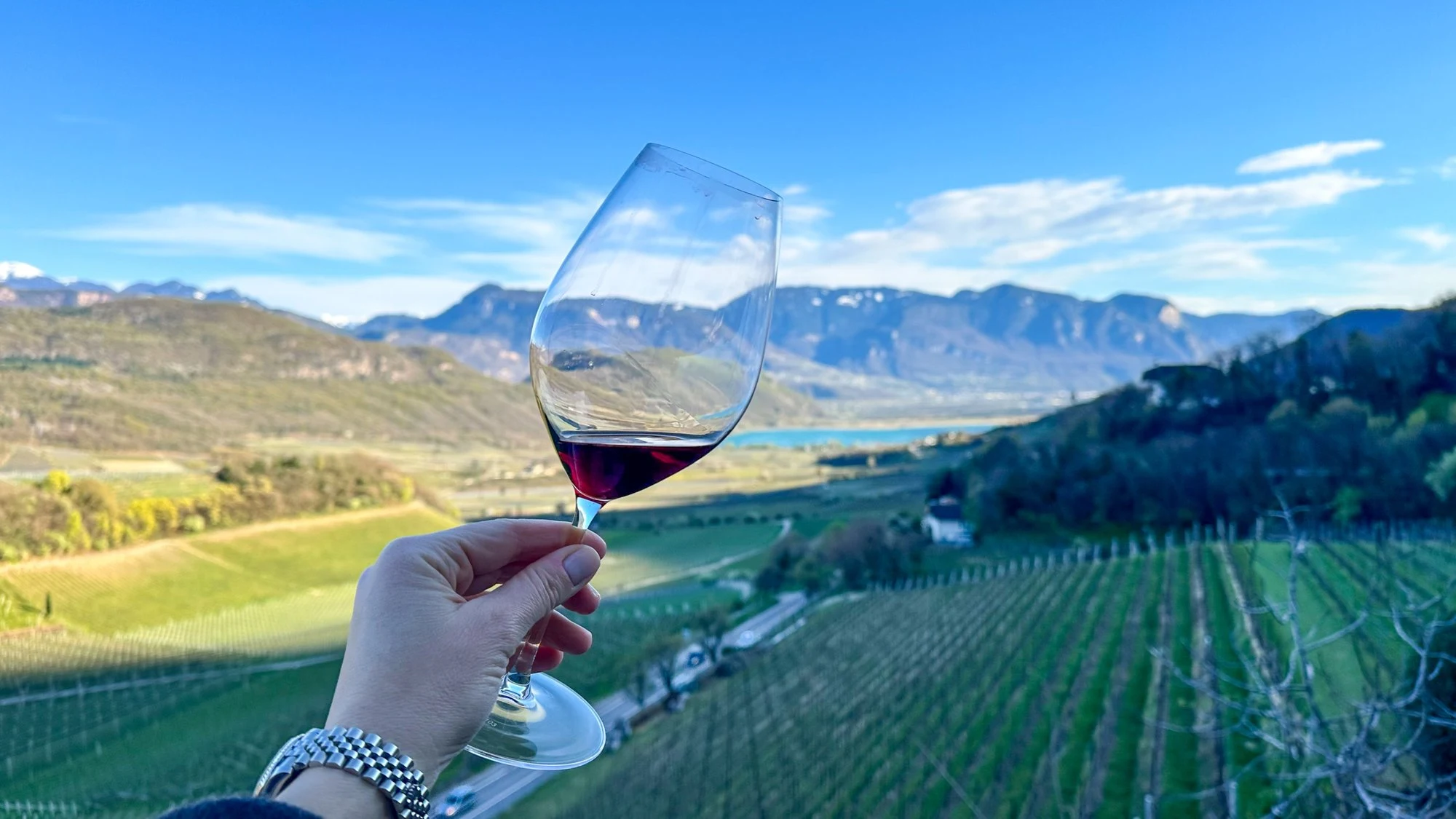
Approaching wine in Kaltern means reading two climates at once: lake warmth and mountain coolness, Mediterranean ease and Dolomitic altitude. Lieselehof works directly inside that contrast, with vineyards connected to Lake Caldaro at lower elevation and mountain sites that rise toward 1,250 metres. The experience is quiet and instructional rather than theatrical: vines, family continuity, organic farming and grape diversity carry more weight than cellar-pageantry.
South Tyrol has long been a borderland for wine culture, with Germanic precision, Italian hospitality and alpine viticulture compressed into a small region. In that context, the estate’s value is not only the glass in front of the visitor but the way it frames Kaltern as a place of altitude, biodiversity and controlled scale. The Morandell family has been tied to the winery since 1993, and Werner Morandell gives the project a named figure without turning the estate into a personality cult. The stronger story is agricultural: low yields, hand harvesting each autumn, organic practice and a preference for teaching visitors how wine is made.
Kaltern's altitude story, told through vines rather than theatre
The clearest reason to take the estate seriously is the vertical range. Vineyards connected to the property run from about 250 metres above sea level near Lake Caldaro to 1,250 metres in the Dolomites. That spread matters in South Tyrol, where ripening pace, acidity, aromatic lift and harvest timing can change sharply over short distances. A winery working across that range is not selling a single postcard version of alpine wine; it is showing how Kaltern can move from lake-influenced warmth to high-elevation tension.
The private vine museum sharpens that point. Around 300 to 360 grape varieties are planted in a single educational vineyard, making the estate as much a living ampelographic classroom as a boutique producer. For visitors who care about viticulture, that is the difference between another regional tasting and a more technical look at why grape diversity matters. The collection also supports the estate’s sustainability narrative: biodiversity is not presented only through labels, but through a physical vineyard that turns genetic range into something visible.
Varietal mix points toward both regional grounding and experimentation. Bronner, Solaris and other PIWI varieties sit alongside Cabernet Sauvignon, Schiava, Gewürztraminer and Pinot Bianco. That combination places the estate inside a broader South Tyrolean conversation about climate pressure, disease-resistant grapes and the limits of inherited appellation habits. Alto Adige / Südtirol DOC gives the regional frame; the organic and PIWI focus gives the project its more contemporary edge.
Werner Morandell's philosophy is low-yield, organic and educational
Winemaker-led wine pages often collapse into biography. Here the more useful reading is practical philosophy. Werner Morandell’s role is attached to an estate that talks consistently about family tradition, innovation and sustainability, but the production signals are more persuasive than the slogans: small scale, organic farming, hand-harvested grapes, low yields and an emphasis on characterful alpine wines rather than volume.
The portfolio spans still red, still white, sparkling and dessert styles. Named bottlings include Vino del Passo, Lieselehof Brut, Sweet Claire and Julian, with recognition attached to several wines: Vino del Passo appears under Le Guide de L’Espresso’s 100 Migliori Vini Italiani, Lieselehof Brut is associated with Golden Star, and Sweet Claire carries a 94+ Alto Adige Speciale reference. Those signals do not make the estate a trophy stop in the international sense; they place it within Italian and regional evaluation systems where multiple wines have drawn attention.
The presence of sparkling wine is useful context. Kaltern is often read through Schiava and lake-country reds, but South Tyrol’s altitude and temperature swing also support white, sparkling and aromatic categories. A portfolio that includes Lieselehof Brut, Gewürztraminer, Pinot Bianco and PIWI varieties reflects that range. The estate’s identity is less about a single flagship than about breadth managed through a small family farm.
Hospitality follows the same logic. The visit types include guided tasting, vineyard walk plus tasting, museum tour with tasting and private appointment tasting, with German, Italian and English available. The tone is educational and relaxed: a winery for visitors who want to understand farming choices, grape material and site variation, not only move through a standard flight. Outdoor seating, vineyard and mountain views, and a quiet small-capacity setting support that slower format.
How to fit it into a Kaltern wine day
For a Kaltern itinerary, this is the stop to use when the day needs depth rather than another familiar cellar format. The estate works for wine education, small groups, couples and solo visitors who want context around organic farming and PIWI grapes. It is less suited to visitors looking for food-pairing menus or a broad culinary program, since the experience is built around wine, vines and the museum rather than a kitchen-led offer.
On-site parking and accessible parking make the logistics easier than many rural winery visits, and the setting near Lake Caldaro and the Mendel Mountains keeps the experience anchored in the visual geography of South Tyrol. The dress code is casual, which fits the tone: serious enough for attentive tasting, relaxed enough for a vineyard walk.
Readers building a wider Kaltern plan can cross-reference the local wine circuit through Andi Sölva, Baron di Pauli, Cantina Kaltern, Erste+Neue and Kettmeir. For the broader trip architecture, use Our full Kaltern wineries guide alongside Our full Kaltern restaurants guide, Our full Kaltern hotels guide, Our full Kaltern bars guide and Our full Kaltern experiences guide. For a wider view of wine travel beyond South Tyrol, compare the Italian and European spread through 3GP SRL in Treviso, 47 Anno Domini in Trebaseleghe, A Mano Wine in Noci, »der Steiner« Hans Steiner in Podersdorf am See and & Handwein in Mannheim.
Questions
Frequently asked
How expensive is Lieselehof?
Lieselehof is listed at a price level of $$$.
The field
How it compares
| Place | Notes |
|---|---|
| Lieselehof | St. Anton / Castelvecchio (Kaltern an der Weinstraße), $$$ |
| Andi Sölva | Kaltern |
| Erste+Neue | Kaltern |
| Lacus – Walter Schullian | Kaltern |
| Ritterhof Weingut-Tenuta | Kaltern |
| St. Quirinus | Kaltern |
| Weingut Peter Sölva | Kaltern |