Mapo Ok
- 01CuisineTraditional Korean Seolleongtang
- 02CitySeoul, South Korea
Ox bones, brisket, kimchi, rice
- Michelin Bib Gourmand · Michelin Guide
- Michelin Bib Gourmand · 2025
- Michelin Bib Gourmand · 2024
Brisket before the bowl
Ox bones and brisket set the rhythm at Mapo Ok in Mapo-gu, Seoul, South Korea. The room is known for seolleongtang rather than display: milky ox bone broth, rice already in the bowl, thick slices of yangji brisket, and kimchi close enough to change the broth at the table. This is a house built around one soup, opened in 1949 and now run by a third generation of the same family, a team that has never put a single name above the pot. The Seoul Metropolitan Government listed it among the city’s top hundred restaurants in 2022. Seolleongtang leaves little cover for a cook. The broth must read clean before salt, hold body without heaviness, and carry the beef without becoming blunt. In that discipline, the hand shows less through invention than through the refusal to disturb what already works.
A broth held to one method
The program is spare: Seolleongtang and Yangji Seolleongtang, served à la carte, with beer and soju kept in support. The method rests on ox bones and 100% Korean beef brisket simmered for hours until the liquid turns opaque and pale, the texture closer to extraction than sauce. Rice goes into the bowl before it reaches the table. Brisket arrives in thick slices, tender but still legible as meat, and optional noodles add another pull through the broth. The seasoning belongs partly to the guest, which is not the same as incompletion. Salt, green onion, chili powder, pepper, and kimchi juice let each bowl move from neutral beef clarity toward the register a regular wants that day. The banchan are not decoration. Classic kimchi, radish kimchi, green onion kimchi, and aged fermented kimchi bring acid, heat, and lactic depth to a soup whose base remains deliberately plain. Mapo Ok’s Bib Gourmand recognition, with 2 awards noted for the house, follows that economy of means. The craft is the long way, bones, heat, brisket, rice, and fermented cabbage doing their work without an expanded menu around them.
The second-floor room
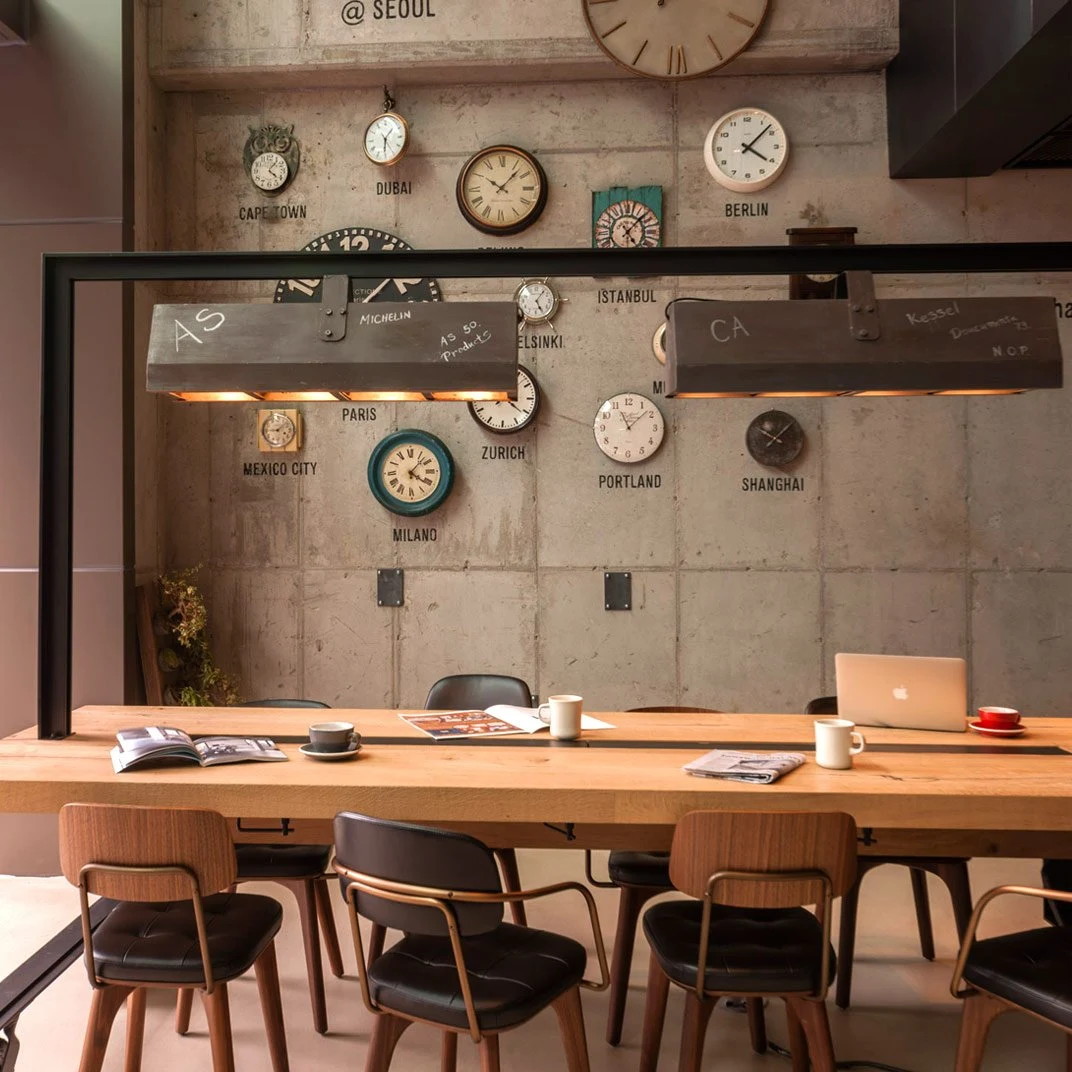
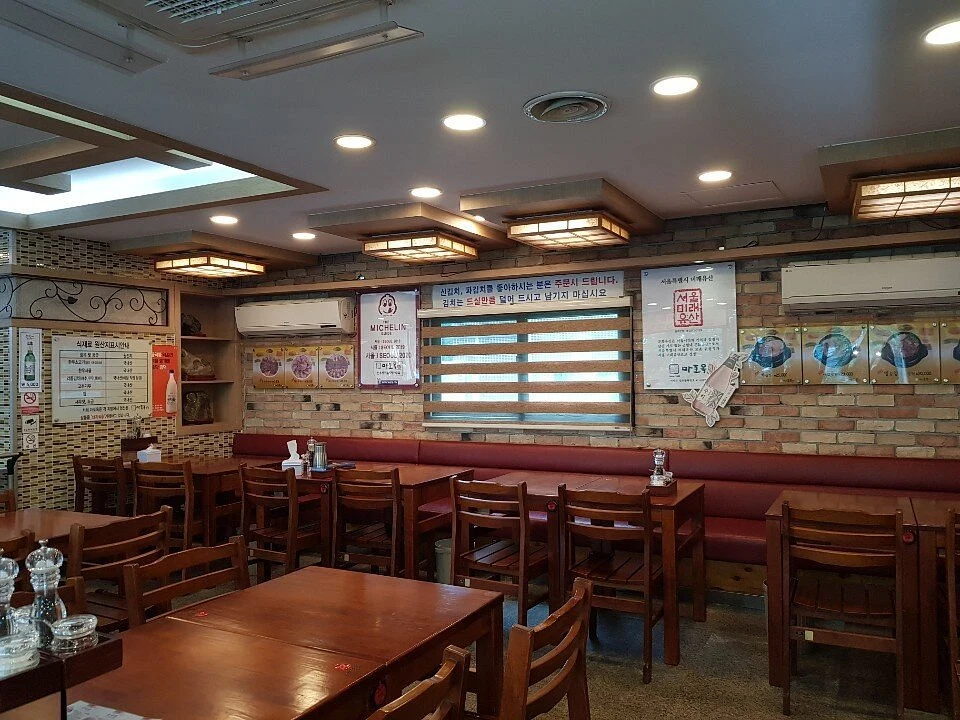
The restaurant sits on a second-floor site in Yonggang-dong, close to Mapo Station, and the room keeps the practical grammar of a Korean soup house. Tables turn, bowls land hot, and the conversation stays at the level of regulars who already know how they like their broth. It is modest rather than staged, warmed by steam, stainless vessels, and the recurring movement of kimchi to soup, spoon to rice, brisket to mouth. Service has the efficiency of a place that does not need to narrate its own purpose. The counter and the pass exist for speed, but the tempo is not careless; seolleongtang punishes haste long before the bowl is carried out. Around the room, the same gestures repeat: a pinch of salt, a scatter of green onion, a spoonful of kimchi juice clouding the surface. The house has lasted because those gestures still belong to Mapo Ok’s Seolleongtang.
Questions
Frequently asked
What is Mapo Ok known for?
Mapo Ok is known for seolleongtang, especially its Yangji Seolleongtang made with milky ox bone broth and brisket.
What recognition does the restaurant hold?
The restaurant holds Michelin Bib Gourmand recognition, and the Seoul Metropolitan Government listed it among the city’s top hundred restaurants in 2022.
What is the dining format like?
The menu is spare, with Seolleongtang and Yangji Seolleongtang served à la carte, alongside beer and soju.
What are the hours and booking policy?
Mapo Ok is open from 7 AM to 9 PM from Monday to Friday, and from 7 AM to 5 PM on Saturday and Sunday. It is walk-in friendly.
The field
How it compares
| Place | Cuisine | Notes | Awards |
|---|---|---|---|
| Mapo Ok | Traditional Korean Seolleongtang | 노고산동, $$ | · |
| alla prima | Modern Fusion Fine Dining | Seoul | Michelin 2 Stars, World's 50 Best |
| Eatanic Garden | Modern Korean Contemporary | Seoul | Michelin 1 Star, World's 50 Best |
| Evett | Modern Innovative Korean | Seoul | Michelin 2 Stars |
| Jungsik | Modern Korean Fine Dining | Seoul | Michelin 2 Stars, World's 50 Best |
| Mingles | Modern Korean Fine Dining | Seoul | Michelin 3 Stars, World's 50 Best |
| Onjium | Modern Korean Royal Court Cuisine | Seoul | Michelin 1 Star, World's 50 Best |
Similar places
Modern Fusion Fine Dining
alla prima
Seoul, South Korea
★★ · 50 Best
Modern Korean Contemporary
Eatanic Garden
Seoul, South Korea
★ · 50 Best
Modern Innovative Korean
Evett
Seoul, South Korea
★★
Modern Korean Fine Dining
Jungsik
Seoul, South Korea
★★ · 50 Best
Modern Korean Fine Dining
Mingles
Seoul, South Korea
★★★ · 50 Best
Modern Korean Royal Court Cuisine
Onjium
Seoul, South Korea
★ · 50 Best