Marlow
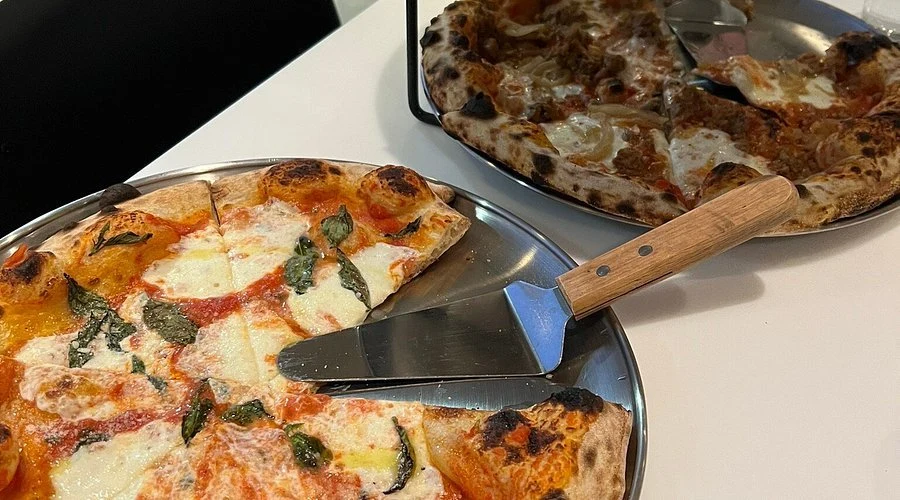
- 01CuisineNeapolitan Sourdough Pizza
- 02CityMakawao, United States
From the people index
Recommended by
One trusted voice points here.
Upcountry Maui and the Case for Eating Where the Food Grows
Makawao sits at roughly 1,500 feet on the slopes of Haleakala, high enough that the air carries a coolness absent from the coast and the pastureland holds moisture long after the resort towns below have baked dry. This is Maui's agricultural interior, and the town's low-slung storefronts and working ranches are a more accurate picture of the island's food economy than anything on the beachfront. The farms that supply serious kitchens across Hawaii, and increasingly across the mainland, operate within a few miles of Makawao's main drag. Dining here is, in a direct sense, eating close to the source.
Marlow occupies a suite in the commercial cluster at 30 Kupaoa St, a address that places it among a handful of independent restaurants that have made the upcountry their operating base rather than their fallback option. Across the American restaurant scene, the sourcing-first model has been claimed by enough operators that the phrase risks losing meaning. What distinguishes the upcountry context is that the claim is geographically verifiable: Upcountry Maui's small farms produce taro, sweet potato, specialty greens, heritage-breed pork, and grass-finished beef at a density that few American agricultural regions match on a per-acre basis.
What Ingredient Sourcing Looks Like in This Zip Code
The broader trend in American fine and casual dining over the past decade has been a shift toward traceability. Restaurants from Blue Hill at Stone Barns in Tarrytown to Single Thread Farm in Healdsburg have built their programs around direct farm relationships, in some cases owning or operating the land themselves. The logic is that the fewer hands between field and plate, the more the kitchen can work with produce at its actual peak, not its shipping peak.
In Makawao, that logic is structural rather than aspirational. Operators who commit to local sourcing are working with farms reachable by a twenty-minute drive. Kula Agricultural Park, Ho'opono farmers, and the Haleakala-slope ranches that have been producing since the plantation era give Upcountry restaurants access to a supply chain that coastal Maui kitchens have to work harder to maintain. The seasonal signals are also sharper at elevation: what's growing changes perceptibly across Maui's vertical range, which means menus tied to the land shift with more granularity than they would at sea level.
This is the competitive context Marlow inhabits. The restaurants that resonate longest in this town tend to be the ones that take the agricultural proximity seriously as a kitchen discipline rather than a branding exercise. The Makawao dining scene, set against a state where over 85% of food is imported, occupies an unusual position in the American restaurant conversation.
Makawao's Restaurant Scene in Brief
The town supports a range of formats without the volume of a resort corridor. Casanova Italian Restaurant has anchored the local dining calendar for decades, functioning as both a credible Italian kitchen and a live-music destination that few comparable towns outside Hawaii could sustain. Polli's Cantina handles the Mexican end of the street, while Pizza Fresh and Serpico's Restaurant cover the casual-Italian and American comfort registers. The Wooden Crate trades in a more market-forward format. Marlow enters this scene as part of a newer wave of operators treating the upcountry's ingredient access as a primary selling point rather than ambient local color.
For travelers triangulating between Makawao and the broader Maui dining map, the upcountry is rarely the first stop on the resort-hotel recommendation sheet. That works in the town's favor. Restaurants here price against local reality rather than visitor expectation, and the pace is calibrated to the community rather than a check-in calendar.
How Makawao Fits the Sourcing-Led American Table
The sourcing conversation in American restaurants has matured enough that provenance alone no longer functions as a differentiator. What separates the kitchens that execute on the promise from those that perform it is whether the sourcing decision shapes the cooking or merely annotates it. At Providence in Los Angeles, sustainable seafood sourcing drives the entire menu architecture. At The French Laundry in Napa, the three-Michelin-star kitchen maintains its own garden as a working supply line, not a photo opportunity. At Lazy Bear in San Francisco, the tasting format exists specifically to showcase how fermentation, preservation, and seasonal discipline can make a short ingredient list feel expansive. Each of these restaurants, across very different price points and formats, treats sourcing as a structural commitment rather than a garnish.
Makawao's advantage in this conversation is that the infrastructure for sourcing-led cooking already exists in the surrounding landscape. Operators in towns like this, from the similarly agricultural Healdsburg in Sonoma to the market-driven kitchens of Vermont's Northeast Kingdom, have shown that being far from a major urban center is not a handicap for serious cooking when the land is this productive. Hawaii's year-round growing climate, combined with the elevation-driven variety of the upcountry, means the seasonal calendar never fully closes.
Restaurants that operate in this mode tend to price at the middle-to-upper range of their local markets, because the logistics of direct farm relationships carry real cost. The tradeoff, for diners who understand it, is ingredient quality at peak ripeness rather than peak durability. The gap between what a kitchen pulling from Kula farms on a given Wednesday can serve and what arrives after a multi-day supply chain is not philosophical; it is measurable in flavor, texture, and yield.
Planning a Visit to Marlow
Marlow's address at 30 Kupaoa St, Suite A104, places it within Makawao's walkable commercial core, accessible from both the Hana Highway corridor and the Kula Highway via a ten-to-fifteen-minute drive from central Maui's main resort areas. The upcountry is not dense enough with dining options to treat a closed door as a recoverable inconvenience. Visitors with flexibility in their Maui itinerary will find that building a half-day around the upcountry, combining a visit to Makawao with a drive through Kula's farm stands, produces a more grounded picture of the island than the beach-and-resort circuit alone can offer.
Addison in San Diego, Atomix in New York City, Alinea in Chicago, Le Bernardin in New York City, The Inn at Little Washington, Emeril's in New Orleans, and 8 1/2 Otto e Mezzo Bombana in Hong Kong, all of which approach sourcing and provenance with program-level seriousness. Makawao operates at a different scale, but the underlying discipline, knowing where every component comes from and building the menu around what that actually produces, is the same.
Questions
Frequently asked
How expensive is Marlow?
Marlow is listed at a price level of $$.
Where is Marlow and what does it serve?
Marlow is in Pukalani, Makawao, serving Neapolitan Sourdough Pizza.
The field
How it compares
| Place | Cuisine | Notes | Awards |
|---|---|---|---|
| Marlow | Neapolitan Sourdough Pizza | Pukalani, $$ | · |
| Arca | Modern Yucatan Fire-Cooked Small Plates | Tulum | World's 50 Best |
| Döllerer | Modern Alpine Cuisine | Golling an der Salzach | Michelin 2 Stars |
| Hélène Darroze at The Connaught | Three Michelin-Star Modern French Fine Dining | London | Michelin 3 Stars |
| Kato | Modern Taiwanese Fine Dining | Los Angeles | Michelin 2 Stars, World's 50 Best |
| KOL | Modern Mexican Fine Dining | London | Michelin 1 Star, World's 50 Best |
| Odette | Modern French Fine Dining | Singapore | Michelin 3 Stars, World's 50 Best |
Similar places
Modern Yucatan Fire-Cooked Small Plates
Arca
Tulum, Mexico
50 Best
Modern Alpine Cuisine
Döllerer
Golling an der Salzach, Austria
★★
Three Michelin-Star Modern French Fine Dining
Hélène Darroze at The Connaught
London, United Kingdom
★★★
Modern Taiwanese Fine Dining
Kato
Los Angeles, United States
★★ · 50 Best
Modern Mexican Fine Dining
KOL
London, United Kingdom
★ · 50 Best
Modern French Fine Dining
Odette
Singapore, Singapore
★★★ · 50 Best