Marukyu Koyamaen Nishinotouin ten
- 01CuisineTraditional Japanese tea house & sweets cafe
- 02CityKyoto, Japan
From the people index
Recommended by
One trusted voice points here.
- Tabelog 100 #39: 3.6pts · 2025
Approach this part of Nakagyo and Kyoto shifts quieter: machiya lines, low traffic, and the calm around tea merchants rather than restaurants chasing long-course drama. The city’s cafe culture splits between contemporary coffee rooms and older Japanese-sweets houses, but the sharper divide is sourcing. In Kyoto, matcha is not a flavour trend. It is an agricultural, milling, and blending discipline, and better tea rooms make that hierarchy legible without theatre.
Marukyu Koyamaen Nishinotouin ten sits in that tradition. Its selection for Tabelog Cafe WEST 100 in 2025 places it among a curated group of western Japan cafes, but the more useful signal is format: cafe, Japanese sweets, and kakigori, with a tea room available and take-out built into the service model. This is not the Kyoto of ornate kaiseki rooms such as Kyoryori Fujimoto, nor the casual city snacking of 551蓬莱. It occupies a narrower lane, where the ingredient carries the argument.
Tea as the main ingredient, not a decorative note
Kyoto’s tea reputation is often flattened into matcha, but serious service depends on decisions made long before the bowl reaches the table: cultivar, shading, harvest timing, steaming, drying, blending, and grinding. A tea room attached to a producer-led name differs from a dessert cafe buying powder for colour. The point is not abundance. It is control, and that matters because matcha can move from grassy to bitter to rounded depending on handling.
The menu categories make the editorial position clear without a chef’s biography. Japanese sweets frame the tea rather than compete with it, while kakigori, available in summer, connects Kyoto’s older tea culture to the city’s seasonal shaved-ice circuit. Kakigori has become a serious cafe category across Japan, not just a heat-wave novelty. In Kyoto, the better versions work when syrup, dairy, bean paste, or tea has enough definition to survive the ice. A tea specialist has an advantage: intensity and balance are not afterthoughts.
For travellers comparing Kyoto meals, this differs from the counter-driven precision of 3TOKU6MI Shijo karasuma ten, the plant-forward language often associated with [ki:], or French-accented dining such as Abbesses. It is closer to old Kyoto sweets culture, the kind that also makes Aburi Mochi Honke Nemoto Kazariya valuable: narrow specialization, repeatable craft, and an ingredient with its own grammar.
A compact tea room in a city that rewards small formats
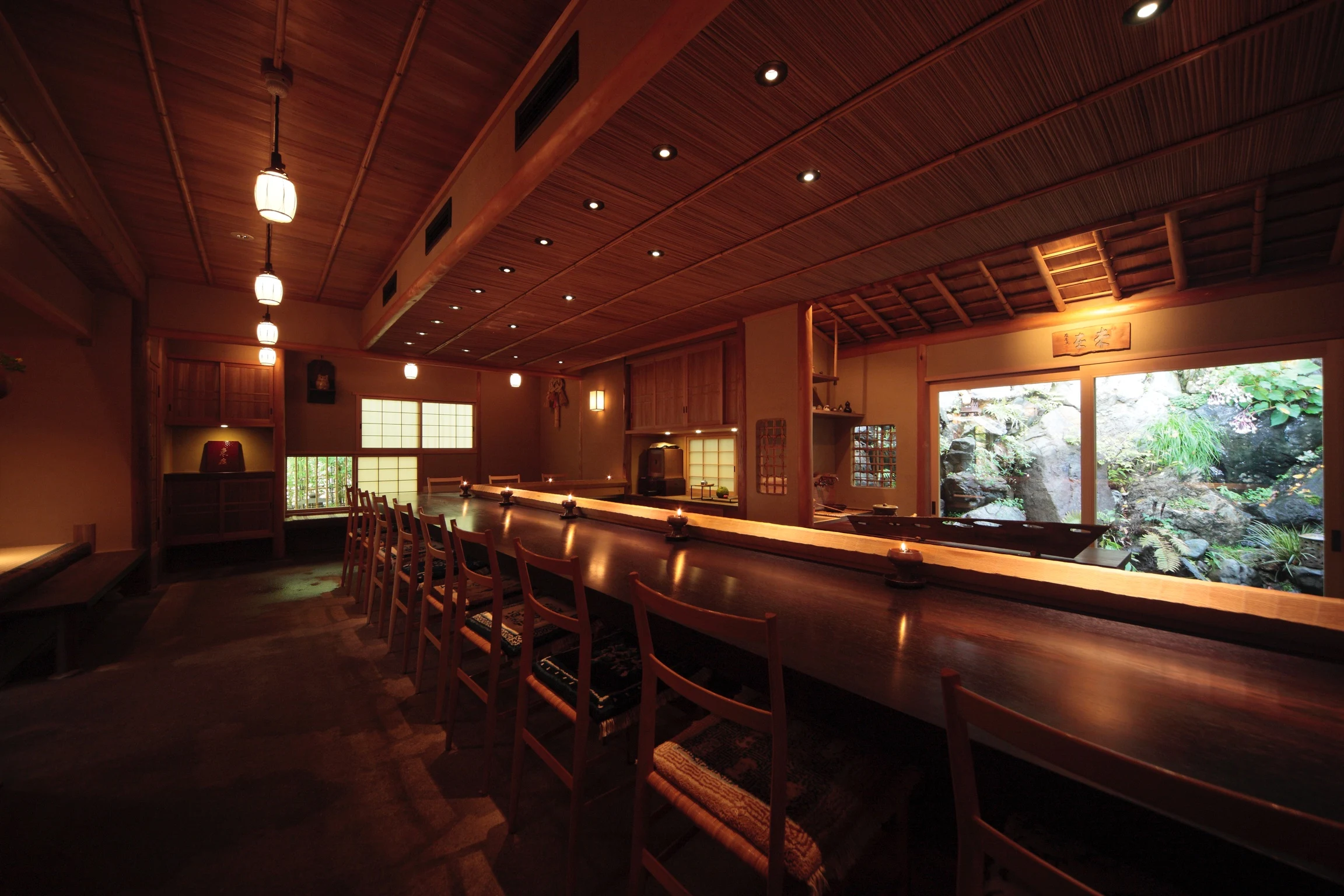
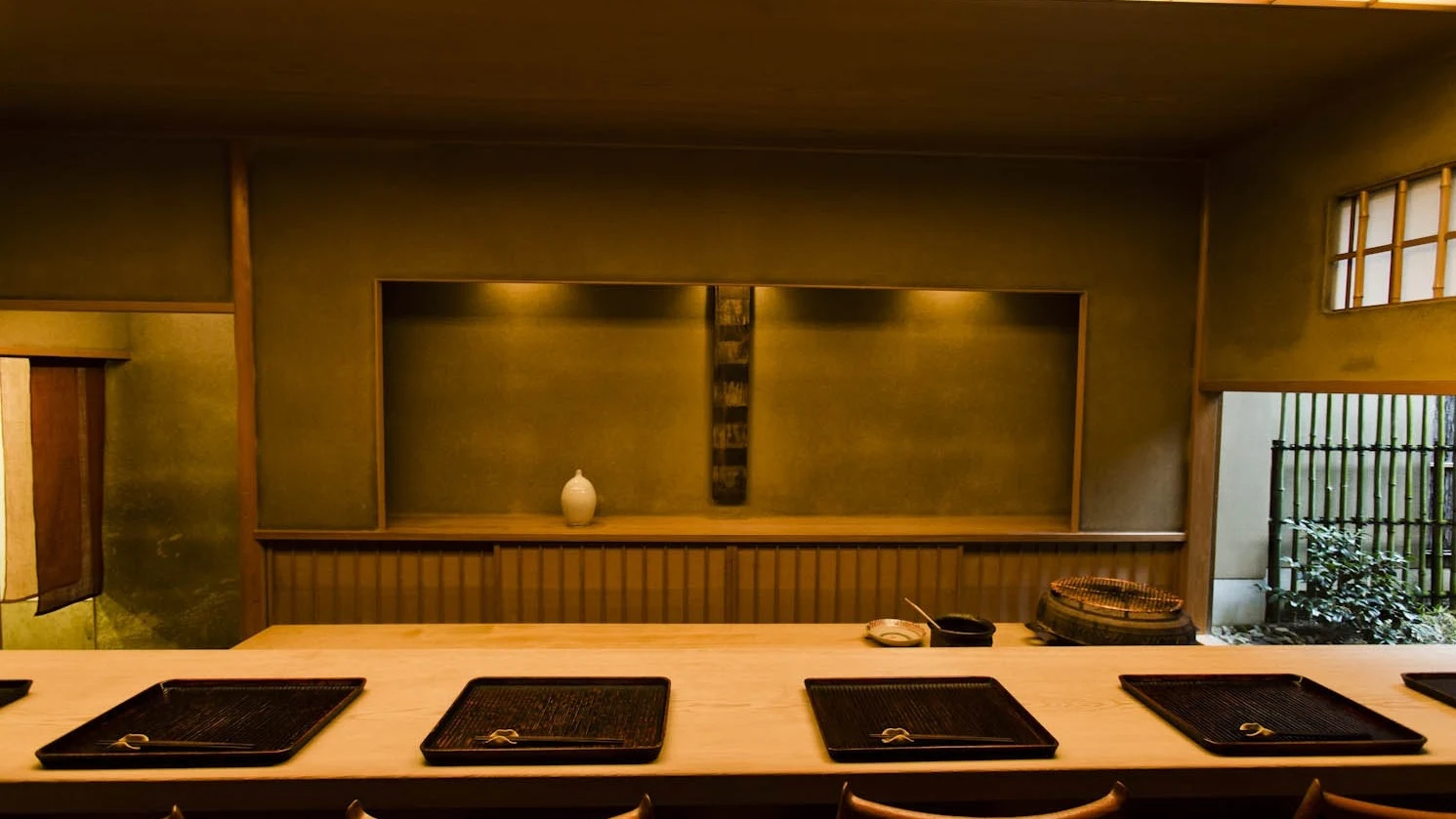
Kyoto is often misread as formal by default. In practice, some of its strongest food experiences are small, specific, and brief: a sweet before temple walking, a bowl of tea between appointments, shaved ice in summer, or a take-out purchase that makes more sense than another seated meal. The 10-seat scale keeps the experience closer to a specialist counter than a general cafe. It also changes the traveler’s calculation: this is a planned pause, not a sprawling afternoon lounge.
That compactness fits a broader Kyoto pattern. Serious dining rooms such as Miyawaki, Ogawa, and Kamanza Nagashima operate in a city where intimacy often signals focus, not scarcity alone. At a lower spend and shorter duration, the same principle applies to tea and sweets. Solono, in a similar casual price band, belongs to the city’s cafe conversation, but a tea-led address has a different center of gravity: provenance and preparation sit ahead of ambience.
The room’s appeal also comes from resisting over-explanation. Kyoto has many places translating tradition into tourist-facing performance. A tea room like this works better through restraint: small capacity, non-smoking setting, no private rooms, and service that can accommodate take-out. Those details point to a working urban tea address, not a staged cultural set piece. Families are welcome, which says something useful about Kyoto’s sweets culture: formality and everyday use are not opposites.
How to place it in a Kyoto food day
The strongest use case is between heavier meals. Kyoto itineraries can become overbuilt with temple routes, ryokan breakfasts, and multi-course dinners; a tea-focused stop gives the day a clean center without adding another long sitting. Summer changes the logic because kakigori becomes part of the reason to go, especially for visitors tracking seasonal sweets rather than restaurant awards. Outside summer, the draw is more clearly the tea-and-wagashi axis.
Payment flexibility and take-out broaden the audience, but the reason to care remains narrower: this is an ingredient-led Kyoto cafe with external recognition and a format that protects tea from becoming background flavour. For broader planning, Our full Kyoto restaurants guide gives the dining context around it, while Our full Kyoto hotels guide, Our full Kyoto bars guide, Our full Kyoto wineries guide, and Our full Kyoto experiences guide help build the rest of the day without forcing every stop into the same register.
Seen from outside Kyoto, the appeal is instructive. Japan’s casual dining spectrum runs from shaved-ice cafes such as.cafe in Osaka to curry specialists like [Curry Senmon Ten] Maruyama Kyoju. in Sapporo, Vietnamese cooking at (Shoku) Vietnam in Kawasaki, and regional contemporary rooms such as.know in Kumamoto. Abroad, Japanese formats are often translated through sake bars and rice specialists, from Jōdo Saké Bar in Los Angeles to Onigiri Time in Pasadena. Kyoto’s tea rooms make a different case: origin, processing, and season can define the whole experience. Marukyu Koyamaen Nishinotouin ten is valuable for exactly that reason.
For visitors also moving through Tokyo, the contrast with grill-and-seafood addresses such as. 鮪と炭火焼き うお炭 秋葉原店 in Tokyo or regional beef formats like -Grilled beef Sukiyaki- KAMAKURA TANUKIAN 鎌倉 たぬき庵 in Kamakura is useful. Those meals are built around appetite and heat. Kyoto tea service is built around calibration. That quieter register is the reason to include it: not as dessert afterthought, but as a precise reading of one of the city’s defining ingredients.
Questions
Frequently asked
How expensive is Marukyu Koyamaen Nishinotouin ten?
Marukyu Koyamaen Nishinotouin ten is listed at a price level of $$.
Where is Marukyu Koyamaen Nishinotouin ten and what does it serve?
Marukyu Koyamaen Nishinotouin ten is in Nakagyō, Kyoto, serving Traditional Japanese tea house & sweets cafe.
The field
How it compares
| Place | Cuisine | Notes | Awards |
|---|---|---|---|
| Marukyu Koyamaen Nishinotouin ten | Traditional Japanese tea house & sweets cafe | Nakagyō, $$ | · |
| Gion Sasaki | Modern Kaiseki | Kyoto | Michelin 3 Stars |
| Hyotei | Traditional Kaiseki | Kyoto | Michelin 3 Stars |
| Isshisoden Nakamura | Traditional Kyoto Kaiseki | Kyoto | Michelin 3 Stars |
| Kikunoi Honten | Kyoto Kaiseki Ryotei | Kyoto | Michelin 3 Stars |
| Mizai | Traditional Kaiseki | Kyoto | Michelin 3 Stars |
| Ogata | Kaiseki Omakase | Kyoto | Michelin 2 Stars |