Mastard

In Residence
Simon Mathys
Chef
- 01CuisineModern Quebec Terroir Fine Dining
- 02CityMontréal, Canada
- 03RecognitionOne Michelin Star
A Neighbourhood Street That Earned a Michelin Star
Rue Bélanger runs through Rosemont-La Petite-Patrie, one of Montreal's denser residential neighbourhoods, far from the downtown hotel corridor and the tourist-facing stretch of the Plateau. The address matters here. This part of the city has developed a dining culture built on small rooms, chef-ownership, and menus that shift with what Quebec farms and foragers can deliver week to week. Mastard, at number 1879, is the neighbourhood's most decorated expression of that tendency, holding a Michelin star as of 2025 while maintaining the feel of a room its regulars walk to rather than travel to.
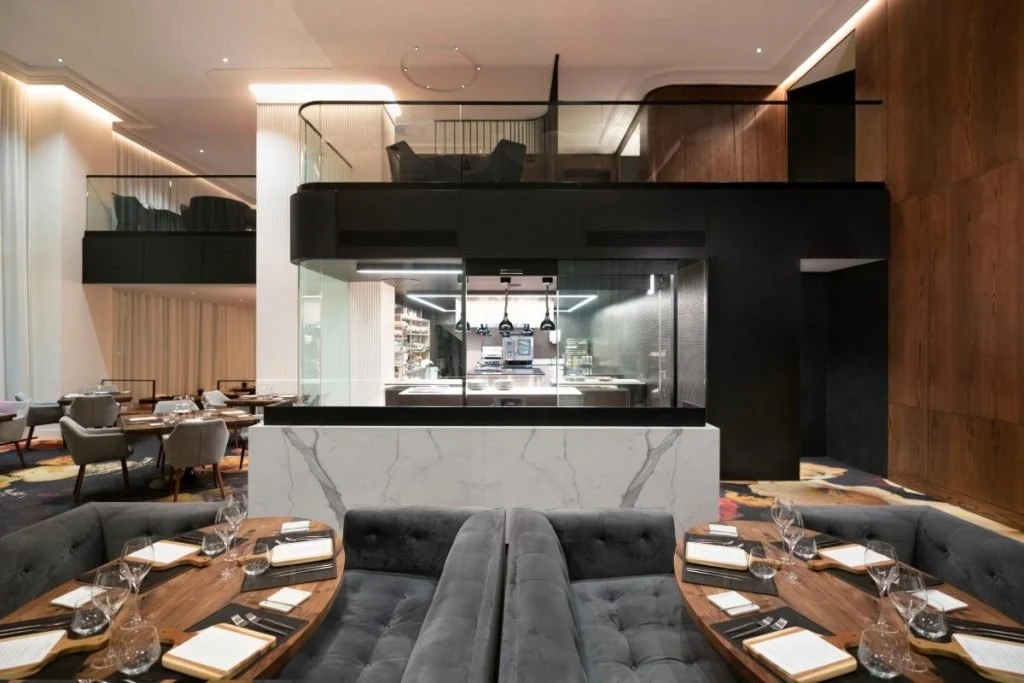
That dual identity, neighbourhood spot and destination restaurant, is harder to pull off than it sounds. Many starred rooms in Canadian cities drift toward formality as recognition accumulates, distancing themselves from the communities that originally sustained them. Mastard has moved in the opposite direction. A recent major renovation introduced a minimalist décor built around natural materials, which sharpened the room's visual identity without sacrificing the ease that defines the service under front-of-house partner Viki Brisson-Sylvestre. The result is a dining room that reads as considered without being precious. Mastard holds one Michelin star.
The Sunday email
Read about the people behind restaurants like Mastard in the Sunday email.
Every Sunday we send a lead story and up to four more about the chefs, winemakers, sommeliers and hoteliers behind the restaurants, bars, wineries and hotels we cover.
Recent stories
Free. One email a week, and you can unsubscribe from any issue.
What Quebec Terroir Looks Like at the Counter
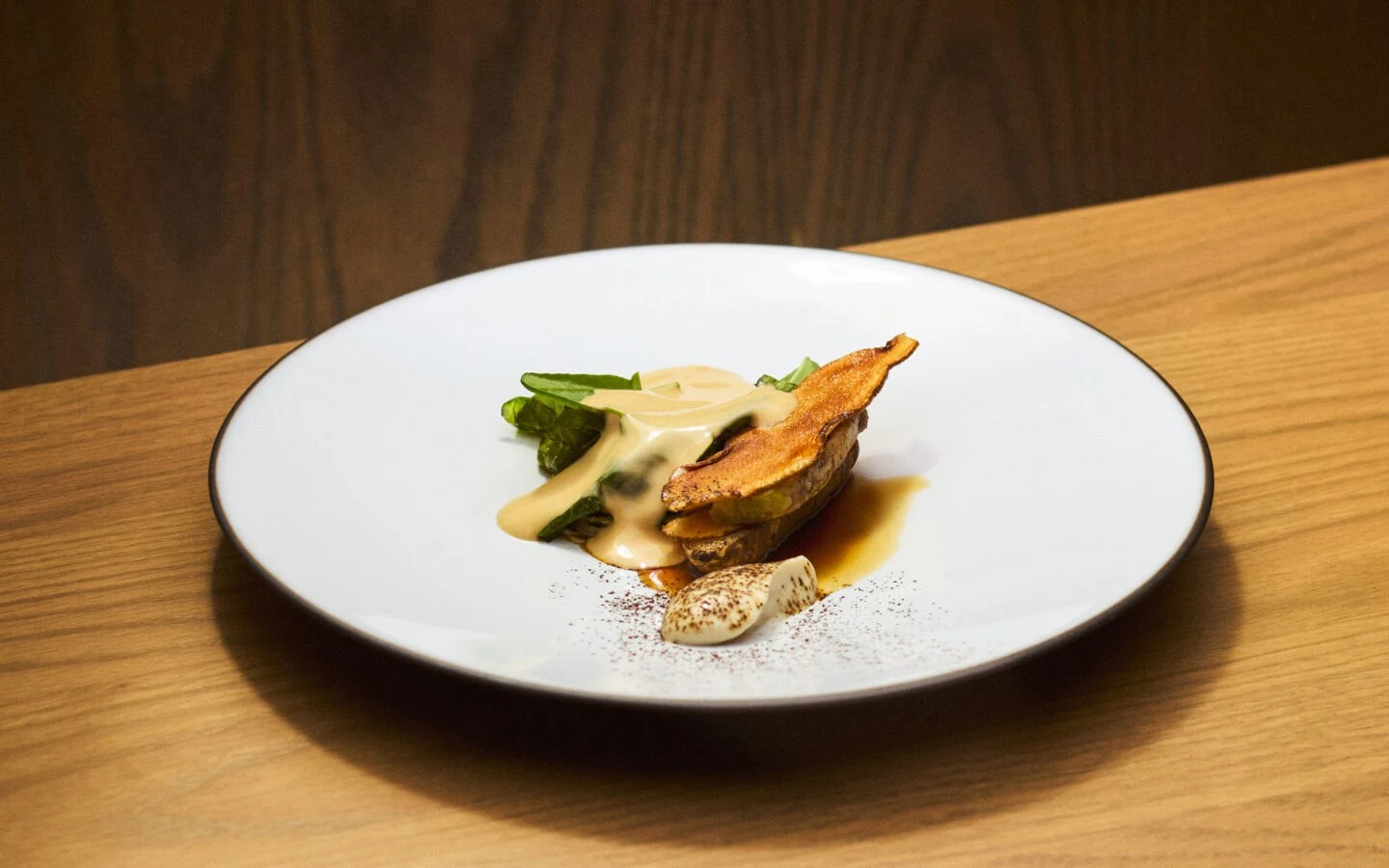
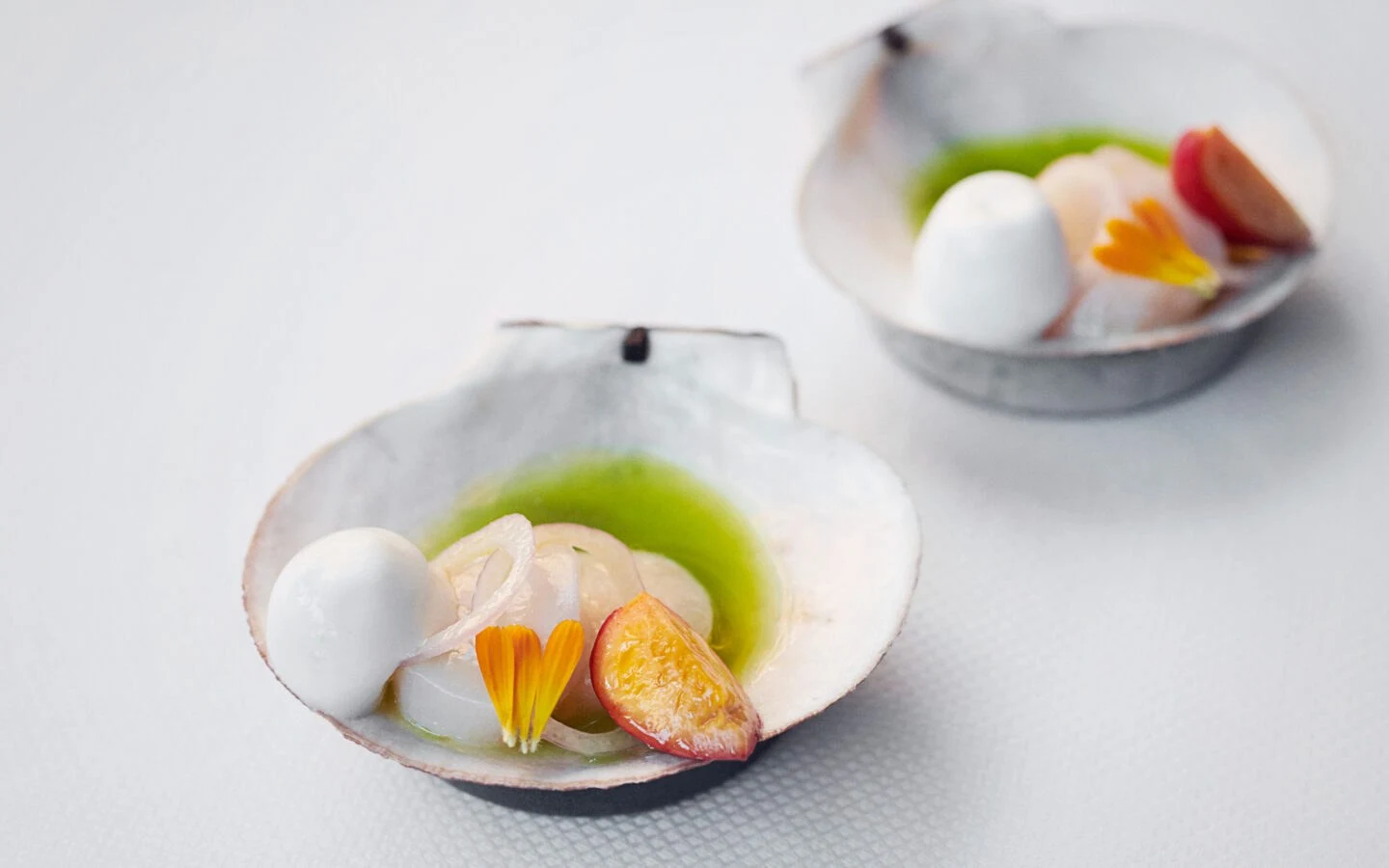
The word mastard carries weight in Quebec French: it signals something large, forceful, and not easily dismissed. The kitchen takes that implied mandate seriously. Chef Simon Mathys works a five-course tasting menu format built around seasonal Quebec product, and the flavour profile that emerges is one of bold clarity rather than refinement for its own sake. Dishes from the current rotation have included a slice of ruby-red tomato from Ferme des Quatre-Temps, finished with smoked beef fat, camelina oil, and verjus, a construction that uses a single polished ingredient as the structural argument of the plate.
The lettuce tart has become the room's signature over repeated seasons: pâte brisée filled with a mousse of local gem lettuce and served alongside an herb sauce. Critic Ivy Lerner-Frank described dreaming about it specifically. That kind of dish, technically demanding, built on an ingredient that most kitchens would treat as garnish, is a reliable signal of where a tasting menu program actually sits in terms of ambition. Meatier courses extend the range: duck sausage with smoked egg yolk emulsion and meat jus, or guinea fowl paired with foie gras terrine, mustard sabayon, and braised endive.
Cooking sits in a lineage that runs through Quebec's most ingredient-focused kitchens. Tanière³ in Québec City and Narval in Rimouski occupy similar territory, tasting menus organized around provincial sourcing, where the season's produce sets the pace and the chef's role is to find one honest expression of what arrived that week. Outside Quebec, the format has close analogs at AnnaLena in Vancouver and Restaurant Pearl Morissette in Lincoln, both of which treat regional sourcing as editorial premise rather than marketing language.
The Wine Program and What It Signals
Mastard's wine flights, offered in four or five pours, lean natural, which places the restaurant inside a broader shift in how Montreal's better dining rooms are approaching their lists. The city's wine culture has moved steadily away from conventional French-heavy programs toward bottles that reflect the same seasonal, producer-led logic as the food. Annette bar à vin and Sabayon represent the bar-focused end of that movement; Mastard integrates it into a formal tasting menu context. The cocktail program also leans into Quebec spirits, which is a practical expression of the same sourcing philosophy that governs the kitchen.
This approach contrasts with the dominant model at the summit of Montreal's price range. Jérôme Ferrer - Europea and Toqué operate at the $$$$ tier with more conventionally structured wine programs. Mastard sits at the $$$ level, meaningfully below those rooms in price, while matching them in award recognition, which makes it an outlier in the city's fine dining tier. For comparison, Cadet and Foxy occupy the more casual end of the neighbourhood-restaurant register in Montreal; Mastard operates at the opposite end of that spectrum in terms of execution, while sharing some of the same community-first instincts.
Mastard in the Context of Canadian Modern Cuisine
Canada's Michelin expansion to Montreal in 2024 put several rooms into international conversation. Mastard's 2025 star positions it alongside Alo in Toronto and a cluster of Quebec City addresses, and it invites comparison with the broader tendency across Canadian fine dining to treat local ingredient identity as a primary differentiator rather than a secondary note.
Internationally, the format has close equivalents at rooms like Frantzén in Stockholm, where terroir-first cooking operates at the tasting menu level with minimal theatrical intervention. Mastard's version of that impulse is less austere, the service is warmer, the room is convivial rather than ceremonious, but the underlying premise is comparable: let the sourcing carry the argument, and build technique around it rather than over it. FZN by Björn Frantzén in Dubai shows how that same sensibility translates to a different context; Mastard's interest lies in staying rooted in place. The Pine in Creemore pursues a version of that same regional commitment at an even smaller scale.
Questions
Frequently asked
What recognition does Mastard hold?
Mastard holds 1 Michelin star.
Who works at Mastard?
Made By profiles Simon Mathys (Chef) at Mastard.
How expensive is Mastard?
Mastard is listed at a price level of $$$.
Where is Mastard and what does it serve?
Mastard is in Gabriel-Sagard, Montréal, serving Modern Quebec Terroir Fine Dining.
The field
How it compares
| Place | Awards | Cuisine | Notes |
|---|---|---|---|
| Mastard | Michelin 1 Star | Modern Quebec Terroir Fine Dining | Gabriel-Sagard, $$$ |
| Beba | 50 Best | Modern Iberian-Italian Fusion | Montréal |
| Jérôme Ferrer - Europea | Michelin 1 Star | Modern French Fine Dining with Quebec Influences | Montréal |
| Joe Beef | · | French Bistro with Québec Terroir | Montréal |
| Mon Lapin | 50 Best | Modern Quebecois Bistro | Montréal |
| Montréal Plaza | 50 Best | Modern French-Canadian with Japanese Flair | Montréal |
| Toqué | · | Modern Quebecois Fine Dining | Montréal |
Similar places
Modern Iberian-Italian Fusion
Beba
Montréal, Canada
50 Best
Modern French Fine Dining with Quebec Influences
Jérôme Ferrer - Europea
Montréal, Canada
★
French Bistro with Québec Terroir
Joe Beef
Montréal, Canada
Modern Quebecois Bistro
Mon Lapin
Montréal, Canada
50 Best
Modern French-Canadian with Japanese Flair
Montréal Plaza
Montréal, Canada
50 Best
Modern Quebecois Fine Dining
Toqué
Montréal, Canada

The Sunday email
Read about the people behind restaurants like Mastard in the Sunday email.
Every Sunday we send a lead story and up to four more about the chefs, winemakers, sommeliers and hoteliers behind the restaurants, bars, wineries and hotels we cover.
Recent stories
Free. One email a week, and you can unsubscribe from any issue.