Mercado 24
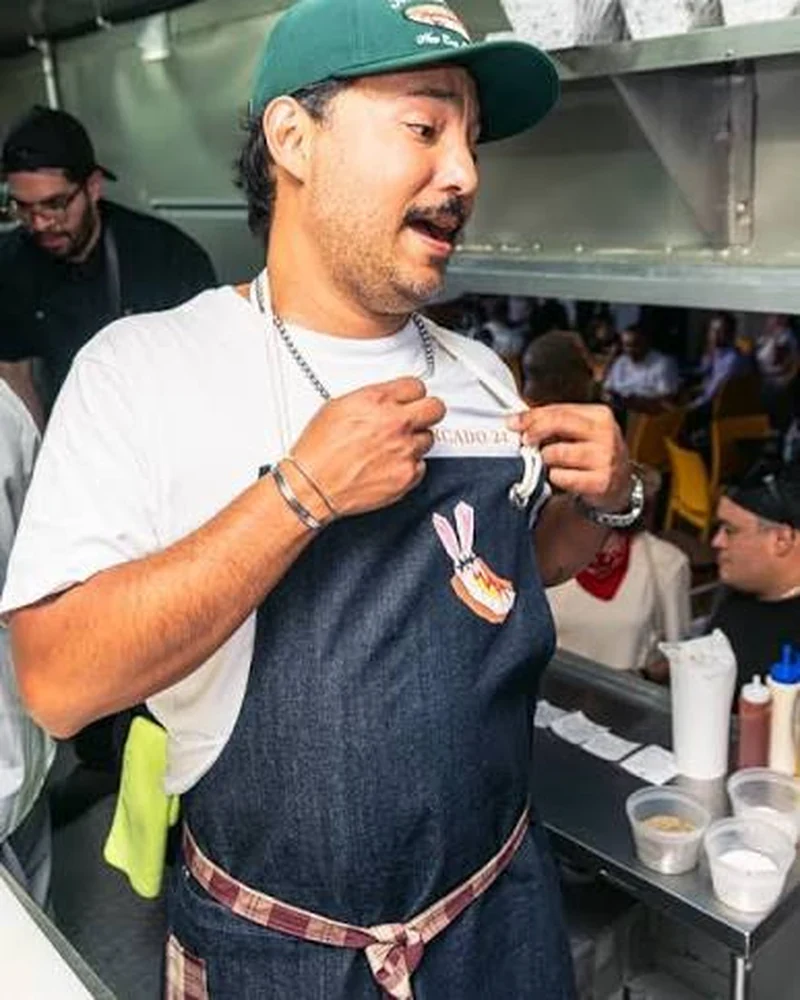
In Residence
Pablo Díaz Quiñonez
Chef
- 01CuisineModern Guatemalan
- 02CityGuatemala City, Guatemala
- 03RecognitionWorld's 50 Best — No. 42
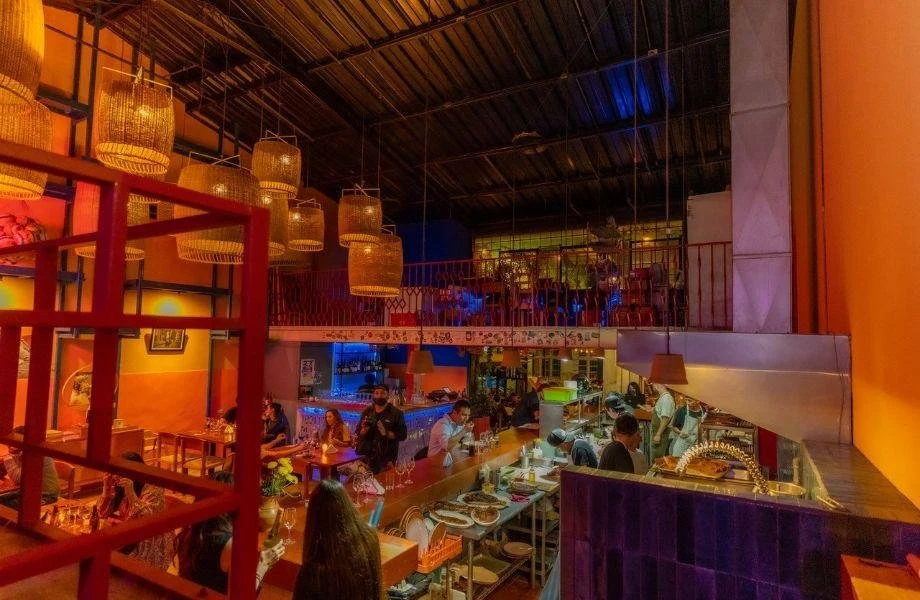
- World's 50 Best · #42 · World's 50 Best Restaurants
- World's 50 Best Latin America's Best Restaurants #42 · 2025
- The Best Chef One Knife · 2025
A Market Decides the Menu
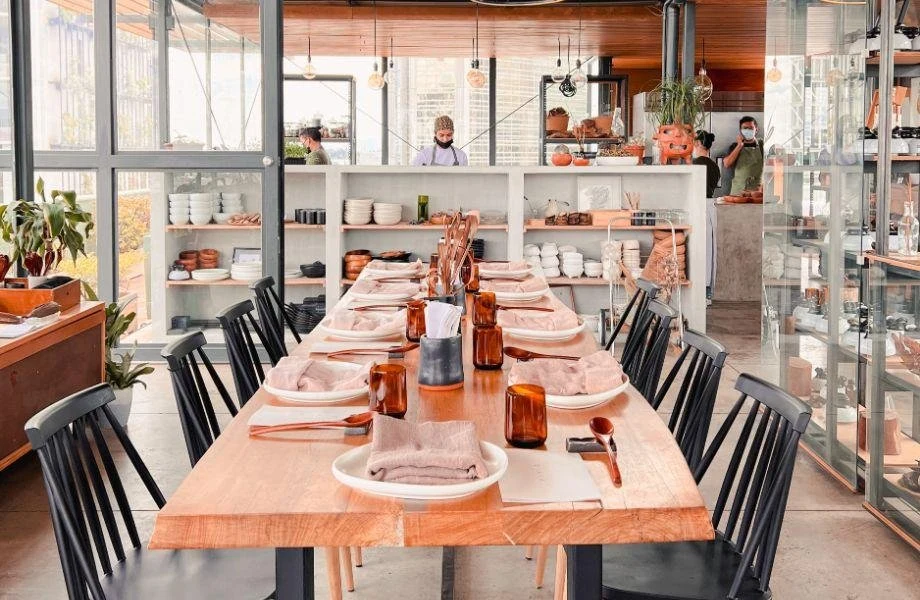
In most restaurants, the market is a supplier. At Mercado 24, the market is the editorial director. The four-person kitchen led by Chef Pablo Díaz Quiñonez operates on a daily reset: what Guatemala City's markets yield each morning shapes what ends up on the table that evening. There is no fixed menu in the conventional sense, no laminated card with the same twelve dishes cycling through months of service. The produce dictates the programme, and the kitchen follows.
This approach places Mercado 24 in a specific and comparatively small category of Central American dining. Across the region, market-driven cooking is a stated philosophy at several addresses, but full daily dependency on market availability, where the kitchen genuinely cannot guarantee dishes from one visit to the next, is a stricter discipline. It requires both sourcing relationships and the kind of improvisational technique that sits alongside classical training rather than replacing it.
Cuatro Grados Norte and What It Signals
The address, Via 5 2-24, places Mercado 24 inside Cuatro Grados Norte, the pedestrianised stretch of Zona 4 that has functioned as Guatemala City's principal dining and creative corridor for the better part of two decades. The neighbourhood's character is defined by its mix of independent restaurants, bars, and cultural venues operating within a walkable grid, which sets it apart from the more dispersed commercial dining of Zona 10 or the colonial heritage framing of Antigua's restaurant scene.
For context, Guatemala City's upper dining tier has been shaped by a generation of chefs returning from European and North American training, and the Zona 4 axis carries a disproportionate share of the more technically ambitious restaurants. Addresses like DIACÁ and Ana occupy positions within this broader cluster. Mercado 24 operates in the same district but with a format that leans casual rather than tasting-menu structured, which positions it differently in the comparable set: the stakes per visit are lower, but the repeat-visit logic is stronger, because the menu will change.
The Ritual of an Undetermined Meal
The dining ritual at Mercado 24 carries a specific etiquette that differs from most fixed-menu restaurants. Arriving without prior knowledge of what will be served is not a disadvantage, it is the intended condition. The conversation with staff about what arrived from the market that day is the functional equivalent of reading a wine list: it shapes decisions, orients expectations, and creates a small, specific anticipation that a standing menu does not replicate.
This format compresses the distance between kitchen and table. When a dish exists because a particular ingredient was available that morning rather than because it was designed into a permanent rotation, the pacing of a meal takes on a different texture. There is less pressure to order strategically around a known menu architecture, and more reason to follow the recommendation of the day. At higher price points globally, this format has become a marker of seriousness: restaurants like Lazy Bear in San Francisco and Atomix in New York City have built their reputations partly around controlled uncertainty in the menu. Mercado 24 operates the same logic at a casual format and at a price point that makes it accessible as a regular rather than occasional address.
The four-strong kitchen team is small enough that the market-dependent model is operationally coherent. A larger brigade would require more consistent volume and planning; a team of four can pivot across a daily ingredient reality without the inertia that volume-focused kitchens carry. This has analogues in other small-format Central American kitchens, including Villa Bokéh in Antigua and 6.8 Palopó in Santa Catarina Palopó, where limited team size and strong local sourcing relationships are design features rather than constraints.
Central American Market Cooking as a Framework
Guatemala City's daily markets draw from one of the most biodiverse agricultural zones in the Americas. The highlands around Quetzaltenango and Lake Atitlán supply vegetables, herbs, and dried chiles that don't travel far before reaching the capital's central market network. Coastal producers bring in seafood from both the Pacific and Atlantic coasts within a reasonable supply window. The diversity available to a kitchen that commits to market dependence is structurally different from what a European or North American equivalent would face, seasonal variation is less about winter scarcity and more about what the highland growing cycles and coastal harvests produce week to week.
At restaurants oriented toward international fine dining benchmarks, this local supply chain is often treated as a point of distinction. At Sublime Restaurant, the Latin-focused framework draws on regional produce alongside international technique. Flor de Lis occupies another position in the Guatemala City dining map. Mercado 24's approach is less about showcasing the ingredient as provenance signal and more about the discipline of working with what exists on a given day, a posture that is harder to maintain over time and less legible as a marketing proposition, but arguably more honest as a cooking method.
The contrast with internationally structured kitchens is instructive. Fixed tasting menus at addresses like Le Bernardin in New York or Alléno Paris au Pavillon Ledoyen depend on supply chains that guarantee consistency across months of service. That consistency is a product, and guests pay for it. The daily-availability format inverts this: it offers variability as the product, and asks the kitchen to absorb the uncertainty rather than pass it to the supply chain.
Planning a Visit
Mercado 24 sits on Via 5 2-24 in Cuatro Grados Norte, within walking distance of several other dining addresses in the Zona 4 corridor. Given that the menu is market-dependent and changes daily, there is a reasonable argument for arriving earlier in a dinner service rather than later, when the day's specific ingredients are more likely to be available in full range. Reservations are recommended.
Those extending travel to the rest of the country will find that the sourcing logic at Mercado 24 connects directly to what the highland and lake-region restaurants are doing in their own local supply frameworks.
Questions
Frequently asked
What recognition does Mercado 24 hold?
Mercado 24 holds a place on the World's 50 Best list at number 42.
Who works at Mercado 24?
Made By profiles Pablo Díaz Quiñonez (Chef) at Mercado 24.
How expensive is Mercado 24?
Mercado 24 is listed at a price level of $$.
Where is Mercado 24 and what does it serve?
Mercado 24 is in Zona 4, Guatemala City, serving Modern Guatemalan.
The field
How it compares
| Place | Awards | Cuisine | Notes |
|---|---|---|---|
| Mercado 24 | World's 50 Best #42 | Modern Guatemalan | Zona 4, $$ |
| DIACÁ | World's 50 Best | Modern Guatemalan Fine Dining | Guatemala City |
| Myojaku | Michelin 3 Stars, World's 50 Best | Modern Minimalist Kaiseki | Tokyo |
| Saison | Michelin 2 Stars, World's 50 Best | Modern Fire-Forward Fine Dining | San Francisco |
| Sublime Restaurante | · | Modern Guatemalan Fine Dining | Guatemala City |
| WING Restaurant | World's 50 Best | Modern Chinese Fine Dining | Hong Kong |
| Ynyshir Hall | Michelin 2 Stars | Modern Fusion Fine Dining | Machynlleth |
In residence
Similar places
Modern Guatemalan Fine Dining
DIACÁ
Guatemala City, Guatemala
50 Best
Modern Minimalist Kaiseki
Myojaku
Tokyo, Japan
★★★ · 50 Best
Modern Fire-Forward Fine Dining
Saison
San Francisco, United States
★★ · 50 Best
Modern Guatemalan Fine Dining
Sublime Restaurante
Guatemala City, Guatemala
Modern Chinese Fine Dining
WING Restaurant
Hong Kong, Hong Kong
50 Best
Modern Fusion Fine Dining
Ynyshir Hall
Machynlleth, United Kingdom
★★