Made ByRestaurant
Miyamoto
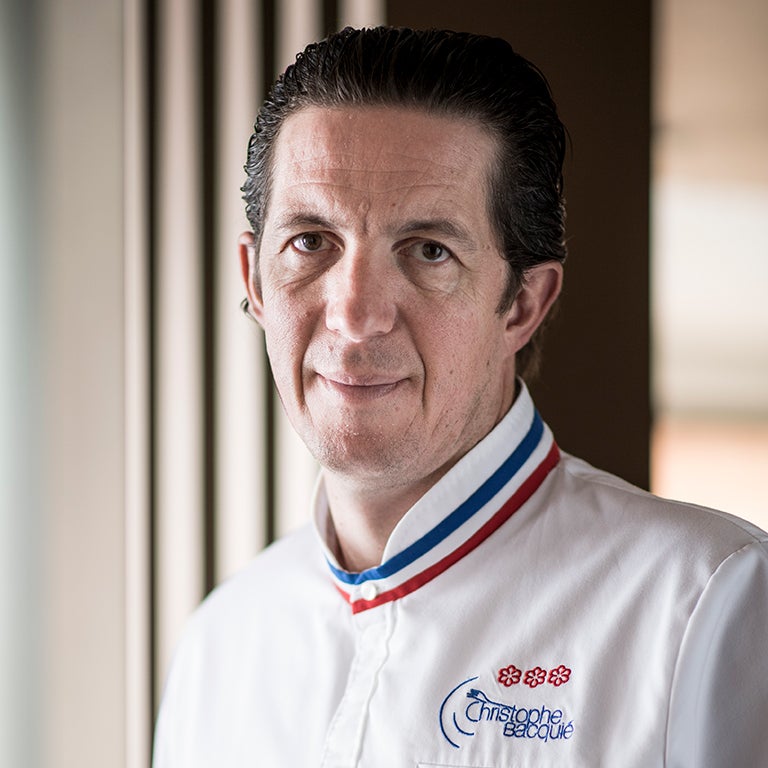
Chef in Residence
Christophe Bacquié
Chef
- 01CuisineMichelin-Starred Kaiseki
- 02CityOsaka, Japan
- 03RecognitionTwo Michelin Stars
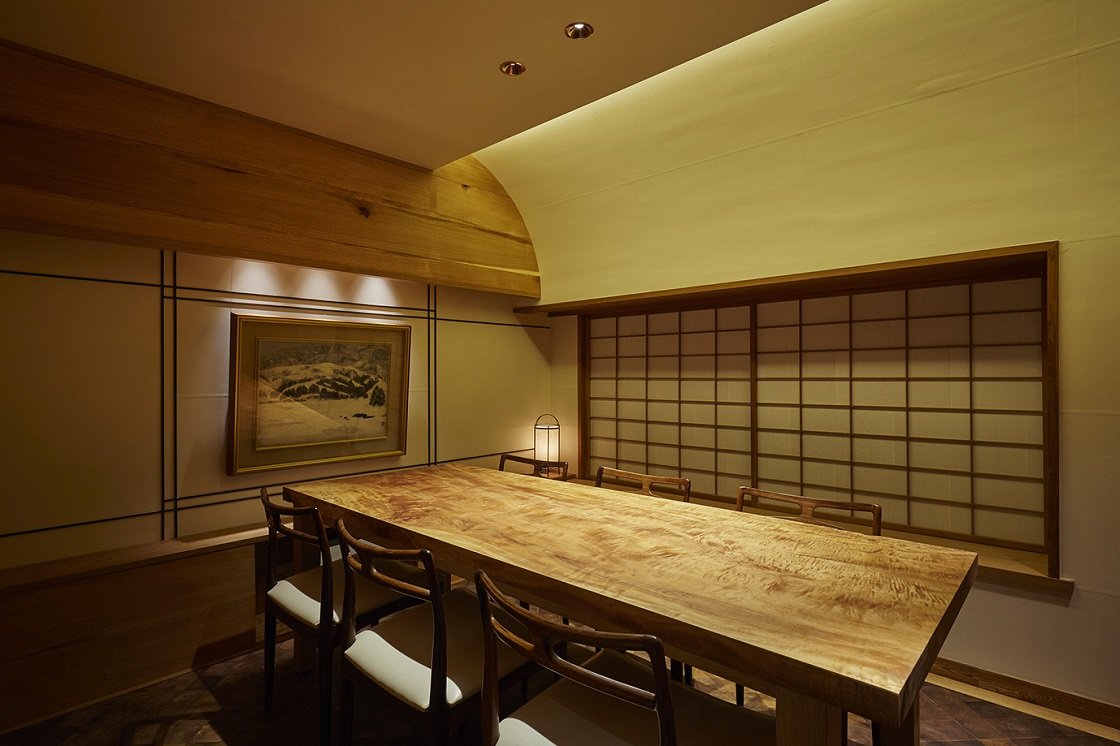
Miyamoto sits in Osaka’s small-format Japanese dining tier, where kappo discipline, seasonal tableware and sake-led pacing carry more weight than spectacle. Its repeated Tabelog Award recognition and Tabelog Japanese cuisine WEST 100 selections place it among the city’s serious washoku rooms, with a social rhythm closer to refined drinking culture than silent temple dining.
- 2 Michelin Stars
At a glance
- Cuisine
- Michelin-Starred Kaiseki
- Price
- $$$$
- Per person
- $200
- Hours
- Mon: 6:30–8:30 PM; Tue: 6:30–8:30 PM; Wed: Closed; Thu: 6:30–8:30 PM; Fri: 6:30–8:30 PM; Sat: 6:30–8:30 PM; Sun: 6:30–8:30 PM
- Neighborhood
- Higashi-Tenma, Kita-ku
- Rating
- 3.9 (67)
<p>The room states its scale before its ambition: a compact Osaka setting with no private rooms, no parking theatre and only eight seats for the evening’s progression. In a city where Japanese cooking is shaped by proximity as much as hierarchy, that matters. Osaka kappo is not arm’s-length kaiseki; it is cooking built around exchange, timing and a drinker’s appetite for sequence. Miyamoto belongs to that lineage, emphasizing seasonal tableware, refined classic flavors and the controlled informality separating Osaka dining culture from Kyoto’s more ceremonial register.</p><p>Osaka is often reduced to takoyaki, okonomiyaki and standing bars, but its serious Japanese restaurants share the same social grammar: food arrives in relation to conversation, sake and table pace. A reservation-only, small-seat Japanese counter changes the volume, not the instinct. The point is reading the room, adjusting tempo and keeping cooking close enough that dinner feels negotiated rather than delivered. Miyamoto’s category, Japanese cuisine, undersells the format: washoku with an Osaka accent, closer to kappo than a rigid banquet script.</p><h2>Osaka kappo viewed through a drinking-room lens</h2><p>Kappo’s Osaka advantage is elasticity. It can carry the polish of high Japanese cuisine while retaining izakaya cadence: small progressions, sake or shochu as structural partners, and a room where the meal is not detached from drinking. Miyamoto’s drinks focus on sake and shochu, placing it inside that Japanese tradition rather than an international fine-dining model of long wine pairings. The food is not a parade of courses; it is a sequence designed to hold attention without exhausting the table.</p><p>The awards record supplies the external signal. The Tabelog Award has repeatedly placed Oryori Miyamoto in Bronze, with Silver recognition in 2019 and Bronze recognition across multiple later years including 2026. It has also appeared in the Tabelog Japanese cuisine WEST 100 selections in 2021, 2023 and 2025. In Japan, Tabelog’s upper scores and award lists tend to reflect sustained local diner consensus rather than short-lived international attention. For readers comparing Osaka washoku rooms, that consistency says more than one headline.</p><p>Within Osaka, the comparison is not only with luxury kaiseki but with the city’s appetite for counter intimacy. Naniwaryori Yu, Washoku Iikura and Oryori Horikawa occupy similar Japanese dining territory at comparable price positioning, while Oryori Yamada sits in a higher-spend bracket and <a href="https://www.enprimeurclub.com/restaurants/doshincho-washoku-zui-osaka-restaurant">Doshincho Washoku Zui</a> reads as a more accessible washoku reference. Miyamoto’s relevance is concentration: a small room, Japanese cuisine, sake and shochu, and enough award history to separate it from the respectable but less defined Osaka middle.</p><h2>Where refinement does not erase Osaka's appetite</h2><p>Osaka’s stronger Japanese restaurants often work by restraint rather than asceticism. The city has a merchant-food culture, and polished rooms still privilege appetite, generous rhythm and ingredient clarity over symbolic austerity. Miyamoto’s public description points to a new generation of Osaka kappo, inheritance of honkotsuki tradition, seasonal tableware and classic flavors. This is not nostalgia, but a restaurant inside a regional grammar where tableware, season and pacing are part of the meal’s intelligence, while pleasure matters more than reverence.</p><p>That is why izakaya culture is a valid lens even for a decorated Japanese restaurant. Izakaya does not only mean cheap beer and fried plates; it describes a Japanese way of eating in which drink, conversation and succession matter. Higher-end kappo refines that pattern. The table is smaller, cooking more controlled, ingredients more carefully chosen, but the sequence still rewards diners who treat sake and shochu as structure. Do not approach it as a checklist of signature dishes. The better frame is a measured Osaka evening built course by course, glass by glass, with tableware and season doing quiet work.</p><p>For travellers building a Japanese dining itinerary, Miyamoto contrasts usefully with Kyoto and Tokyo. Kyoto often prizes inherited formality; Tokyo can turn small counters into competitive scarcity. Osaka’s appeal is conversational precision. That applies across the city’s upper Japanese dining tier, from <a href="https://www.enprimeurclub.com/restaurants/ajikitcho-bumbuan-osaka-restaurant">Ajikitcho Bumbuan</a> and <a href="https://www.enprimeurclub.com/restaurants/ajikitcho-horieten-osaka-restaurant">Ajikitcho Horieten</a> to newer-feeling rooms such as <a href="https://www.enprimeurclub.com/restaurants/fushimimachi-kakoiyama-osaka-restaurant">Fushimimachi Kakoiyama</a> and neighbourhood-focused addresses like <a href="https://www.enprimeurclub.com/restaurants/higashichaya-nakamura-osaka-restaurant">Higashichaya Nakamura</a>. Miyamoto fits the city’s serious washoku conversation without borrowing Kyoto’s stiffness or Tokyo’s performance of exclusivity.</p><p>The La Liste score of 77 points adds another external reference, but domestic recognition is the stronger signal. Japanese diners tend to separate competent luxury from restaurants that hold long-term attention, and repeated Tabelog Award placement is more revealing for this category than social-media visibility. In a field where many rooms claim seasonality and craft, sustained placement over several years suggests consistency in execution and local relevance.</p><h2>How to place it in an Osaka dining itinerary</h2><p>The right itinerary around Miyamoto should not crowd the evening with heavy pre- or post-dinner plans. Small-format Japanese dining rewards attention, and drinking is part of the point. For a broader Osaka map, use Our full Osaka restaurants guide to balance kappo and washoku with sushi, grill rooms and more casual counters. Pair that with Our full Osaka bars guide if the night continues after dinner, and Our full Osaka hotels guide for a base that keeps late transfers easy. Travellers planning beyond restaurants can also scan Our full Osaka experiences guide and Our full Osaka wineries guide, though Osaka’s strongest food identity remains urban, compact and restaurant-led.</p><p>Readers comparing Japanese cuisine outside Osaka should be careful with labels. A Japanese restaurant in Los Angeles or Madrid operates inside a different supply chain, staffing culture and diner expectation than a kappo room in Kita Ward. For contrast rather than equivalence, see 715, Japanese in Los Angeles or 99 sushi bar, Japanese in Alcobendas. Within Japan, the comparison broadens again: [ki:] in Kyoto, -Grilled beef Sukiyaki- KAMAKURA TANUKIAN 鎌倉 たぬき庵 in Kamakura,. 鮪と炭火焼き うお炭 秋葉原店 in Tokyo,.know in Kumamoto, (Shoku) Vietnam in Kawasaki and [Curry Senmon Ten] Maruyama Kyoju. in Sapporo show how quickly “Japanese” becomes an inadequate umbrella once region, format and drinking culture enter the frame.</p><p>The editorial case for Miyamoto is specific: diners who want Osaka Japanese cuisine at a serious level, with kappo’s social intelligence intact. It offers a small room, seasonal tableware, sake and shochu, and an awards history strong enough to justify planning around it. Osaka has always understood that refinement and appetite are not opposites. This is one room where that idea becomes legible.</p>
Know before you go
- Dress code
- smart_casual
- Reservations
- essential
- Payment
- credit_card
Frequently asked
Who is the chef connected to Miyamoto?
The chef associated with Miyamoto is Christophe Bacquié.
What are Miyamoto's hours?
Hours at Miyamoto: Mon: 6:30–8:30 PM; Tue: 6:30–8:30 PM; Wed: Closed; Thu: 6:30–8:30 PM; Fri: 6:30–8:30 PM; Sat: 6:30–8:30 PM; Sun: 6:30–8:30 PM.
What style of cooking does Miyamoto do?
Miyamoto serves Japanese cuisine.
What's the pricing like at Miyamoto?
Pricing at Miyamoto is listed as ¥¥¥.
Address
Japan, 〒530-0044 Osaka, Kita Ward, Higashitenma, 2 Chome−10−28 第一住建フローライト南森町 102
Higashi-Tenma, Kita-ku
How it compares
- Price
- $$$$
- Awards
- Michelin 2 Star
- Notes
- Kita, Michelin-Starred Kaiseki
- Price
- $$$$
- Awards
- Michelin 2 Star
- Notes
- Chūō, Modern Japanese Omakase
- Price
- $$$$
- Awards
- Michelin 2 Star
- Notes
- Kita, Michelin-Starred Tempura Omakase
- Price
- $$$$
- Awards
- Michelin 2 Star
- Notes
- Kita, Creative Kaiseki Fusion
- Price
- $$$$
- Awards
- Michelin 2 Star
- Notes
- Kita, Michelin-Starred Kaiseki
- Price
- $$$$
- Awards
- Michelin 2 Star
- Notes
- Tennōji, Traditional Edomae Omakase
In residence
Similar places
Modern French with Japanese Ingredients
La Cime
Osaka, Japan
★★ · 50 Best
Avant-Garde Japanese Fine Dining
HAJIME
Osaka, Japan
★★★ · 50 Best
Michelin-Starred Modern Cantonese
Sawada
Osaka, Japan
★
Traditional Kaiseki
Honkogetsu
Osaka, Japan
Seasonal Kaiseki Omakase
Kashiwaya Osaka Senriyama
Osaka, Japan
★★★
Traditional Japanese Kaiseki Omakase
Taian
Osaka, Japan
★★★