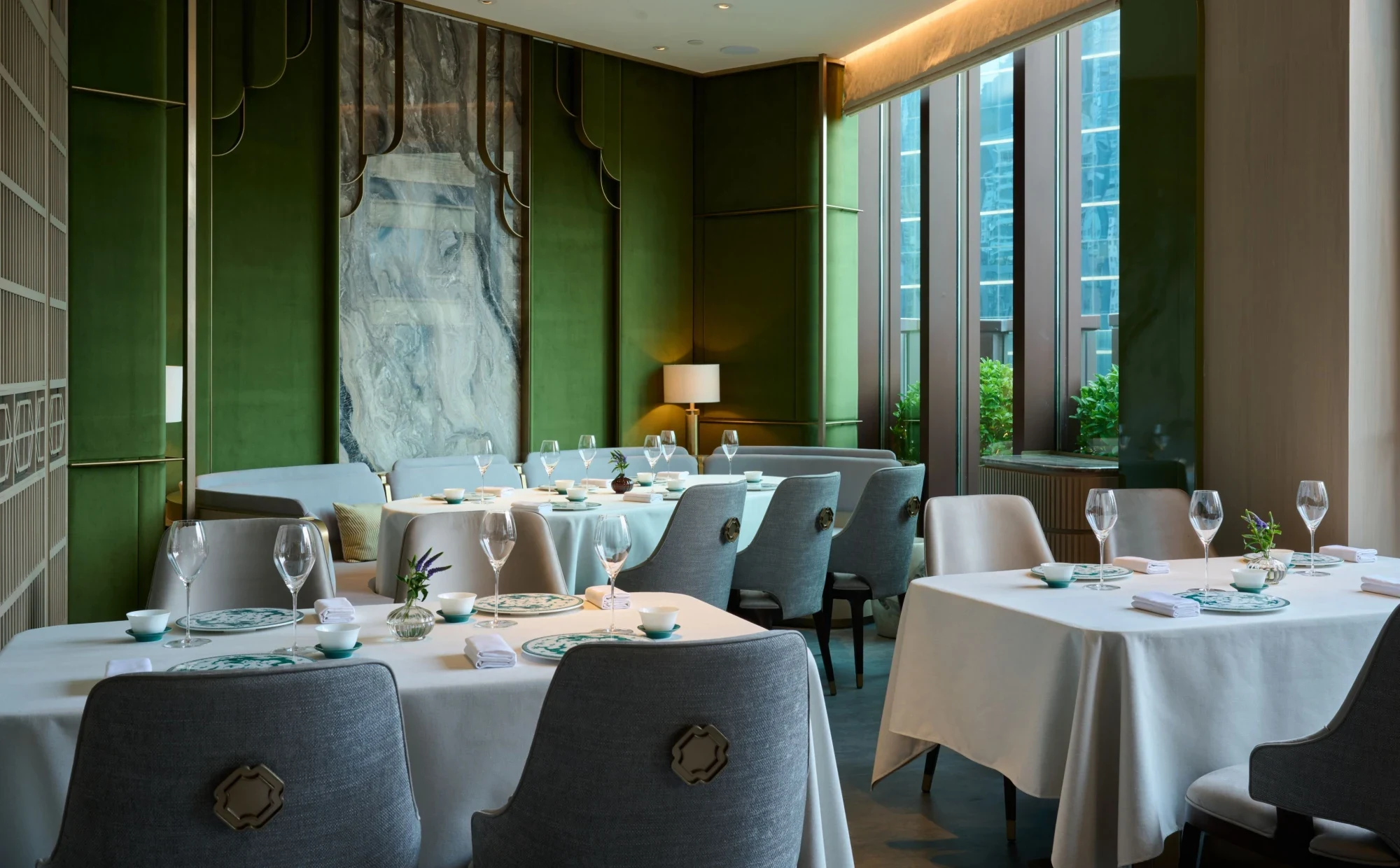
Nihonbashi
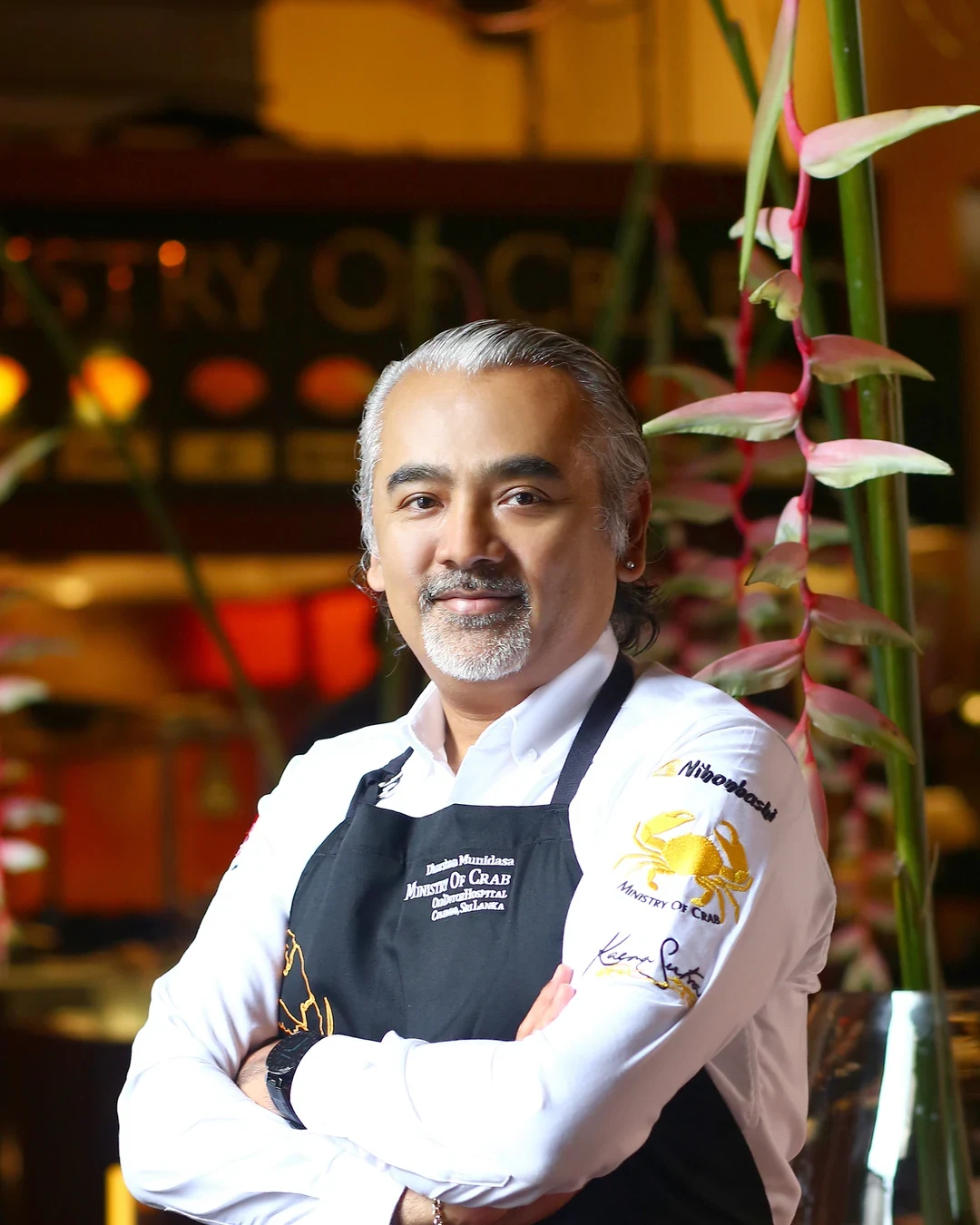
In Residence
Dharshan Munidasa
Chef
- 01CuisineAuthentic Japanese Fine Dining
- 02CityColombo, Sri Lanka
- World Culinary Awards Sri Lanka's Best Restaurant 2025 #1
Port City and the New Geography of Colombo Dining
Colombo's restaurant geography has reorganised itself more dramatically in the past five years than in the previous two decades. The older concentration around Colombo 3 and 7, anchored by long-running institutions and hotel dining rooms, now shares the city's culinary ambition with Port City, the reclaimed-land development off Chaithya Road that has drawn a different class of tenant. The addresses here are designed from the ground up for a cosmopolitan audience, and the dining concepts that have arrived reflect that intent. Nihonbashi, at Plot 01 on Chaithya Road, sits at the edge of this new district.
Approaching from the city side, Port City feels deliberately separate from the organised chaos of central Colombo. The scale is different, the air moves differently off the water, and the architecture signals ambition in a language the older parts of the city rarely speak. It is in this context that a Japanese restaurant with the name Nihonbashi, a reference to the historic bridge district in central Tokyo that has been synonymous with Japan's mercantile and culinary establishment for centuries, makes a particular kind of statement. The choice of name alone positions the restaurant within a tradition that values sourcing, craft, and long institutional memory over novelty.
What the Name Carries
In Tokyo, Nihonbashi has been the reference point for serious Japanese dining and high-grade ingredient trade since the Edo period. Fish markets, premium purveyors, and refined restaurants clustered there because the bridge was where commerce and quality met. A restaurant in Colombo borrowing that name is making a claim about where it sees itself in the broader tradition of Japanese cuisine, and specifically about the importance of ingredient provenance.
Japanese cooking at the level the name implies is built almost entirely on sourcing logic. The quality of the dashi, the grade of the rice, the origin and handling of the fish, the age of the soy: these are the decisions that separate a Japanese restaurant operating at a serious level from one that simply assembles familiar formats. In Colombo, where the supply chain for Japanese-grade ingredients has historically been fragmented, any restaurant working within this tradition has to resolve a sourcing problem that its counterparts in Tokyo, Singapore, or Sydney do not face in the same way. How a kitchen deals with that constraint, whether by importing selectively, by substituting intelligently with local product, or by narrowing its menu to what local supply can genuinely support, is the most revealing thing about its culinary seriousness.
Sri Lanka is not without relevant raw material. The island's waters produce tuna of a quality that reaches export markets in Japan; the agricultural interior supplies produce with a freshness and intensity that imported equivalents rarely match. A Japanese kitchen in Colombo that understands its geography can find genuine advantage in local sourcing for certain categories while maintaining import discipline for others. This is the sourcing calculus that the most coherent Japanese restaurants in non-Japanese cities have learned to apply.
Nihonbashi in the Colombo Context
Colombo's fine-dining tier has developed unevenly. Ministry of Crab (Sri Lankan) demonstrated that a Sri Lankan restaurant could operate at international standard and attract global recognition for it. The Bayleaf and The Gallery Café represent different expressions of the city's appetite for dining that is as much about setting and occasion as it is about the plate. Nana's has occupied a quieter but consistent position in the local conversation about quality. Within this comparable set, a Japanese restaurant at Port City occupies a different competitive register: it is not competing primarily on local cuisine authority, but on the credibility of its execution within a foreign culinary discipline.
That is a harder position to hold in a city where the audience for precision Japanese cooking is still developing. It also carries greater upside if the kitchen delivers. Japanese cuisine at a serious level does not need to explain itself to the small but growing cohort of Colombo diners who travel frequently to Singapore, Tokyo, or London and return with calibrated expectations. For that audience, the question is not whether Japanese food is available in Colombo, but whether it is available at a standard that the trip to Port City makes worth making.
Across Sri Lanka more broadly, the country's dining ambition is not confined to the capital. AQUA Forte in Galle and KAIYŌ in Weligama are part of a wider pattern of serious restaurants establishing themselves outside Colombo, often in locations where tourism demand and natural setting combine to support a different kind of dining investment. Nihonbashi's Port City location makes a different bet: that the city itself, and specifically its newest district, can sustain a Japanese kitchen at the level the name implies.
Planning a Visit
Nihonbashi is located at Plot 01, Port City, No. 5 and 6, Chaithya Road, Colombo 00100. Port City is accessible from central Colombo via Chaithya Road, which runs along the seafront from the Galle Face area. Current booking details and hours are listed with the venue. Reservations are recommended.
Those planning to combine Colombo dining with time elsewhere in Sri Lanka may find useful reference points in venues across the island, from Mandiya in මහනුවර and Grand Thai Restaurant in Nuwara Eliya to Laya Safari - Restaurant in Palatupana and Maara Cafe | Restaurant in Galewela, as well as Priyamali Gedara in Kaduruwela and Petti Petti in Thalaramba. For Sri Lankan coastal dining closer to Colombo, Coconut Sambol in ගාල්ල and Crystal Jade in කොළඹ offer contrasting registers. Internationally, those benchmarking serious Japanese-influenced precision cooking against global standards might consider how venues such as Atomix in New York City or Le Bernardin in New York City approach the sourcing and technique questions that define the upper tier of Asian-influenced fine dining.
Questions
Frequently asked
Who works at Nihonbashi?
Made By profiles Dharshan Munidasa (Chef) at Nihonbashi.
How expensive is Nihonbashi?
Nihonbashi is listed at a price level of $$$.
Where is Nihonbashi and what does it serve?
Nihonbashi is in Galle Face, Colombo, serving Authentic Japanese Fine Dining.
The field
How it compares
| Place | Cuisine | Notes | Awards |
|---|---|---|---|
| Nihonbashi | Authentic Japanese Fine Dining | Galle Face, $$$ | · |
| Alkimia | Modern Catalan Fine Dining | Barcelona | Michelin 1 Star |
| Arca | Modern Yucatan Fire-Cooked Small Plates | Tulum | World's 50 Best |
| Döllerer | Modern Alpine Cuisine | Golling an der Salzach | Michelin 2 Stars |
| Forest Side | Modern British Fine Dining | Grasmere | Michelin 1 Star |
| Ministry of Crab | Sri Lankan Mud Crab Seafood | Colombo | World's 50 Best |
| WING Restaurant | Modern Chinese Fine Dining | Hong Kong | World's 50 Best |
In residence
Similar places
Modern Catalan Fine Dining
Alkimia
Barcelona, Spain
★
Modern Yucatan Fire-Cooked Small Plates
Arca
Tulum, Mexico
50 Best
Modern Alpine Cuisine
Döllerer
Golling an der Salzach, Austria
★★
Modern British Fine Dining
Forest Side
Grasmere, United Kingdom
★
Sri Lankan Mud Crab Seafood
Ministry of Crab
Colombo, Sri Lanka
50 Best
Modern Chinese Fine Dining
WING Restaurant
Hong Kong, Hong Kong
50 Best