Made ByRestaurant
O Secadeiro
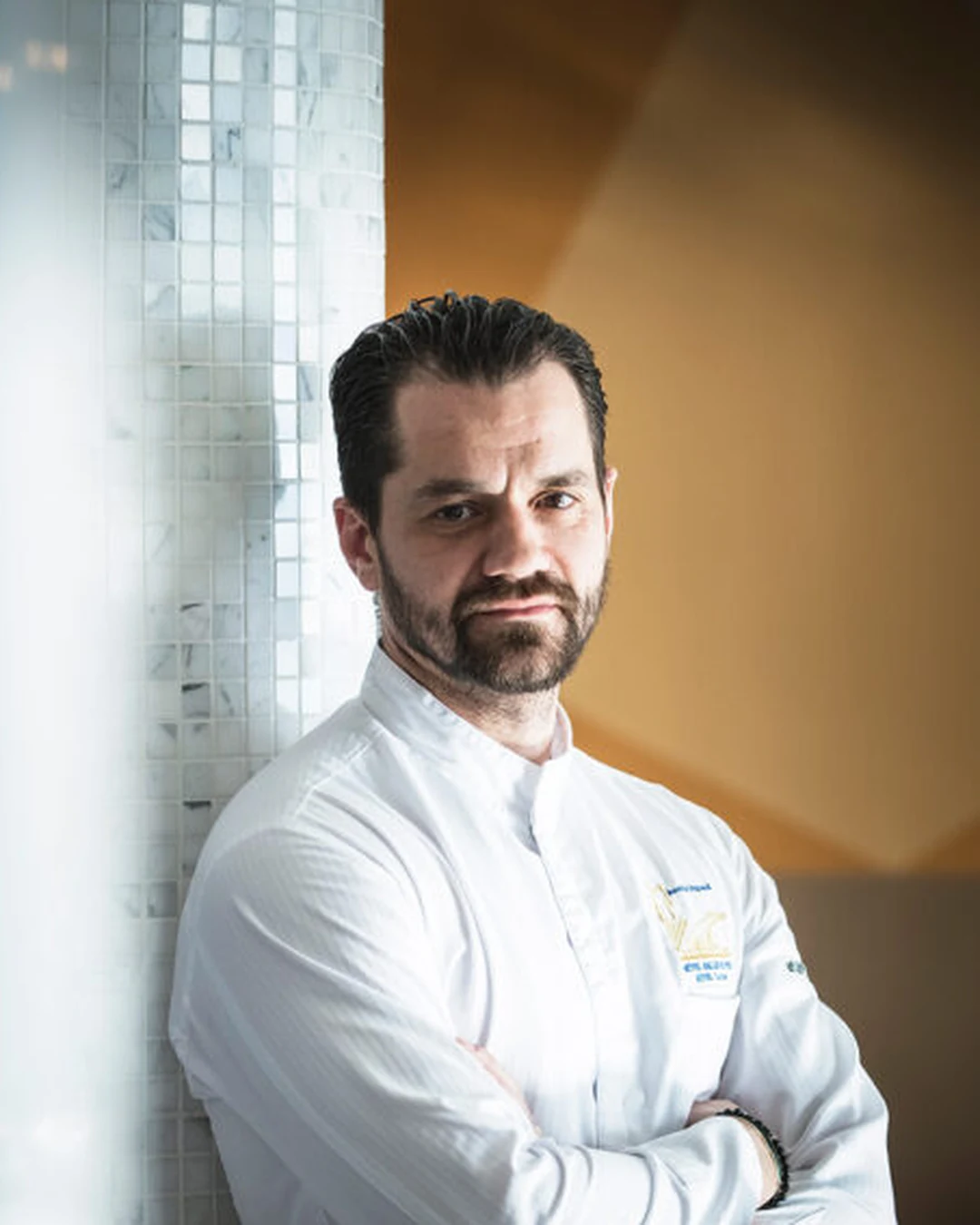
Chef in Residence
Aurélien Véquaud
Chef
- 01CuisineModern Galician Farm-to-Table
- 02CitySerra de Outes, Spain
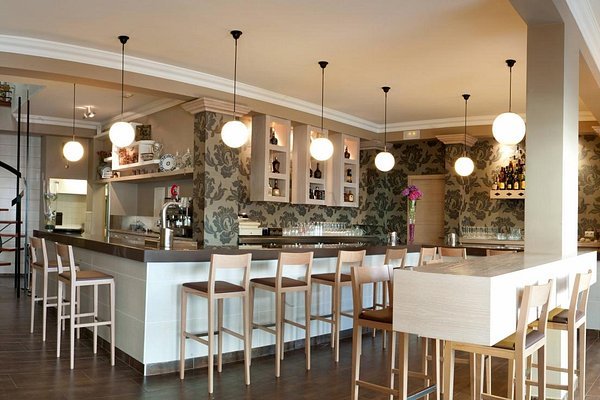
A restored farmhouse in rural Galicia where two trained chefs run a single seasonal vegetarian menu grown largely on site. O Secadeiro holds consecutive Michelin Plates for 2024 and 2025 and a Google rating of 4.9 across 166 reviews, numbers that signal something worth the detour into Serra de Outes.
At a glance
- Cuisine
- Modern Galician Farm-to-Table
- Price
- $$$
- Per person
- $80
- Hours
- Mon: 1:30–3 PM; Tue: Closed; Wed: Closed; Thu: 1:30–3 PM; Fri: 1:30–3 PM; Sat: 2–3 PM, 9–10 PM; Sun: 2–3 PM
- Neighborhood
- Banzas
- Rating
- 4.9 (201)
<h2>A Farmhouse Kitchen in Rural Galicia</h2><p>The road into Banzas, a hamlet within the municipality of Serra de Outes in A Coruña province, narrows as the Atlantic hinterland thickens around it. There are no restaurant signs at scale here, no valet lane, no pavement. What you find instead is a restored stone house that once belonged to a family, and that now operates as one of the more quietly rigorous vegetarian dining rooms in northwest Spain. The physical setting matters because it frames the proposition: this is not a rural restaurant that happens to do vegetables. It is a restaurant built around a vegetable garden, a greenhouse, and a philosophy of seasonal constraint that the building's whole history reinforces.</p><p></p><h2>Trained Chefs, Rural Address</h2><p>The pattern that O Secadeiro represents is one that has gained currency across Europe over the past decade: chefs who trained in technically demanding kitchens eventually leaving urban restaurant culture to build something smaller and more direct in a rural or semi-rural context. The skills travel; the ambition narrows productively. Fernando and Eva, the couple behind O Secadeiro, brought their professional formation back to Eva's grandmother's house in Galicia, and the result carries the marks of that formation in the precision of the cooking while remaining legible to the setting.</p><p>This trajectory places O Secadeiro in a recognisable peer category: not the grand-gesture rural destination restaurant aimed at international gastronomic tourism, but the intimate, locally embedded project where the land provides the menu's logic and the kitchen's technique elevates what the garden produces. It is a notably different register from the maximalist end of Spain's fine dining spectrum. Compare the scale and intent here with flagship operations like <a href="https://www.enprimeurclub.com/restaurants/diverxo-madrid-restaurant">DiverXO in Madrid</a>, <a href="https://www.enprimeurclub.com/restaurants/el-celler-de-can-roca-girona-restaurant">El Celler de Can Roca in Girona</a>, or <a href="https://www.enprimeurclub.com/restaurants/disfrutar-barcelona-restaurant">Disfrutar in Barcelona</a>, and you are looking at a fundamentally different type of project, priced and scaled accordingly.</p><h2>The Vegetarian Menu as Editorial Choice</h2><p>Single-menu vegetarian restaurants in Spain remain a distinct minority. The country's fine dining tradition runs heavily toward protein-led tasting menus: the marine focus of <a href="https://www.enprimeurclub.com/restaurants/aponiente-el-puerto-de-santa-maria-restaurant">Aponiente in El Puerto de Santa María</a>, the ingredient intensity of <a href="https://www.enprimeurclub.com/restaurants/mugaritz-errenteria-restaurant">Mugaritz in Errenteria</a>, the Basque product-reverence at <a href="https://www.enprimeurclub.com/restaurants/arzak-san-sebastian-restaurant">Arzak in San Sebastián</a> and <a href="https://www.enprimeurclub.com/restaurants/martin-berasategui-lasarte-oria-restaurant">Martin Berasategui in Lasarte-Oria</a>. For a restaurant to commit entirely to a seasonal vegetarian format in rural Galicia, not as a dietary accommodation but as the entire proposition, is a choice with real consequences for the kitchen. It demands that technique carry the weight usually distributed across premium proteins, and that the garden's output justify the menu's coherence week to week.</p><p>Michelin's recognition of O Secadeiro with Plates in 2024 and 2025 is, in this context, the relevant credential. The Plate designation in the Guide's current usage signals cooking that merits attention without the full star apparatus, it is the Guide's way of flagging that something genuinely well-made is happening. For a small rural operation running a vegetarian-only format in a province not known for concentrations of awarded restaurants, consecutive recognition represents a meaningful external validation of the kitchen's consistency.</p><p>The Michelin assessors noted specifically the roasted aubergines with miso as a dish that demonstrated the kitchen's capacity to combine classical technique with Japanese-inflected seasoning logic, a combination that speaks directly to professional training absorbed before the return to Galicia. The same assessment cited the restaurant's personality, its seasonal discipline, and the garden's central role. For the farm-to-table category more broadly, this approach has European parallels: see <a href="https://www.enprimeurclub.com/restaurants/bok-restaurant-brust-oder-keule-munster-restaurant">BOK Restaurant in Münster</a> and <a href="https://www.enprimeurclub.com/restaurants/clostermanns-le-gourmet-niederkassel-restaurant">Clostermanns Le Gourmet in Niederkassel</a> for comparable models operating in different national contexts.</p><h2>Where It Sits in the Spanish Scene</h2><p>Spain's awarded restaurant map clusters densely in the Basque Country, Catalonia, and the Mediterranean coast. Galicia has its own culinary identity rooted in seafood, empanada, and a wine culture tied to Albariño and Godello production in the Rías Baixas and Ribeira Sacra zones. O Secadeiro operates slightly against type in its own region: no seafood, no meat, no octopus. It draws on the land in a maritime province and brings a contemporary vocabulary to vegetables in a context where that is not yet the dominant mode.</p><p>The €€€ price range places it clearly in a mid-range bracket for Spain, below the tasting-menu cost of operations like <a href="https://www.enprimeurclub.com/restaurants/quique-dacosta-denia-restaurant">Quique Dacosta in Dénia</a>, <a href="https://www.enprimeurclub.com/restaurants/azurmendi-larrabetzu-restaurant">Azurmendi in Larrabetzu</a>, <a href="https://www.enprimeurclub.com/restaurants/ricard-camarena-valencia-restaurant">Ricard Camarena in València</a>, or <a href="https://www.enprimeurclub.com/restaurants/atrio-caceres-restaurant">Atrio in Cáceres</a>. For the level of cooking the Michelin Plate signals and the format it delivers, a full seasonal vegetarian tasting menu in a restored farmhouse, that pricing sits as a deliberate access decision rather than a signal of limited ambition.</p><h2>Planning a Visit</h2><p>Serra de Outes sits roughly between Santiago de Compostela and the coastal municipalities of the Rías Baixas, making it reachable by car from both. The address at Lugar de Banzas, 18, 15237 Banzas, A Coruña places the restaurant in a genuinely rural hamlet, so arriving by car is the practical choice. Given the single-menu format and the scale of a restored family house, capacity is limited and reservations should be treated as essential rather than advisable. The menu rotates seasonally, meaning what is served in spring differs materially from the autumn offering, and the visit reward scales accordingly for guests who return across seasons. The Google rating of 4.9 across 201 reviews is unusually consistent for a rural restaurant of this size and reflects a high proportion of diners who found the experience matched or exceeded expectations. Eva's presence in both the kitchen and the dining room creates a coherence between cooking and service that is harder to achieve in larger operations.</p><h3>At a Glance</h3><ul><li>Cuisine: Seasonal vegetarian, contemporary technique, garden-driven menu</li><li>Price range: €€</li><li>Recognition: Michelin Plate 2024 and 2025</li><li>Google rating: 4.9 (166 reviews)</li><li>Address: Lugar de Banzas, 18, 15237 Banzas, A Coruña, Spain</li><li>Getting there: Car recommended; rural hamlet location</li></ul>
Know before you go
- Dress code
- smart_casual
- Reservations
- recommended
- Parking
- on_site_lot
- Outdoor seating
- Yes
Frequently asked
Is O Secadeiro good for families?
The €€ price range makes O Secadeiro accessible relative to other Michelin-recognised restaurants in Spain, which lowers one practical barrier for families. That said, the kitchen runs a single fixed vegetarian menu with no alternatives listed, so families with selective eaters should factor that in before booking. The intimate farmhouse setting in Banzas is quiet rather than child-oriented.
What is the atmosphere like at O Secadeiro?
The dining room occupies a stone farmhouse restored by the owners from her grandmother's original property, which sets the tone directly: small, rural, and materially grounded in the Galician countryside outside Serra de Outes. Fernando runs the kitchen while Eva oversees the dining room, giving the service a personal, couple-led character rather than the formality of larger tasting-menu restaurants. It reads closer to a chef's personal project than a commercial operation.
Has O Secadeiro won any awards?
O Secadeiro has received recognition including: Once in a while you come across a truly pleasant surprise in a rural setting run by chefs who have returned to their roots with the sole aim of showcasing what they have learnt elsewhere. This is definitely the case with couple Fernando and….
What dish is O Secadeiro famous for?
The roasted aubergines with miso is the specific dish cited in the Michelin recognition, and it captures the kitchen's approach: a familiar vegetable treated with a fermentation technique that sits outside the conventional Galician pantry. The menu is entirely vegetarian and changes with the season, drawing from the on-site kitchen garden and greenhouse, so that dish may not always be on the current menu.
Address
Lugar de Banzas, 18, 15237 Banzas, A Coruña, Spain
Banzas
How it compares
- Cuisine
- Modern Galician Farm-to-Table
- Price
- $$$
- Awards
- Michelin Plate
- Notes
- Banzas
- Cuisine
- Modern Galician Seafood
- Price
- $$$
- Awards
- Michelin Plate
- Notes
- Riazor
- Cuisine
- Galician Steakhouse
- Price
- $$$
- Awards
- Michelin Plate
- Notes
- Carballo
- Cuisine
- Modern Galician Tapas
- Price
- $$$
- Awards
- Michelin Plate
- Notes
- old quarter
- Cuisine
- Contemporary Galician Seasonal Cuisine
- Price
- $$$
- Awards
- Michelin Bib Gourmand
- Notes
- Old Town (Zona Vieja)
- Cuisine
- Modern Galician with Japanese Influences
- Price
- $$$
- Awards
- Michelin Plate
- Notes
- city center
In residence
Similar places

Japanese-influenced Californian Kaiseki
Single Thread Farm
Healdsburg, United States
★★★ · 50 Best
French Seafood Fine Dining
Le Bernardin
New York City, United States
★★★ · 50 Best
Modern Korean Tasting Menu
Atomix
New York City, United States
★★ · 50 Best
French
Sézanne
Tokyo, Japan
★★★ · 50 Best

Contemporary Plant-Based Fine Dining
Eleven Madison Park
New York City, United States
★★★ · 50 Best
Modern Seafood Fine Dining
Providence
Los Angeles, United States
★★★ · 50 Best