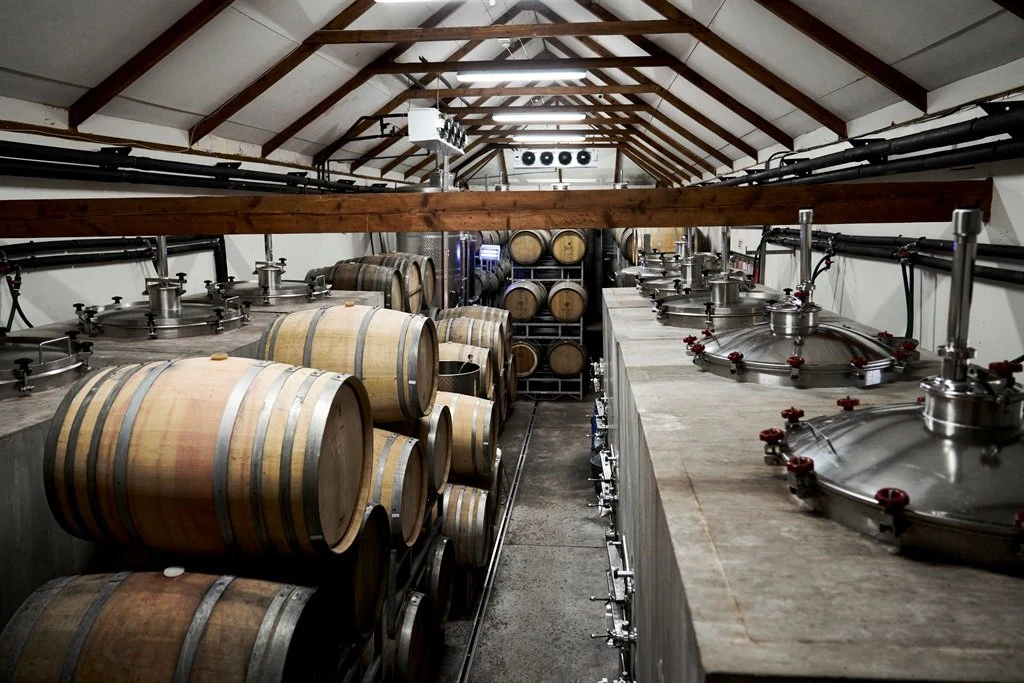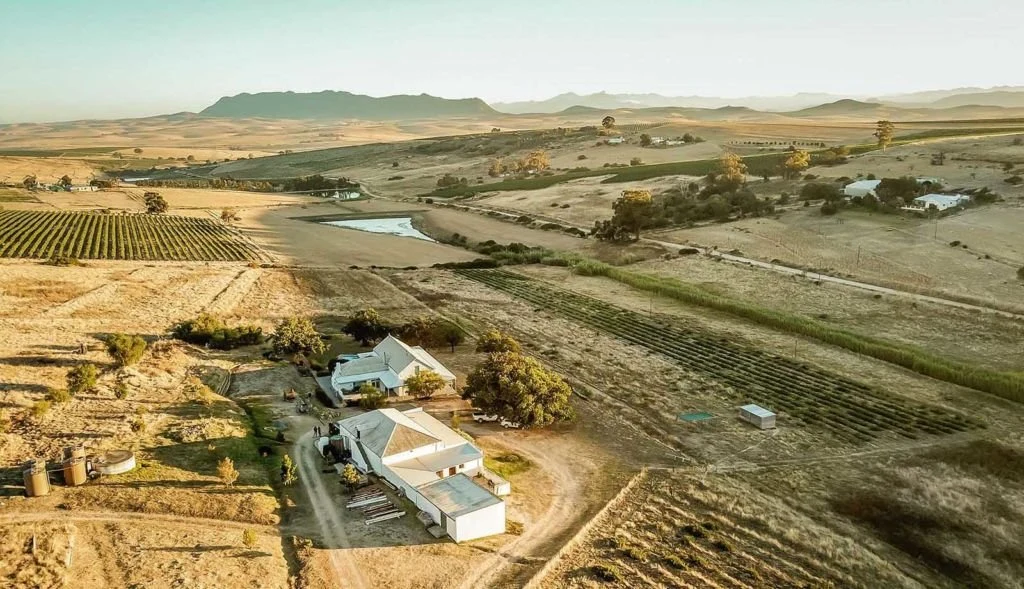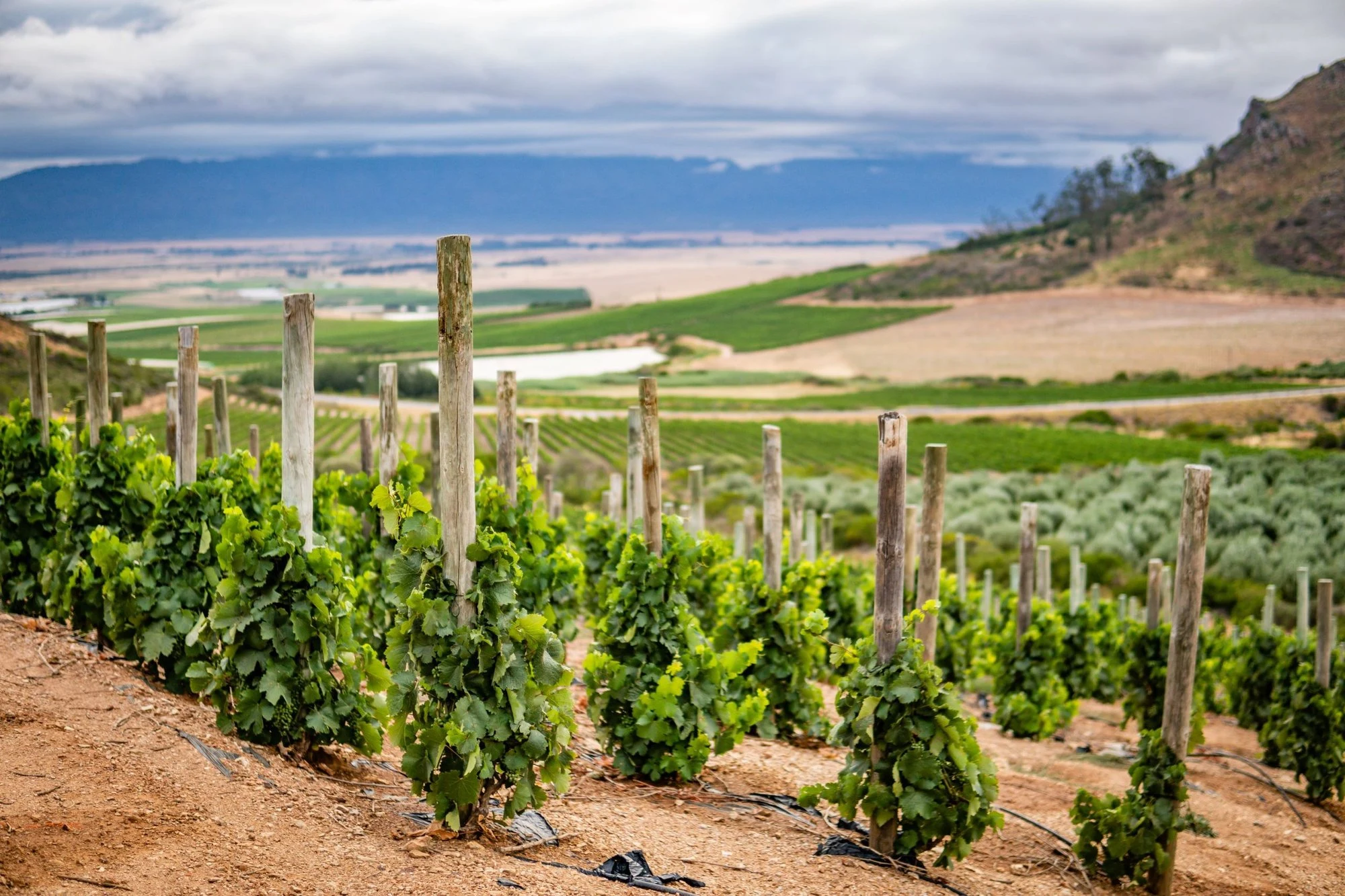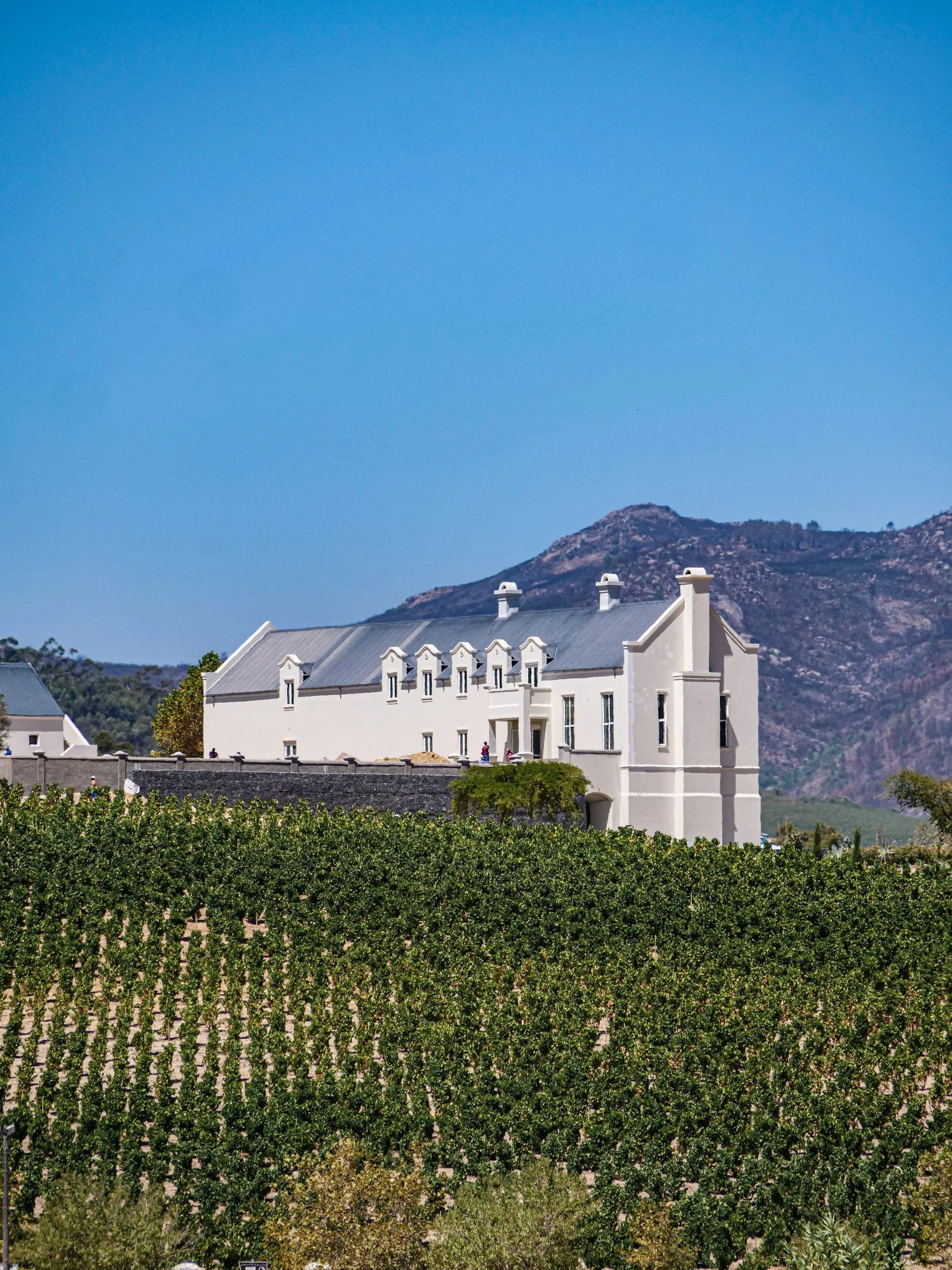
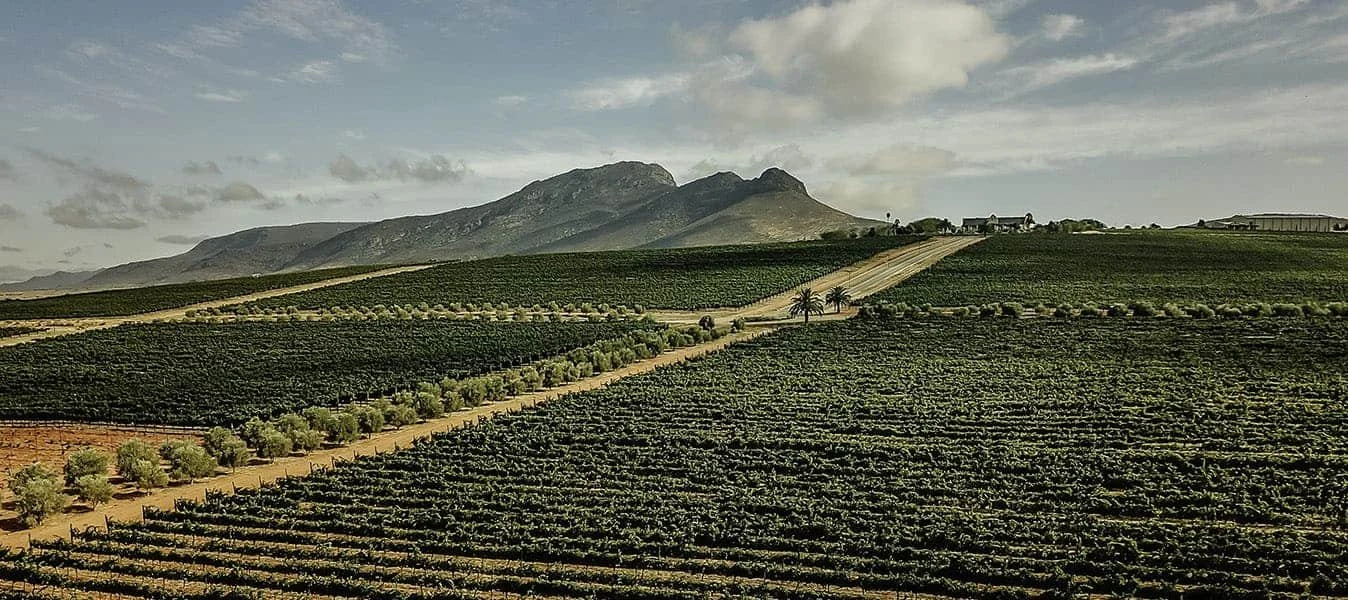
Org de Rac sits along the N7 corridor near Piketberg, where Swartland's organic farming movement has taken its clearest institutional form. A Pearl 2 Star Prestige award for 2025 places it in the upper tier of the Western Cape's certified organic producers. For visitors tracing the region's shift toward lower-intervention viticulture, this estate offers a grounded reference point.
<h2>Where Swartland's Organic Argument Gets Made in the Vineyard</h2><p>The drive north from Cape Town on the N7 marks a gradual transition from the manicured wine routes of Stellenbosch and Paarl into something more spare and deliberate. By the time you reach the R399 turnoff near Piketberg, the mountain backdrop has shifted and the farms along this stretch carry the particular stillness of properties that have been farmed with consistency over time rather than optimised for photogenic drama. Org de Rac Organic Wines sits in this zone, and arriving here feels less like pulling into a tasting facility and more like entering a working agricultural estate that happens to pour wine for visitors.</p><p>That distinction matters in a region where winemaking identity has become closely tied to farming philosophy. Swartland's rise as one of South Africa's most discussed wine areas over the past two decades rested partly on a rejection of formulaic production, and the estates that have earned sustained attention, including <a href="https://www.enprimeurclub.com/wineries/sadie-family-wines-swartland-winery">Sadie Family Wines</a> and <a href="https://www.enprimeurclub.com/wineries/david-nadia-sadie-family-swartland-winery">David & Nadia (Sadie Family)</a>, built their reputations on specificity of place and restraint in the cellar. Org de Rac comes at that conversation from a different angle: full certified organic production, which in the Western Cape context remains the commitment of a minority rather than a marketing category.</p><h2>The Organic Tier in Western Cape Wine</h2><p>Certification differentiates Org de Rac from the broader field of producers who describe their farming as sustainable or natural without submitting to third-party verification. The Western Cape has a handful of certified organic estates, and they occupy a recognisable niche: farms where the decision to forgo synthetic inputs was made early enough that the vineyards themselves reflect that history rather than the vineyards simply being managed differently from last season. At Org de Rac, the estate name itself signals that positioning, and visitors arriving with that context tend to read the property differently than those who might pull in expecting the polished cellar-door format more common in Franschhoek or Stellenbosch.</p><p>Peer producers in Swartland, such as <a href="https://www.enprimeurclub.com/wineries/kloovenburg-wine-olive-estate-swartland-winery">Kloovenburg Wine & Olive Estate</a>, offer a useful comparison point. Kloovenburg has built its cellar-door experience around a diversified agricultural offering that includes olives and olive oil alongside wine, a model that is common in this part of the Swartland where farms carry multiple productive uses. Org de Rac's organic focus gives it a narrower but more defined positioning within that comparable set.</p><p>The Pearl 2 Star Prestige rating for 2025 provides external calibration, and the estate's price tier is modest at about $7 per person. Pearl ratings are among the more structured quality assessments applied to South African wine estates, and a 2 Star Prestige designation places Org de Rac within the upper segment of rated producers rather than at the entry tier. For visitors cross-referencing quality signals before making the drive up the N7, that credential carries weight alongside the organic certification.</p><h2>The Tasting Room as Agricultural Statement</h2><p>Tasting rooms in the Swartland have generally resisted the format common in the more tourist-oriented wine regions to the south. At estates along the N7 corridor, the visit tends to be less about architectural spectacle and more about the relationship between what you're tasting and what you can see from the window or the stoep. At Org de Rac, that orientation is amplified by the organic farming context: the vines outside are as much part of the story as the wines in the glass.</p><p>How the tasting is structured, what formats are available, and what guided or unguided options the estate offers are details confirmed directly through the estate before visiting, as these have a way of shifting with seasons and staffing. What the organic certification does guarantee is that conversations with whoever is pouring will tend toward the practical and agricultural rather than the romanticised. Staff at certified organic estates typically discuss weed management, cover cropping, and soil biology with the same fluency they bring to tasting notes, and that dimension gives a visit here a texture that is harder to find at conventional operations further south.</p><p>For visitors building a Swartland day that includes multiple cellar-door stops, Org de Rac's location near Piketberg means it works as a northern anchor on the N7 route, pairing naturally with properties that sit closer to Malmesbury on the return south. That geographical logic is worth building around, as the distances between Swartland producers are longer than the compact Stellenbosch wine routes, and sequencing matters for managing driving time effectively.</p><h2>What the 2025 Pearl Rating Signals About the Wines</h2><p>Awards in the South African wine context function partly as directional signals for consumers who haven't tasted a producer's range and need an external reference. The Pearl 2 Star Prestige for 2025 places Org de Rac in a credible tier without positioning it at the apex of the regional hierarchy, which is an honest and useful signal. It suggests a producer whose wines have passed quality scrutiny at a meaningful level while remaining accessible in the sense of not carrying the allocation constraints and waiting lists that define the very top tier of Swartland producers.</p><p>Swartland's most allocated producers have trained international audiences to think of the region primarily in terms of Rhône-influenced blends, old-vine Chenin Blanc, and field blends from dry-farmed bush vines. Organic estates operating in the same area often work with similar varieties but bring a different cellar philosophy to bear, one in which the absence of synthetic intervention in the vineyard is treated as a foundation rather than a finishing detail. The specific wines in Org de Rac's current range, including which varieties and formats are available at the tasting room, should be confirmed at the time of visit, as organic production can result in variable volumes that affect what is available to taste in any given season.</p><h2>Placing This Estate in the Wider Western Cape Picture</h2><p>Visitors using the Western Cape as a wine region for a longer itinerary will find that Org de Rac's organic positioning offers a counterpoint to some of the region's better-known names. Properties like <a href="https://www.enprimeurclub.com/wineries/babylonstoren-franschhoek-winery">Babylonstoren in Franschhoek</a> and <a href="https://www.enprimeurclub.com/wineries/constantia-glen-cape-town-winery">Constantia Glen in Cape Town</a> represent the polished estate format where hospitality and wine production are built around each other. Operations like <a href="https://www.enprimeurclub.com/wineries/graham-beck-wines-robertson-winery">Graham Beck Wines in Robertson</a> or <a href="https://www.enprimeurclub.com/wineries/neethlingshof-estate-stellenbosch-winery">Neethlingshof Estate in Stellenbosch</a> sit within the heritage-estate tier of the Cape winelands. Org de Rac belongs to a different category entirely, one defined by certification, farming practice, and a location that requires deliberate effort to visit rather than slotting easily into a tourist circuit.</p><p>That deliberateness is part of what makes the stop worthwhile for visitors who care about how wine is grown rather than just how it is presented. The same logic applies to outlier producers further afield in the Cape, from <a href="https://www.enprimeurclub.com/wineries/beaumont-family-wines-bot-river-winery">Beaumont Family Wines in Bot River</a> to <a href="https://www.enprimeurclub.com/wineries/creation-wines-hermanus-winery">Creation Wines in Hermanus</a>, where the cellar-door experience is shaped by a specific production philosophy rather than by hospitality infrastructure. <a href="https://www.enprimeurclub.com/wineries/vergelegen-wine-estate-somerset-west-winery">Vergelegen Wine Estate in Somerset West</a> and <a href="https://www.enprimeurclub.com/wineries/val-de-vie-estate-paarl-winery">Val de Vie Estate in Paarl</a> show how the estate model scales in the opposite direction toward resort-level amenity. Org de Rac sits at neither pole, which is precisely what makes its place in the organic tier legible and useful as a reference.</p><h2>Planning a Visit</h2><p>Org de Rac is located on the N7 at the R399 intersection near Piketberg, roughly 130 kilometres north of Cape Town by road. Given the estate's rural position, a self-drive is the practical approach for most visitors; the N7 is well-surfaced and the drive from the Cape Town airport takes under two hours in normal traffic.</p><p> The Pearl 2 Star Prestige credential for 2025 gives you confidence in the quality tier you are visiting; confirming logistics directly removes the risk of an unnecessary detour.</p>
Org de Rac Organic Wines has received recognition including: Pearl 2 Star Prestige (2025).
Org de Rac Organic Wines is located at N 7, R399, Piketberg, 7320, Swartland.
Org de Rac's specific current releases are best confirmed directly with the estate before visiting, as range and availability shift by season. What anchors the selection is the certified organic farming across the entire range, which earned a Pearl 2 Star Prestige rating for 2025. Arriving with an openness to the estate's red and white varieties grown in Swartland conditions will give you the clearest read on what the certified approach produces.
The combination of full organic certification and a Pearl 2 Star Prestige rating for 2025 separates Org de Rac from producers who use sustainable language without third-party verification. In a Swartland context, where natural farming claims are common but formal certification is rarer, that distinction carries weight. The estate's position on the N7 near Piketberg also places it along a route that connects Cape Town to a less commercially developed wine corridor.
The estate sits at the N7 and R399 intersection near Piketberg, roughly 130 kilometres north of Cape Town, outside the established tourist circuits of Stellenbosch and Franschhoek. That distance warrants confirming visiting hours and tasting availability directly with the estate before making the trip. Building the visit into a broader Swartland or West Coast itinerary is the most practical approach given the rural setting.
N 7, R399, Piketberg, 7320
Piketberg
Kloovenburg Wine & Olive Estate