Pelotari
- 01CuisineTraditional Basque Steakhouse
- 02CityMadrid, Spain
Rib eye over Basque heat
- Macarfi 7.3 Food Rating · 2026
- Opinionated About Dining Casual in Europe Recommended · 2026
- Opinionated About Dining Casual in Europe Ranked #677 · 2025
- Opinionated About Dining Casual in Europe Ranked #688 · 2024
- Opinionated About Dining Casual in Europe Recommended · 2023
Rib eye on the Basque grill
The rib eye reaches the grill before the room fills at Pelotari in Salamanca, Madrid. The northern Spanish grammar sets the terms: heat, salt, fish, beef, and the patience to leave a product alone when it is already speaking clearly. Simplicity and the excellence of the raw material are the stated measure, and the kitchen is a team rather than a signature.
The bench belongs to a restaurant with Basque-Navarre roots on a site tied to a former pelota court, where Basque and Navarrese communities once gathered to play. The house has been working for more than 25 years, with recent anniversary language placing it at around 30, near Paseo de Recoletos, Plaza Colón and the Archaeological Museum. Its discipline is traditional rather than nostalgic: red meats, northern fish, seasonal vegetables, stews, and the old sauces that ask for timing more than decoration.
Bilbaína, green sauce, and the long cut
The menu is built like an asador that still listens to the coast. Monkfish bilbaína arrives with garlic chips, hake keeps to green sauce, cod appears as brandade and ajoarriero, and kokotxas sit within the same northern register. The meat side is equally direct: rib eye steak, sirloin with foie, Tournedos Rossini, chistorra sausage, T-bone steak, and a rib eye listed at 1kg. These are not dishes that improve through explanation. They need a steady grill, a hot pan, a sauce held at the right point, and a cook willing to repeat the gesture until it becomes reliable.
The approach favours product over construction, in the mar y montaña manner. Stuffed piquillo peppers, Tudela lettuce hearts with tuna, stewed mushrooms with poached egg, duck liver with artichokes, baby squid in ink, chickpeas and tripe stew, scrambled eggs with baby shrimp, and an open omelette with elvers and prawns make the table feel closer to a northern family meal than to a tasting sequence. The wine program follows that line with a visible cellar and bottles suited to beef, fish and stews, including Rioja Imperial 2007, El Puntido 2010, and Albariño whites named by diners as part of the house's rhythm.
Wood, two dining rooms, low voices
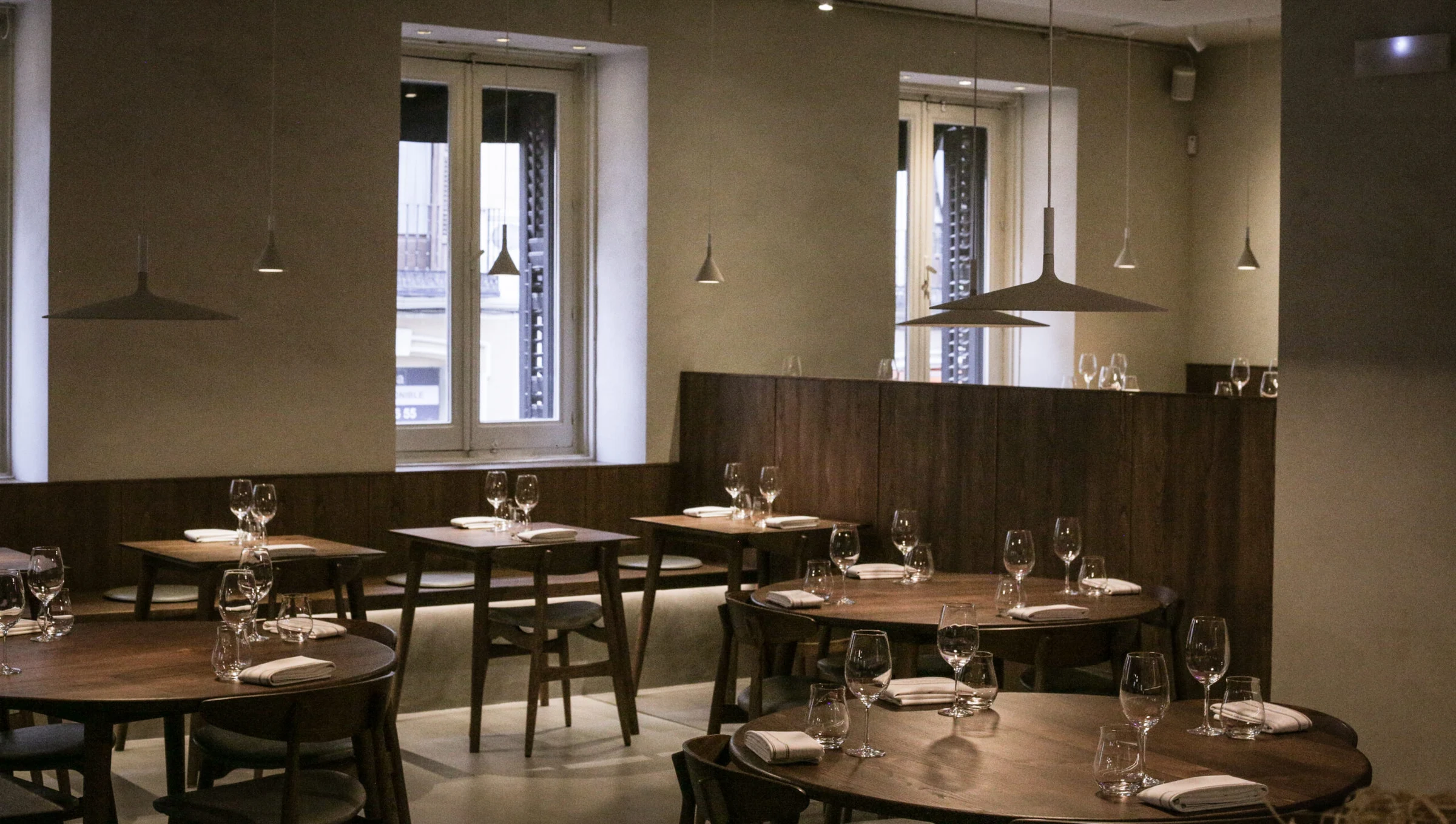
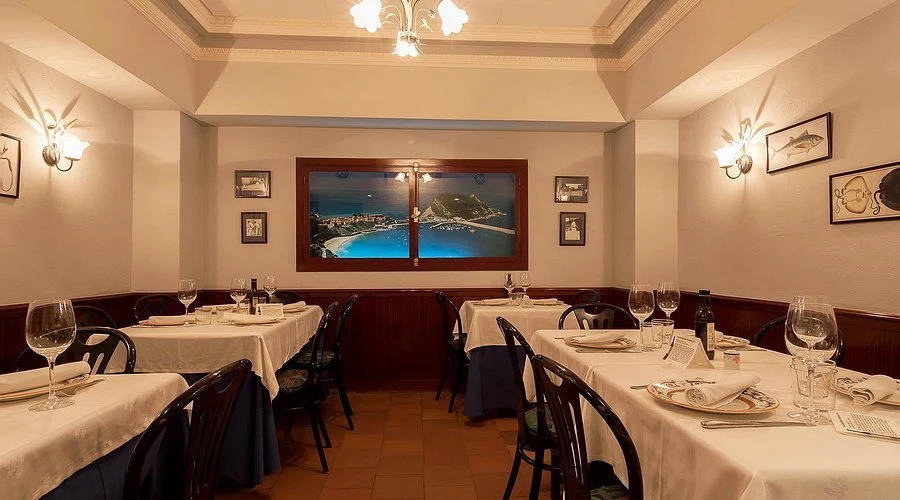
The room keeps its scale close. Pelotari is small, with 7-8 tables, two dining rooms and a private room for groups, dressed in wood and rustic Basque farmhouse cues without turning the place into theatre. The counterpoint to the grill is quiet conversation. Old-school service moves through the room with the confidence of repetition, the kind that knows when a steak needs attention and when a table should be left to its bottle.
That intimacy matters because the cooking is physical. Garlic hits hot oil for bilbaína, fish comes from the pan before it tightens, and red meat depends on a read of heat rather than a flourish at the pass. Families of Basque or Navarrese origin still give the restaurant part of its shape, alongside Madrid regulars who come for the northern staples. If the next movement here is simply another service, it is enough to end on the rib eye, the monkfish bilbaína, and the wooden room at Plaza de Recoletos 3.
Questions
Frequently asked
What kind of restaurant is Pelotari?
Pelotari is a traditional Basque-Navarre asador in Salamanca, with a menu built around red meats, northern fish, seasonal vegetables, stews and old sauces.
What dishes is Pelotari known for?
The menu includes rib eye steak, monkfish bilbaína, chistorra sausage, hake in green sauce, cod in brandade and ajoarriero, and T-bone steak.
What is the room like?
Pelotari is a small restaurant with 7-8 tables, two dining rooms and a private room for groups. The room is dressed in wood and rustic Basque farmhouse cues.
How does booking work at Pelotari?
Reservations are recommended and bookings are taken direct.
What are Pelotari's opening hours?
Pelotari opens every day from 1:30 to 4 PM and again from 8:30 to 11:30 PM.
The field
How it compares
| Place | Cuisine | Notes | Awards |
|---|---|---|---|
| Pelotari | Traditional Basque Steakhouse | Recoletos, $$$ | · |
| Coque | Modern Spanish Fine Dining | Madrid | Michelin 2 Stars |
| Corral de la Morería | Modern Spanish Fine Dining with Flamenco | Madrid | Michelin 1 Star |
| Desde 1911 | Premium Seafood Fine Dining | Madrid | Michelin 1 Star |
| DiverXO | Avant-Garde Spanish Tasting Menu | Madrid | Michelin 3 Stars, World's 50 Best |
| DSTAgE | Avant-Garde Spanish Tasting Menus | Madrid | Michelin 2 Stars |
| Paco Roncero | Avant-Garde Spanish Fine Dining | Madrid | Michelin 2 Stars |
Similar places
Modern Spanish Fine Dining
Coque
Madrid, Spain
★★
Modern Spanish Fine Dining with Flamenco
Corral de la Morería
Madrid, Spain
★
Premium Seafood Fine Dining
Desde 1911
Madrid, Spain
★
Avant-Garde Spanish Tasting Menu
DiverXO
Madrid, Spain
★★★ · 50 Best
Avant-Garde Spanish Tasting Menus
DSTAgE
Madrid, Spain
★★
Avant-Garde Spanish Fine Dining
Paco Roncero
Madrid, Spain
★★