Matcha inside French pastry form
- Opinionated About Dining Casual in Japan Ranked #26 · 2026
- Opinionated About Dining Casual in Japan Ranked #80 · 2025
- Opinionated About Dining Casual in Japan Ranked #66 · 2024
- Opinionated About Dining Casual in Japan Ranked #62 · 2023
Matcha held inside French form
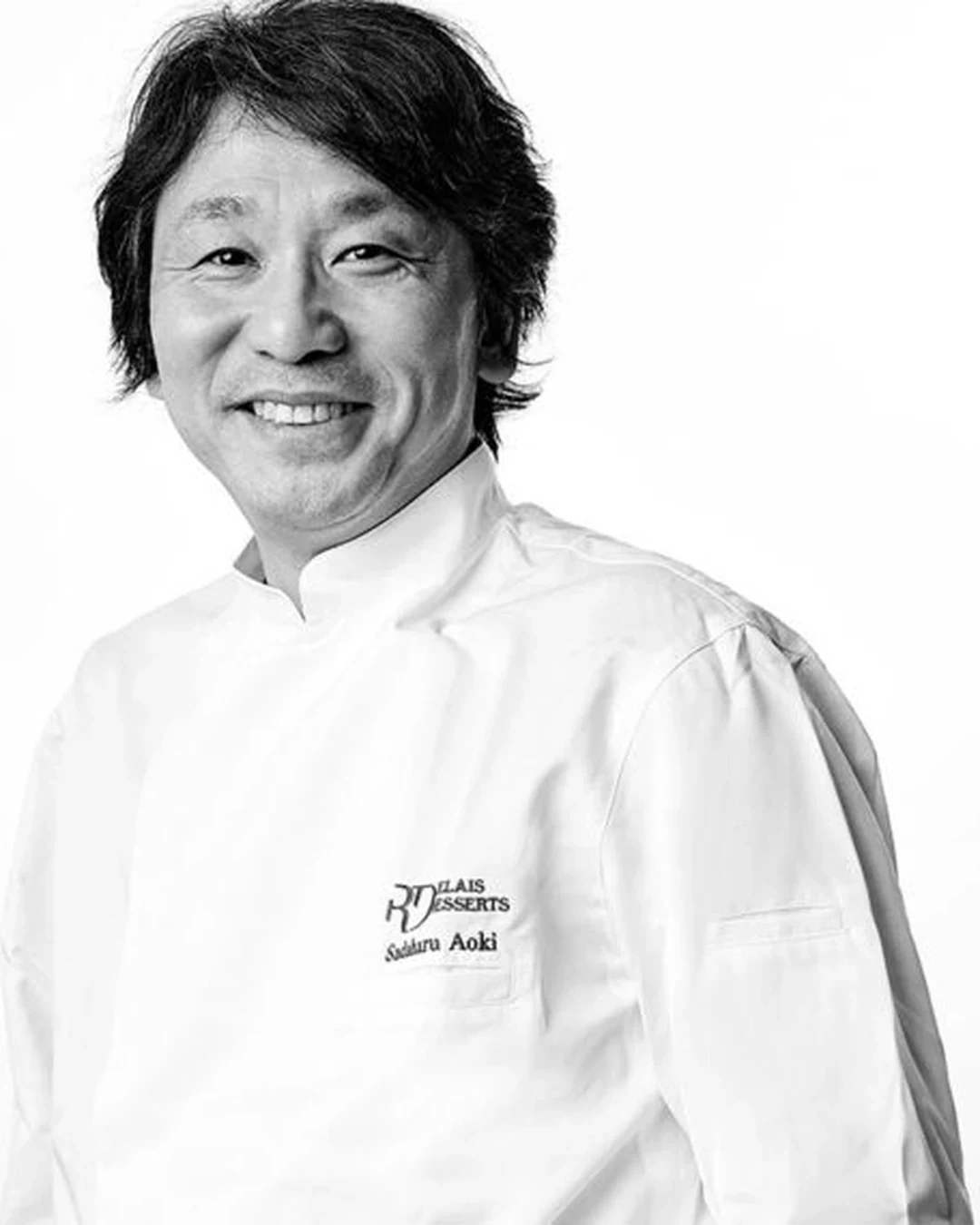
Matcha, yuzu, wasabi and black sesame sit in the case as pastry decisions, not decoration. Sadaharu Aoki, chef at Pâtisserie Sadaharu AOKI in Tokyo, keeps French pâtisserie structure in contact with Japanese ingredients at the Marunouchi shop. The lineage begins before the boutique: pastry training at Machida Cooking School, then production work at Patisserie Chandon in Tokyo until 1991, before Paris posts at Jean Millet's and Pierre Couderc's restaurants from 1991. A later station at Frédy Girardet's restaurant in Switzerland added another European kitchen context before Aoki founded Pâtisserie Sadaharu Aoki Paris in 1998.
That path matters because the work in Tokyo is not a translation of French pastry for a Japanese counter. It is a method built from both sides of the bench. Aoki has said, “Delicious!" When I hear this from people with their mouths full of my pastries and a smile on their face, I would always say: "Good, but I can do even better!" This is a motto of my everyday life.” The sentence has the pressure of a station after service: satisfaction accepted, then put back to work.
The case as a working grammar
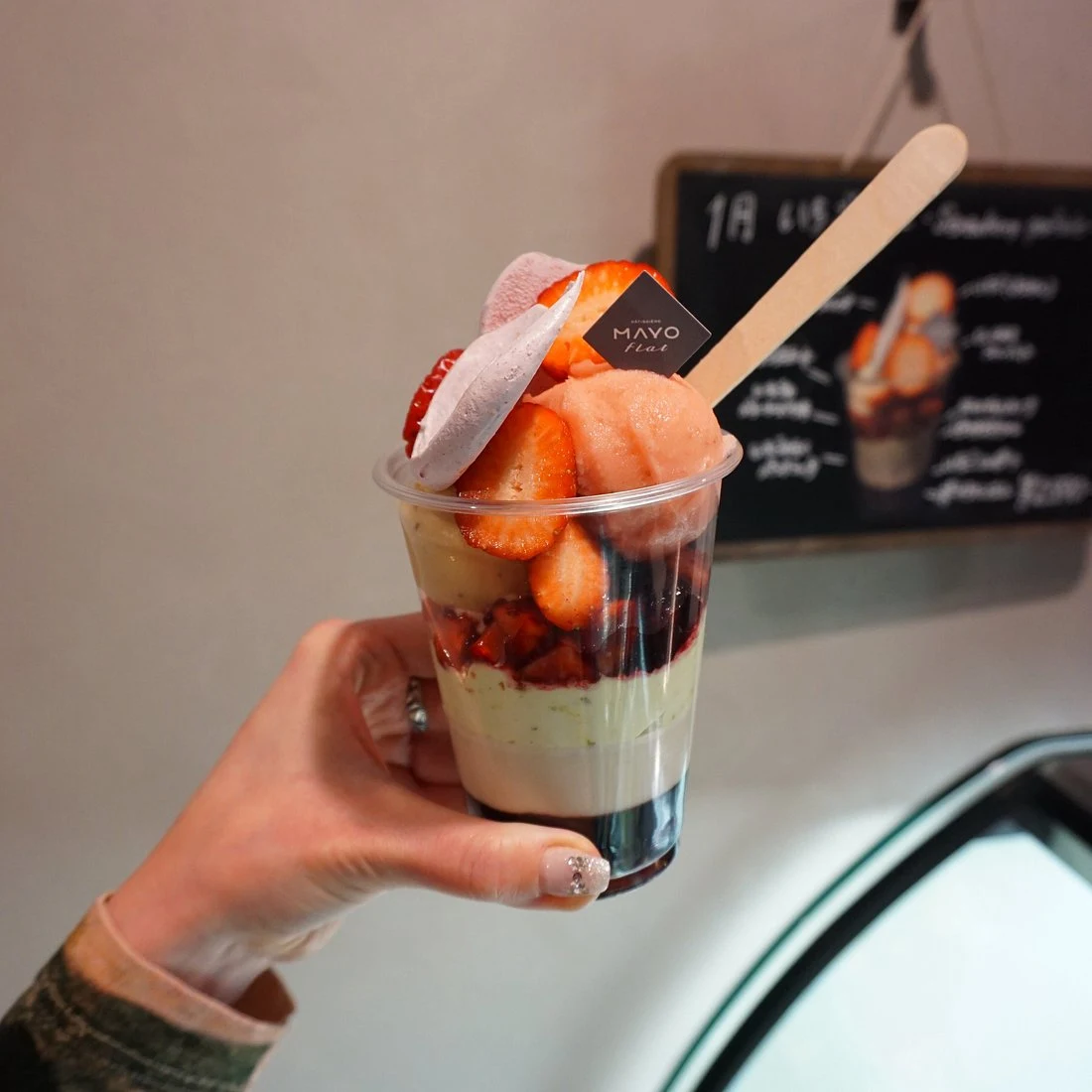
The program at Pâtisserie Sadaharu AOKI turns through macarons, cakes, éclairs, chocolates, entremets and petit gateaux, with Japanese flavors placed inside familiar French formats. Thé Vert Napoléon is the clearest signature, a green tea construction held in layered pastry form. The Chocolate and Salted Butter-Caramel Tart sits nearer the French side of the house, while the macarons carry yuzu, matcha, genmaicha, wasabi, kurogome, fraise, caramel salé, citron and chocolat across the same disciplined shell.
Tokyo production keeps entremets and petit gateaux on-site, while macarons and petit gateaux pour sec are brought from France. That division gives the Marunouchi counter a particular tempo: some pieces belong to the immediate work of the local bench, others carry the continuity of the Paris atelier. The method does not ask matcha to announce itself as novelty. It asks it to behave inside cream, biscuit, ganache, glaze and cut edge. Rectangular cakes, vivid bonbons chocolat and black sesame éclairs make the visual language clear, but the discipline is in the finish.
A quiet room of colored work
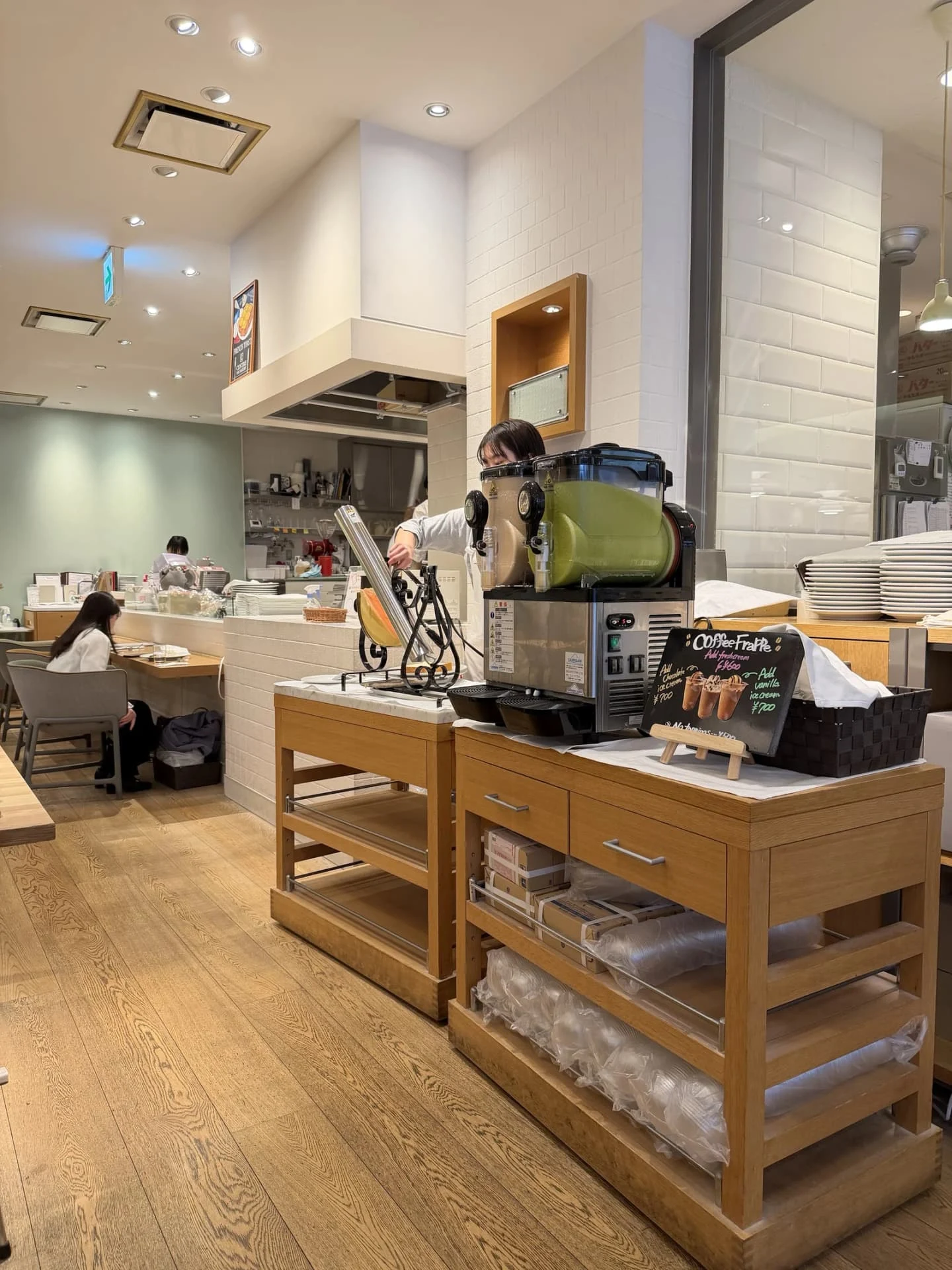
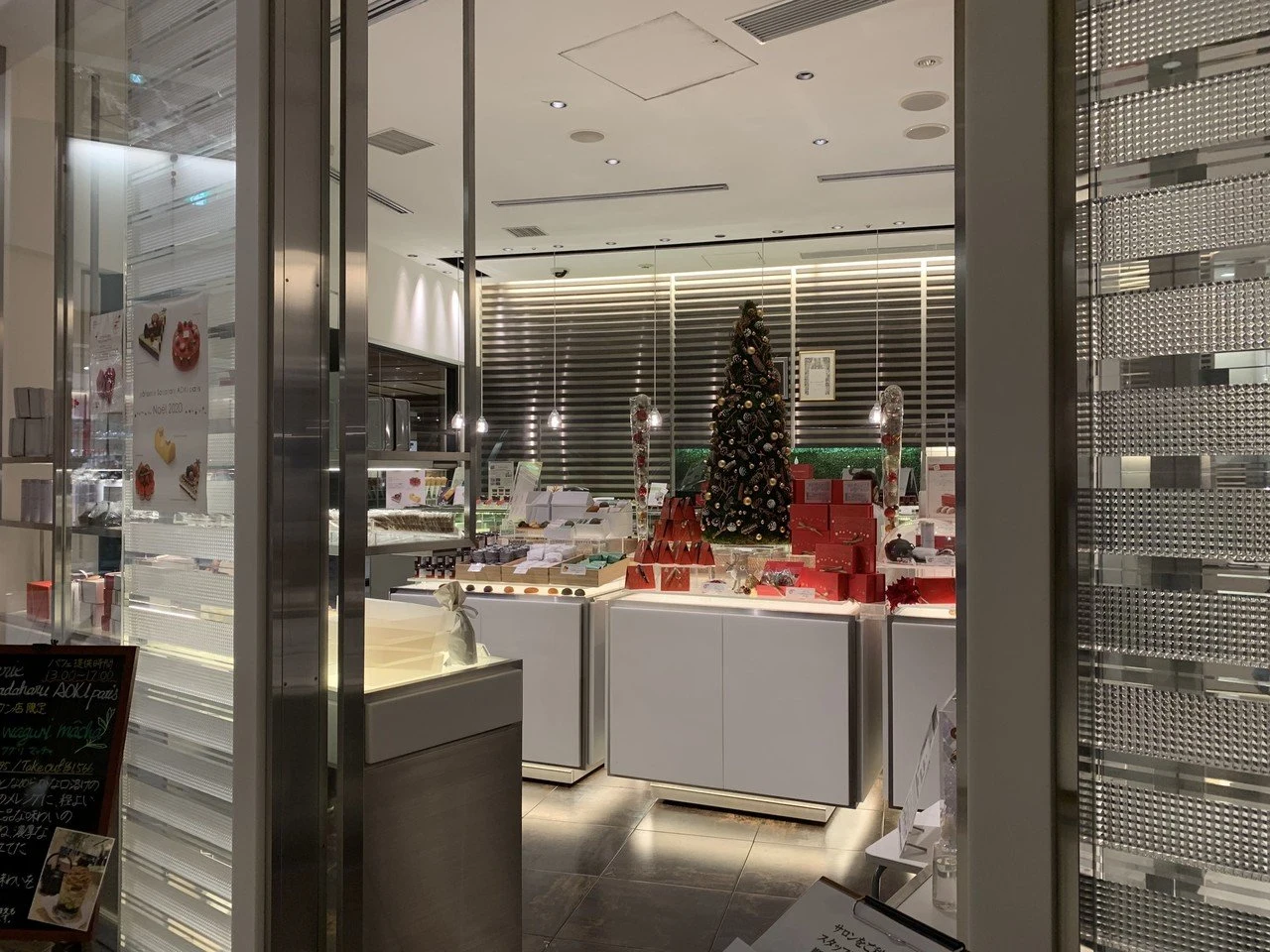
The room keeps a white, restrained surface around the pastry, so the color reads first from the case. In Marunouchi, the counter suits close looking: green tea, raspberry, roasted green tea, praline, chocolate and citrus appear as bands, dots, shells and glazed planes. It is a quiet room, intimate rather than theatrical, with seating near enough to the displays that the work remains bench-side in feeling even after it leaves the tray.
That restraint is part of the craft. The shop does not need a grand salon gesture to carry Aoki's practice; it needs light, a clean case, and enough stillness for the cut face of Thé Vert Napoléon to hold attention. The hand keeps returning to the same question, whether the next answer is a macaron, a tart, or Thé Vert Napoléon.
Questions
Frequently asked
What is Pâtisserie Sadaharu AOKI known for?
It is known for French pâtisserie structure used with Japanese ingredients, including matcha, yuzu, wasabi and black sesame. Thé Vert Napoléon is presented as a signature, and the shop also works through macarons, cakes, éclairs, chocolates, entremets and petit gateaux.
Who is behind the bakery?
The shop is led by Sadaharu Aoki, a chef who trained at Machida Cooking School, worked in Tokyo at Patisserie Chandon until 1991, then worked in Paris at Jean Millet's and Pierre Couderc's restaurants from 1991, before a later stage at Frédy Girardet's restaurant in Switzerland and the founding of Pâtisserie Sadaharu Aoki Paris in 1998.
What should a visitor expect in the case?
The case holds pastries where Japanese flavors sit inside familiar French formats. Macarons come in flavours such as yuzu, matcha, genmaicha, wasabi, kurogome, fraise, caramel salé, citron and chocolat, alongside cakes, éclairs, chocolates, entremets and petit gateaux.
Is it easy to drop in for a visit?
The bakery is walk-in friendly, and it is open every day from 11 AM to 9 PM.
What is the setting like?
The room is described as quiet and restrained, with a white interior that keeps attention on the pastry case. Seating is close enough to the displays that the work feels bench-side even after it leaves the tray.
The field
How it compares
| Place | Notes | Cuisine |
|---|---|---|
| Pâtisserie Sadaharu AOKI | Minato, $$ | · |
| Centre Bakery | Tokyo | japanese |
| Patisserie Mayo | Tokyo | japanese |