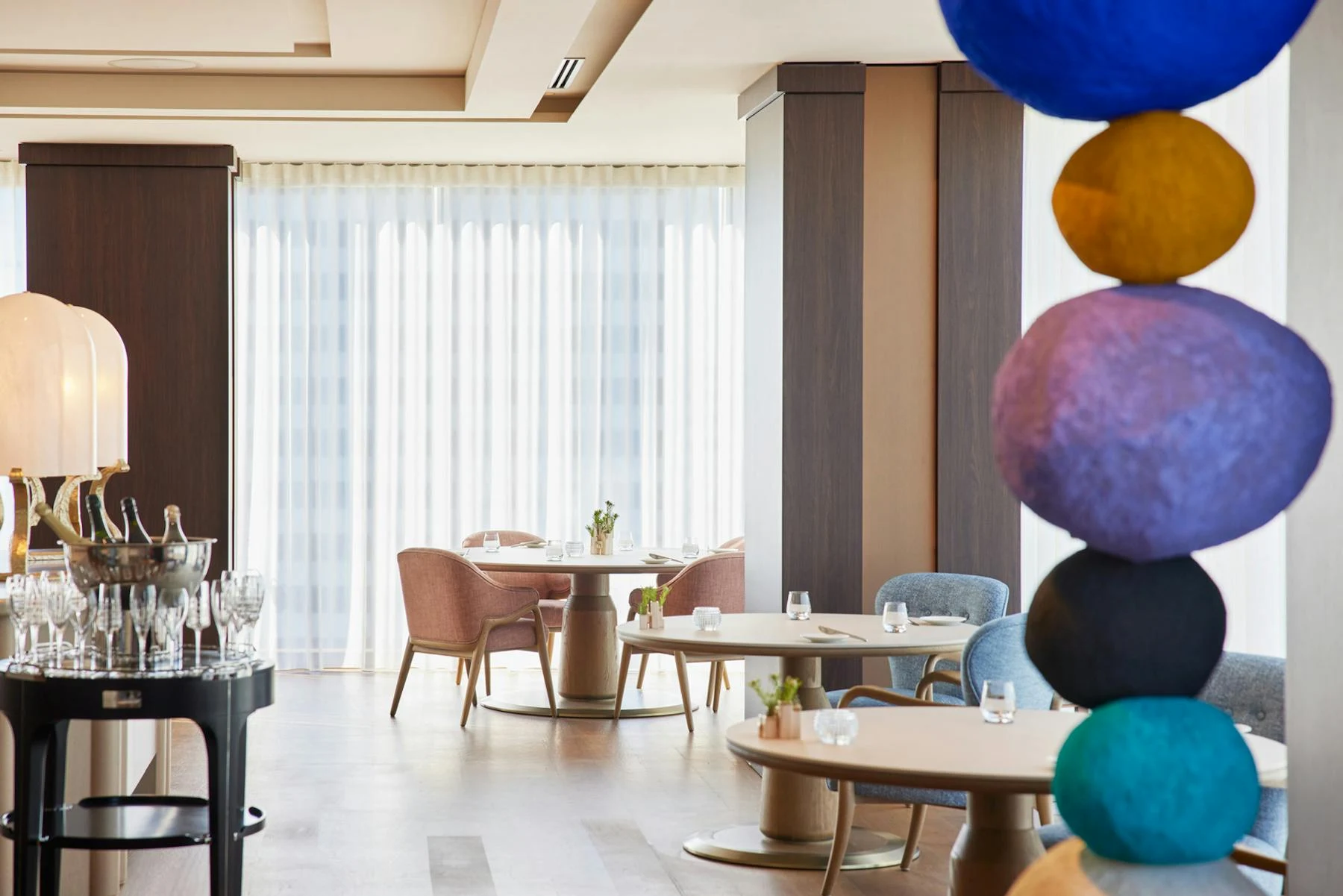
Ristorante Aso
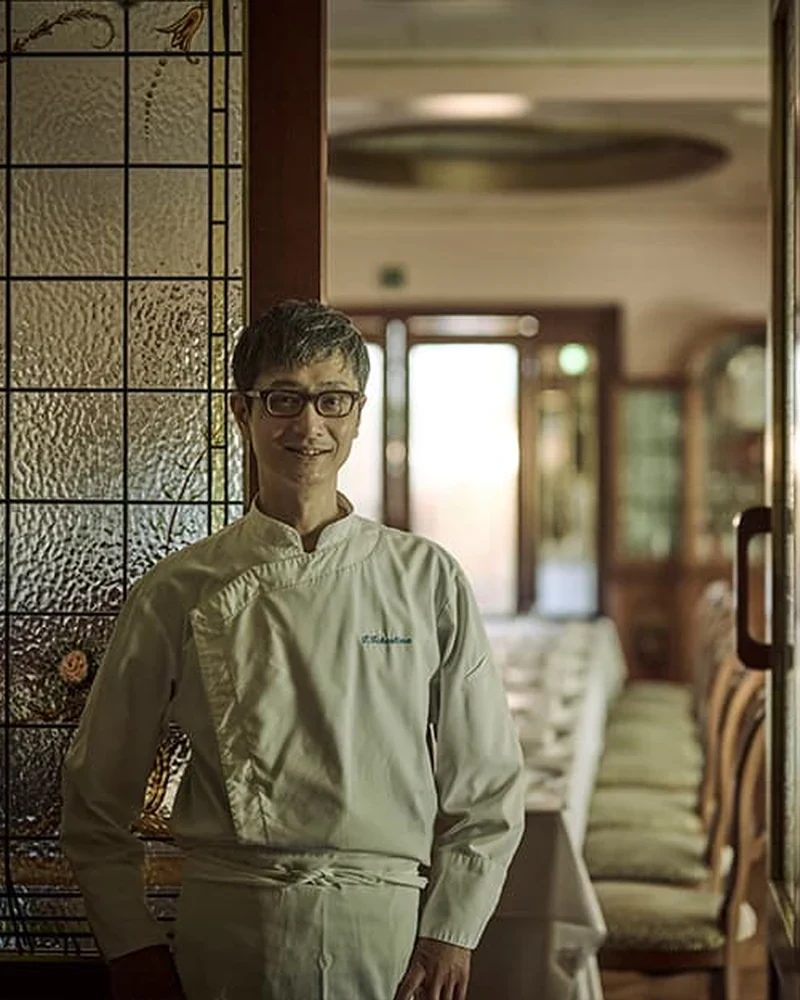
In Residence
Taku Takashina
Chef
- 01CuisineModern Italian with Japanese influences
- 02CityTokyo, Japan
- Opinionated About Dining Top Restaurants in Japan Recommended · 2026
- Opinionated About Dining Top Restaurants in Japan Ranked #483 · 2025
- Tabelog 100 #30: 3.7pts · 2025
- Opinionated About Dining Top Restaurants in Japan Ranked #358 · 2024
- Opinionated About Dining Top Restaurants in Japan Ranked #424 · 2024
- Opinionated About Dining Top Restaurants in Japan Recommended · 2023
- Opinionated About Dining Top Restaurants in Japan Highly Recommended · 2023
Italian in Tokyo: The Counter-Intuitive Tier
Tokyo's Italian restaurant scene has developed along lines that have little to do with geography and everything to do with culinary rigour. The city now sustains a cohort of Italian kitchens that operate at a level of technical seriousness comparable to their counterparts in Milan or Rome, drawing on Japanese sourcing discipline and a precision-first kitchen culture. These are not novelty crossovers. They are restaurants that have spent years earning the trust of a dining public with very high expectations and very low tolerance for imprecision. Ristorante Aso is a restaurant in Tokyo, at 29-3 Sarugakucho in Shibuya, serving modern Italian with Japanese influences. It has appeared on Opinionated About Dining's Japan rankings every year since 2023, moving into the numbered rankings at #358 in mid-2024, #424 later in 2024, and #483 in 2025. That trajectory, tracked across three consecutive years of OAD coverage, positions it inside a specific tier of Tokyo's Italian offering: serious, neighbourhood-anchored, and noticed by the surveys that track this kind of work.
The Daikanyama Context
Sarugakucho sits within the Daikanyama quarter of Shibuya, one of the few Tokyo neighbourhoods where a small-footprint restaurant can survive on a combination of local loyalty and word-of-mouth recommendation. Daikanyama has long attracted a quieter, more design-literate crowd than nearby Shibuya's commercial core. The streets are lower-rise, the retail is independent, and the restaurants that last here tend to be ones that reward regulars rather than rely on tourist traffic. An Italian restaurant in this setting is making a specific choice about its audience: it is not pitching to the expense-account circuit that sustains some of Tokyo's larger Italian operations, nor is it operating in the tourist-dense zones of Shinjuku or Roppongi. It is, in effect, a neighbourhood restaurant with the kitchen ambitions of something much larger. For context on the range of Italian dining available across the city, see our full Tokyo restaurants guide.
Menu Architecture: What the Structure Reveals
Japanese-trained Italian chefs working at this level almost always make the same foundational decision: whether to produce a tasting menu with fixed progression, a carte format that allows guest autonomy, or a hybrid that offers both within a constrained service window. Ristorante Aso's hours, lunch sittings from 12 to 3:30 pm and dinner from 6 to 10:30 pm, six days a week with Wednesday closures, tell you something important before you have seen a single dish. A 90-minute window for each service is tight. It implies sequenced menus rather than open-ended ordering, a kitchen that controls the arc of the meal rather than responding to variable table demands. Chef Taku Takashina's kitchen operates within these constraints by design.
The menu architecture at restaurants of this type typically reflects a Japanese sensitivity to seasonal rhythm applied to Italian ingredients and techniques. That means the sourcing calendar drives the structure as much as the cuisine does: a spring menu built around mountain vegetables and lighter proteins gives way to autumn menus with denser, longer-cooked preparations. This is not fusion; it is a philosophical alignment between two kitchen cultures that both take seasonal sourcing seriously. For a comparison point within Tokyo's Italian scene, Aroma Fresca operates in the same tradition with a longer track record, while PRISMA and Principio represent newer entrants pushing the format in different directions. AlCeppo and Gucci Osteria da Massimo Bottura Tokyo sit in different segments of the same broad category, with the latter's brand profile placing it in a distinct competitive set.
OAD Rankings as a Calibration Tool
Opinionated About Dining's Japan list operates differently from Michelin: it is survey-driven, with votes weighted toward frequent restaurant-goers and food professionals, and it tends to surface restaurants earlier in their recognition curve than the guide system does. Ristorante Aso's progression from Recommended in 2023 to a numbered ranking by mid-2024 suggests a kitchen that was already being noticed by the survey's core voter base before broader recognition followed. The shift from #358 to #424 between the two 2024 editions, and then to #483 in 2025, represents movement within a ranked field of hundreds, not a linear climb, and should be read as positional fluctuation within a competitive comparable set rather than a decline in quality. The restaurant's Google rating of 4.4 across 649 reviews provides a separate data point. These two signals together, OAD recognition and a high-volume Google average, place Ristorante Aso in a tier where the kitchen is delivering reliably at a level that both specialist and general audiences notice. For Italian at a comparable level of seriousness elsewhere in Japan, cenci in Kyoto and 8½ Otto e Mezzo Bombana in Hong Kong operate in the same tradition across different cities.
Where Ristorante Aso Sits in Tokyo's Wider Dining Map
Tokyo's high-end dining scene is frequently discussed through the lens of Japanese cuisine: the sushi counters, kaiseki progressions, and yakitori specialists that define the city's global reputation. But the Italian tier has developed its own internal hierarchy over the past two decades, and it now contains restaurants that can be assessed on their own terms rather than as curiosities within a Japanese context. Ristorante Aso belongs to the mid-to-upper level of that Italian hierarchy: not a marquee destination in the way that a three-starred operation might be, but a restaurant that the people who track this scene have consistently found worth noting. The city's broader dining context includes landmarks across cuisines, from the kaiseki tradition represented by HAJIME in Osaka and Gion Sasaki in Kyoto to the regional diversity found at Goh in Fukuoka, akordu in Nara, 1000 in Yokohama, and 6 in Okinawa.
Planning Your Visit
Address: 29-3 Sarugakucho, Shibuya, Tokyo 150-0033. Hours: Monday, Tuesday, Thursday, Friday, Saturday, Sunday, lunch 12:00 to 1:30 pm, dinner 6:00 to 8:00 pm; closed Wednesday. Budget: Budget: Expect about $150 per person.
Questions
Frequently asked
Who works at Ristorante Aso?
Made By profiles Taku Takashina (Chef) and Tatsuji Aso (Chef) at Ristorante Aso.
How expensive is Ristorante Aso?
Ristorante Aso is listed at a price level of $$$$.
Where is Ristorante Aso and what does it serve?
Ristorante Aso is in Shibuya, Tokyo, serving Modern Italian with Japanese influences.
The field
How it compares
| Place | Cuisine | Notes | Awards |
|---|---|---|---|
| Ristorante Aso | Modern Italian with Japanese influences | Shibuya, $$$$ | · |
| Den | Modern Japanese Kaiseki | Tokyo | Michelin 2 Stars, World's 50 Best |
| Florilège | Modern French-Japanese Plant-Based Fine Dining | Tokyo | Michelin 2 Stars, World's 50 Best |
| Narisawa | Modern Japanese Satoyama Fine Dining | Tokyo | Michelin 2 Stars, World's 50 Best |
| Quintessence | Modern French Fine Dining | Tokyo | Michelin 3 Stars |
| Sazenka | Modern Chinese Fine Dining | Tokyo | Michelin 3 Stars, World's 50 Best |
| Sézanne | Modern French Fine Dining | Tokyo | Michelin 3 Stars, World's 50 Best |
In residence

Similar places
Modern Japanese Kaiseki
Den
Tokyo, Japan
★★ · 50 Best
Modern French-Japanese Plant-Based Fine Dining
Florilège
Tokyo, Japan
★★ · 50 Best
Modern Japanese Satoyama Fine Dining
Narisawa
Tokyo, Japan
★★ · 50 Best
Modern French Fine Dining
Quintessence
Tokyo, Japan
★★★
Modern Chinese Fine Dining
Sazenka
Tokyo, Japan
★★★ · 50 Best
Modern French Fine Dining
Sézanne
Tokyo, Japan
★★★ · 50 Best