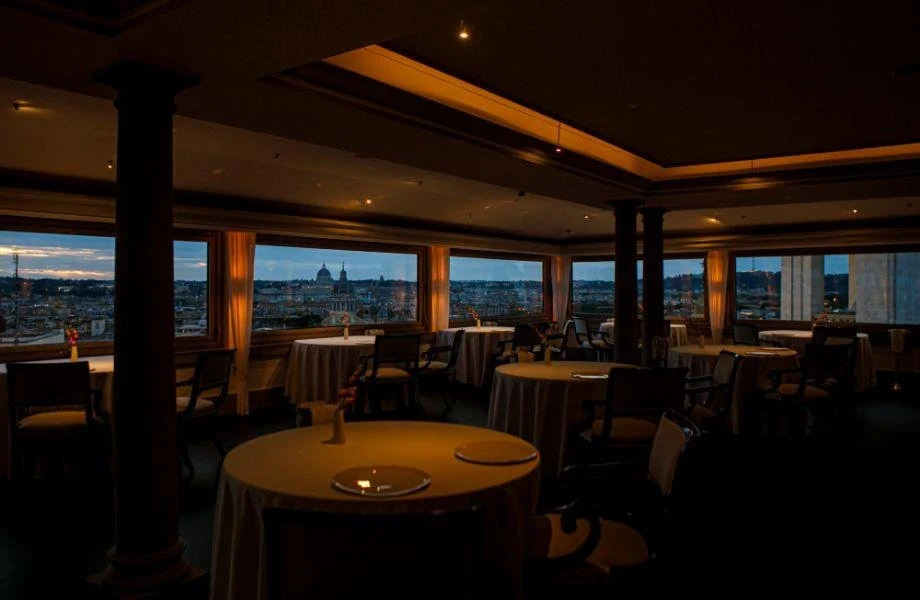
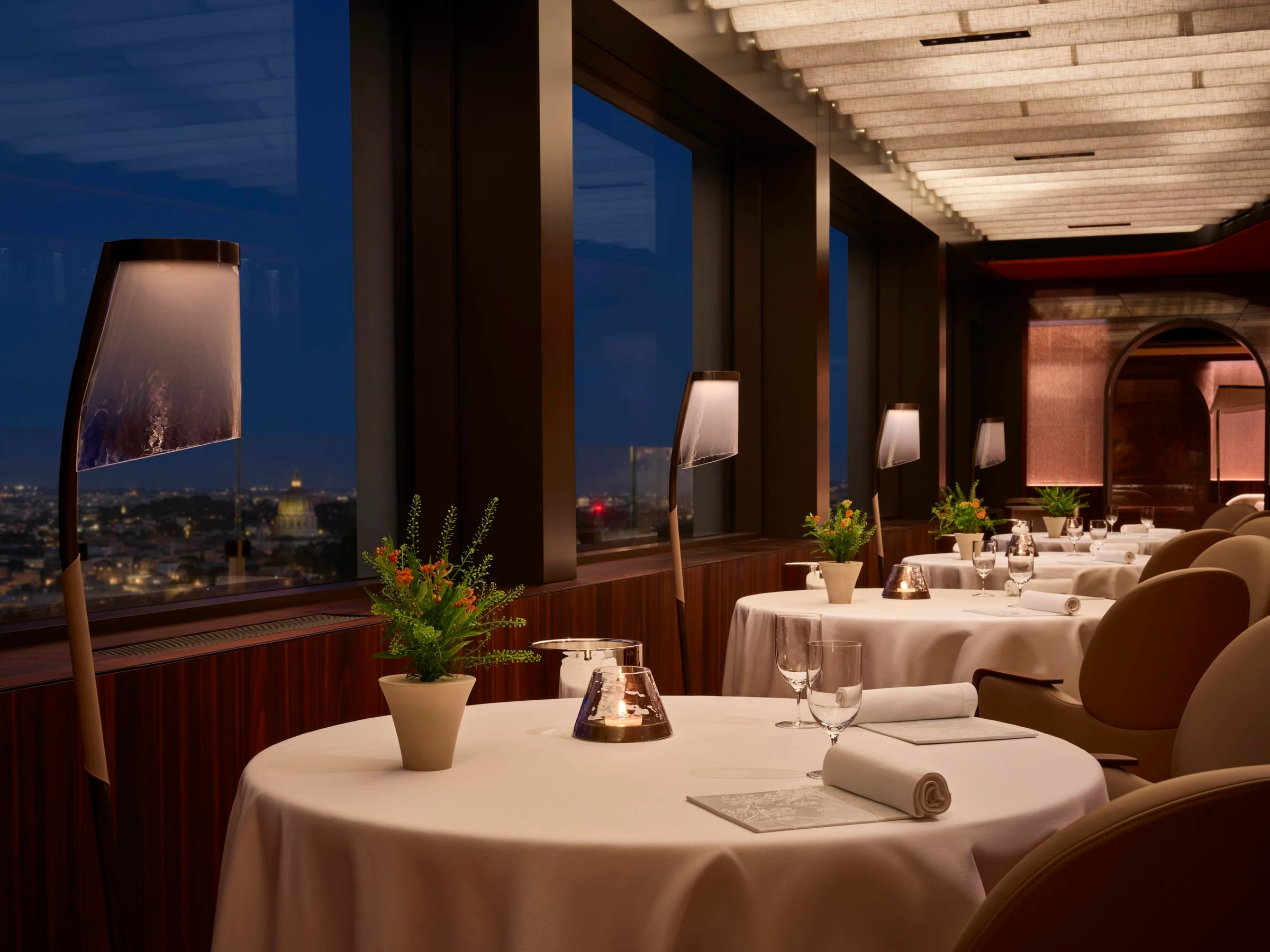
Roscioli
- 01CuisineTraditional Roman Pasta Trattoria
- 02CityRome, Italy
From the people index
Recommended by
3 trusted voices point here.


- Food & Wine Global Tastemakers Top Restaurants #8 · 2026
- Falstaff Restaurant - 92 Falstaff Points · 2026
- Opinionated About Dining Casual in Europe Ranked #79 · 2026
- Michelin Plate · 2026
- Opinionated About Dining Casual in Europe Ranked #119 · 2025
- Opinionated About Dining Casual in Europe Ranked #718 · 2025
- Opinionated About Dining Cheap Eats in Europe Ranked #9 · 2025
- Michelin Plate · 2025
- Opinionated About Dining Casual in Europe Ranked #71 · 2024
- Opinionated About Dining Cheap Eats in Europe Ranked #12 · 2024
- Michelin Plate · 2024
- Opinionated About Dining Casual in Europe Recommended · 2023
The Rome That Prioritises the Ingredient Over the Performance
Via dei Giubbonari runs through one of Rome's most food-dense neighbourhoods, the blocks between Campo de' Fiori and the Tiber where butchers, bakers, and wine merchants have operated for generations. Roscioli sits at Via dei Giubbonari, 21, in Rome, as a traditional Roman pasta trattoria built around a deli counter and marble service area.
This is not the Rome of La Pergola or Il Pagliaccio, where four-course formats and wine pairings shape the evening. Roscioli operates in a different register entirely, one where the competitive pressure comes from the quality of the anchovy tin rather than the architecture of the tasting menu. That distinction matters when reading its awards: a Michelin Plate in both 2024 and 2025, and a ranking of #9 in Opinionated About Dining's Cheap Eats in Europe for 2025, a list that judges on value against quality rather than ambition against execution.
Sourcing as the Editorial Position
The argument that ingredient sourcing is itself a form of sustainability thinking is nowhere more legible than in the Roman trattoria tradition. Where fine dining sustainability conversations tend to focus on waste reduction and carbon accounting, the older Italian approach frames it differently: buy less, buy better, use everything. A deli counter stocked with aged hams, raw-milk cheeses, and anchovies from named producers is not merely a display of abundance. It is a supply chain made visible.
Roscioli's dual identity as delicatessen and restaurant allows that logic to operate openly. Ingredients that arrive for the counter also appear in the kitchen. The mozzarella that sits behind glass at lunch reappears in a dish by evening. This is not a novel sustainability gesture but the continuation of a provisioning model that predates the terminology. What has changed is the context: in a city where budget trattorias increasingly rely on commodity suppliers and where mid-range dining has shifted toward a kind of anonymous Italian-ness, a kitchen that sources visibly and specifically has taken on a critical function it didn't need to claim before.
For comparison, some of Italy's most awarded restaurants have moved toward terroir-specific sourcing as a philosophical statement. Atelier Moessmer Norbert Niederkofler in Brunico has made regional provenance the structural principle of its entire menu. At the other end of the format spectrum, Dal Pescatore in Runate has sustained family-sourced produce relationships across decades. Roscioli operates at a different price point and with different ambitions, but the underlying instinct, that the ingredient's origin is non-negotiable, places it within a coherent Italian tradition.
The Roman Pantry on a Plate
Roman cuisine at its core is a cuisine of specificity. Cacio e pepe is three ingredients, each of which must be exactly right. Carbonara is not a cream sauce with bacon, it is guanciale, pecorino, egg yolk, and black pepper, sourced and executed with precision. The dishes fail when the ingredients are wrong, which is why the quality of the pantry is the only meaningful variable. Roscioli's menu moves through this territory with typical Roman range: handmade pastas, cured meats, cheeses, cooked and raw fish, and meat dishes that follow the city's nose-to-tail tradition.
The bread is made in-house. The wine list is varied, which in the context of a well-stocked Roman deli means it draws on both regional and national producers with breadth. Chef Fabrizio Di Stefano's kitchen works in service of this pantry rather than in tension with it, the cooking exists to present the ingredients at their leading rather than to transform them into something else.
Across Italian dining at higher price tiers, there is sometimes a tension between the creative instinct of the kitchen and the integrity of the raw material. Enoteca Pinchiorri in Florence and Enrico Bartolini in Milan represent the creative-transformation end of that spectrum. Osteria Francescana in Modena has spent years negotiating exactly that tension. Roscioli has never entered that negotiation. The pantry is the point.
Position in Rome's Dining Spectrum
Rome's restaurant scene at the leading end clusters around hotels and formal dining rooms: Enoteca La Torre, Acquolina, and Achilli al Parlamento all occupy the €€€€ tier with corresponding tasting formats. Roscioli at €€ sits in a completely different competitive bracket, but its Opinionated About Dining trajectory is significant: ranked in the top 100 for Casual Dining in Europe across 2023 and 2024, and now inside the leading ten for Cheap Eats in Europe in 2025. That upward movement on a peer-reviewed platform reflects genuine consistency, not a one-cycle spike.
The more telling figure is the OAD placement, which comes from a dining community that compares Roscioli directly against other serious European casual rooms, from Lyon's bouchons to London's neighbourhood restaurants.
Quattro Passi in Marina del Cantone offers a useful contrast on the Campanian coast.
Know Before You Go
Questions
Frequently asked
How expensive is Roscioli?
Roscioli is listed at a price level of $$$.
Where is Roscioli and what does it serve?
Roscioli is in Regola, Rome, serving Traditional Roman Pasta Trattoria.
The field
How it compares
| Place | Cuisine | Notes | Awards |
|---|---|---|---|
| Roscioli | Traditional Roman Pasta Trattoria | Regola, $$$ | · |
| Acquolina | Modern Mediterranean Seafood Fine Dining | Rome | Michelin 2 Stars |
| Enoteca La Torre | Modern Italian Fine Dining | Rome | Michelin 2 Stars |
| Idylio by Apreda | Modern Mediterranean-Asian Fusion | Rome | Michelin 1 Star |
| Il Pagliaccio | Modern Italian-Japanese Fusion Fine Dining | Rome | Michelin 2 Stars |
| Imàgo | Modern Italian Fine Dining | Rome | Michelin 1 Star |
| La Pergola | Modern Italian Fine Dining | Rome | Michelin 3 Stars |
Similar places
Modern Mediterranean Seafood Fine Dining
Acquolina
Rome, Italy
★★
Modern Italian Fine Dining
Enoteca La Torre
Rome, Italy
★★
Modern Mediterranean-Asian Fusion
Idylio by Apreda
Rome, Italy
★
Modern Italian-Japanese Fusion Fine Dining
Il Pagliaccio
Rome, Italy
★★
Modern Italian Fine Dining
Imàgo
Rome, Italy
★
Modern Italian Fine Dining
La Pergola
Rome, Italy
★★★