Sagardi

In Residence
Iñaki López de Viñaspre
Chef
- 01CuisineTraditional Basque Grill
- 02CityLondon, United Kingdom
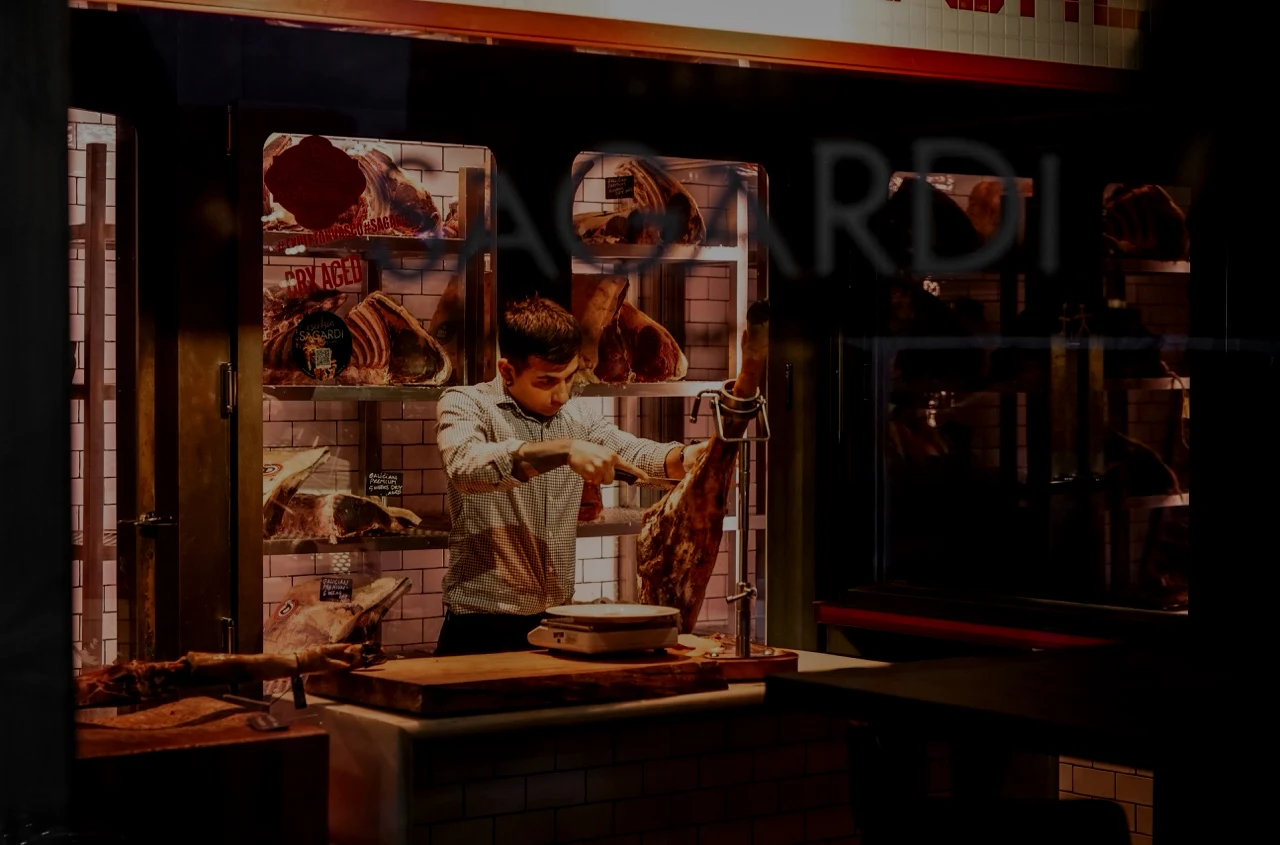
- World's Best Steaks 101 Best Steak Restaurants #90 · 2026
Fire, Patience, and the Asador Tradition in East London
Curtain Road is a corridor of converted warehouses and creative agencies, the sort of Shoreditch block that has absorbed a dozen dining trends over two decades. What makes Sagardi notable in that context is precisely what it refuses to do: it does not adapt itself to the neighbourhood's appetite for novelty. The smell of wood smoke and the low heat of an open grill reach the room before anything else does, and that sensory anchoring is intentional. Basque cooking at its serious end is built around fire, patience, and the quality of what you put over the flame, not around reinvention for its own sake.
That resistance to reinvention is, paradoxically, what gives Sagardi its current relevance in London's dining scene. At a moment when the city's most discussed restaurants, from the technically precise modern British cooking at CORE by Clare Smyth to the heavily constructed tasting menus at Sketch, The Lecture Room and Library and the classical formality of Restaurant Gordon Ramsay, pull heavily toward technique and theatre, a room organised around a single grill and the correct handling of aged beef reads as a clear editorial position.
How Shoreditch Shaped the Offer
Sagardi's arrival in East London was not accidental. The group behind it, led by Iñaki López de Viñaspre, had already established the format in Barcelona and San Sebastián, where the asador sits inside a broader culture of pintxos bars and communal eating. Transplanting that format to London required decisions about what to preserve and what to let shift. The answer, evident in the current room, is that the fundamentals did not move: wood-fired grill, dry-aged Spanish beef, and a hospitality register built on warmth over ceremony. What evolved was the context, a London audience, a Shoreditch address, and the need to hold a clear identity in a city where Spanish restaurants range from tapas chains to highly rated regional specialists.
Over time, the restaurant has reinforced rather than diluted its Basque positioning. Where other internationally rooted restaurants in London have broadened their menus to catch a wider audience, Sagardi has stayed close to the asador model, a narrower, more confident brief. That evolutionary choice is visible in the physical room: wooden tables that recall a Bilbao grill house, open flames positioned so that the cooking process is present without being performative, and a general atmosphere that values rhythm over spectacle. In this sense, the trajectory has been one of consolidation rather than reinvention. The restaurant has become more itself over time, not less.
The Txuleton as Cultural Document
The txuleton occupies a specific cultural position in Basque food culture that goes beyond its status as a premium steak. In the Basque Country, the preference runs to older cattle, retired dairy cows, typically, whose extended lives and varied grazing produce fat with greater depth and marbling than younger beef. The cut is bone-in, thick, and cooked at high heat over wood or charcoal, then rested, sliced, and served with the interior still carrying that deep ruby warmth. Seasoning is salt. The logic is that anything more would be interference with a product that has already done most of the work across months or years of ageing.
Sagardi's beef programme is built around that tradition, with dry-aged Spanish meat sourced through relationships that prioritise provenance. The txuleton here is the gravitational centre of the menu, the dish around which the rest of the offer orbits. That positioning distinguishes Sagardi from the broader London steakhouse category, which tends to operate around British or American beef breeds and an entirely different set of references. It also places the restaurant in a small peer group: there are very few London addresses where Basque-style aged beef from older Spanish cattle is the primary subject.
For readers comparing fire-led cooking across the UK more broadly, the Basque grill tradition sits alongside but distinct from the approach at places like Moor Hall in Aughton or Ynyshir Hall in Machynlleth, both of which use fire as a technique within a wider modernist framework. Sagardi's use of the grill is categorical rather than instrumental, the fire is not one tool among many, it is the philosophy.
The Room and Its Register
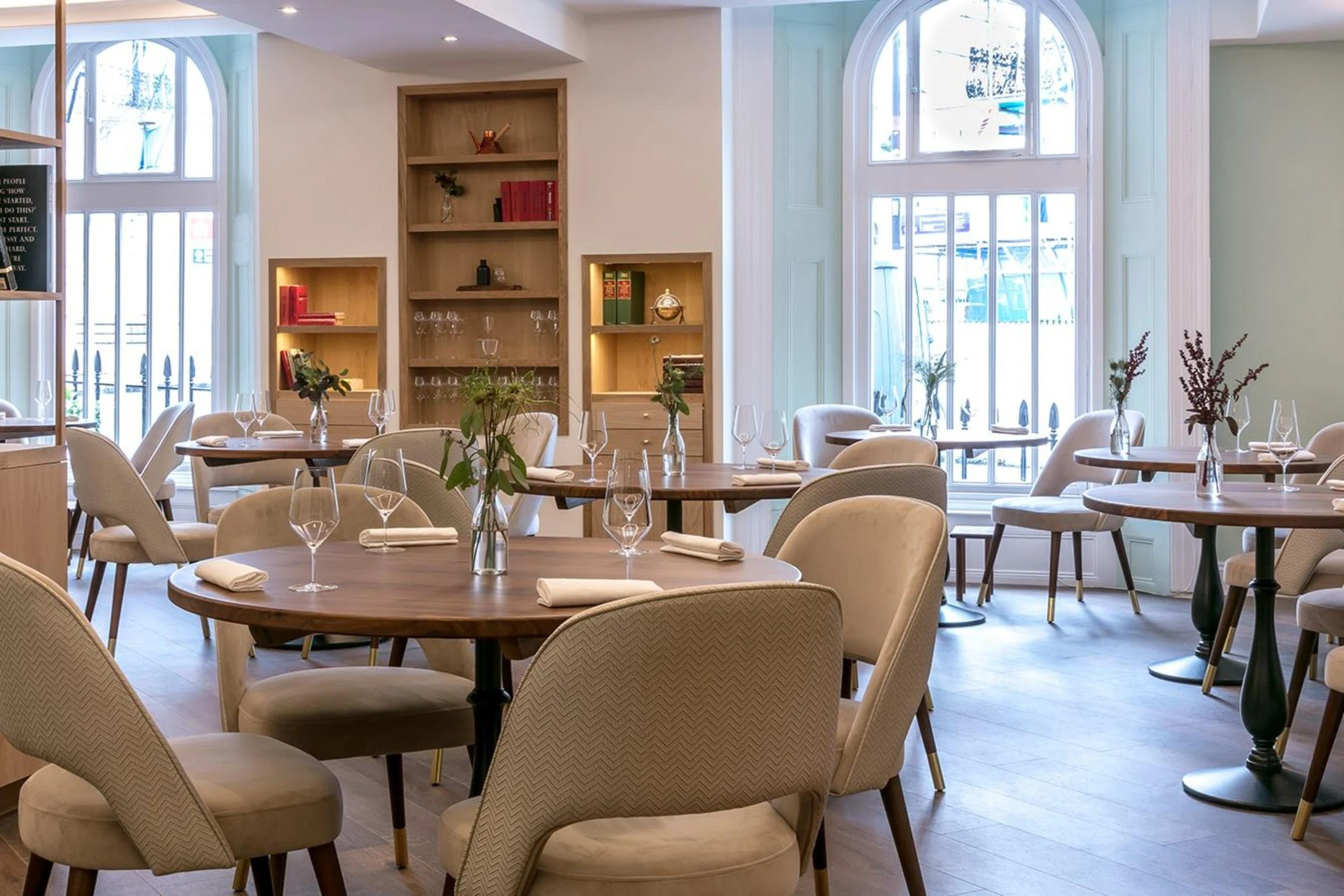
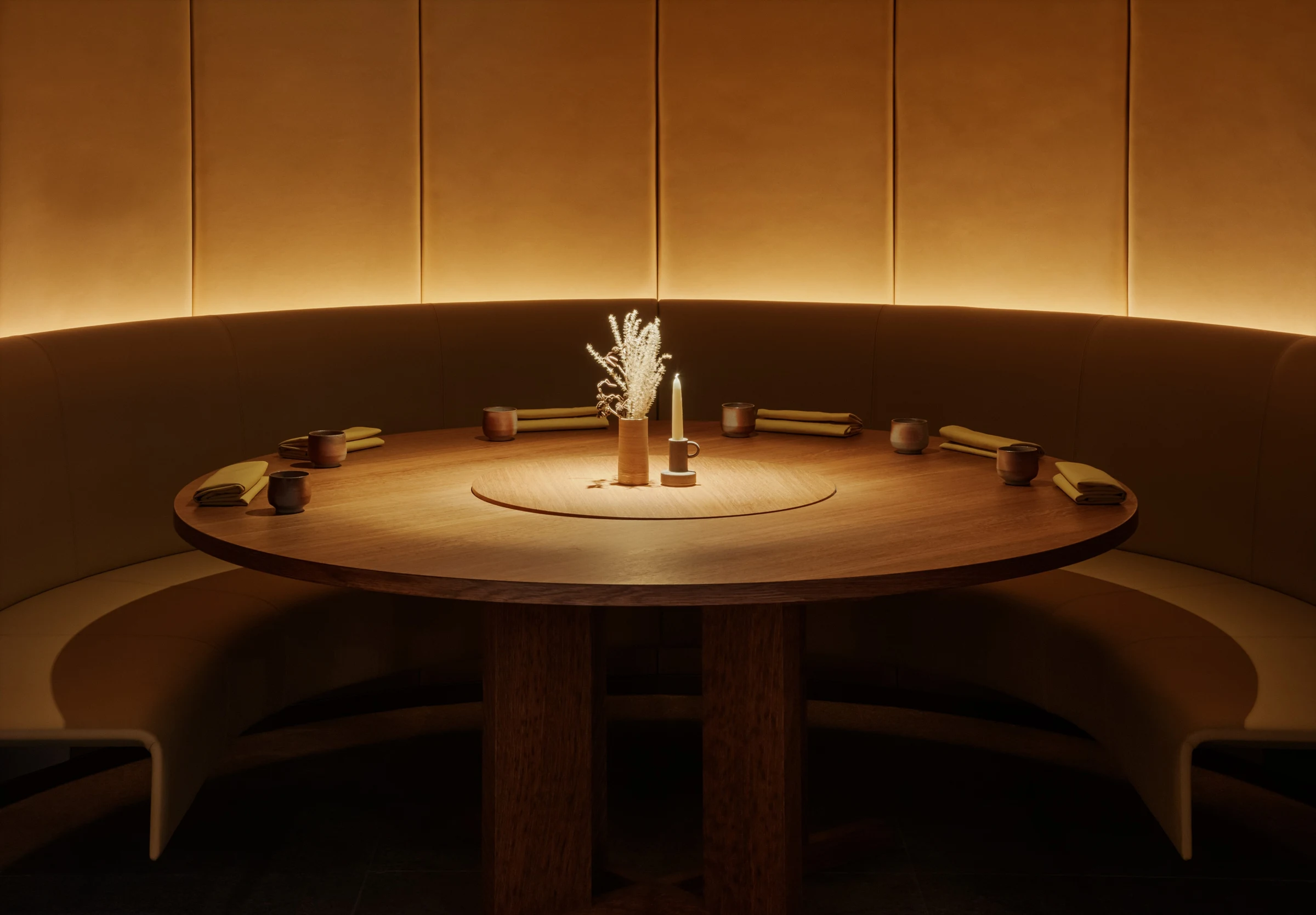
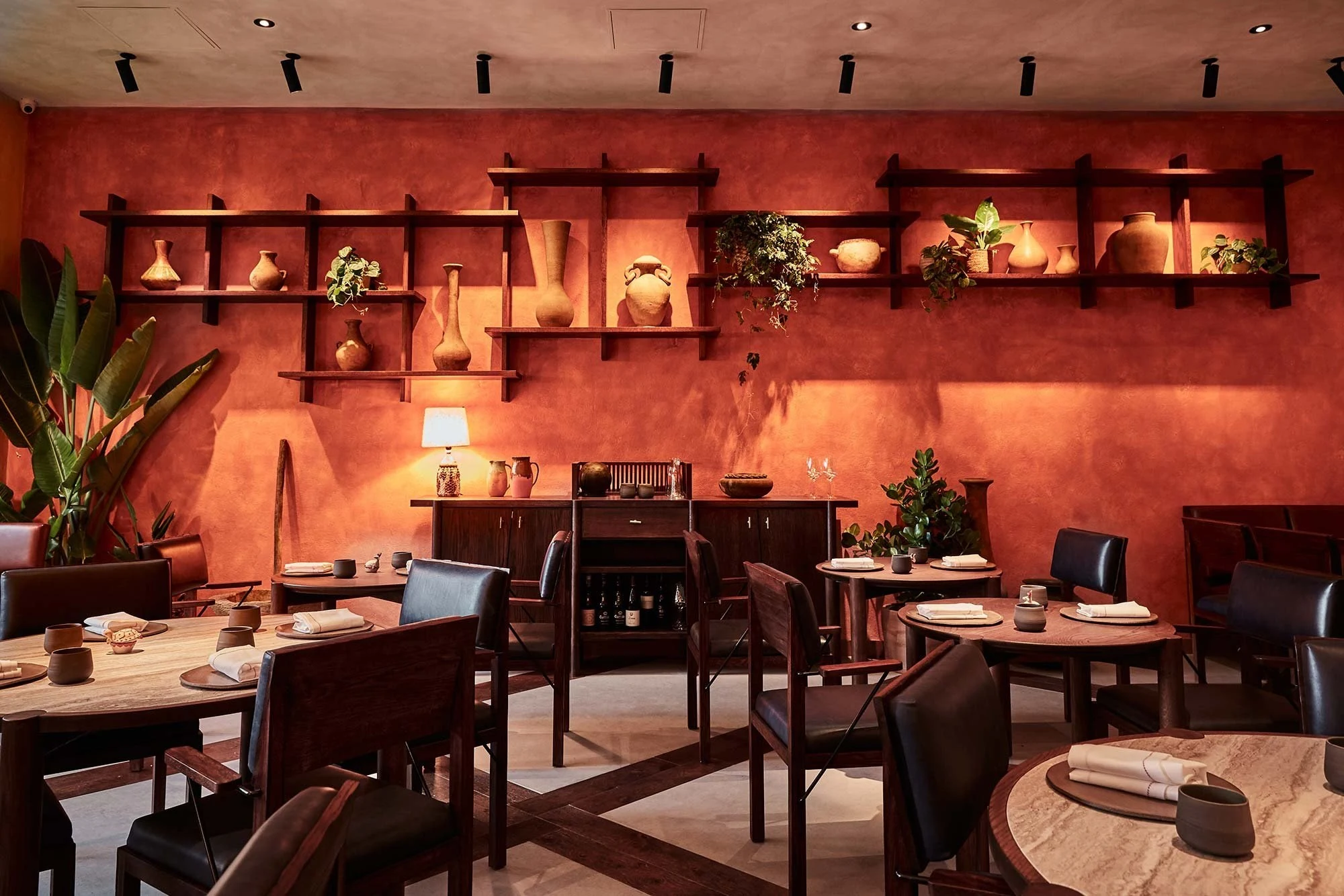
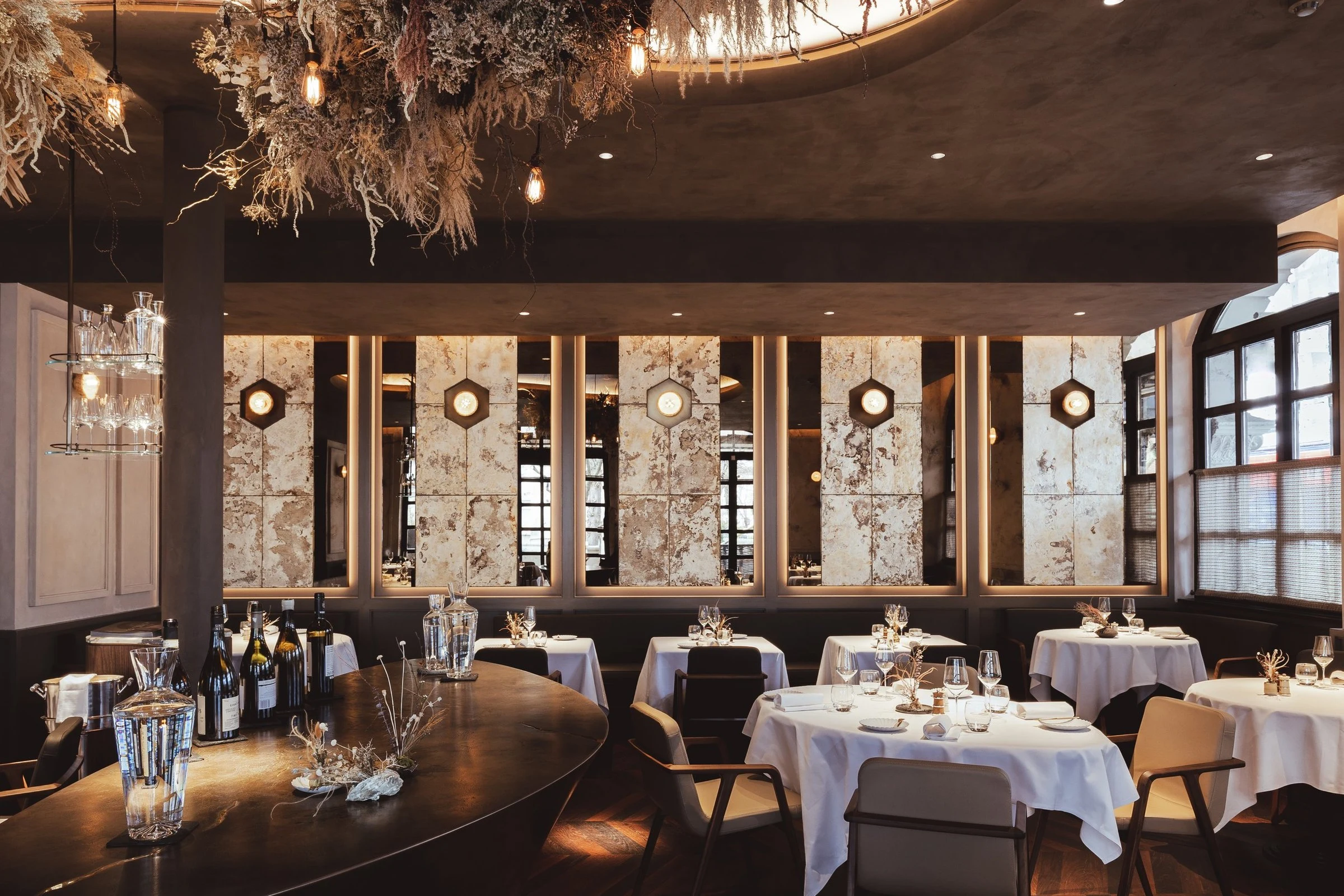
The physical environment at Sagardi operates on a principle of honest warmth. The Cordy House address on Curtain Road gives the restaurant an industrial-heritage shell, exposed brick, volume, the kind of raw material that Shoreditch conversions tend to work with. Inside, the intervention is mostly subtractive: wooden tables, open flames, and the smell and sound of grilling meat do more work than any decorative layer could. The room does not perform rusticity; it simply doesn't eliminate it.
Service follows the same logic. The hospitality tradition in San Sebastián and Bilbao is grounded in directness and generosity rather than formality. The Sagardi approach carries that forward: knowledgeable about the product, attentive to pace, but without the choreographed ceremony that defines the higher-end tasting-menu rooms at, say, The Ledbury or Dinner by Heston Blumenthal. That difference is a feature, not a gap. The Basque dining tradition is built around conviviality, and Sagardi's service pitch preserves that without reverting to informality as a substitute for quality.
Sagardi in London's Broader Grill Conversation
London's appetite for serious grilling has matured considerably. The city now has a coherent category of fire-led restaurants drawing on traditions from Argentina, Japan, West Africa, and Northern Spain, each representing a distinct set of cultural references and product choices. Sagardi sits within that category but operates from a more singular brief than most. The Basque asador is not a broad church, it has specific requirements around product age, breed, butchery, fire management, and the absence of unnecessary intervention. Restaurants that do this well tend to be those that accept the constraints of the tradition rather than softening them for broader appeal.
For readers building a picture of London's current restaurant scene, Sagardi's position is usefully contrasted with the technically ambitious cooking at CORE by Clare Smyth or the classical French rigour at Waterside Inn in Bray. Those restaurants demonstrate what maximum technique and resources can produce. Sagardi demonstrates something different: what happens when a tradition is trusted completely and executed without hedging. The comparison is not competitive, these are different projects, but it clarifies what Sagardi is for and why it occupies a distinct position in the city's offer.
Further afield, the fire-led culinary discipline that Sagardi represents finds American parallels in places like Lazy Bear in San Francisco, where live-fire cooking also anchors the experience, or the seafood precision of Le Bernardin in New York City, where product quality and restraint define the kitchen's authority, though through an entirely different tradition. Across the UK, the product-first ethos also connects Sagardi to L'Enclume in Cartmel, Gidleigh Park in Chagford, Hand and Flowers in Marlow, hide and fox in Saltwood, Midsummer House in Cambridge, Opheem in Birmingham, and Restaurant Andrew Fairlie in Auchterarder, each working from a conviction that sourcing is the foundation of cooking, even when the traditions diverge sharply.
Questions
Frequently asked
Who works at Sagardi?
Made By profiles Iñaki López de Viñaspre (Chef) at Sagardi.
How expensive is Sagardi?
Sagardi is listed at a price level of $$$.
Where is Sagardi and what does it serve?
Sagardi is in Shoreditch, London, serving Traditional Basque Grill.
The field
How it compares
| Place | Cuisine | Notes | Awards |
|---|---|---|---|
| Sagardi | Traditional Basque Grill | Shoreditch, $$$ | · |
| CORE by Clare Smyth | Modern British Fine Dining | London | Michelin 3 Stars, World's 50 Best |
| Ikoyi | Modern West African Fine Dining | London | Michelin 2 Stars, World's 50 Best |
| Kitchen Table | Modern British Fine Dining | London | Michelin 2 Stars |
| KOL | Modern Mexican Fine Dining | London | Michelin 1 Star, World's 50 Best |
| Row on 5 | Modern British Fine Dining with Mediterranean & Asian Influences | London | Michelin 2 Stars |
| The Ledbury | Modern British Fine Dining | London | Michelin 3 Stars, World's 50 Best |
In residence
Similar places
Modern British Fine Dining
CORE by Clare Smyth
London, United Kingdom
★★★ · 50 Best
Modern West African Fine Dining
Ikoyi
London, United Kingdom
★★ · 50 Best
Modern British Fine Dining
Kitchen Table
London, United Kingdom
★★
Modern Mexican Fine Dining
KOL
London, United Kingdom
★ · 50 Best
Modern British Fine Dining with Mediterranean & Asian Influences
Row on 5
London, United Kingdom
★★
Modern British Fine Dining
The Ledbury
London, United Kingdom
★★★ · 50 Best