San Giusto a Rentennano
- 01CityGaiole in Chianti, Italy
- Falstaff Winery - 5 Stars · 2026
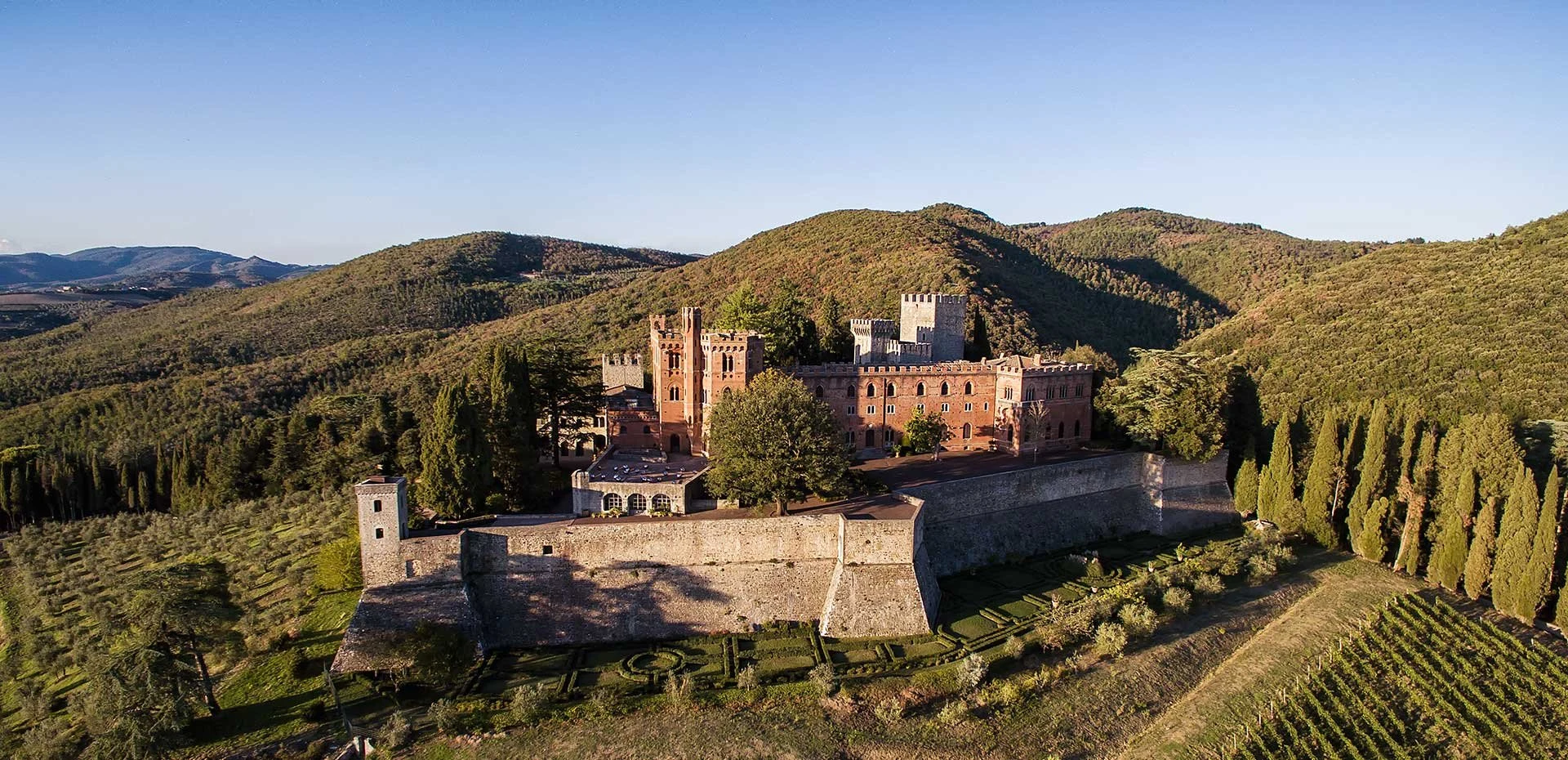
Approaching a serious Chianti Classico estate is rarely about spectacle. The more persuasive places let stone, slope, cellar temperature, and vineyard proportion do the work. San Giusto a Rentennano belongs to that older Tuscan model: a fortified site with medieval origins, underground cellars, and a working agricultural frame rather than a hospitality complex built around staged arrivals.
The estate’s story begins with a monastery of Cistercian nuns, San Giusto alle Monache, and moves into the political geography of medieval Tuscany when the Florentines fortified the site in 1204 as a boundary point with Siena. That history matters because Chianti Classico is not just a wine zone; it is a range of borders, hill roads, ecclesiastical holdings, defensive architecture, and farming continuity. In Gaiole in Chianti, that mixture gives wine estates a different tone from polished destination tasting rooms elsewhere in Tuscany.
Southern Chianti Classico read through soil, altitude, and Sangiovese
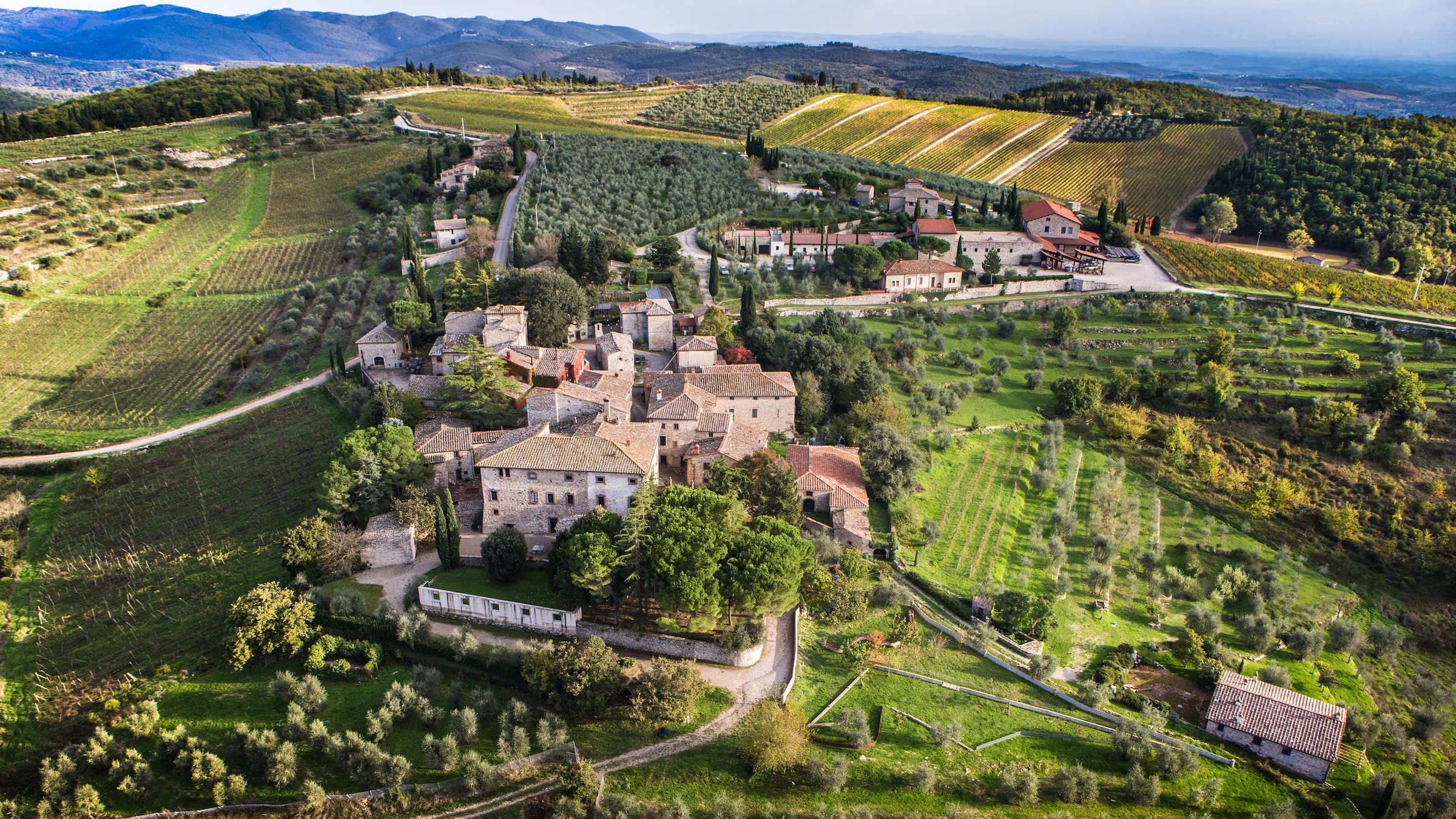
The estate sits in the southernmost part of the Chianti Classico zone, overlooking the upper course of the Arbia River. Its scale is agricultural rather than decorative: 160 hectares in total, with 31 hectares under vine, 11 hectares of olive groves, 40 hectares of woods, and 78 hectares in cultivated and grazing land. That balance matters. Vineyards are part of a broader farm ecology, not the whole estate.
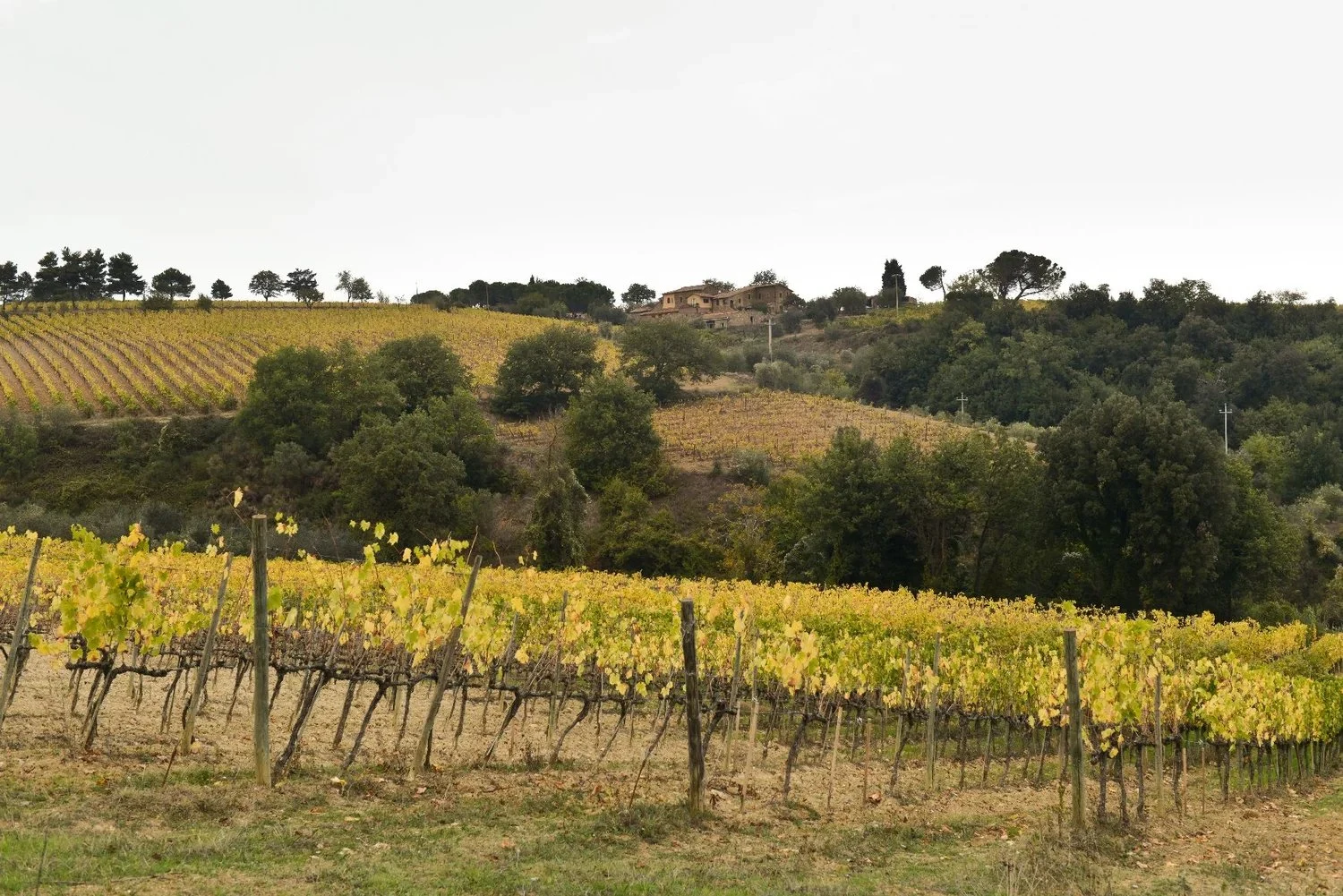
At an average altitude of 270 metres, the site has the kind of day-night temperature variation that gives Sangiovese a chance to ripen without losing its line of freshness. The soils are described as a mix of sand, clay, lime, alkali, volcanic ash, argil, and calcium-rich components, which points to a patchwork rather than a single dominant soil signature. In practical wine terms, that is the difference between Chianti Classico as a generic label and Chianti Classico as a set of estate-specific decisions about ripeness, extraction, ageing, and restraint.
The grape story is anchored by Sangiovese, supported across the estate’s broader plantings by Canaiolo, Merlot, Malvasia, and Trebbiano. The portfolio is compact by Tuscan standards: Chianti Classico, Chianti Classico Riserva, Percarlo, La Ricolma, Vin Santo, and extra virgin olive oil. Percarlo is framed as a 100% Sangiovese expression, while La Ricolma carries strong collector attention, including a 100-point 2018 rating on Tastingbook and high scores for 2016, 2019, and 2013 on the same platform.
A cellar language of restraint rather than display
Organic farming is central to the estate’s public identity, with an emphasis on avoiding synthetic chemicals and keeping vineyard health tied to the wider property. In a region where tradition can become decorative copy, the more interesting signal is land use: woods, olive groves, grazing land, and vines sharing the same estate. That makes the wines feel connected to an agricultural system rather than to a narrow luxury-wine narrative.
Francesco Martelli is named as winemaker, with Marco Bartoli as assistant winemaker, and the cellar approach is described as traditional and low-intervention. The clearest technical ageing detail concerns the 2015 Chianti Riserva Baroncole, aged in a combination of 30HL casks and tonneaux. That mix says something about the estate’s register: large-format wood for poise, smaller vessels where structure and detail require closer handling. It is not a technological story; it is a judgement story.
Recognition reinforces the estate’s position in the premium Tuscan conversation without needing formal award theatre. The 2015 Baroncole has been scored 95 by Antonio Galloni/Vinous, 97 by James Suckling, and 94 by The Wine Advocate. Tastingbook lists the estate with a 98-point wine average on its platform, alongside a country ranking of 4 and a regional ranking of 2. Those numbers matter less as trophies than as market signals: collectors follow this producer because the stronger bottlings have performed across vintages.
How to place it within a Gaiole wine itinerary
This is a winery for travellers who care about terroir, ageability, and the way Tuscan estates carry history through farming rather than design. The visit format is appointment only, and the experience is better understood as private, quiet, and wine-focused than as a casual drop-in stop. The setting suits wine education, solo exploration, focused group tastings, and special-occasion itineraries built around Chianti Classico rather than a broad countryside day out.
Gaiole in Chianti rewards travellers who plan by estate character rather than by distance alone. For a wider view of the area’s wine scene, use Our full Gaiole in Chianti wineries guide, then cross-reference historic and estate-led addresses such as Badia a Coltibuono, Barone Ricasoli (Brolio), Bertinga, Borratella, and Capannelle. The surrounding trip planning is better handled by category: Our full Gaiole in Chianti restaurants guide, Our full Gaiole in Chianti hotels guide, Our full Gaiole in Chianti bars guide, and Our full Gaiole in Chianti experiences guide.
For readers building a broader European winery file beyond Tuscany, contrast this Chianti Classico model with producers in different regions and scales, including 3GP SRL in Treviso, 47 Anno Domini in Trebaseleghe, A Mano Wine in Noci, »der Steiner« Hans Steiner in Podersdorf am See, and & Handwein in Mannheim. San Giusto a Rentennano’s appeal is narrower and more serious: medieval stone, mixed soils, organic farming, and Sangiovese with enough critical performance to justify close attention.
Questions
Frequently asked
How expensive is San Giusto a Rentennano?
San Giusto a Rentennano is listed at a price level of $$$.
The field
How it compares
| Place | Notes |
|---|---|
| San Giusto a Rentennano | Gaiole in Chianti, $$$ |
| Barone Ricasoli (Brolio) | Gaiole in Chianti |
| Castello di Ama | Gaiole in Chianti |
| Castello di Lucignano | Gaiole in Chianti |
| Fattoria di Rietine | Gaiole in Chianti |
| Fietri | Gaiole in Chianti |
| Ricasoli | Gaiole in Chianti |