- Michelin Bib Gourmand · Michelin Guide
- Michelin Bib Gourmand · 2026
- Michelin Bib Gourmand · 2025
- Michelin Bib Gourmand · 2024
Six Floors Up, Firmly Grounded in Wan Chai's Cantonese Tradition
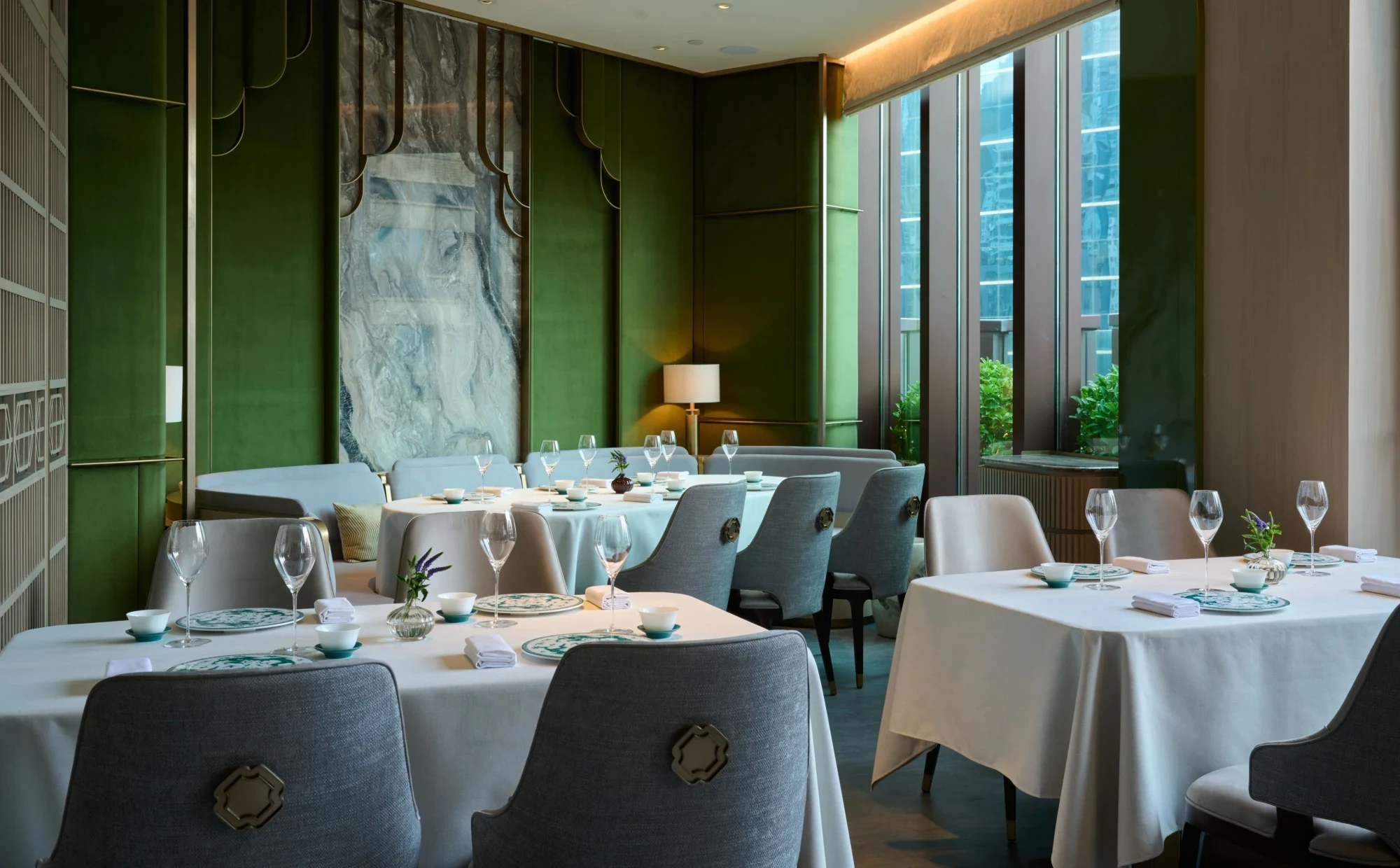
Wan Chai's dining character has always been shaped by a certain pragmatic ambition: rooms that do not announce themselves, kitchens that have been refining the same techniques for decades, and a clientele that returns because the cooking holds up. The sixth floor of Hopewell Centre on Queen's Road East fits that description precisely. There is no street-level theatre, no ground-floor signage angling for foot traffic. You take the lift, step out, and find Ship Kee operating with the low-key confidence of a restaurant that has never needed to perform its credentials, which, since 2024, have included a Michelin Bib Gourmand, renewed for 2025, with Dee Lui at the helm.
The Bib Gourmand designation matters here as a marker of value in Hong Kong's Cantonese pricing spectrum. The city's top tier, represented by addresses like Lung King Heen, T'ang Court, and Lai Ching Heen, operates at price points where the room, the service theatre, and the ingredient sourcing are all priced in together. Ship Kee's double Bib Gourmand signal is about technique that clears Michelin's quality threshold at a price point where shortcuts are the norm, not the exception. Ship Kee's double Bib Gourmand signals something different: technique that clears Michelin's quality threshold at a price point ($$) where shortcuts are the norm, not the exception.
The Cantonese Mid-Tier and What It Actually Requires
Hong Kong's Cantonese mid-tier is more competitive than its lower profile suggests. The restaurants in this band are not competing against the three-star rooms, they are competing against each other, and against the accumulated weight of neighbourhood expectation. Wan Chai residents and office workers who have eaten Cantonese food all their lives are not a forgiving audience. Wok hei either registers or it doesn't. Timing on steamed fish is either correct or it exposes the kitchen. Bib Gourmand recognition at this level means consistency across multiple visits.
Chef Dee Lui works within that context. In a category where the cooking tradition is more relevant than any individual chef's biographical arc, what matters is whether the kitchen is executing the fundamentals with discipline, whether the seasoning is calibrated, whether oil temperatures are managed correctly, whether the sourcing reflects genuine care rather than margin optimisation. Ship Kee's sustained recognition across two consecutive years suggests those fundamentals are in order.
On the Question of Drinks at This Level
Wine curation sits differently at a Bib Gourmand Cantonese address than it does at the cellar-deep fine dining rooms. Hong Kong's premium Cantonese addresses, places like Rùn or Forum, maintain wine lists that can run to considerable depth, with older Burgundy vintages and aged Bordeaux that pair surprisingly well against the clean, precise flavours of high-level Cantonese cooking. The interaction between aged white Burgundy and steamed seafood, or between a lighter red and roasted meats, is a pairing logic that Hong Kong's fine dining rooms have spent years refining.
At Ship Kee's price tier, that depth of cellar curation is not the primary value proposition. The drinks dimension here is best understood through the lens of what serves the cooking: clean, unfussy pairings that do not compete with the kitchen's precision. Jasmine tea, Chinese rice wine, or a direct bottle of white are the practical choices. The absence of a deep sommelier program is not a gap, it is a correct reading of what the format requires. Visitors who want to pair wine with Cantonese cooking at this address should approach it as a meal-first proposition. For cellar depth alongside Cantonese at the fine dining level, the starred rooms referenced above operate in a different register entirely.
Across the wider region, Cantonese cooking has attracted serious wine investment at the premium tier: Jade Dragon in Macau and Summer Pavilion in Singapore both sit in hospitality contexts where beverage programs are deeply resourced. Ship Kee operates in a different competitive set entirely, closer in spirit to 102 House in Shanghai or Canton 8 in the Huangpu district, where the cooking tradition carries the weight of the meal rather than the room or the list.
Wan Chai as a Dining District
Wan Chai occupies a particular position in Hong Kong's dining geography: more residential in texture than Central, less self-consciously trendy than Sai Ying Pun, and home to a dense concentration of Cantonese addresses that serve the neighbourhood's working population as much as destination diners. Hopewell Centre sits on the eastern edge of the district, and the building's vertical density, offices stacked above offices, restaurants operating on upper floors without the luxury of ground-level presence, is a physical expression of how Hong Kong has always managed the relationship between space and ambition.
For visitors building a broader Hong Kong eating itinerary, Ship Kee belongs in the same day as the neighbourhood's more casual dai pai dong culture rather than the same evening as a starred tasting menu. It functions as a serious midday or early evening address where the cooking rewards attention without requiring a formal occasion.
Cantonese Beyond Hong Kong
For readers tracking Cantonese cooking across the region, the tradition has seeded serious addresses in every major city. Chef Tam's Seasons in Macau represents one interpretation of the tradition at the premium end. Le Palais in Taipei demonstrates how the cooking travels when the sourcing and technique are handled with rigour. Bao Li Xuan and Imperial Treasure Fine Chinese Cuisine in Shanghai show the mainland's growing investment in the form. Ship Kee operates from the source. Hong Kong remains the primary reference point for Cantonese cooking precisely because the tradition is embedded in the daily life of the city.
Planning Your Visit
Ship Kee is located at 6/F, Hopewell Centre, 183 Queen's Road East, Wan Chai.
| Venue | Cuisine | Price Tier | Recognition | Format |
|---|---|---|---|---|
| Ship Kee | Cantonese | $$ | Michelin Bib Gourmand (2024, 2025) | Neighbourhood restaurant, upper-floor |
| Lung King Heen | Cantonese | $$$$ | Michelin starred | Hotel fine dining |
| Forum | Cantonese | $$$ | Michelin recognised | Destination restaurant |
| Neighborhood | International/European Contemporary | $$ | Recognised | Casual contemporary |
Questions
Frequently asked
What recognition does Ship Kee hold?
Ship Kee holds a Michelin Bib Gourmand.
Who works at Ship Kee?
Made By profiles Dee Lui (Chef) at Ship Kee.
How expensive is Ship Kee?
Ship Kee is listed at a price level of $$.
Where is Ship Kee and what does it serve?
Ship Kee is in Wan Chai, Hong Kong, serving Classic Cantonese.
The field
How it compares
| Place | Cuisine | Notes | Awards |
|---|---|---|---|
| Ship Kee | Classic Cantonese | Wan Chai, $$ | · |
| 8 1/2 Otto e Mezzo Bombana (Hong Kong) | 3 Michelin-Star Italian Fine Dining | Hong Kong | Michelin 3 Stars, World's 50 Best |
| Amber | Contemporary French Fine Dining | Hong Kong | Michelin 3 Stars, World's 50 Best |
| Caprice | Contemporary French Fine Dining | Hong Kong | Michelin 3 Stars, World's 50 Best |
| The Chairman | Traditional Cantonese | Hong Kong | Michelin 1 Star, World's 50 Best |
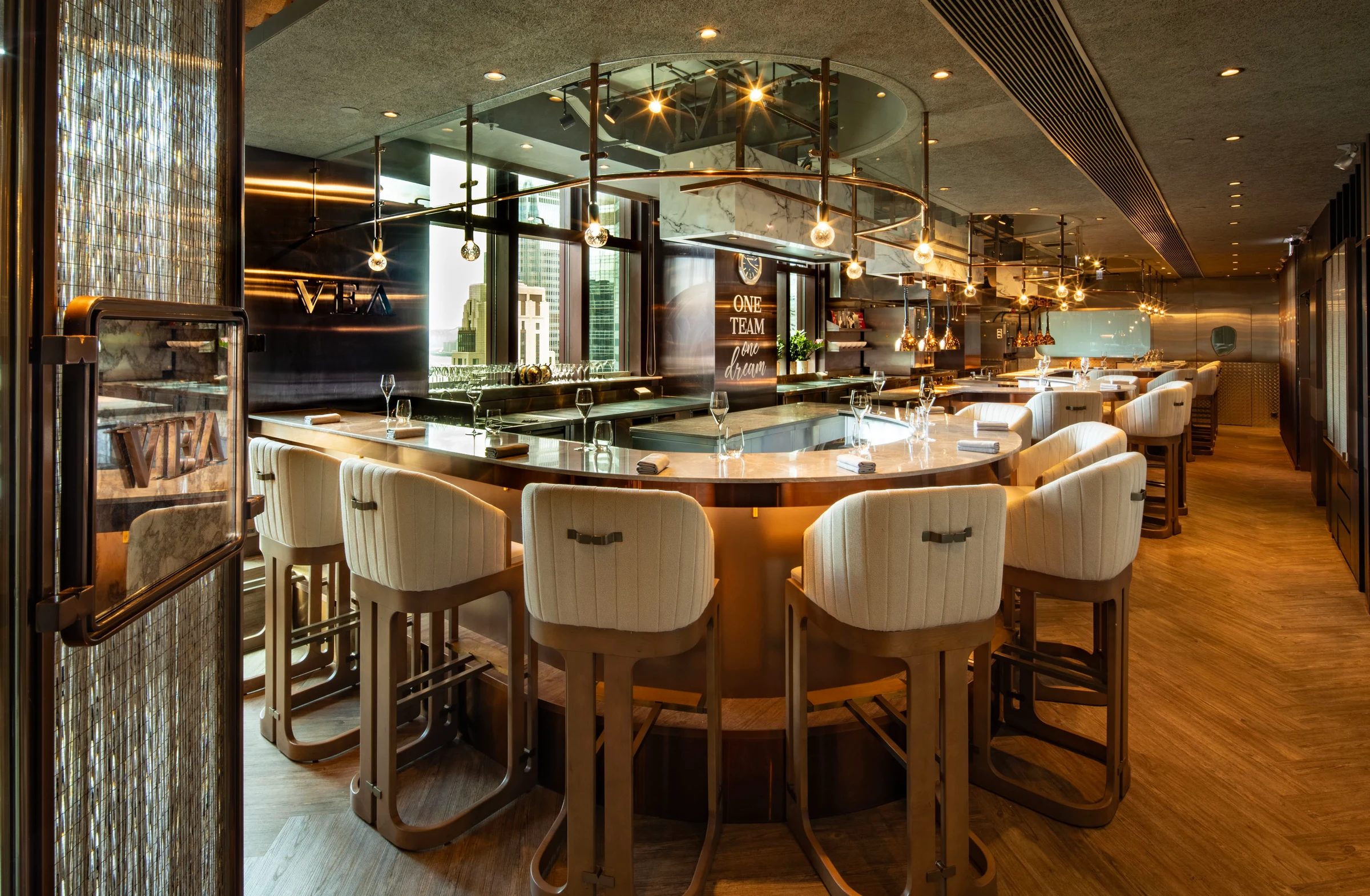
| Vea | Modern Chinese-French Fusion | Hong Kong | Michelin 1 Star, World's 50 Best |
| WING Restaurant | Modern Chinese Fine Dining | Hong Kong | World's 50 Best |
In residence

Similar places
3 Michelin-Star Italian Fine Dining
8 1/2 Otto e Mezzo Bombana (Hong Kong)
Hong Kong, Hong Kong
★★★ · 50 Best
Contemporary French Fine Dining
Amber
Hong Kong, Hong Kong
★★★ · 50 Best
Contemporary French Fine Dining
Caprice
Hong Kong, Hong Kong
★★★ · 50 Best
Traditional Cantonese
The Chairman
Hong Kong, Hong Kong
★ · 50 Best
Modern Chinese-French Fusion
Vea
Hong Kong, Hong Kong
★ · 50 Best
Modern Chinese Fine Dining
WING Restaurant
Hong Kong, Hong Kong
50 Best