Sileni Estates
- 01CityHastings, New Zealand
- Falstaff Winery - 2 Stars · 2026
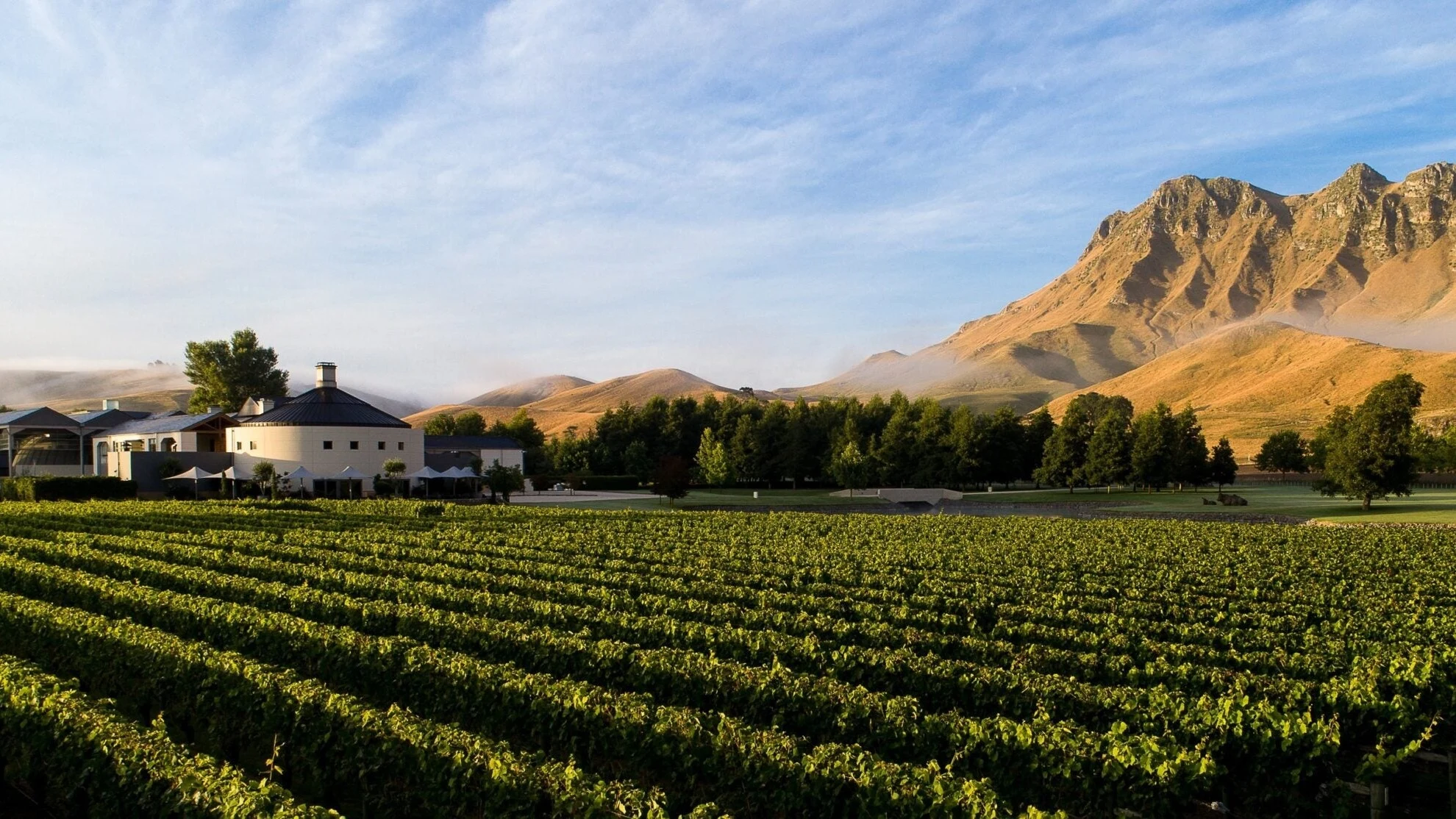
The terrace sets the tone before the technical conversation begins: vines close by, outdoor seating, a cellar-door rhythm built for tasting rather than ceremony, and an Epicurean Centre that folds local-product browsing into the wine visit. In Hawke’s Bay, where cellar doors often split between serious production houses and leisure-driven tasting stops, Sileni Estates sits in the middle ground: large enough to carry a broad portfolio, relaxed enough to function as an easy regional stop, and structured enough to make place part of the experience.
That matters in Hastings because Hawke’s Bay is not a single-note region. It is New Zealand’s oldest wine region, and its reputation leans toward reds with structure as well as aromatic whites. Sileni’s position in the Bridge Pa Triangle gives the visit a clear Hawke’s Bay anchor, while its vineyard base also reaches into Marlborough. The result is a cellar-door story that moves between two major New Zealand identities: Hawke’s Bay for Merlot, Syrah, and fuller red-wine context; Marlborough for the national shorthand of Sauvignon Blanc and cool-climate white-wine recognition.
Bridge Pa Triangle hospitality with a broad New Zealand wine lens
The defining feature here is not scarcity or cult allocation. It is range. The portfolio includes Sauvignon Blanc, Pinot Noir, Merlot, Syrah, and Pinot Gris, with named labels such as The Triangle Merlot, Grand Reserve Pinot Noir, Cellar Selection Sauvignon Blanc, Cellar Selection Pinot Noir, Cellar Selection Pinot Gris, The Plateau Pinot Noir, and Cellar Selection Syrah. The Triangle Merlot carries a winemaker’s-choice designation, which points toward Hawke’s Bay’s red-wine argument rather than treating the cellar door as a generic tasting counter.
Scale also shapes the experience. A facility capable of crushing more than 1,500 tonnes of grapes places the winery in a substantial commercial tier by regional cellar-door standards. That scale helps explain why the tasting room can support an extensive range rather than a tight micro-producer lineup. The interest for visitors is in seeing how a large Hawke’s Bay producer presents regional character across accessible cellar-selection wines, reserve-style bottlings, and named cuvées built around food pairing.
Sileni Estates began with a first vintage in 1998, which makes it modern rather than ancestral in New Zealand terms. The name reaches back to the Sileni of Greek mythology, companions of Dionysus associated with wine, vineyards, theatre, and good company, but the practical identity is contemporary Hawke’s Bay hospitality. Winemaker Grant Edmonds is attached to the program, and the broader team is described as having training across Alsace, Bordeaux, Burgundy, California, Chile, and Oregon. That international frame matters less as biography than as context: the range has to speak several dialects of wine, from Sauvignon Blanc freshness to Pinot Noir delicacy and Hawke’s Bay red-wine structure.
Terroir is presented through range, not single-vineyard minimalism
Some wineries make their case through tightly defined parcels, soil maps, and microscopic site language. This one makes its case through a wider New Zealand spread. Hawke’s Bay and Marlborough are complementary rather than interchangeable: one gives the cellar door its physical and red-wine centre of gravity, the other expands the white-wine and Pinot-facing side of the portfolio. For travellers trying to understand New Zealand wine without turning the day into a technical seminar, that dual-region approach is useful.
The production language is sustainability-oriented, with an emphasis on environmentally sustainable viticultural and winemaking practices. The more important editorial point is restraint in how far that claim should be taken: the public positioning supports a sustainability philosophy, while the cellar-door experience is more clearly evidenced through tasting, local retail, vineyard-adjacent seating, and the food-friendly framing of the wines. In other words, stewardship is part of the vocabulary, but hospitality is the part visitors will encounter first.
Recognition is similarly grounded in bottle-level evidence rather than a trophy-wall narrative. Natalie MacLean scores attached to earlier vintages include 90/100 for Cellar Selection Sauvignon Blanc 2011, 91/100 for Grand Reserve Pinot Noir 2018, 92/100 for The Plateau Pinot Noir 2009, and 91/100 for The Plateau Pinot Noir 2012. Those numbers do not create a current-vintage hierarchy, but they do show that the range has attracted credible outside attention across white, Pinot, and named red-wine expressions.
The room’s appeal is broader than the glass alone. Trained cellar-door staff, local products, accessible parking, step-free entry, outdoor seating, a conversational noise level, and dog- and child-friendly tags all point toward a visit that suits mixed groups. This is not the austere tasting-room model where every guest is assumed to arrive with a notebook. It is a Hastings winery for people who want wine education, terrace time, and regional browsing in the same stop.
How it fits into a Hastings wine day
For planning the wider region, Sileni Estates works as a useful lens on the hospitality side of Hawke’s Bay wine. Readers building a cellar-door route can place it alongside Alpha Domus Winery, Collaboration Wines, Craggy Range, Greyrock, and Hawkes Bay Wine to understand how Hastings shifts between estate scale, boutique production, cellar-door theatre, and regional breadth.
The wider Hastings trip also benefits from separating wine time from the rest of the day. Use our full Hastings wineries guide for cellar-door planning, then cross-check our full Hastings restaurants guide, our full Hastings hotels guide, our full Hastings bars guide, and our full Hastings experiences guide for the surrounding itinerary. For a broader New Zealand and international wine frame, compare the editorial spread across Akarua Winery in Nevis, Akitu in Wānaka, Alan McCorkindale Limited in Christchurch, »der Steiner« Hans Steiner in Podersdorf am See, and & Handwein in Mannheim.
The editorial takeaway is clear: this is a large, hospitable Hawke’s Bay cellar door using range, terrace setting, and food-minded retail to translate terroir for a wide audience. Go for a generous reading of New Zealand wine rather than a narrow collector ritual.
Questions
Frequently asked
How expensive is Sileni Estates?
Sileni Estates is listed at a price level of $$.
The field
How it compares
| Place | Notes | Awards |
|---|---|---|
| Sileni Estates | Bridge Pa, $$ | · |
| Alpha Domus Winery | Hastings | · |
| Collaboration Wines | Hastings | · |
| Craggy Range | Hastings | World's 50 Best |
| Squawking Magpie | Hastings | · |
| Stonecroft | Hastings | · |
| Wild Rock Wine | Hastings | · |