Sushi Kawashima
- 01CuisineNara-Style Omakase Sushi
- 02CityNara, Japan
- 03RecognitionOne Michelin Star
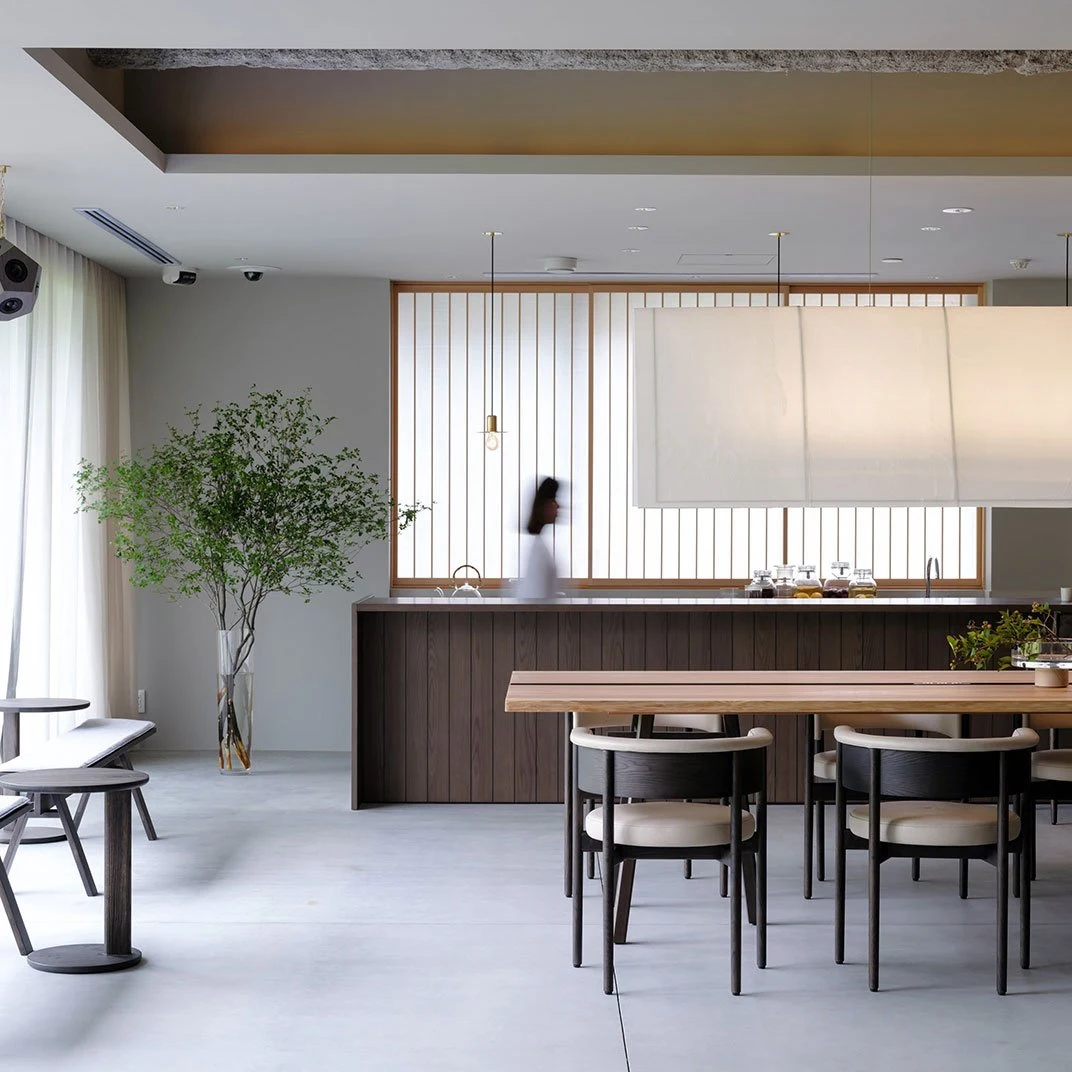
No-wasabi nigiri with Nara seasoning
- 1 Michelin Star · Michelin Guide
- Michelin 1 Star · 2026
- Michelin 1 Star · 2025
- Michelin 1 Star · 2024
Wasabi left off the rice
The wasabi stays off the nigiri so rice and topping meet without a middle note. At Sushi Kawashima in Nara, the owner-chef works a Nara-style omakase that asks for restraint at the counter. Chef Kawashima trained in Japanese cuisine at restaurants in Kyoto and Osaka, working as an itamae before moving to sushi by self-study, and the route shows in the food: kaiseki foundations without a formal sushi apprenticeship, and nigiri left unwasabied so topping and rice carry the taste between them. The restaurant holds one Michelin star, and its identity is not coastal swagger but inland concentration. Nara has no sea on which to lean, so the craft turns toward rice, curing, fermentation, leaf, citrus, and the exact moment a piece is placed down. What is clear is the demand of the station itself: a small room, an omakase sequence, and a style that lets Nara’s older food culture sit beside nigiri without becoming decoration.
Hishio, persimmon leaf, no wasabi
The method at Sushi Kawashima is specific to place. Sashimi may be dressed with hishio, a koji and salt-water preparation understood as a precursor to soy sauce, bringing fermentation into the early part of the meal before the rice begins to set the rhythm. Snacks can carry preserved so, the condensed-milk product associated with ancient Japan, while Yamato tachibana pepper brings a citrus line from a fruit native to the region. Gizzard shad wrapped in persimmon leaf folds sushi into a Nara grammar rather than treating locality as garnish. Karasumi with local taro works in the same register: salt, starch, depth, and restraint. The nigirizushi is formed without wasabi, a decision that changes the bench-side arithmetic. Heat does not intervene. The topping, the rice, the temperature of both, and the pressure of the hand have to carry the piece. The progression ends with persimmon-leaf tea, a quiet close that returns the meal to the prefecture rather than to a generic sushi finish.
A counter near the shrine
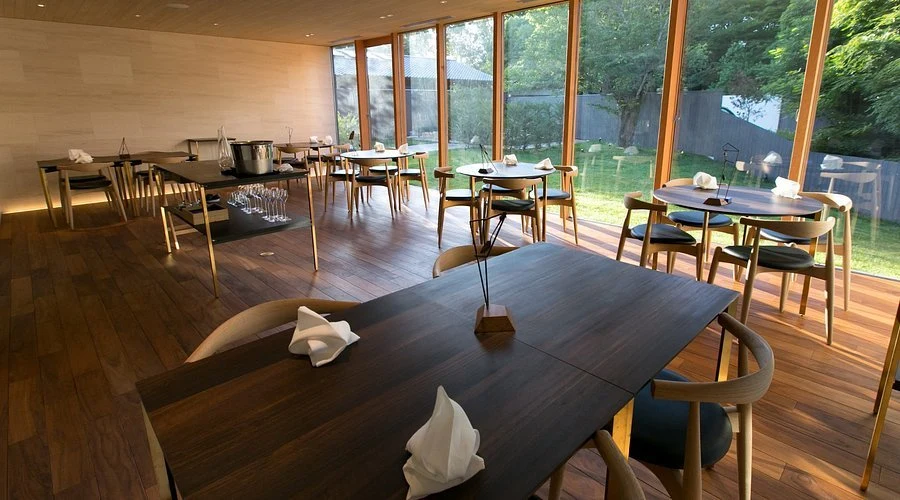
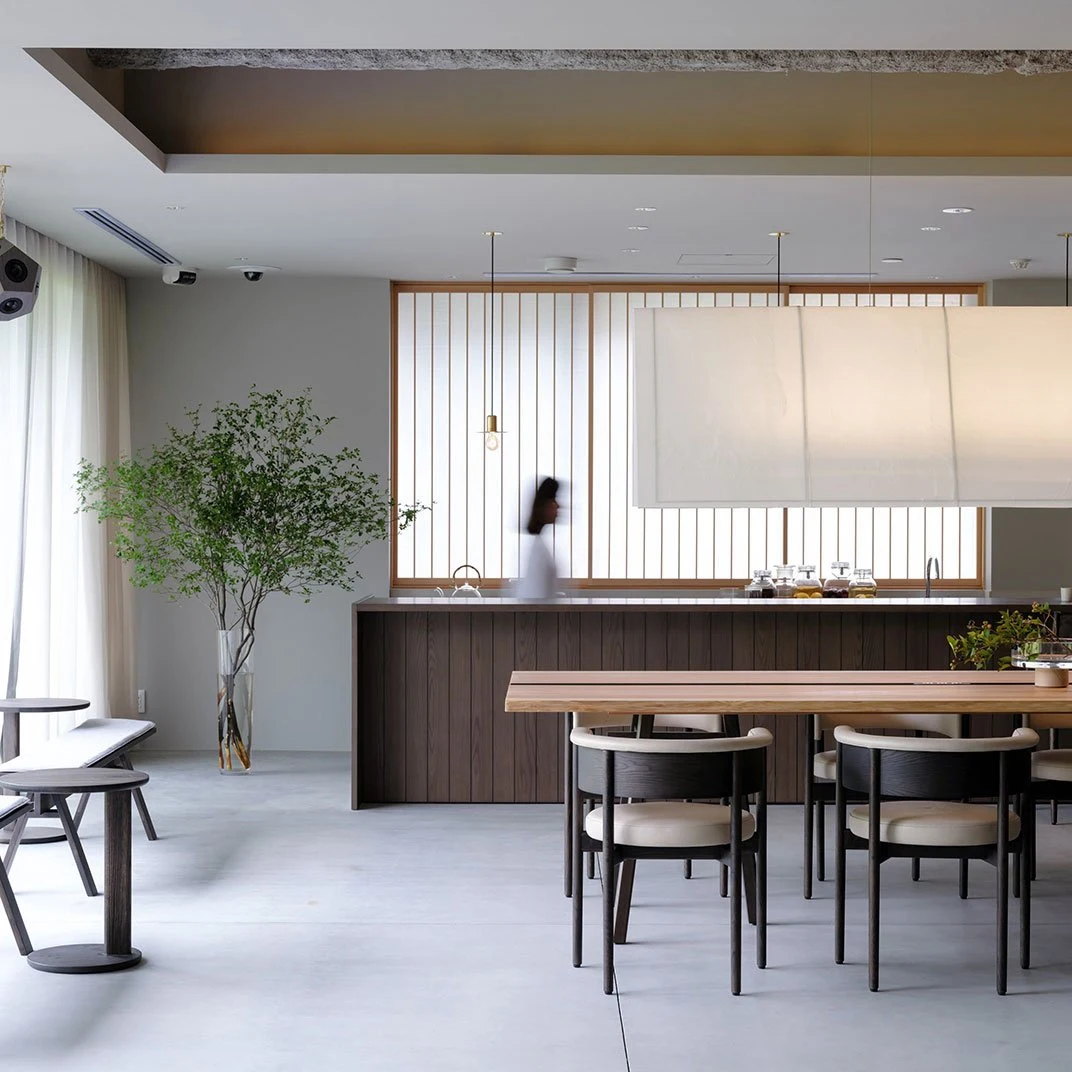
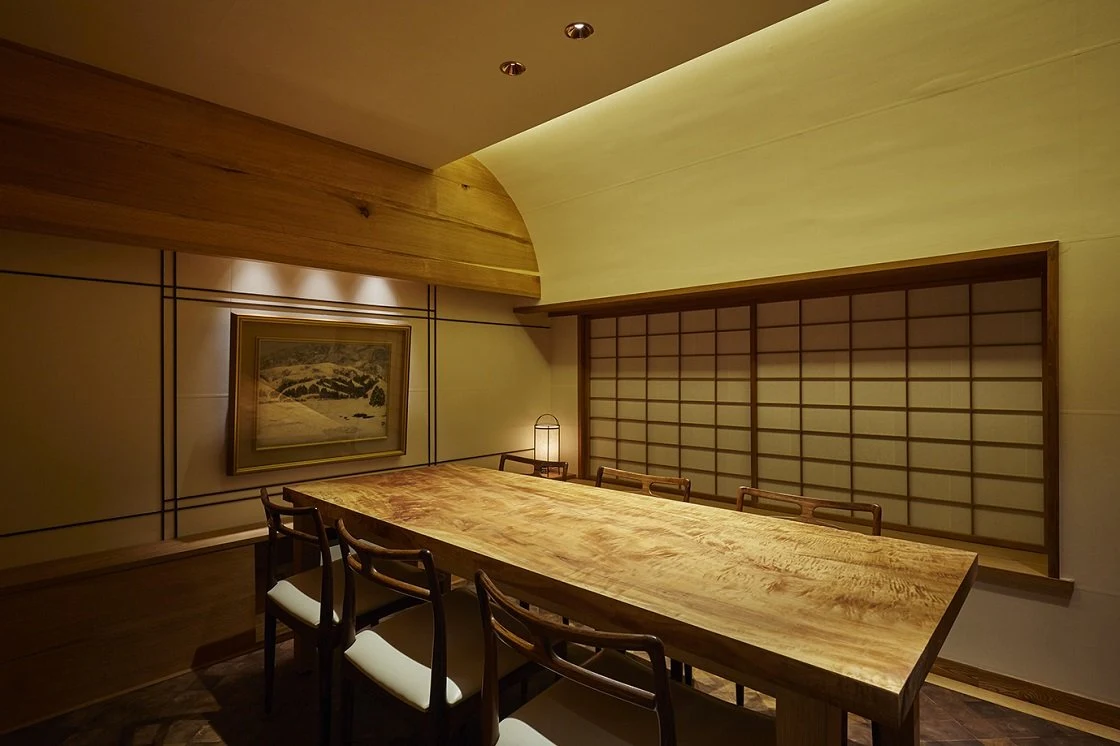
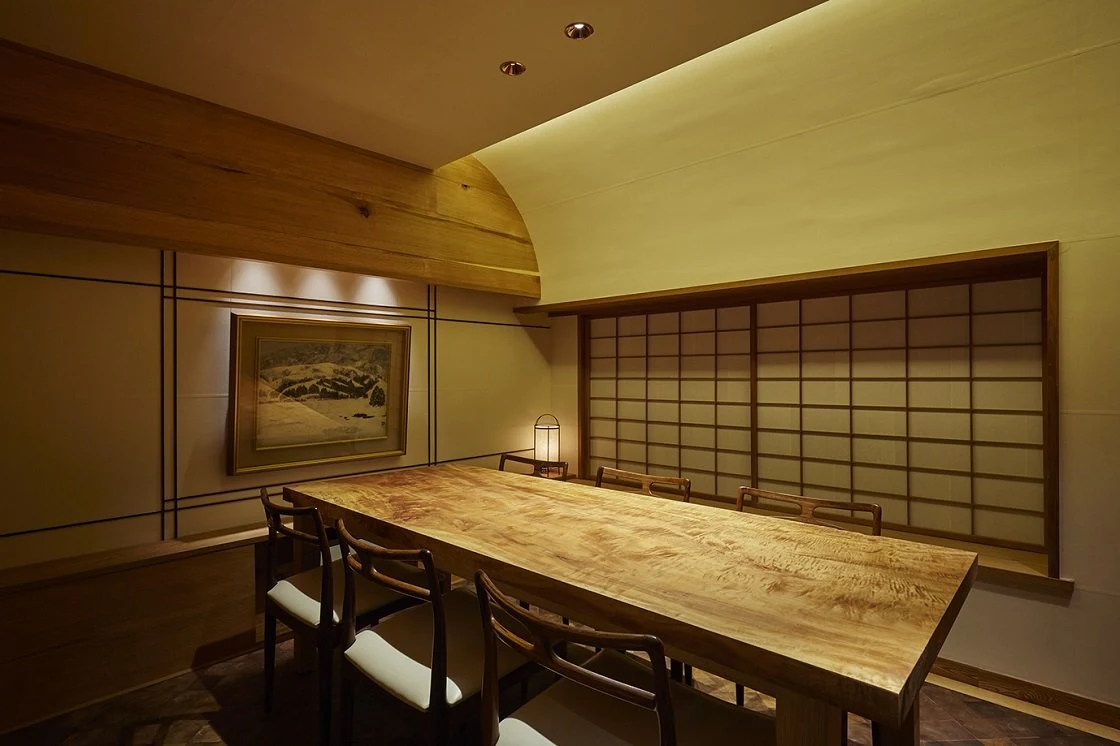
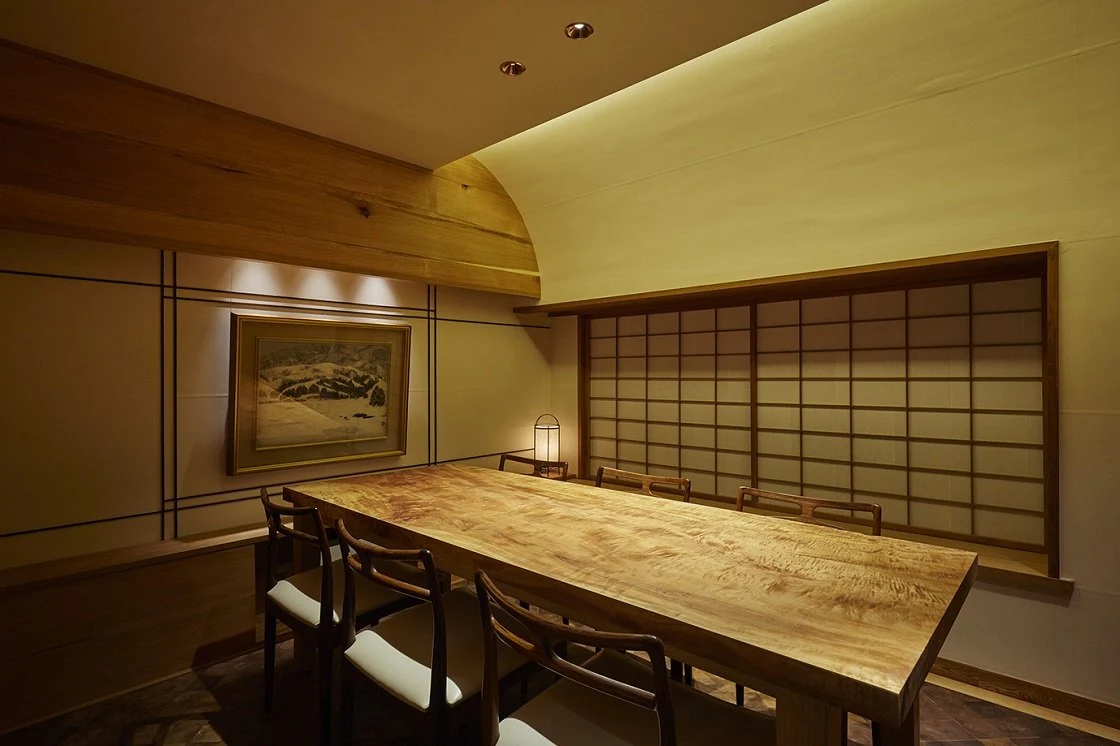
The restaurant sits in a residential part of Kashihara near Kashihara Shrine, close to Kashiharajingū-mae Station, and the room is refined, calm, and quiet. That matters at a sushi counter. Noise changes attention; so does distance. Here the pass is close enough for the guest to read the gesture, the cut, the lift of rice, the small pause before a piece is set down. The atmosphere is formal without becoming cold, with a welcoming manner that guests have noted in the way dishes are explained and the menu is translated for non-Japanese speakers. The setting keeps the work at counter scale. A modest exterior gives way to a composed room, and the meal depends on that compression: chef, assistant, guest, fish, rice, leaf, bowl, tea.
Nara carried piece by piece
The restaurant’s distinction rests on how it turns an inland prefecture into a sushi language. It does not borrow Nara as scenery; it brings hishio, preserved so, Yamato tachibana, persimmon leaf, taro, and tea into the sequence of the meal. The one Michelin star belongs to this address, not to a borrowed reputation, and it sits beside a program that remains intimate in scale. When the final cup arrives, the point is not a flourish but a return to the same discipline that shaped the rice at Sushi Kawashima: persimmon-leaf tea.
Questions
Frequently asked
What style of sushi does Sushi Kawashima serve?
Sushi Kawashima serves a Nara-style omakase sushi course. The meal is shaped by inland Nara food culture rather than a coastal seafood identity.
What is distinctive about the nigiri here?
The nigiri is served without wasabi, so the rice and topping meet directly. That choice is part of the restaurant’s restrained counter style.
What sort of ingredients or flavours appear in the meal?
The menu can include hishio on sashimi, preserved so, Yamato tachibana pepper, gizzard shad wrapped in persimmon leaf, karasumi with local taro, and persimmon-leaf tea at the end.
Has the restaurant received any recognition?
Sushi Kawashima holds one Michelin star.
What should visitors know about booking and the room?
Reservations are essential, and booking is handled through TableCheck. The restaurant is in a refined, calm room in Kashihara, near Kashihara Shrine and close to Kashiharajingū-mae Station.
The field
How it compares
| Place | Awards | Cuisine | Notes |
|---|---|---|---|
| Sushi Kawashima | Michelin 1 Star | Nara-Style Omakase Sushi | Kashihara, $$$$ |
| akordu | Michelin 2 Stars | Modern Spanish with Nara Influences | Nara |
| Koikiryori Aji Manso | Michelin 1 Star | Kappo | Nara |
| LA TRACE | Michelin 1 Star | Modern French with Nara Seasonal Ingredients | Nara |
| Oryori Hanagaki | Michelin 2 Stars | Two Michelin-Star Kaiseki | Nara |
| Tsukumo | Michelin 2 Stars | Modern Kaiseki | Nara |
| Wa Yamamura | Michelin 1 Star | Traditional Kaiseki | Nara |