Sushi Kuu

In Residence
Satoru Mukogawa
Chef
- 01CuisineModern Japanese Sushi and Omakase
- 02CityHong Kong, Hong Kong
- Opinionated About Dining Top Restaurants in Asia Recommended · 2026
- Opinionated About Dining Top Restaurants in Asia Ranked #422 · 2025
- Opinionated About Dining Top Restaurants in Asia Ranked #349 · 2024
- Opinionated About Dining Top Restaurants in Asia Recommended · 2023
Edomae in Central: What the Counter Signals Before the First Piece Arrives
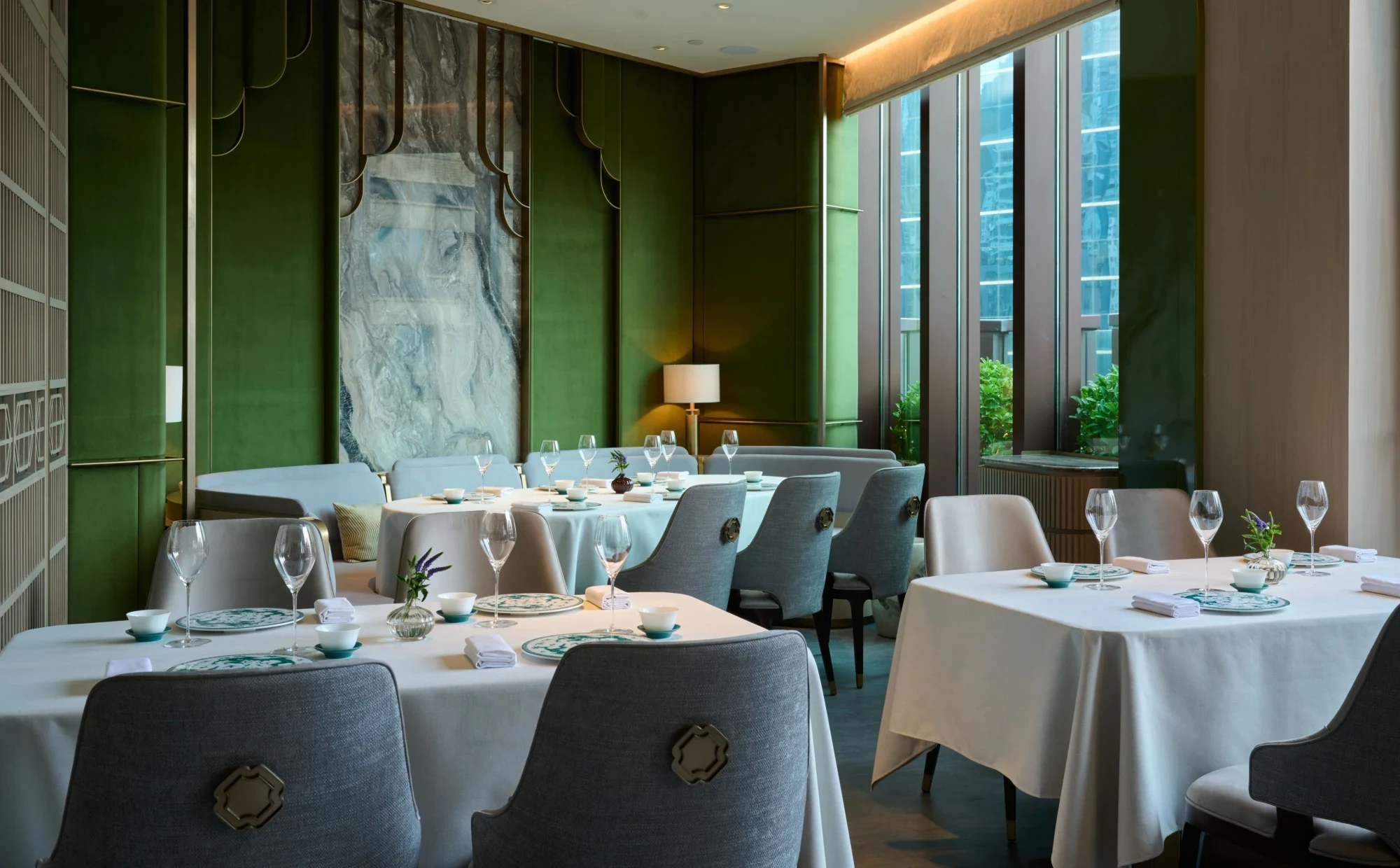
Baskerville House on Ice House Street sits in the quieter, more composed corner of Central, away from the foot traffic of Lan Kwai Fong. Walking into the ground-floor unit, the architectural register is immediate: the counter format, the controlled lighting, the deliberate absence of visual noise. These are not decorative choices. In omakase sushi at this level, the environment is a statement of intent, that the fish, the rice, and the sequence are the entire argument. Hong Kong has accumulated a dense field of Japanese counter restaurants over the past two decades, but the city's serious edomae contingent remains smaller and more self-selecting than the broader Japanese dining scene. Sushi Kuu, a Modern Japanese Sushi and Omakase restaurant in Central, Hong Kong, fits inside that contingent.
The Shokunin Tradition and What It Means in a City Like Hong Kong
Edomae sushi is, at its foundation, a discipline built on transmission. The shokunin model, where technique is absorbed through years of proximity to a master before a chef earns the right to cut independently, produces a recognisable lineage logic in elite counters across Tokyo, and increasingly across Asia. Chef Satoru Mukogawa works within that tradition at Sushi Kuu. The relevant question for a Hong Kong diner is not simply what appears on the counter, but what years of formation behind that technique imply about consistency, sourcing discipline, and the control of the smallest variables: rice temperature, knife angle, the timing of a piece from hand to plate.
That formation logic is why counters with credible apprenticeship depth tend to maintain tighter performance ranges than those that import surface aesthetics without the underlying rigour. It also explains why Opinionated About Dining has tracked Sushi Kuu across three consecutive years, ranked among its Leading Restaurants in Asia in both 2024 (at #349) and 2025 (at #422), and Recommended in 2023. The directional movement in the rankings between years reflects the kind of iterative refinement that serious shokunin practice tends to produce rather than rapid headline-making changes.
Hong Kong's Sushi Tier: Where Kuu Sits
The city's premium sushi counters now occupy a clearly stratified field. At the leading sits Sushi Shikon, a three-Michelin-star operation that prices and formats against Tokyo's most decorated counters. Below that, a second tier of serious, award-tracked counters, including Sushi Saito, Sushi Wadatsumi, Sushi Fujimoto, and Sushi Gin, operate with enough OAD or Michelin recognition to attract both local regulars and visiting diners who have done their research. Sushi Kuu belongs to this peer group: three years of consecutive OAD recognition, a Google rating of 4.2 across 407 reviews, and a Central address that places it alongside some of Hong Kong's most demanding dining environments.
Regionally, the comparison set extends outward. Counters such as Shoukouwa and Hamamoto in Singapore, and Tokyo references including Harutaka, Sushi Kanesaka, and Edomae Sushi Hanabusa, define what apprenticeship-grounded edomae looks like at the top of the Asian market. Internationally, Sushi Sho in New York City and Sukiyabashi Jiro Roppongiten represent how far the counter format has translated outside Japan. Sushi Harasho in Osaka offers a further regional reference for how regional Japanese sushi traditions diverge from the Tokyo-origin edomae model. Within Hong Kong, Kuu earns its position through consistency rather than spectacle, the OAD dataset's value lies precisely in rewarding the former over the latter.
The Format and What to Expect
Service runs across lunch and dinner sittings, seven days a week, from 12 to 3 pm and 6 to 11 pm. The split-session structure is standard for counters operating at this level in Hong Kong: it allows the kitchen to reset fully between services, which matters in edomae contexts where rice preparation and fish conditioning are continuous processes rather than batch operations. Arriving at the start of a session rather than mid-way through is always the better read, particularly for the lunch format where the pace tends to be more compressed.
The counter format itself shapes the experience in ways that matter. Omakase removes choice as a mechanism and replaces it with sequencing, the chef determines what is served, in what order, and at what pace. For diners accustomed to à la carte control, this requires a recalibration. For those already familiar with the format, a counter like Kuu's offers the particular satisfaction of watching a trained professional execute within constraints they have spent years internalising.
Central as a Dining Address
Ice House Street and the immediate surrounding blocks represent one of Hong Kong's more concentrated patches of serious dining. The neighbourhood's lunch demographic skews toward finance and legal professionals working nearby, which sustains a daytime counter business that many comparable venues in less commercial districts cannot support. By evening, the same streets draw a more varied crowd, including visiting diners who use Central as a logical base for covering multiple Hong Kong restaurants across a stay. The ground-floor positioning in Baskerville House makes the entrance more accessible than basement or high-floor counters that require navigating building lobbies, a small but practical advantage in a city where the physical experience of finding a venue can set the tone before the meal begins.
Central also positions Kuu well relative to Hong Kong's broader dining field. Diners who approach the city through its full spectrum, including the contemporary European and French references at venues like Caprice, 8 1/2 Otto e Mezzo Bombana, and Feuille, tend to include one or two Japanese counter meals as structural anchors in a multi-night programme. The OAD recognition signals that Kuu can serve that function without being a compromise pick within the sushi category.
Planning Your Visit
What Regulars Order at Sushi Kuu
At an omakase counter, the question of what to order is structurally different from asking for a dish recommendation at an à la carte restaurant. The format at Sushi Kuu is chef-led: the sequence is determined by Chef Satoru Mukogawa based on what the kitchen is working with that service. Regulars at this kind of counter tend to concentrate their attention not on specific pieces but on the rice, its temperature, seasoning level, and how it holds against the fish, and on the progression from lighter white fish through richer, aged, or cured preparations. At established edomae counters, the toro and uni pieces draw the most attention from first-timers, but experienced diners often cite the leaner, more technically demanding cuts as the more revealing indicator of a kitchen's actual level. Kuu's kitchen maintains the consistency that repeat visitors rely on, which is itself the most useful signal for what to expect on any given night.
Questions
Frequently asked
Who works at Sushi Kuu?
Made By profiles Satoru Mukogawa (Chef) at Sushi Kuu.
How expensive is Sushi Kuu?
Sushi Kuu is listed at a price level of $$$$.
Where is Sushi Kuu and what does it serve?
Sushi Kuu is in Central, Hong Kong, serving Modern Japanese Sushi and Omakase.
The field
How it compares
| Place | Cuisine | Notes | Awards |
|---|---|---|---|
| Sushi Kuu | Modern Japanese Sushi and Omakase | Central, $$$$ | · |
| 8 1/2 Otto e Mezzo Bombana (Hong Kong) | 3 Michelin-Star Italian Fine Dining | Hong Kong | Michelin 3 Stars, World's 50 Best |
| Amber | Contemporary French Fine Dining | Hong Kong | Michelin 3 Stars, World's 50 Best |
| Caprice | Contemporary French Fine Dining | Hong Kong | Michelin 3 Stars, World's 50 Best |
| The Chairman | Traditional Cantonese | Hong Kong | Michelin 1 Star, World's 50 Best |
| Vea | Modern Chinese-French Fusion | Hong Kong | Michelin 1 Star, World's 50 Best |
| WING Restaurant | Modern Chinese Fine Dining | Hong Kong | World's 50 Best |
In residence
Similar places
3 Michelin-Star Italian Fine Dining
8 1/2 Otto e Mezzo Bombana (Hong Kong)
Hong Kong, Hong Kong
★★★ · 50 Best
Contemporary French Fine Dining
Amber
Hong Kong, Hong Kong
★★★ · 50 Best
Contemporary French Fine Dining
Caprice
Hong Kong, Hong Kong
★★★ · 50 Best
Traditional Cantonese
The Chairman
Hong Kong, Hong Kong
★ · 50 Best
Modern Chinese-French Fusion
Vea
Hong Kong, Hong Kong
★ · 50 Best
Modern Chinese Fine Dining
WING Restaurant
Hong Kong, Hong Kong
50 Best