Chef in Residence
Tadashi Yoshida
Chef

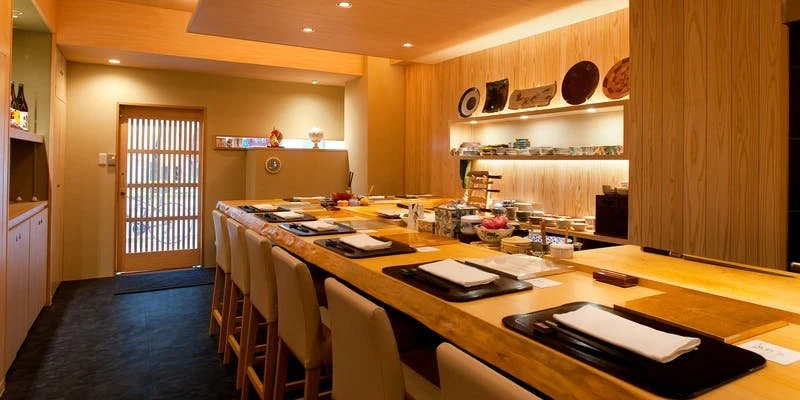
A Michelin Bib Gourmand counter in Nishikanda where Edomae tradition passes directly from father to son. Red-vinegar shari, old-school preparations, and a long zelkova-wood counter in a basement setting place Sushi Yoshino firmly in the lineage-driven tier of Tokyo sushi, serious craft at a price point that sits well below the city's omakase stratosphere.
<h2>The Apprenticeship Model and What It Produces</h2><p>Sushi Yoshino is a traditional Edomae sushi restaurant in Tokyo's Nishikanda, with a Bib Gourmand in 2024 and a price tier of ¥¥. The city's most respected counters trace their lineage through documented apprenticeships: years spent mastering knife angle, rice temperature, and the precise application of red vinegar before a shokunin is considered ready to stand alone. This is not sentimentality. It is a quality-control mechanism that has shaped Edomae sushi for generations, and it explains why a counter's lineage is treated as a credential in the same breath as a Michelin award.</p><p>Sushi Yoshino in Nishikanda sits squarely within that tradition. The founder trained as an apprentice at a sushi restaurant in Kyobashi. When he became independent, he inherited the shop name from his training house, a practice that signals not just permission to operate but a formal endorsement of continuity. That inherited name now flies above a second generation: the founder's son works alongside him, meaning the transmission of technique is happening in real time, across a family line, at a single counter.</p><p>Counters operating on this model sit in a specific tier of Tokyo sushi. They are not the destination omakase rooms of Ginza, places like <a href="https://www.enprimeurclub.com/restaurants/sushi-kanesaka-tokyo-restaurant">Sushi Kanesaka</a> or <a href="https://www.enprimeurclub.com/restaurants/harutaka-tokyo-restaurant">Harutaka</a>, where covers are priced to reflect three-star prestige and the room itself is part of the offering. Nor are they the anonymous neighbourhood sushi-ya with laminated menus and no discernible lineage. They occupy the space between: small, lineage-verified, technically serious, and priced at ¥¥, a range that makes them among the most useful recommendations in the city for anyone who wants craft without the omakase price escalation.</p><h2>The Counter, the Room, the Rice</h2><p>The basement location in a building in Nishikanda, Chiyoda City, establishes the register immediately. Basement sushi counters in Tokyo are common enough that the format carries its own associations: focused, unhurried, removed from street noise. Sushi Yoshino works with this by using lighting deliberately, an approach that matters more underground, where there is no borrowed daylight to shape the atmosphere. The long counter itself is zelkova wood, a hardwood with a pronounced grain that has been used in Japanese joinery and craftsmanship for centuries. It is a material choice that signals the same values as the food: old-school, considered, built to last.</p><p>The technical foundation is red-vinegar shari. This is the marker that separates the most traditionally-minded Edomae counters from the wider population of Tokyo sushi restaurants. Aka-su, red vinegar derived from sake lees, produces a rice with a deeper, more complex acidity and a brownish tint that is visually distinct from the white rice made with grain vinegar. It was the standard in Edo-period sushi and fell out of wide use through the twentieth century before returning as a marker of deliberate traditionalism among serious practitioners. Paired with toppings prepared in the old-school way, the combination at Sushi Yoshino is a coherent statement about which tradition the counter is operating in.</p><p>For context on where this style sits regionally, comparable rigor shows up at counters like <a href="https://www.enprimeurclub.com/restaurants/edomae-sushi-hanabusa-tokyo-restaurant">Edomae Sushi Hanabusa</a>, and the lineage-first approach echoes across Japan's fine-dining culture, from <a href="https://www.enprimeurclub.com/restaurants/hiroo-ishizaka-tokyo-restaurant">Hiroo Ishizaka</a> in Tokyo's upscale residential belt to <a href="https://www.enprimeurclub.com/restaurants/sukiyabashi-jiro-roppongiten-tokyo-restaurant">Sukiyabashi Jiro Roppongiten</a> at the far end of the prestige spectrum. The shared thread is that the counter's authority derives from documented training and inherited practice, not from a marketing narrative.</p><h2>Recognition and What It Tells You</h2><p>The 2024 Michelin Bib Gourmand designation is the key recognition here. The Bib Gourmand category, which Michelin awards to restaurants offering quality cooking at a lower price point, is a specific signal: inspectors found the cooking worth seeking out at a price that does not require the budget of a full-star omakase room. In Tokyo's sushi context, that combination, traditional lineage, red-vinegar technique, multi-generational operation, and a Bib Gourmand, narrows the field considerably.</p><p>A Google review average of 4.7 across 118 reviews adds a separate layer of evidence. At a small counter with limited covers, 105 reviews is a substantial sample, and a 4.7 average at that volume reflects consistent delivery rather than a cluster of enthusiast first-impressions.</p><h2>How Sushi Yoshino Fits the Broader Tokyo Picture</h2><p>Nishikanda is not the obvious sushi destination that Ginza or Shinjuku represent to first-time visitors. That is, in part, what makes a counter like this worth knowing. The neighbourhood operates with less foot traffic and tourist-oriented programming than central Ginza, which means the clientele at a basement counter here tends toward regulars and informed visitors rather than the walk-in tourist trade. This shapes the atmosphere in practical ways: the pace is calibrated for guests who are there for the food, not for a spectacle.</p><p>For visitors assembling a serious Tokyo itinerary, Sushi Yoshino occupies a different slot than the omakase marquee names. It answers the question of where to eat traditional Edomae sushi with documented lineage at a price that does not double the restaurant budget for a single meal. The ¥¥ pricing places it in a bracket where the value case is clear, and the Bib Gourmand supports the quality case.</p><p> <a href="https://www.enprimeurclub.com/restaurants/gion-sasaki-kyoto-restaurant">Gion Sasaki in Kyoto</a>, <a href="https://www.enprimeurclub.com/restaurants/hajime-osaka-restaurant">HAJIME in Osaka</a>, <a href="https://www.enprimeurclub.com/restaurants/akordu-nara-restaurant">akordu in Nara</a>, <a href="https://www.enprimeurclub.com/restaurants/goh-fukuoka-restaurant">Goh in Fukuoka</a>, <a href="https://www.enprimeurclub.com/restaurants/1000-yokohama-restaurant">1000 in Yokohama</a>, and <a href="https://www.enprimeurclub.com/restaurants/6-okinawa-restaurant">6 in Okinawa</a>. For those curious about how Tokyo's Edomae tradition exports, see also <a href="https://www.enprimeurclub.com/restaurants/sushi-shikon-hong-kong-restaurant">Sushi Shikon in Hong Kong</a> and <a href="https://www.enprimeurclub.com/restaurants/shoukouwa-singapore-restaurant">Shoukouwa in Singapore</a>, both of which represent the style at the top of the market in Southeast Asia.</p><p> <a href="https://www.enprimeurclub.com/restaurants/-tokyo-restaurant">restaurants</a>, <a href="https://www.enprimeurclub.com/restaurants/-tokyo-restaurant">hotels</a>, <a href="https://www.enprimeurclub.com/restaurants/-tokyo-restaurant">bars</a>, <a href="https://www.enprimeurclub.com/restaurants/-tokyo-restaurant">wineries</a>, and experiences.</p><h2>Planning Your Visit</h2><p>Sushi Yoshino is located at 2 Chome-3-2 Makiビル 102, Nishikanda, Chiyoda City, Tokyo. The address places it in a low-key section of Chiyoda, accessible by subway. Reservations are recommended. Confirming availability before travelling to the area is the standard approach for small counters of this type in Tokyo.</p><p>Quick reference: Sushi Yoshino, Nishikanda, Chiyoda City, Tokyo. Cuisine: Traditional Edomae Sushi. Price: ¥¥. Google: 4.7 (118 reviews).</p>
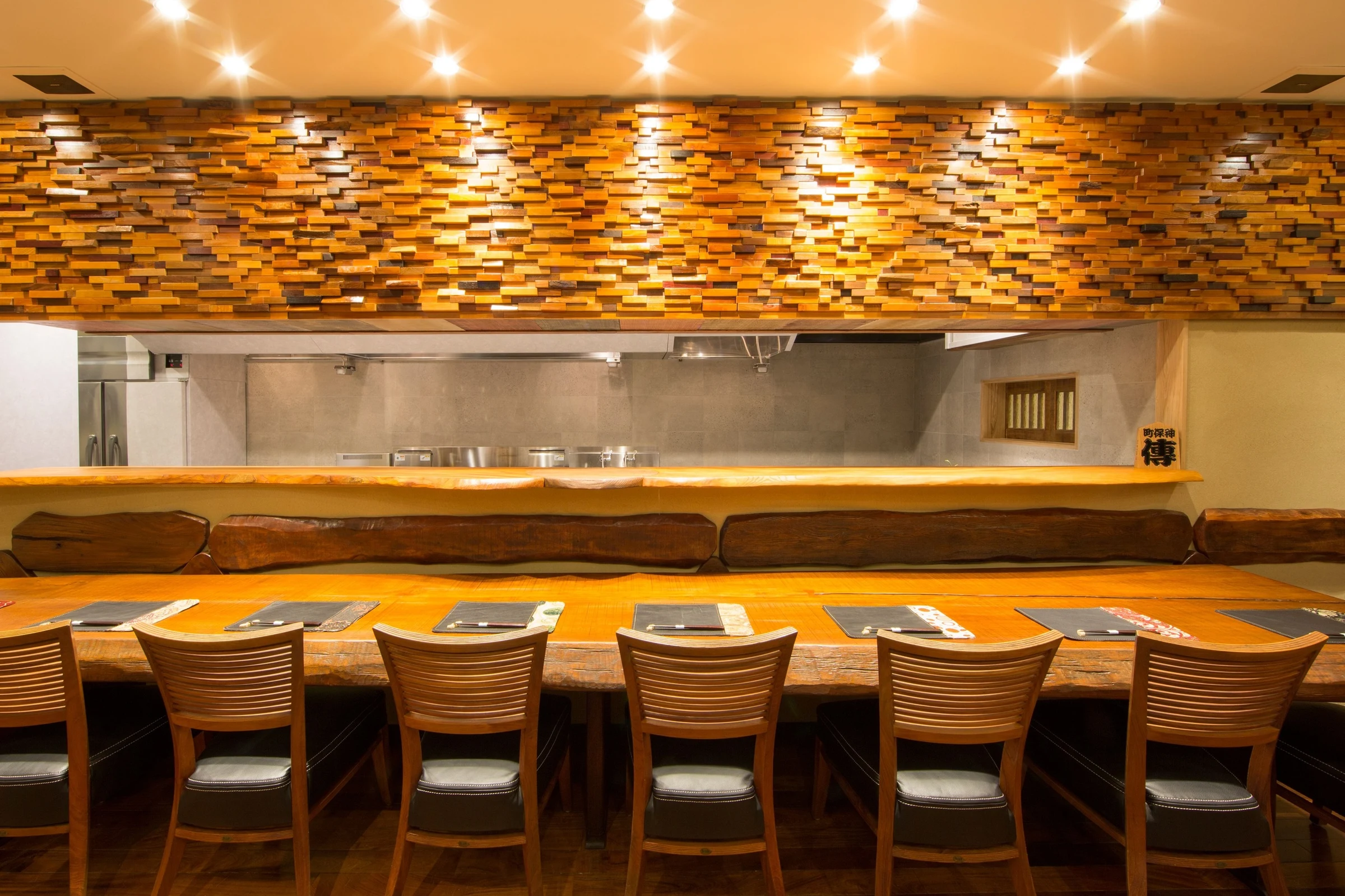
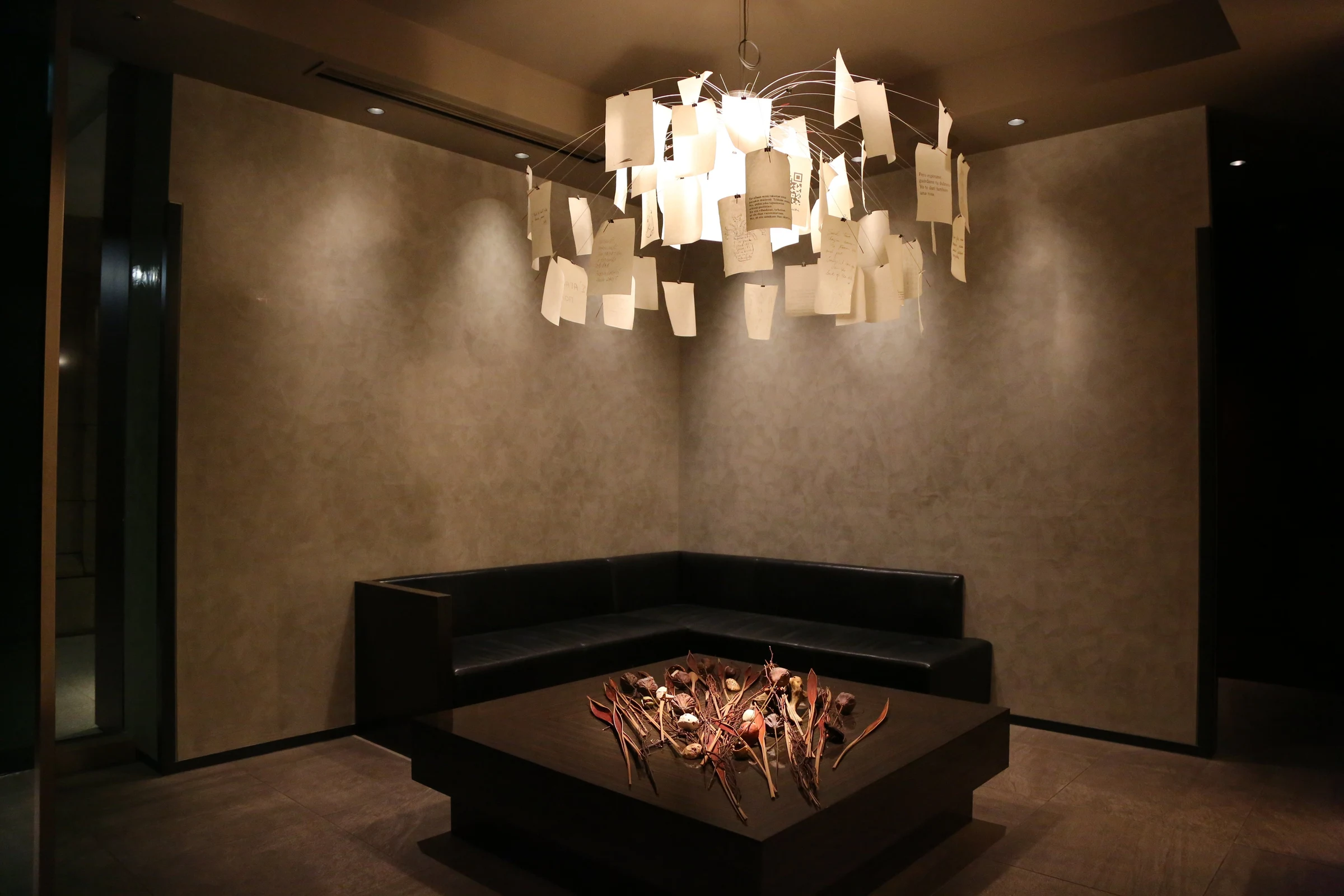
Sushi Yoshino occupies the register of a serious working sushi counter rather than a formal dining room. The basement setting in Nishikanda, the long zelkova wood counter, and old-school preparation style signal craft over ceremony. The 2024 Michelin Bib Gourmand designation reflects a place where the focus is the sushi itself, not the occasion around it. Respectful, tidy dress is appropriate, but the atmosphere is closer to focused than ceremonial.
The chef associated with Sushi Yoshino is Tadashi Yoshida.
The kitchen's identity is built around shari made with red vinegar, a defining characteristic of Edomae tradition that sets the rice apart from the milder white-vinegar styles more common today. Toppings are prepared in the old-school way, meaning the chef applies seasoning and technique to each piece rather than leaving that to condiment dishes. Given the ¥¥ price range and Bib Gourmand standing, the counter format is best experienced as a full progression rather than selecting individual pieces.
Pricing at Sushi Yoshino is listed as ¥¥.
Sushi Yoshino is located at Japan, 〒101-0065 Tokyo, Chiyoda City, Nishikanda, 2 Chome−3−2 牧ビル 102, Tokyo.
Japan, 〒101-0065 Tokyo, Chiyoda City, Nishikanda, 2 Chome−3−2 牧ビル 102
Nihonbashi
Shinjiko Shijimi Chukasoba Kohaku

French
Sézanne
Tokyo, Japan
★★★ · 50 Best
Modern Chinese Fine Dining
Sazenka
Tokyo, Japan
★★★ · 50 Best

Modern Japanese Satoyama Fine Dining
Narisawa
Tokyo, Japan
★★ · 50 Best

Modern French-Japanese Plant-Based Fine Dining
Florilège
Tokyo, Japan
★★ · 50 Best

Modern Japanese Kaiseki
Den
Tokyo, Japan
★★ · 50 Best

Modern French Fine Dining
Quintessence
Tokyo, Japan
★★★