Sushiyuu
- 01CuisineTraditional Edomae Omakase
- 02CityTokyo, Japan
- Opinionated About Dining Top Restaurants in Japan Recommended · 2026
- Opinionated About Dining Top Restaurants in Japan Ranked #520 · 2025
- Opinionated About Dining Top Restaurants in Japan Ranked #452 · 2024
- Opinionated About Dining Top Restaurants in Japan Recommended · 2023
Roppongi's Sushi Counter Against the Grain
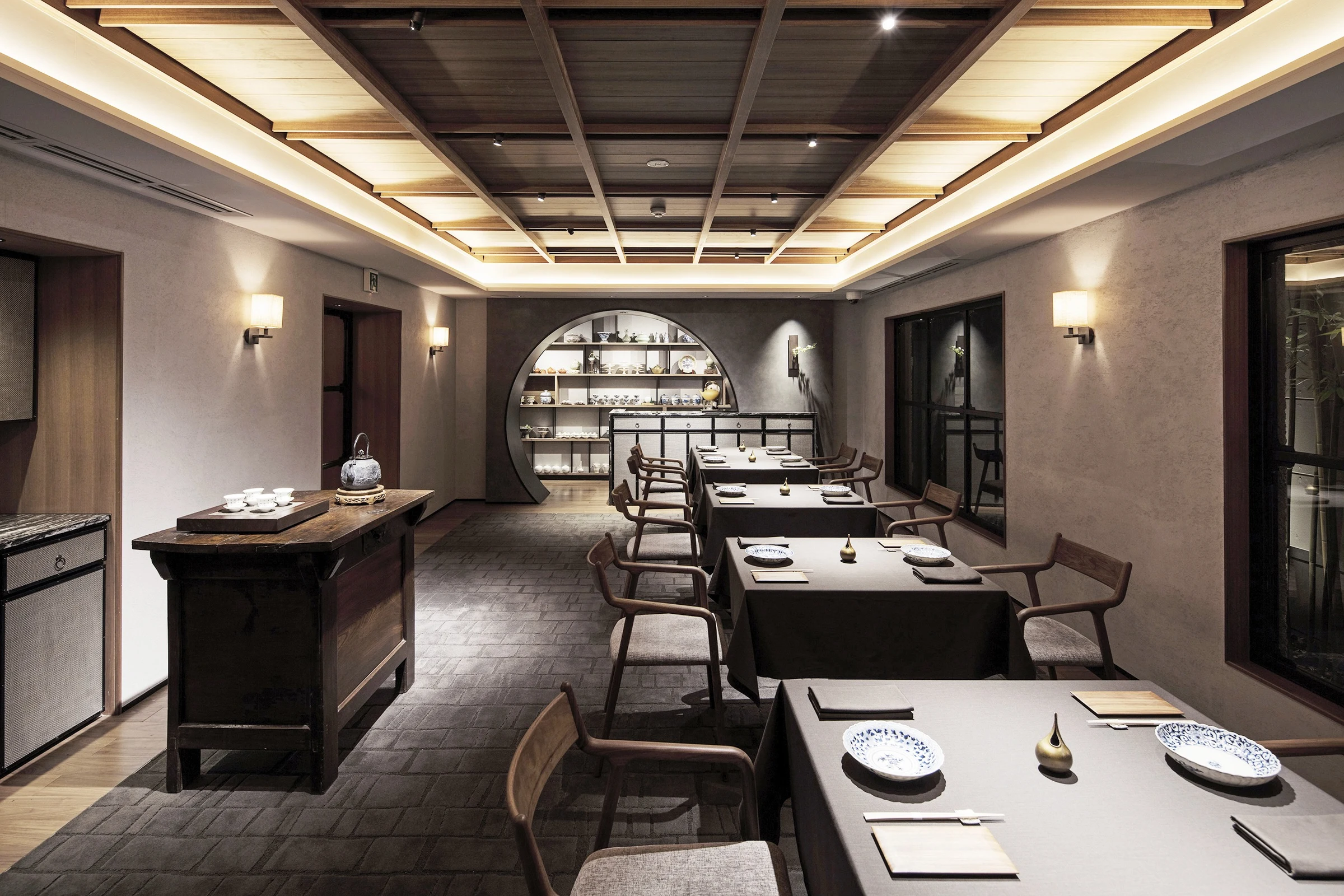
Roppongi has a complicated reputation in Tokyo's dining hierarchy. The district is better known for its art institutions, late-night energy, and concentration of international restaurants than for serious sushi. That makes it an unusual address for a counter that has earned consecutive listings on Opinionated About Dining's Japan rankings, a critical index that tracks specialist sushi, ramen, and washoku through repeat, informed-visitor data. Sushiyuu, operating from a basement room in M's Building on 7-chome Roppongi, arrived on that list as Recommended in 2023, climbed to #452 in 2024, and sits at #520 in 2025. That trajectory, entering ranked and holding position in a field where hundreds of counters compete, says something about consistency rather than novelty.
The neighbourhood context matters. Roppongi's serious dining has historically tilted toward French and kaiseki formats: RyuGin, which operates nearby, built its reputation on Japanese haute cuisine at the highest technical level. The area's sushi offer has been thinner by comparison. Counters at this level of critical recognition more commonly appear in Ginza, Minami-Aoyama, or Nihonbashi, where the comparable set is denser and the omakase infrastructure, specialist fishmongers, aging rooms, established supplier relationships, is more embedded. A counter holding its own against that geography, operating from a basement in a district not associated with the format, occupies a distinct position in how Tokyo's sushi scene is actually distributed across the city.
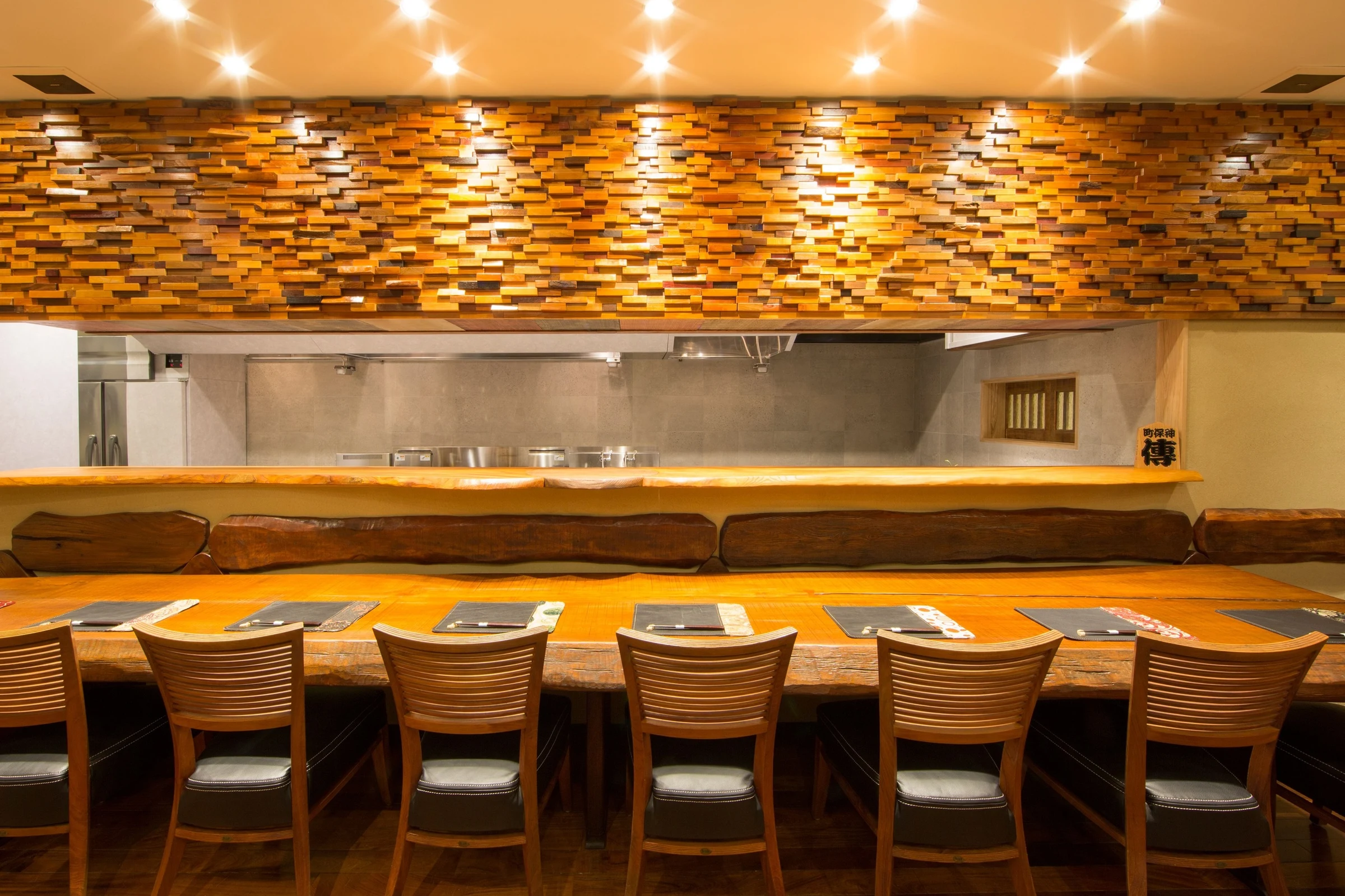
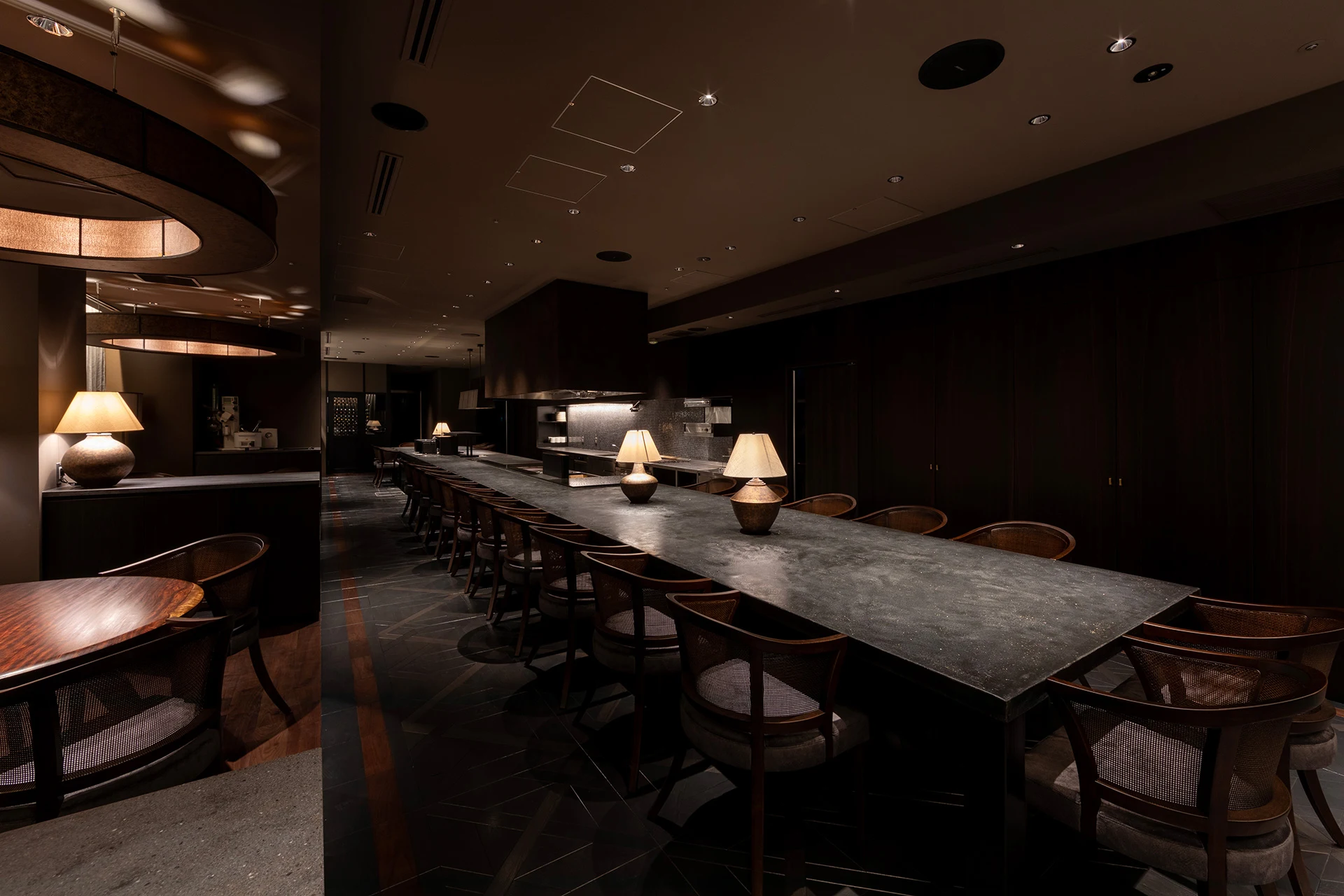
The Roppongi Basement Counter Format
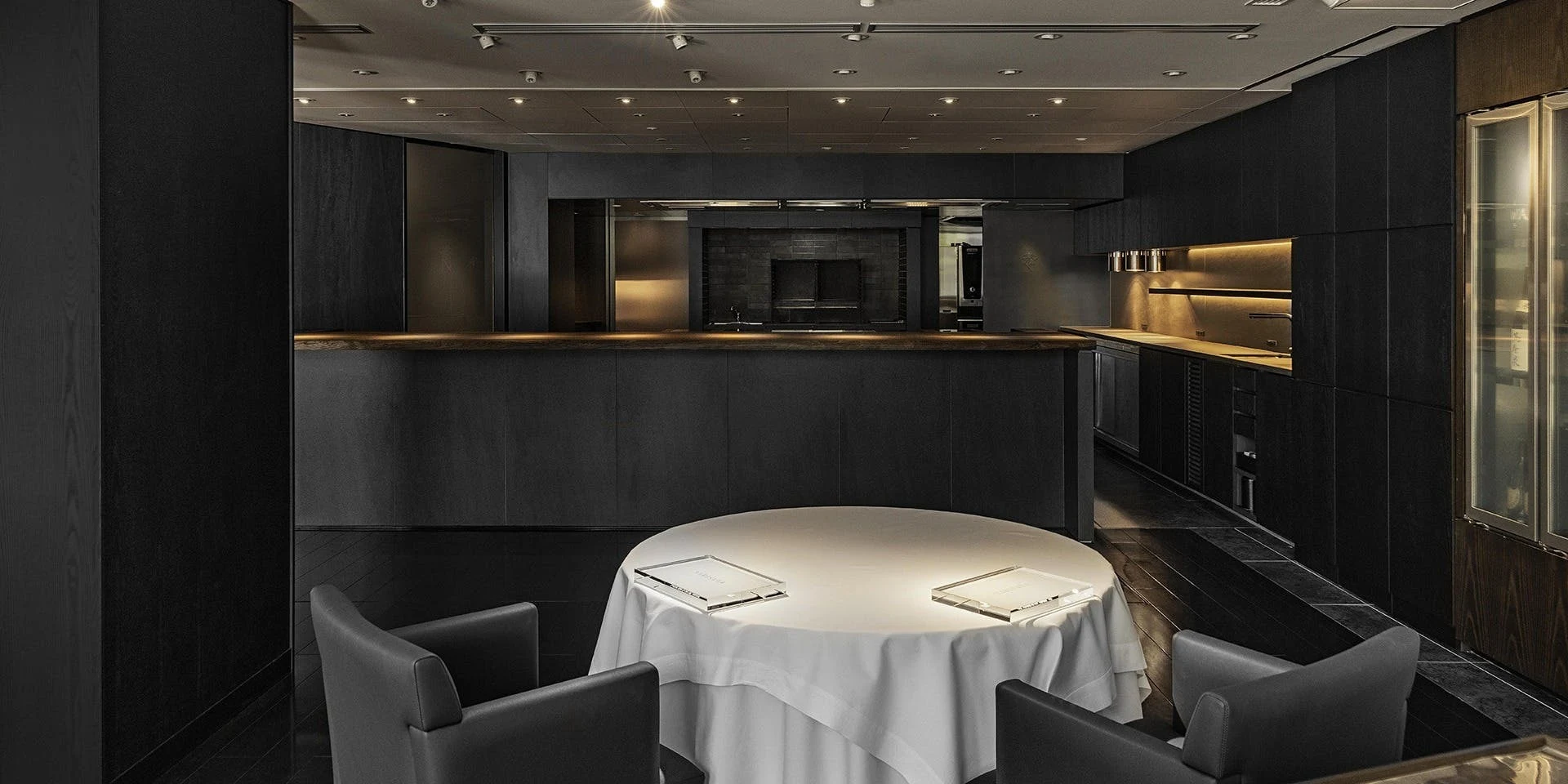
Basement counters in Tokyo are a format with specific implications. They read differently from ground-floor operations: the descent creates a contained environment, acoustically separate from street-level noise, with lighting and temperature that the chef controls completely. In Ginza, this format has become the default for serious omakase, see Sushi Kanesaka or Harutaka, both of which operate in configurations where the physical setting reinforces the idea that you are stepping out of the city's movement and into something more deliberate. Sushiyuu uses the same spatial logic but from a Roppongi address, a neighbourhood where that kind of purposeful separation from the street has less precedent in the sushi category.
The operating hours confirm service Monday through Sunday, 11:00 am to 3:00 pm and 4:00 pm to 11:00 pm. That six-evening window is a common configuration for serious Tokyo counters, where the itamae's preparation work, fish selection, rice temperature management, vinegar calibration, occupies the hours before service. The late closing time allows for a longer service window than many comparable counters.
Reading the OAD Rankings in Context
Opinionated About Dining operates differently from Michelin or the Asia's 50 Best list. Its rankings aggregate scores from a large pool of identified frequent diners, weighted toward people who eat across the relevant category with regularity. For Tokyo sushi specifically, the OAD Japan list functions as a signal of sustained quality in the eyes of the most informed repeat visitors, people who have enough reference points to distinguish a counter that performs consistently from one that had a strong run during inspection season.
The movement in Sushiyuu's position, Recommended in 2023, entering the numbered rankings at #452 in 2024, then #520 in 2025, reads as a counter building its voter base rather than declining in quality. A numbered ranking requires a certain volume of submissions; the 2025 number reflects a wider pool of voters than 2024, which may explain the apparent drop in absolute number even as the counter grows in reach. This is a common pattern in the OAD data for counters that are genuinely gaining visibility. The Google rating of 4.7 across 104 reviews provides a secondary signal.
For comparison within the broader Tokyo sushi tier, Edomae Sushi Hanabusa and Hiroo Ishizaka occupy adjacent critical territory, while Sukiyabashi Jiro Roppongiten, also in Roppongi, operates at the very best of the recognised tier in the same district, providing a point of reference for how seriously the area can be taken when a counter earns its place.
Chef Daisuke Shimazaki and the Counter's Position in the Scene
Tokyo's sushi scene at this level rewards clarity of identity over eclecticism. The counters that build durable critical reputations tend to have a precise point of view on rice temperature, fish sourcing geography, and the ratio of aged to fresh pieces through a service. Chef Daisuke Shimazaki operates Sushiyuu from that framework,
What the record does support is the assessment that the counter has been recognised consistently since at least 2023 and has not been a one-season phenomenon. That kind of sustained presence, particularly from a Roppongi address in a category where Ginza's gravitational pull remains strong, is the kind of detail that matters when assessing where a counter actually sits in the competitive field.
Tokyo's Sushi Scene Beyond Ginza
The distribution of serious sushi across Tokyo's neighbourhoods has shifted over the past decade. Ginza and Shimbashi remain the densest cluster, but counters of genuine critical weight now operate in Minami-Aoyama, Shibuya, Nishi-Azabu, and increasingly, in addresses that earlier guidebooks would have overlooked. Roppongi's entry into this distribution is still partial, Sushiyuu and Sukiyabashi Jiro Roppongiten are outliers rather than part of a cohesive neighbourhood scene, but they indicate that the format can sustain critical quality outside its traditional geography.
That same geographic diversification is visible at the regional level. Serious sushi is no longer a Tokyo-only conversation: Sushi Shikon in Hong Kong and Shoukouwa in Singapore have built credible reputations at the top of their respective markets, operating on edomae principles in cities where the supporting supply chain has become sophisticated enough to allow it. Tokyo remains the reference point, but the radius of serious sushi has expanded.
Planning Your Visit
Sushiyuu operates Monday through Saturday, with evening service from 5:00 pm to 11:30 pm. The address is basement level at M's Building, 7-10-1 Roppongi, Minato City, Tokyo. Booking is essential, and the price per person is about US$170. Sunday is closed.
Quick reference: Basement counter, Roppongi, Mon–Sat 5 to 11:30 pm, closed Sunday; OAD Japan Leading Restaurants ranked #520 (2025); Google 4.8/5 (77 reviews).
Questions
Frequently asked
How expensive is Sushiyuu?
Sushiyuu is listed at a price level of $$$$.
Where is Sushiyuu and what does it serve?
Sushiyuu is in Minato, Tokyo, serving Traditional Edomae Omakase.
The field
How it compares
| Place | Cuisine | Notes | Awards |
|---|---|---|---|
| Sushiyuu | Traditional Edomae Omakase | Minato, $$$$ | · |
| Den | Modern Japanese Kaiseki | Tokyo | Michelin 2 Stars, World's 50 Best |
| Florilège | Modern French-Japanese Plant-Based Fine Dining | Tokyo | Michelin 2 Stars, World's 50 Best |
| Narisawa | Modern Japanese Satoyama Fine Dining | Tokyo | Michelin 2 Stars, World's 50 Best |
| Quintessence | Modern French Fine Dining | Tokyo | Michelin 3 Stars |
| Sazenka | Modern Chinese Fine Dining | Tokyo | Michelin 3 Stars, World's 50 Best |
| Sézanne | Modern French Fine Dining | Tokyo | Michelin 3 Stars, World's 50 Best |
Similar places
Modern Japanese Kaiseki
Den
Tokyo, Japan
★★ · 50 Best
Modern French-Japanese Plant-Based Fine Dining
Florilège
Tokyo, Japan
★★ · 50 Best
Modern Japanese Satoyama Fine Dining
Narisawa
Tokyo, Japan
★★ · 50 Best
Modern French Fine Dining
Quintessence
Tokyo, Japan
★★★
Modern Chinese Fine Dining
Sazenka
Tokyo, Japan
★★★ · 50 Best
Modern French Fine Dining
Sézanne
Tokyo, Japan
★★★ · 50 Best