Tai Wing Wah
In Residence
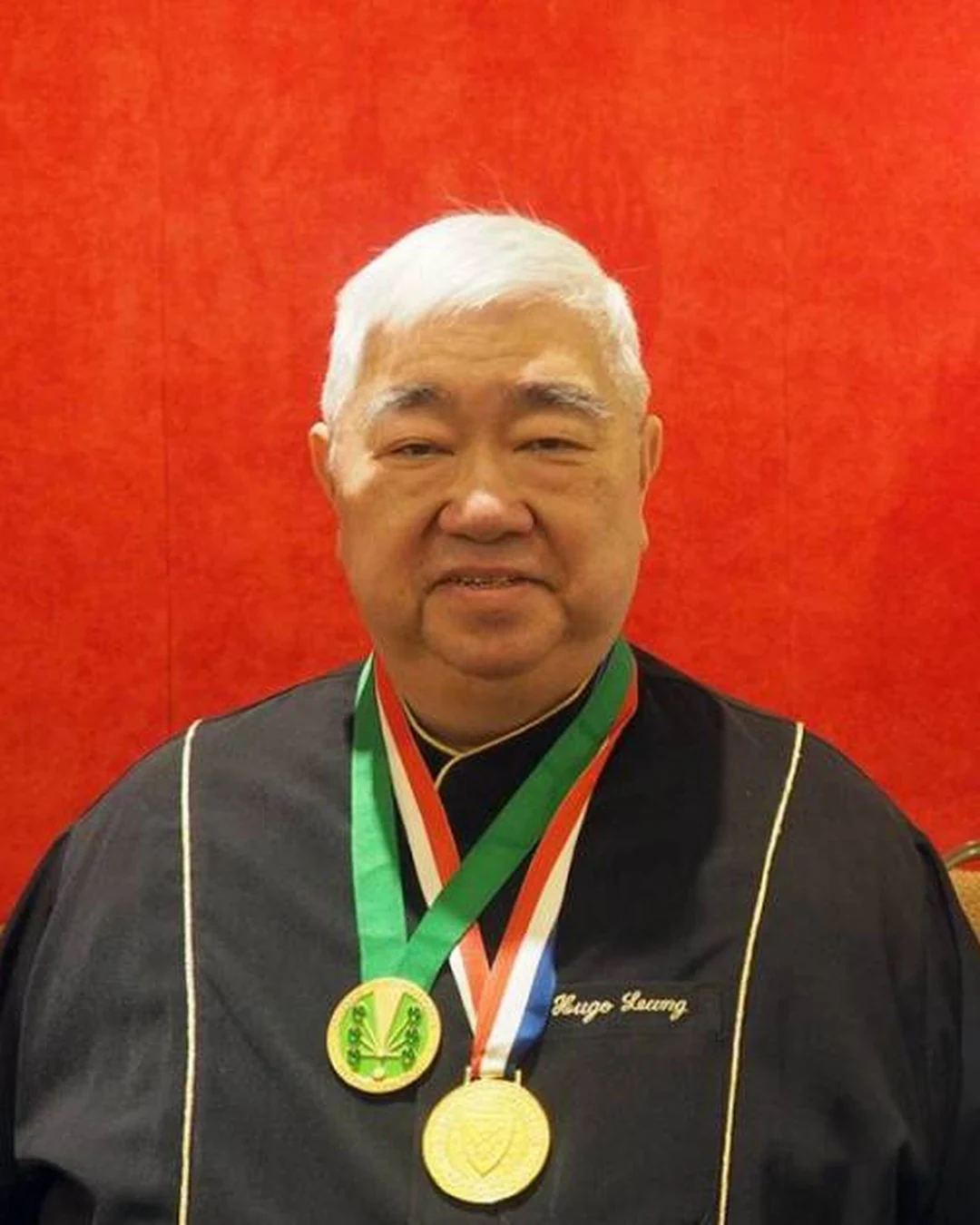
Hugo Leung Man To
Chef
- 01CuisineTraditional Cantonese Walled Village Cuisine
- 02CityHong Kong, Hong Kong
- Michelin Bib Gourmand · Michelin Guide
- Michelin Bib Gourmand · 2026
- Michelin Bib Gourmand · 2025
- Michelin Bib Gourmand · 2024
Yuen Long and the Cantonese table it keeps
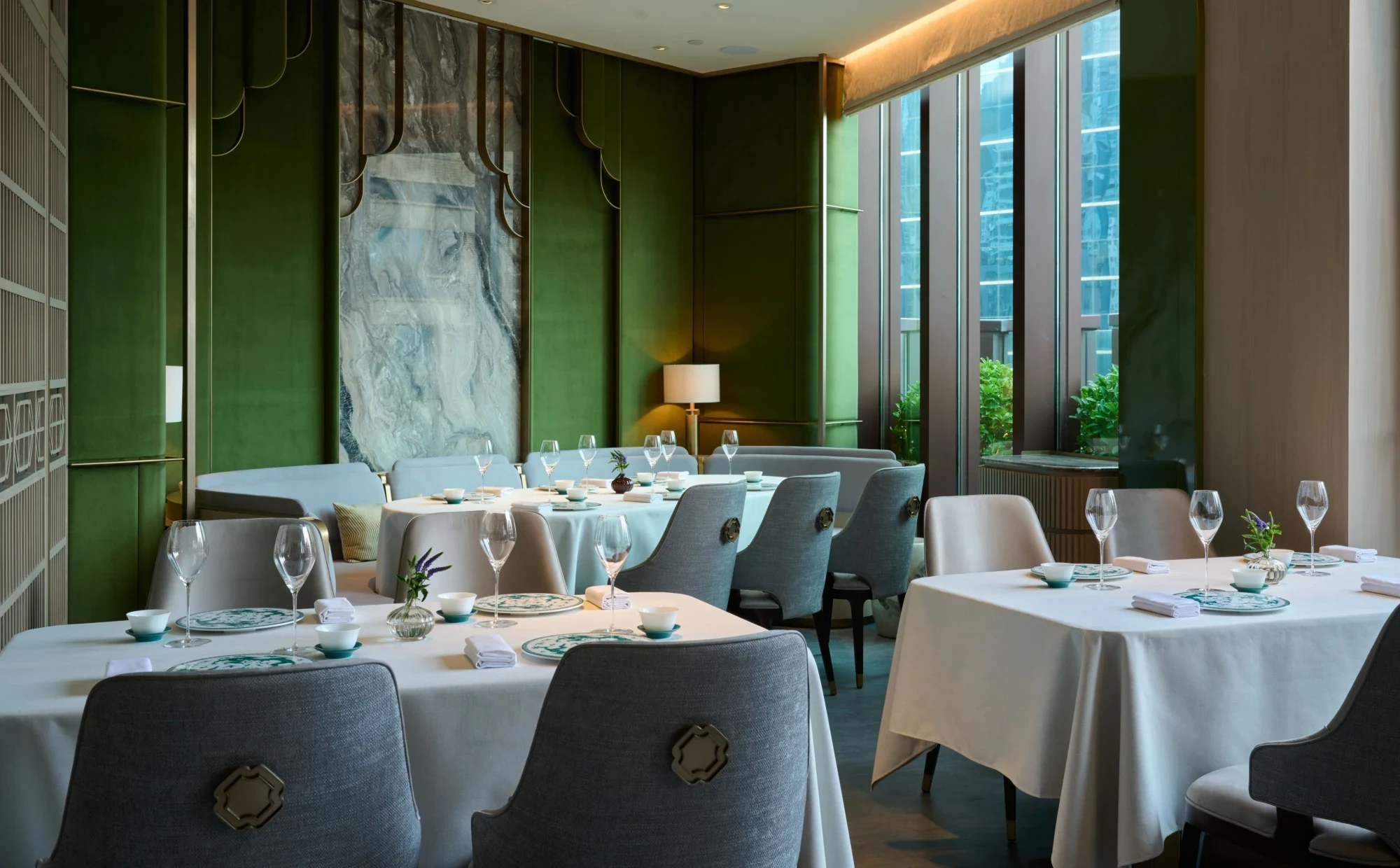
Tai Wing Wah is a restaurant in Hong Kong's Yuen Long district serving Traditional Cantonese Walled Village Cuisine at a $$ price point. The New Territories district sits beyond the density of Mong Kok and Causeway Bay, past the MTR interchange at Tin Shui Wai, in a part of Hong Kong where the architecture lowers and the street-level commerce belongs to residents rather than tourists. Arriving at Tai Wing Wah on the second floor of a low-rise block, you are not in the Hong Kong of harbourfront restaurants and private dining rooms. You are in the Hong Kong that feeds itself without theatrics, and that distinction matters enormously for understanding what the kitchen produces.
Cantonese cuisine is not a monolith. Within the tradition, a clear fault line runs between the metropolitan refinement of Hong Kong island's grand hotel restaurants, the kind of cooking found at Lung King Heen, Lai Ching Heen, or T'ang Court, and the older, more agrarian register of Pearl River Delta village cooking. The former emphasises presentation precision, premium seafood sourcing, and the formal logic of a multi-course banquet. The latter draws on preserved ingredients, slow-cooked meats, and the kind of flavour depth that comes from technique accumulated over generations rather than from luxury product. Tai Wing Wah operates firmly in this second register, and has earned Michelin recognition in consecutive years.
What the Bib Gourmand signals here
Michelin awarded Bib Gourmand recognition in 2024 and 2025, placing the restaurant among Hong Kong's notable value-driven Cantonese addresses. At a $$ price range, Tai Wing Wah sits at a significant distance from the starred Cantonese rooms on Hong Kong island. That gap is not a deficit. It reflects a different competitive set entirely. Where Rùn and Forum compete on premium ingredient sourcing and formal presentation, Tai Wing Wah operates in a tier where the technical benchmark is flavour integrity and product knowledge rather than luxury positioning.
The Bib Gourmand, in the context of a restaurant this far from Hong Kong's dining centre, is also a statement about geography. Michelin's inspectors have increasingly recognised that the most culturally specific Cantonese cooking in the territory is not always found in Central or Wan Chai. The New Territories hold a different relationship to the Pearl River Delta's food traditions, and the recognition of restaurants like Tai Wing Wah reflects a broader understanding that regional Cantonese depth exists outside the hotel circuit.
The regional Cantonese framework
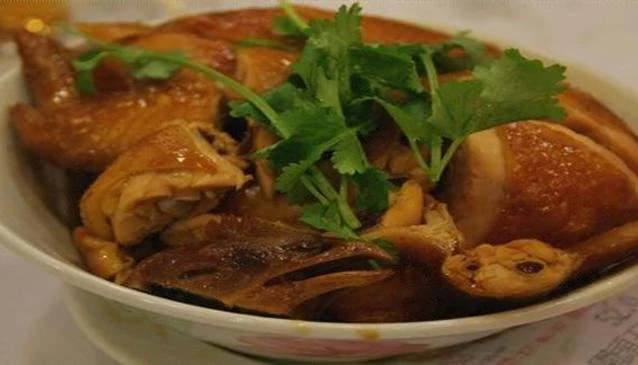
To understand the cooking at Tai Wing Wah, it helps to understand what distinguishes Pearl River Delta village Cantonese from its urban counterpart. The Pearl River Delta tradition places a premium on preserved and cured ingredients, lap mei (cured meats), dried seafood, fermented black beans, and on cooking methods that extract maximum flavour from relatively simple cuts. Congee and clay-pot preparations carry as much weight as whole fish. Seasonal vegetables from the surrounding market gardens of the New Territories appear with a directness that urban kitchens often replace with year-round imported product.
Chef Hugo Leung Man To works within this framework. Chef Hugo Leung Man To works within a specific regional tradition. Across the Pearl River Delta, village Cantonese cooking faces the same forces that have hollowed out regional specificity in other Chinese culinary traditions: younger cooks moving toward more visible, higher-margin formats, and older techniques becoming harder to transmit. In that context, sustained Michelin recognition for a kitchen operating at this price point in Yuen Long carries more weight than the award alone suggests.
For comparison across the broader Cantonese diaspora, Le Palais in Taipei and Jade Dragon in Macau represent the formal, high-investment end of Cantonese cooking outside Hong Kong. Chef Tam's Seasons in Macau occupies a technically progressive middle ground. Summer Pavilion in Singapore reflects the hotel Cantonese model that has spread across Southeast Asia. In Shanghai, 102 House, Bao Li Xuan, Canton 8, and Imperial Treasure Fine Chinese Cuisine each represent how Cantonese cooking translates when exported to a Shanghainese dining culture. None of these parallels are direct comparisons to Tai Wing Wah; rather, they illustrate how geographically and stylistically wide the Cantonese table actually runs.
Google reviews and what 2,847 ratings say
A Google rating of 3.6 across 2,896 reviews is worth noting. At a restaurant with this volume of reviews, a mid-range average typically reflects a particular kind of friction: the gap between what local regulars expect and what visitors arriving on the strength of a Michelin listing find. Yuen Long is not a neighbourhood that absorbs tourist traffic easily. The restaurant is on the second floor of a building without the kind of ground-level visual cues that guide unfamiliar visitors. The absence of English-language signage and menu translation creates a barrier that registers in reviews but does not reflect the cooking. Michelin's inspectors eat anonymously and evaluate on culinary merit.
For comparison, Hong Kong's dining scene at the $$ tier skews heavily toward either international formats, Forum's accessible positioning, for instance, or neighbourhood Cantonese operations that have not attracted significant external attention. Tai Wing Wah occupies an unusual position: externally recognised by Michelin, deeply local in character, and located in a district where the audience is primarily residential rather than transient.
Who makes the trip and why
The case for travelling to Yuen Long specifically for this restaurant is a case about culinary specificity. Visitors who have covered the harbour-facing Cantonese rooms and want a different register of the tradition will find it here. Cantonese cooking at the village end of its spectrum, clay-pot rice, preserved meats, seasonal market vegetables, slow-braised preparations, is increasingly difficult to find at a standard that warrants an hour's travel from Central. The Bib Gourmand designation, sustained over two consecutive years, is the clearest available signal that the kitchen maintains that standard.
The price point reinforces the case. At $$, a full meal sits well below what comparable Michelin-recognised cooking costs elsewhere in the territory, and significantly below the four-figure per-head bills that attach to the starred Cantonese rooms. For anyone building a Hong Kong dining itinerary around depth rather than spectacle, Yuen Long belongs on it.
Planning your visit
Location: 2-6 On Ning Road, Yuen Long (2nd floor). MTR Yuen Long station is the most practical approach. Awards: Michelin Bib Gourmand 2024 and 2025. Price range: $$, among the most accessible price points for Michelin-recognised Cantonese cooking in Hong Kong. Reservations: Recommended. Language: Cantonese is the primary language of service. Chef: Hugo Leung Man To.
Questions
Frequently asked
What recognition does Tai Wing Wah hold?
Tai Wing Wah holds a Michelin Bib Gourmand.
Who works at Tai Wing Wah?
Made By profiles Hugo Leung Man To (Chef) at Tai Wing Wah.
How expensive is Tai Wing Wah?
Tai Wing Wah is listed at a price level of $$.
Where is Tai Wing Wah and what does it serve?
Tai Wing Wah is in Yuen Long Town Centre, Hong Kong, serving Traditional Cantonese Walled Village Cuisine.
The field
How it compares
| Place | Cuisine | Notes | Awards |
|---|---|---|---|
| Tai Wing Wah | Traditional Cantonese Walled Village Cuisine | Yuen Long Town Centre, $$ | · |
| 8 1/2 Otto e Mezzo Bombana (Hong Kong) | 3 Michelin-Star Italian Fine Dining | Hong Kong | Michelin 3 Stars, World's 50 Best |
| Amber | Contemporary French Fine Dining | Hong Kong | Michelin 3 Stars, World's 50 Best |
| Caprice | Contemporary French Fine Dining | Hong Kong | Michelin 3 Stars, World's 50 Best |
| The Chairman | Traditional Cantonese | Hong Kong | Michelin 1 Star, World's 50 Best |
| Vea | Modern Chinese-French Fusion | Hong Kong | Michelin 1 Star, World's 50 Best |
| WING Restaurant | Modern Chinese Fine Dining | Hong Kong | World's 50 Best |
In residence
Similar places
3 Michelin-Star Italian Fine Dining
8 1/2 Otto e Mezzo Bombana (Hong Kong)
Hong Kong, Hong Kong
★★★ · 50 Best
Contemporary French Fine Dining
Amber
Hong Kong, Hong Kong
★★★ · 50 Best
Contemporary French Fine Dining
Caprice
Hong Kong, Hong Kong
★★★ · 50 Best
Traditional Cantonese
The Chairman
Hong Kong, Hong Kong
★ · 50 Best
Modern Chinese-French Fusion
Vea
Hong Kong, Hong Kong
★ · 50 Best
Modern Chinese Fine Dining
WING Restaurant
Hong Kong, Hong Kong
50 Best