Tempura Shimomura
In Residence
Mitsuhiko Shimomura
Chef
- 01CuisineMichelin-Starred Tempura Omakase
- 02CityTokyo, Japan
- Michelin Plate · 2026
- Opinionated About Dining Top Restaurants in Japan Recommended · 2026
- Michelin Plate · 2025
- Opinionated About Dining Top Restaurants in Japan Ranked #459 · 2025
- Tabelog 100 #27: 3.8pts · 2025
- Opinionated About Dining Top Restaurants in Japan Ranked #339 · 2024
- Michelin Plate · 2024
- Opinionated About Dining Top Restaurants in Japan Recommended · 2023
The Ingredient Logic Behind Edo-Style Tempura
Edo-style tempura has always been defined by proximity to water. The tradition developed along the Sumida River, where fishermen and street vendors turned freshly landed seafood into fast, hot food sold from outdoor stalls. The fish came in daily, the oil was hot, and the timing was everything. That sourcing discipline, catching and frying within a short window, is what separated Edo tempura from the blander, heavier versions that developed elsewhere in Japan. What arrives at the fryer determines what the diner actually eats, and in the leading kitchens working within this tradition, the menu is effectively dictated by whatever the market offered that morning.
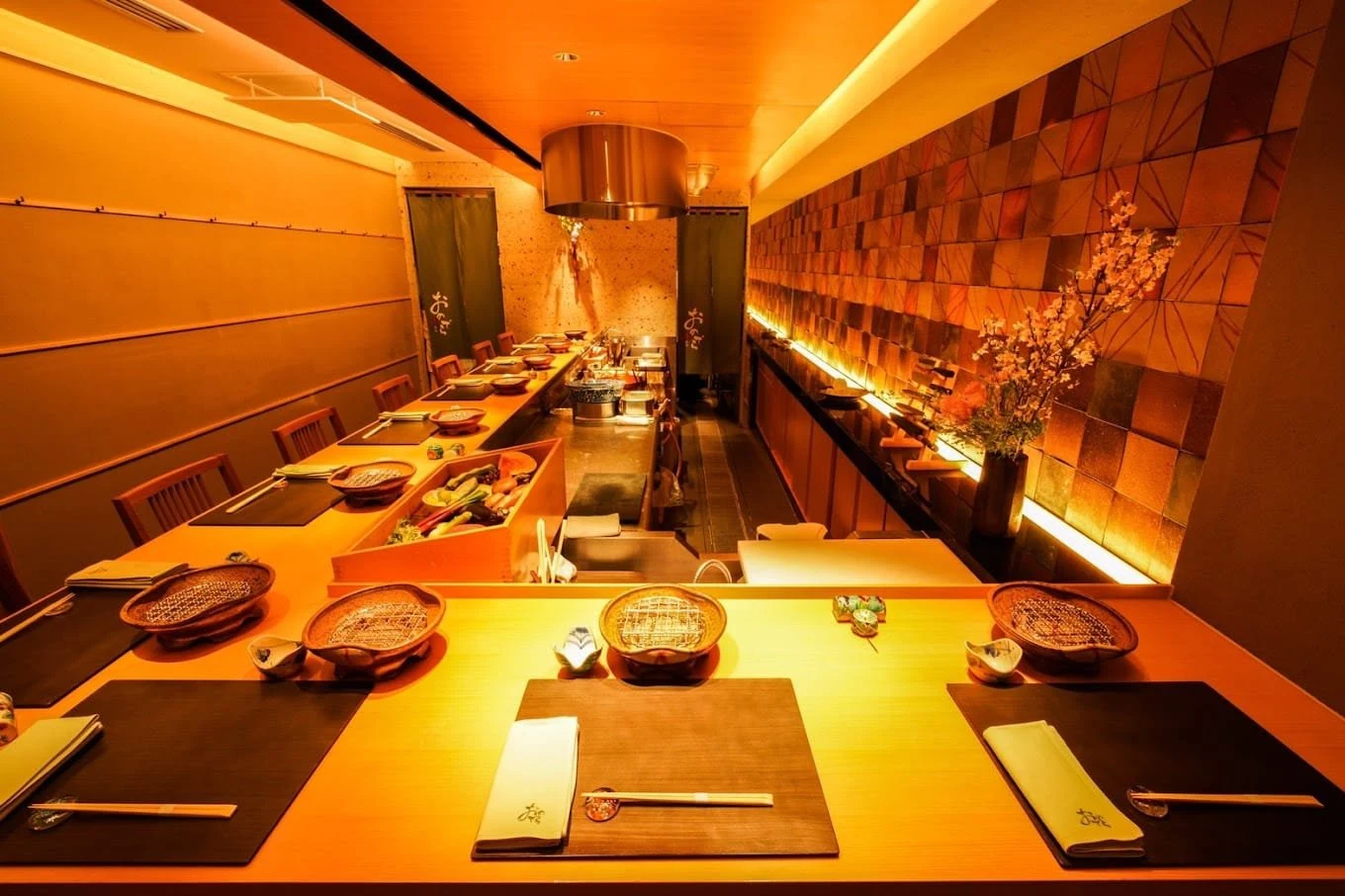
Tempura Shimomura is a Michelin-Starred Tempura Omakase restaurant in Tokyo's Taito City, led by chef Mitsuhiko Shimomura and priced at about $120 per person. These are not decorative choices made for atmosphere alone. They situate the kitchen inside a specific tradition, one where the sourcing constraints of the past still shape how the menu is built today.
The Sunday letter
Find new places through the people who run them.
Our Sunday email brings you the chefs, winemakers and hoteliers behind our newest stories. See a sample before you subscribe.
See a sample of the Sunday emailOne email a week. Unsubscribe from any issue.
What the Kitchen Prioritises and Why
The menu at Shimomura sequences fish and vegetables in strict alternation, a structure that reflects Edo practice rather than contemporary omakase convention. The primary proteins are shrimp, sillago (kisu), and conger eel (anago), three ingredients that have anchored Tokyo tempura menus for generations. Sillago, in particular, is a summer fish with a delicate, sweet flesh that handles the batter-and-fry method precisely because its moisture content is low enough to produce a clean, crisp result without releasing steam that softens the coating. Conger eel, by contrast, is fatty and requires a different frying temperature and batter thickness to avoid greasiness. The fact that these two fish sit on the same menu speaks to technical range, not just ingredient diversity.
For context on how Tokyo's tempura houses occupy different tiers, Tempura Kondo and Tempura Motoyoshi operate at the counter-omakase end of the spectrum, where the chef controls sequence and pacing entirely. Tempura Ginya and Fukamachi sit in a middle register that allows more guest flexibility. Shimomura's approach, with an extensive menu that accommodates diner preference while maintaining regional roots, places it in that second tier: structured by tradition but not rigidly fixed in sequence.
The Case for Tendon in 2025
One of the more telling aspects of Shimomura's offer is what it has kept. Tendon, a bowl of rice topped with tempura, was the original street format through which most Tokyoites encountered the dish. As tempura restaurants moved upmarket over the past few decades, tendon largely disappeared from serious menus in favour of tasting courses served piece by piece. The logic was direct: tendon suggests casual dining, and premium pricing required a premium format. Shimomura resists that drift. At lunchtime, the kitchen offers tendon of vegetable tempura and kakiage, the latter being an all-in-one blend of seafood and vegetables fried together as a single unit rather than individually battered components.
Kakiage, done well, is technically harder than single-piece tempura. The ingredients must be cut to a consistent size and moisture level, the batter must hold them together without becoming dense, and the frying time must account for the fact that the centre of a kakiage takes longer to cook than its edges. A kitchen willing to put kakiage on a lunch menu alongside individual-piece tempura is making an argument about range and confidence rather than simplifying its offer. Diners can also add seafood items to the vegetable set at lunch, which allows some of the same flexibility as a full à la carte menu without abandoning the set structure entirely.
Recognition and Where It Places the Restaurant
Shimomura is recognised in the 2024 and 2025 Tokyo guides.
Edomae Shinsaku operates nearby in a similar register, rooted in Edo technique and recognised by the same critical infrastructure. Both sit apart from the ¥¥¥¥ tier occupied by venues like Harutaka (sushi) or RyuGin (kaiseki), where price and prestige converge at the top of Tokyo's dining pyramid. Shimomura's ¥¥¥ positioning makes it accessible relative to the leading counter experiences while remaining well above casual dining.
Timing, Access, and Planning Your Visit
The lunch service, which includes the tendon and kakiage options, is the more flexible entry point for first-time visitors.
Those extending their Japan trip will find relevant context in HAJIME in Osaka, Gion Sasaki in Kyoto, akordu in Nara, Goh in Fukuoka, 1000 in Yokohama, and 6 in Okinawa. The tempura tradition extends beyond Japan: Mudan Tempura in Taipei and Numata in Osaka offer points of comparison across different markets.
Questions
Frequently asked
Who works at Tempura Shimomura?
Made By profiles Mitsuhiko Shimomura (Chef) at Tempura Shimomura.
How expensive is Tempura Shimomura?
Tempura Shimomura is listed at a price level of $$$.
Where is Tempura Shimomura and what does it serve?
Tempura Shimomura is in Taitō, Tokyo, serving Michelin-Starred Tempura Omakase.
The field
How it compares
| Place | Cuisine | Notes | Awards |
|---|---|---|---|
| Tempura Shimomura | Michelin-Starred Tempura Omakase | Taitō, $$$ | · |
| Den | Modern Japanese Kaiseki | Tokyo | Michelin 2 Stars, World's 50 Best |
| Florilège | Modern French-Japanese Plant-Based Fine Dining | Tokyo | Michelin 2 Stars, World's 50 Best |
| Narisawa | Modern Japanese Satoyama Fine Dining | Tokyo | Michelin 2 Stars, World's 50 Best |
| Quintessence | Modern French Fine Dining | Tokyo | Michelin 3 Stars |
| Sazenka | Modern Chinese Fine Dining | Tokyo | Michelin 3 Stars, World's 50 Best |
| Sézanne | Modern French Fine Dining | Tokyo | Michelin 3 Stars, World's 50 Best |
In residence
Similar places
Modern Japanese Kaiseki
Den
Tokyo, Japan
★★ · 50 Best
Modern French-Japanese Plant-Based Fine Dining
Florilège
Tokyo, Japan
★★ · 50 Best
Modern Japanese Satoyama Fine Dining
Narisawa
Tokyo, Japan
★★ · 50 Best
Modern French Fine Dining
Quintessence
Tokyo, Japan
★★★
Modern Chinese Fine Dining
Sazenka
Tokyo, Japan
★★★ · 50 Best
Modern French Fine Dining
Sézanne
Tokyo, Japan
★★★ · 50 Best
The Sunday letter
Get the next Made By story in your inbox.
We send one email every Sunday morning with the places and people we covered that week.
See a sample of the Sunday emailOne email a week. Unsubscribe from any issue.