Èter
- 01CuisineModern Contemporary Spanish
- 02CityMadrid, Spain
- 03RecognitionOne Michelin Star
- 1 Michelin Star · Michelin Guide
- Macarfi 8 Food Rating · 2026
- Michelin 1 Star · 2026
- Opinionated About Dining Top Restaurants in Europe Recommended · 2026
- Guía Repsol 1 Sol · 2026
- Opinionated About Dining Top Restaurants in Europe Ranked #614 · 2025
- Michelin Plate · 2025
- Michelin Plate · 2024
Where Arganzuela Meets the Contemporary Table
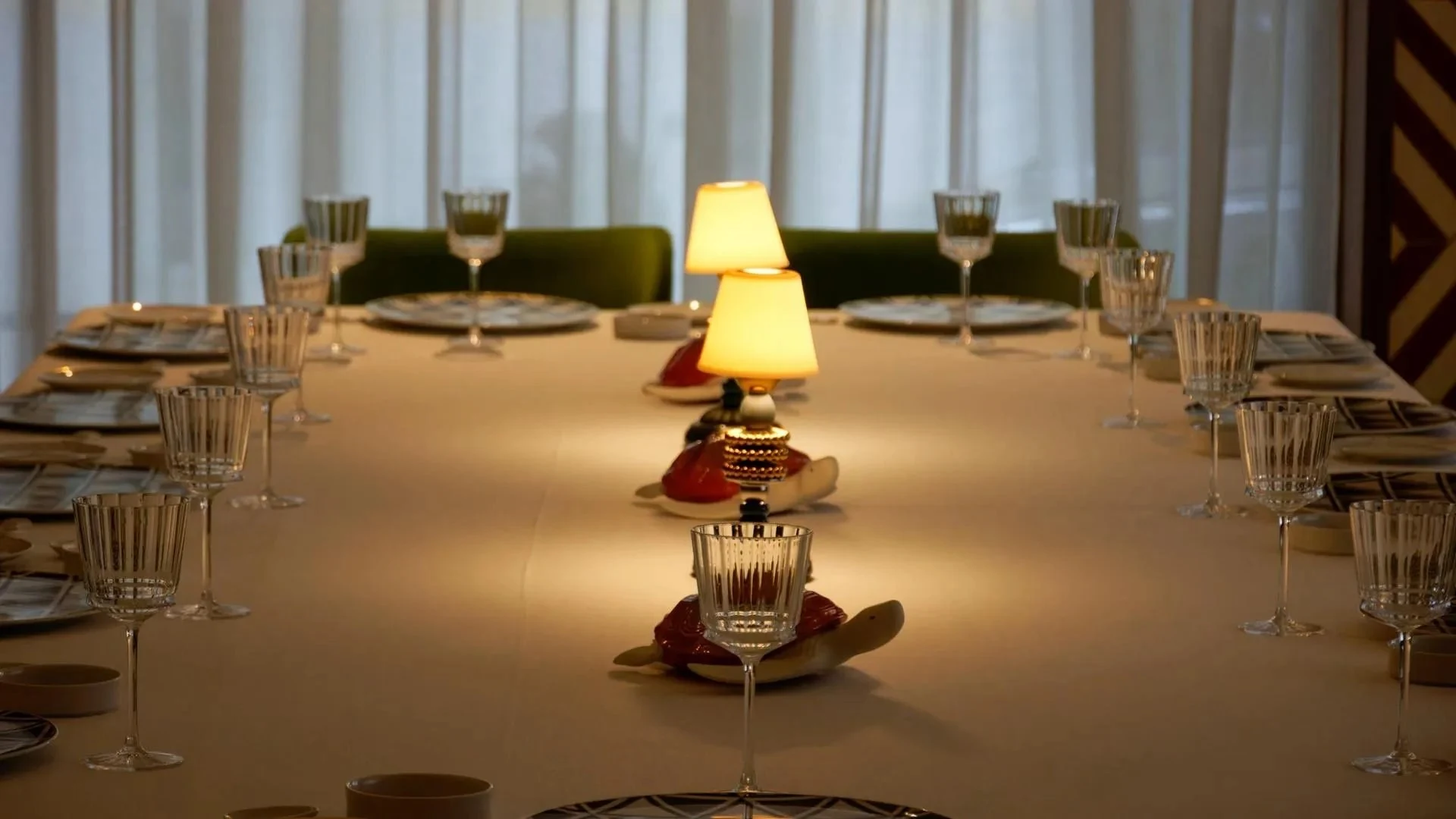
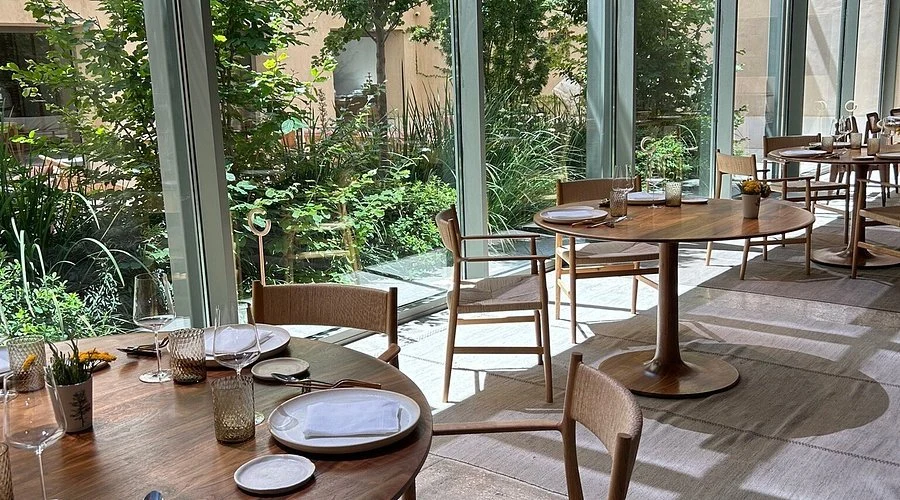
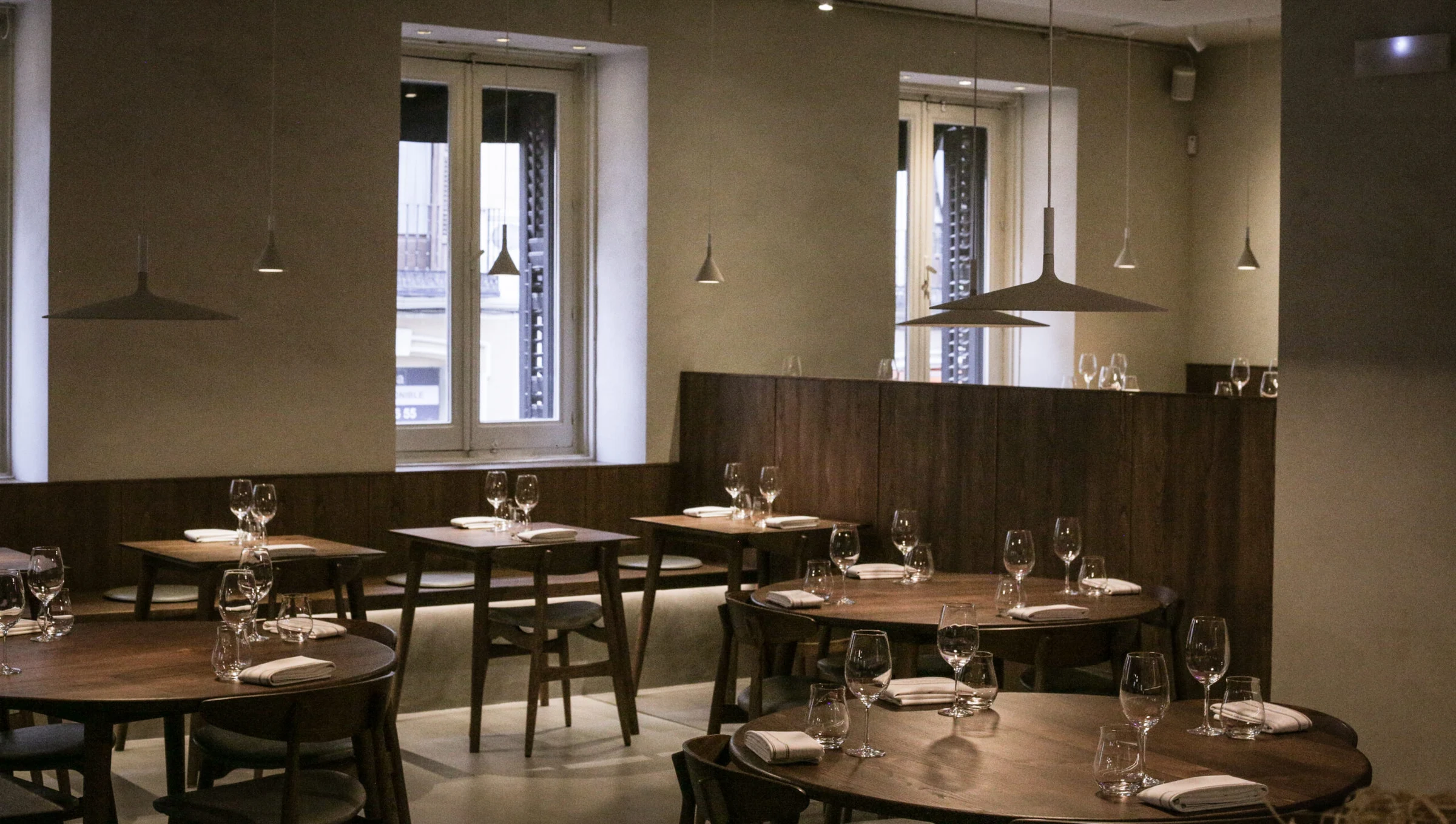
Madrid's fine-dining geography has long tilted north and west: Salamanca for the expense-account crowd, Chamberí for the cerebral independents. Èter is a one-star restaurant in Madrid's Arganzuela, serving modern contemporary Spanish cooking at about $140 per person. Arganzuela sits south of the Manzanares, closer to the working rhythms of Legazpi than to the gallery circuit of Alonso Martínez, and that position matters. The neighbourhood has developed its own quiet tier of serious restaurants, operating at a remove from the visibility that central postcodes confer but not from the ambition. Èter, on Calle del Granito, belongs to that tier. The room is intimate and deliberately spare, with paintings by rotating artists providing the only real visual intervention. The music changes with the menu, a detail that sounds gimmicky until you sit through a full service and notice how effectively it modulates the pacing of a meal.
The broader Madrid contemporary scene clusters around a handful of well-capitalised tasting-menu addresses: Desborre, BANCAL, Adaly. At the summit of the city's price tier, DiverXO operates at €€€€ with three Michelin stars, and Coque and Smoked Room hold two stars each at the same price point. Èter sits at €€€, which positions it as a more accessible entry into structured, concept-led tasting menus, not a budget compromise, but a different competitive conversation. The 2025 Michelin star confirms it as a tracked address rather than a neighbourhood curiosity.
Five Menus, Five Ingredient Logics
The editorial choice at Èter is structural: the restaurant runs five distinct tasting menus across the year rather than one menu with seasonal updates. Each has a name, a focus, and its own ingredient logic. Talo appears twice in spring, Karpo arrives in summer with a vegetable-centred approach, Ouros lands in October with mountain produce as its organising principle, and Thalate takes over in winter with a seafood focus. The names carry enough specificity to signal intent without over-explaining. Ouros, for instance, gestures toward gold and autumn abundance simultaneously; Thalate connects to the sea without the blunt literalism of naming a menu 'mar'.
This structure is rarer in Madrid than it might appear. Most tasting-menu restaurants in the city operate on a single annual menu that rotates incrementally, adjusting dishes as produce changes. Running five fully differentiated menus requires more from both the kitchen and the guest: the kitchen must maintain distinct ingredient vocabularies across the year, and the guest who returns four times will encounter four meaningfully different experiences rather than variations on a single theme. For the committed diner, that is the point. For the occasional visitor, choosing when to go becomes an editorial decision in itself, autumn's Ouros menu for mountain produce, winter's Thalate if the Pacific coast is your reference point.
The sourcing logic embedded in this structure draws directly on Spanish regional produce traditions. Mountain menus in October imply game, fungi, and cured ingredients from the sierras; seafood menus in winter track the North Atlantic and Cantabrian catches that peak in colder months. This is not novel as a concept, plenty of Spanish restaurants have built identity around seasonal sourcing, but the formalisation of it into five named, discrete menus gives Èter a more transparent relationship with its ingredient calendar than most. The menu's identity is not a surprise to be revealed; it is part of the information available at the point of reservation.
Latin American Threads in a Spanish Framework
Contemporary Spanish fine dining has absorbed many international influences over the past two decades, but Latin American references remain underrepresented in the upper tiers of Madrid's restaurant scene. The dominant external influence at most starred addresses runs through French classical technique or Japanese minimalism. The Tofé brothers, Mario and Sergio, bring a different set of references, specifically from Mexico and Colombia, shaped through working relationships with chefs from those regions. The result is not fusion in the reductive sense, but a contemporary Spanish framework with recurring ingredient and technique signatures from Mesoamerican and Andean traditions.
This matters for ingredient sourcing specifically. Mexican and Colombian culinary traditions have deep relationships with fermentation, with dried and fresh chilli varieties, with corn preparations, and with herb profiles that differ substantially from European norms. When those references appear inside a structured tasting menu built on Spanish seasonal produce, the combinations become genuinely compositional rather than decorative. Whether that translation holds across all five annual menus, or concentrates more heavily in certain seasons, is something the menu archive would clarify, but as a framing intention it gives Èter a distinct ingredient perspective that its comparable set at the €€€ level in Madrid does not widely replicate.
For comparison, En la Parra and Ferretería both operate in the contemporary Madrid space with their own sourcing logics, but neither foregrounds Latin American influence as a structural element. Further afield, the Basque-rooted addresses, Arzak in San Sebastián and Martín Berasategui in Lasarte-Oria, operate at higher price tiers and with different ingredient traditions. Internationally, the contemporary format has its own distinct expressions at Jungsik in Seoul and César in New York City, where cross-cultural ingredient thinking operates through entirely different reference libraries.
The Room and the Service Model
The division of labour at Èter runs clearly: Sergio Tofé as chef, Mario Tofé as maître d' and sommelier. This separation of kitchen and floor across two people who share the project's full weight is common in smaller independent restaurants but functions differently when both roles are covered by founders rather than hired heads of department. The floor perspective and the kitchen perspective are both invested in the same outcome, which tends to produce a consistency of intention from opening to service close. The room's minimalism, intimate scale, spare décor, rotating artworks, reflects a similar economy of means: nothing decorative that does not also serve a purpose.
A high average across a substantial volume of reviews, rather than a small number of enthusiastic early adopters, suggests consistent execution across different menus and different seasons. That consistency is harder to achieve with five annual menu rotations than with a single evolving format.
Where Èter Sits in the Broader Picture
Spain's most decorated contemporary tables, El Celler de Can Roca in Girona, Azurmendi in Larrabetzu, Aponiente in El Puerto de Santa María, Cocina Hermanos Torres in Barcelona, operate at a different scale of recognition and ambition. Èter is not in that conversation yet. What it represents instead is a specific Madrid phenomenon: the small, owner-operated contemporary restaurant that has earned critical attention without the institutional backing or media profile that the city's larger starred addresses command.
That position has its own value for the reader deciding where to allocate their restaurant spending in Madrid. The €€€€ addresses at the summit of the city's tier offer more resource, more production, more accumulated recognition. Èter offers a more direct relationship between the people who conceived the project and the experience of sitting inside it, at a price point that makes a second visit within the same year (to catch a different menu) financially reasonable.
Know Before You Go
- Address: C. del Granito, 20, Arganzuela, 28045 Madrid
- Price range: €€€
- Awards: Michelin Plate (2024, 2025); Opinionated About Dining Europe #614 (2025)
- Menu structure: Five named tasting menus per year, Talo (spring, twice), Karpo (summer, vegetable-focused), Ouros (October, mountain produce), Thalate (winter, seafood)
- Music: Changes with each menu and the stages of the meal
- Nearest landmark: A few minutes' walk from Plaza de Legazpi 8 (617 reviews)
Questions
Frequently asked
What recognition does Èter hold?
Èter holds 1 Michelin star.
How expensive is Èter?
Èter is listed at a price level of $$$$.
Where is Èter and what does it serve?
Èter is in Delicias, Madrid, serving Modern Contemporary Spanish.
The field
How it compares
| Place | Awards | Cuisine | Notes |
|---|---|---|---|
| Èter | Michelin 1 Star | Modern Contemporary Spanish | Delicias, $$$$ |
| Coque | Michelin 2 Stars | Modern Spanish Fine Dining | Madrid |
| Corral de la Morería | Michelin 1 Star | Modern Spanish Fine Dining with Flamenco | Madrid |
| Desde 1911 | Michelin 1 Star | Premium Seafood Fine Dining | Madrid |
| DiverXO | Michelin 3 Stars, World's 50 Best | Avant-Garde Spanish Tasting Menu | Madrid |
| DSTAgE | Michelin 2 Stars | Avant-Garde Spanish Tasting Menus | Madrid |
| Paco Roncero | Michelin 2 Stars | Avant-Garde Spanish Fine Dining | Madrid |
Similar places
Modern Spanish Fine Dining
Coque
Madrid, Spain
★★
Modern Spanish Fine Dining with Flamenco
Corral de la Morería
Madrid, Spain
★
Premium Seafood Fine Dining
Desde 1911
Madrid, Spain
★
Avant-Garde Spanish Tasting Menu
DiverXO
Madrid, Spain
★★★ · 50 Best
Avant-Garde Spanish Tasting Menus
DSTAgE
Madrid, Spain
★★
Avant-Garde Spanish Fine Dining
Paco Roncero
Madrid, Spain
★★