The Marigold Club

In Residence
Bailey McCarthy
Owner
- 01CuisineFrench with London Sensibility
- 02CityHouston, United States
- Wine Spectator · Tier 2
- Michelin Plate · 2026
- Wine Spectator Best of Award of Excellence · 2026
- World's Best Wine Lists Awards WBWL 3-Star · 2025
Where Montrose Meets Mayfair
Houston's Montrose neighbourhood has long operated as the city's most adventurous district, the place where concepts arrive before they're fully legible to the rest of the city. In recent years, that restlessness has taken a more considered turn. Alongside the masa-forward precision of Tatemó and the Venetian depth of March, a quieter tier of European-inflected rooms has taken shape, places where the reference point isn't the American tasting menu format but something older, more Atlantically oriented. The Marigold Club at 2531 Kuester St. sits squarely in that tier.
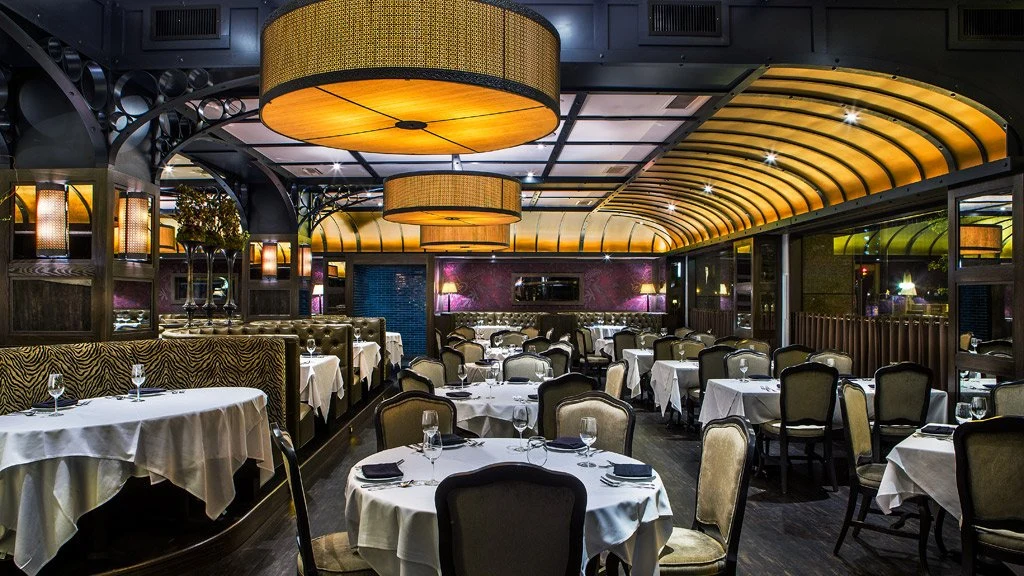
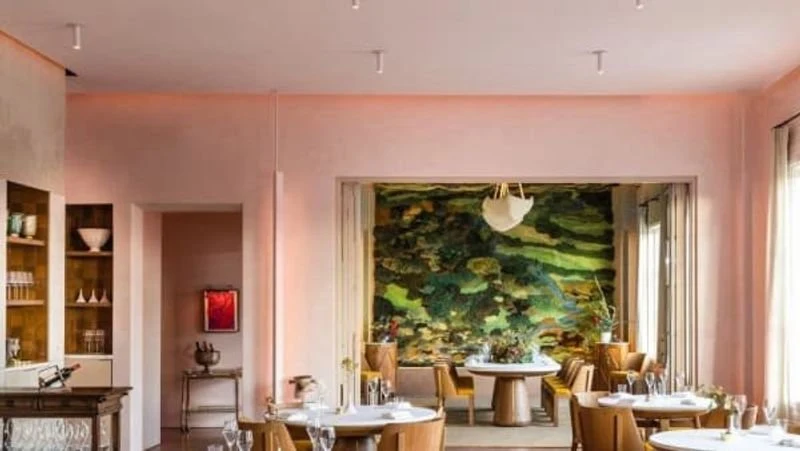
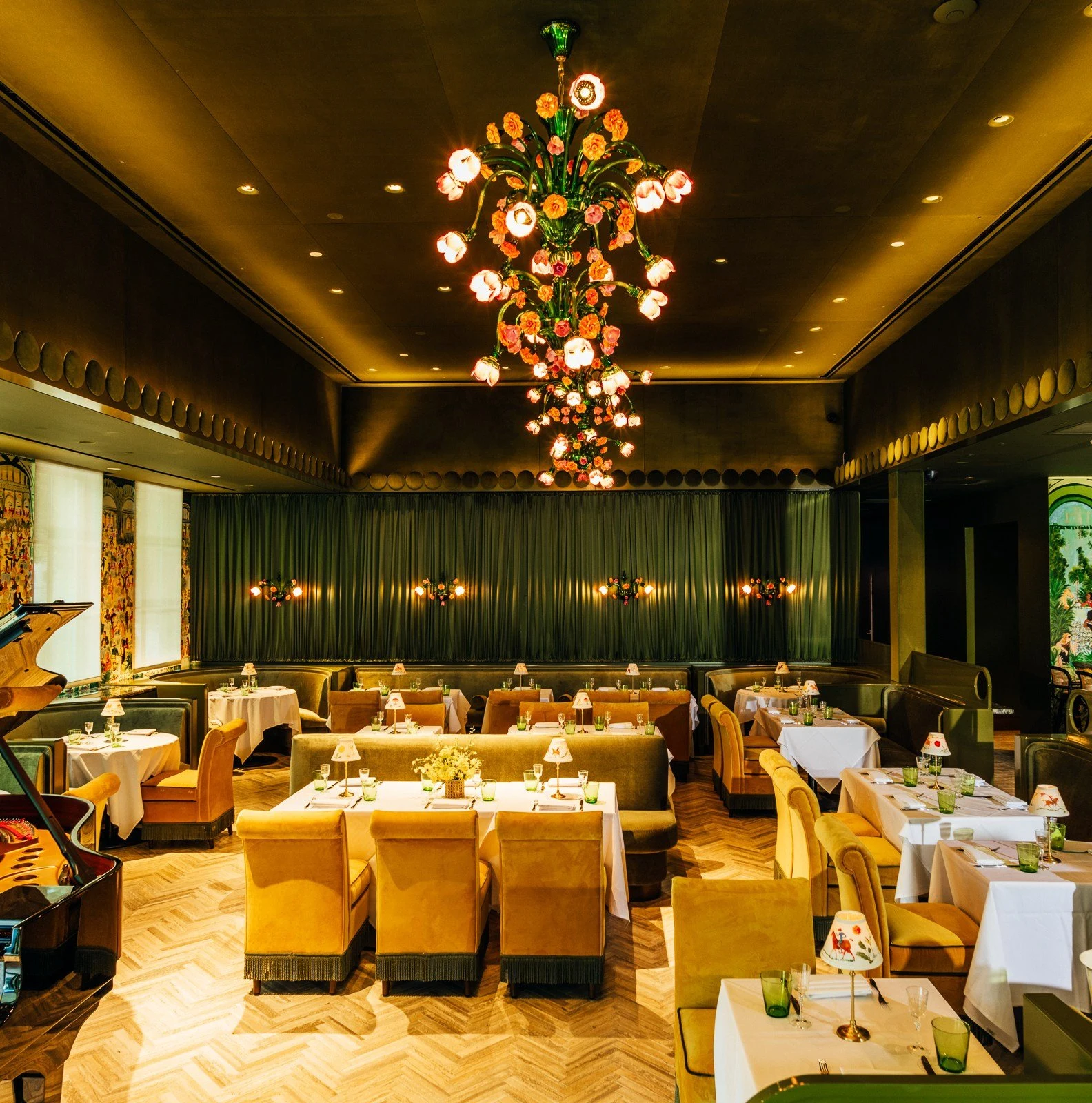
The room announces its intentions without ambiguity. Sleek lines and composed proportions evoke a Mayfair members' club rather than the open-plan, high-ceilinged style that dominates Houston's newer restaurant openings. A player piano runs through the evening, not as a novelty but as a structural element of the room's pacing, filling the space between conversations without forcing the energy upward. You dress for this room. That's not a criticism; it's information about what the room is trying to do.
The Menu's Anglo-French Argument
French cuisine in the American fine-dining context has been filtered through so many local interpretations that its original grammar can become difficult to hear. At the coastal end, Le Bernardin in New York City holds the austere line. At the other, the format has been stretched into tasting menus of considerable invention, as at Alinea in Chicago. The Marigold Club takes a third position: French technique carried through a British sensibility, where richness is not avoided but disciplined.
Chef Austin Waiter's menu reads as a deliberate argument for that position. Seafood towers and miniature gougères piped with chicken liver mousse occupy the bar and opening registers, familiar formats executed with the kind of care that separates a gougère from a canapé. Duck Wellington is the room's most direct statement of the Anglo-French premise: a French preparation in an unmistakably British form, asking the kitchen to manage pastry, fat, and protein in a single composition.
The veal cuscinetto, a bone-in chop stuffed with prosciutto and Comté, topped with vermouth figs over a mostarda sauce, is the menu's most architecturally complex dish. It references the Italian-French borderlands of alpine cooking while remaining within the menu's broader register of restrained decadence. The vermouth figs add an aromatic lift that prevents the dish from becoming simply heavy. Braised leeks in sauce gribiche serve as a side that could justify their own ordering: gribiche's acidity and texture work against the richness that runs through most of the plate.
Dessert closes with the baba-misu, a riff that takes two distinct European formats, the rum baba and the tiramisu, and finds their structural overlap. It's a conceptually tidy move that also functions as a statement about how the kitchen approaches tradition: not to replicate it, but to find where traditions rhyme.
The Floor as Collaborator
The editorial angle for a room like this isn't the chef in isolation. The Marigold Club's proposition, Mayfair formality in a Texas dining room, only holds if the front-of-house understands what the room is trying to be. At restaurants where the service register misaligns with the kitchen's ambitions, the dissonance is immediate. Here, the composition of oysters and caviar at the bar, the player piano, the dress code implied by the room's design: these are elements that require a floor team working from the same brief.
European-inflected rooms in American cities face a particular challenge on the floor: the formality implied by the cuisine reference can harden into stiffness if the team doesn't carry it with some warmth. Houston's dining culture, even in its more serious rooms, tends toward approachability. The fact that The Marigold Club is described as elegant yet approachable suggests the floor has calibrated for that tension. That calibration is, in most cases, harder to achieve than the kitchen's execution of a Wellington.
The sommelier function in a French-inflected room carries additional weight. A menu that moves from oysters to duck Wellington to vermouth figs covers enough acidity, fat, and aromatic range that wine pairings become a meaningful editorial act. Without a disclosed wine list or sommelier name in the public record, the pairing program isn't assessable from the outside, but the menu's structure invites one. The World of Fine Wine & Lifestyle Awards' 3-Star Accreditation lends contextual confidence to the beverage program.
Where It Sits in Houston's Fine-Dining Map
Houston's upper dining tier has diversified considerably. Musaafer brought a high-production Indian format to a city that hadn't seen it executed at that scale. Le Jardinier Houston carries the French vegetable-forward tradition from its New York origin. BCN Taste & Tradition holds the Spanish end of the European continuum. The Marigold Club's specific position, Anglo-French, club-inflected, bar-forward with an oyster and caviar program, doesn't duplicate any of these.
The closest international comparators are rooms where the British private club aesthetic has been exported with genuine fidelity, the way Alain Ducasse at Louis XV in Monte Carlo operates within a specific European luxury grammar without apology. The Marigold Club isn't working at that scale, but it is working from a comparable conviction about what a room should feel like when you walk in. That conviction, sustained at the bar and on the plate, is what separates a concept from a destination.
Planning Your Visit
The Marigold Club is at 2531 Kuester St. in Montrose. Given its 3-Star Accreditation from the World of Fine Wine & Lifestyle Awards and its position as one of the more distinctly European-inflected rooms in the city, demand on weekends is likely to compress availability. Booking ahead is the prudent approach. The room's design and the nature of the menu suggest that it rewards a longer evening rather than a quick turn, so factoring time is worth doing when you book. The bar program, with oysters and caviar available there, provides a lower-commitment entry point if a full dinner booking proves difficult on shorter notice.
Questions
Frequently asked
Who works at The Marigold Club?
Made By profiles Bailey McCarthy (Partner / Co-Owner) at The Marigold Club.
How expensive is The Marigold Club?
The Marigold Club is listed at a price level of $$$.
Where is The Marigold Club and what does it serve?
The Marigold Club is in Montrose, Houston, serving French with London Sensibility.
The field
How it compares
| Place | Cuisine | Notes | Awards |
|---|---|---|---|
| The Marigold Club | French with London Sensibility | Montrose, $$$ | · |
| BCN Taste & Tradition | Modern Spanish Tapas | Houston | Michelin 1 Star |
| ChòpnBlok | Modern West African Fast-Casual | Houston | · |
| Le Jardinier Houston | Contemporary French Fine Dining | Houston | Michelin 1 Star |
| March | Modern Mediterranean Tasting | Houston | Michelin 1 Star |
| Musaafer | Modern Indian Fine Dining | Houston | Michelin 1 Star |
| Tatemó | Modern Mexican Heirloom Corn Tasting Menu | Houston | Michelin 1 Star |
In residence
Similar places
Modern Spanish Tapas
BCN Taste & Tradition
Houston, United States
★
Modern West African Fast-Casual
ChòpnBlok
Houston, United States
Contemporary French Fine Dining
Le Jardinier Houston
Houston, United States
★
Modern Mediterranean Tasting
March
Houston, United States
★
Modern Indian Fine Dining
Musaafer
Houston, United States
★
Modern Mexican Heirloom Corn Tasting Menu
Tatemó
Houston, United States
★