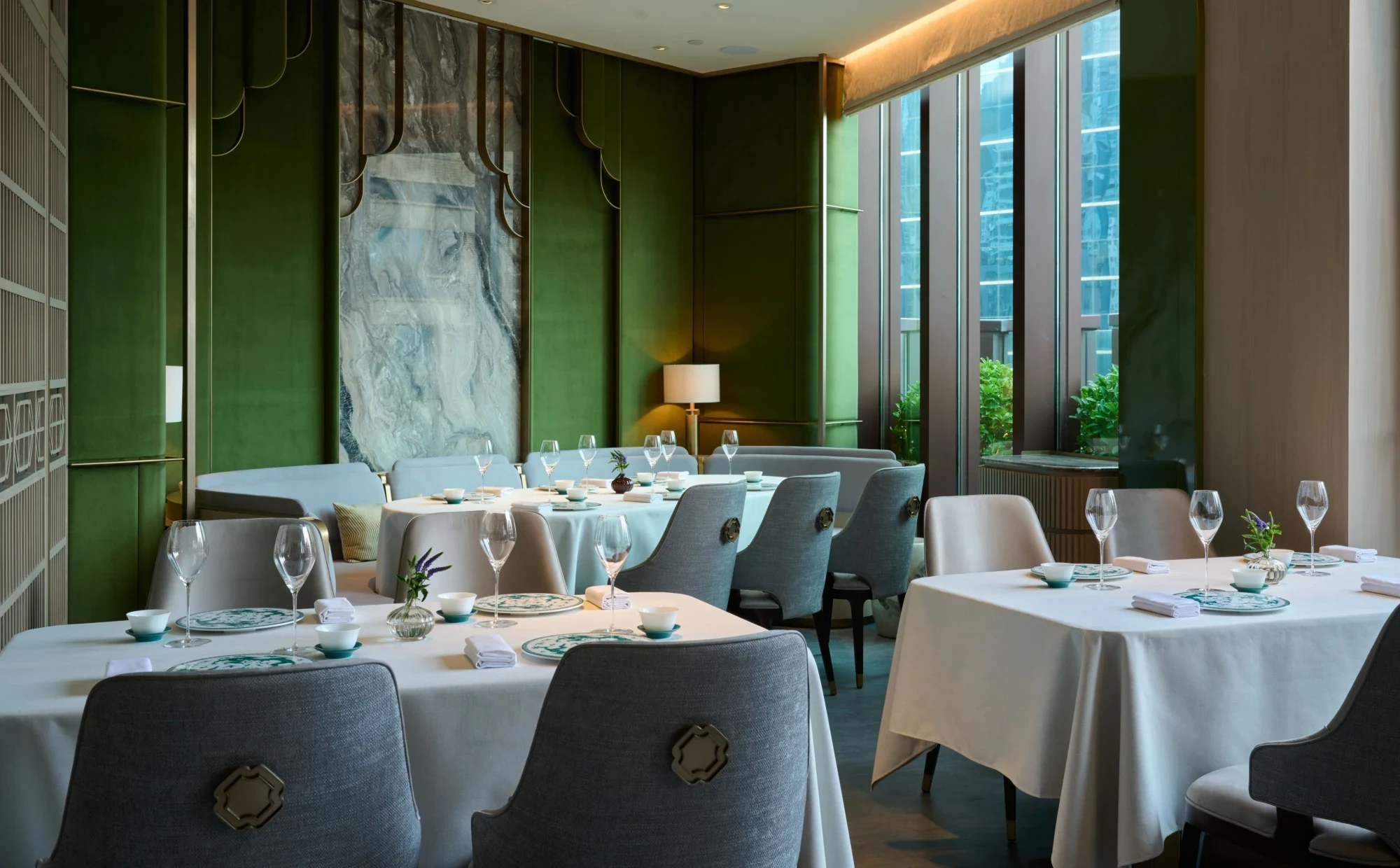
Tim Ho Wan (Sham Shui Po)
- 01CuisineTraditional Cantonese Dim Sum
- 02CityHong Kong, Hong Kong
- Michelin Bib Gourmand · Michelin Guide
- Michelin Bib Gourmand · 2026
- Michelin Bib Gourmand · 2025
- Michelin Bib Gourmand · 2024
Fuk Wing Street and the Arithmetic of Cheap Michelin
Approach Sham Shui Po from the MTR and the neighbourhood reads differently from Hong Kong's harbour-facing dining districts. The blocks around Fuk Wing Street are fabric wholesalers, electronics stalls, and local lunch counters, a working-class residential grid that has never reconfigured itself for tourism. Tim Ho Wan fits here without any sense of incongruity. The queue forms early, the tables turn quickly, and the room operates at the pace of a neighbourhood that has somewhere to be. Tim Ho Wan is a casual restaurant in Sham Shui Po, Hong Kong, known for traditional Cantonese dim sum and a Bib Gourmand recognition in 2024 and 2025. There are no theatrical design gestures; the environment is functional, the lighting practical, the focus entirely on what arrives at the table.
That context matters when placing Tim Ho Wan against Hong Kong's wider dim sum spectrum. Tim Ho Wan occupies the opposite pole: consecutive Michelin Bib Gourmand recognition in 2024 and 2025 at a $ price range. That award validates a kitchen operating at a fraction of the spend required by three-star rooms like Amber or 8 1/2 Otto e Mezzo Bombana. The Bib Gourmand category exists precisely to track this, quality that doesn't depend on a high cover charge to sustain itself.
What the Bib Gourmand Award Actually Signals Here
The Michelin Bib Gourmand is structurally different from a star. It rewards value relative to quality rather than absolute technical ambition, and in a city with Hong Kong's cost base, earning it for two consecutive years in a format as price-compressed as $ dim sum is a meaningful credential. Chef Mak Kwai-pui is associated with Tim Ho Wan, and the Sham Shui Po branch draws on the same kitchen philosophy that earned the brand its recognition. That recognition placed Tim Ho Wan in the Cantonese dim sum conversation as a reference point for what the format can achieve without luxury pricing, a peer comparison that runs closer to Sham Shui Po's street-level cha chaan teng culture than to the hotel-lobby dim sum rooms in Tsim Sha Tsui or Central.
Daytime Versus Evening: When and Why It Matters
Dim sum is a morning and midday form. The tradition in Cantonese culture is yum cha, tea drinking with food attached, and the social rhythm of it is inseparable from daylight hours. Trolleys, if a kitchen uses them, roll earlier. Fillings are fresher at the first sitting. The cooking team is at peak concentration before service compounds across a long day. At Sham Shui Po specifically, the lunch period draws the neighbourhood's own residents: retirees, shopkeepers on a break, families with small children who are not orientating themselves around a tourist itinerary. The room has a quality of dailiness in the midday hour that the evening service, quieter, slightly more visitor-weighted, does not reproduce.
The menu does not change materially between lunch and dinner in terms of what is available, but the energy of consumption shifts. Dim sum eaten at 11am in a full room, with tea refilled and plates arriving in quick succession, is a different register from the same food ordered at 7pm in a half-empty dining room. The Bib Gourmand award applies to the kitchen regardless of the hour, but the case for arriving at lunch is primarily experiential: this is when the format is being used as it was designed to be used, and when Sham Shui Po's particular demographic makes the room feel genuinely local rather than visited. If evening is the only option, the cooking quality holds; what changes is the surrounding context.
Further afield, Bao Teck Tea House in George Town and Chuan Mu Yuan in Taipei represent how the Cantonese yum cha format translates across different Southeast and East Asian urban contexts. For a Korean adaptation of the form, Goobok Mandu in Seoul and Dim Tao in Busan show how dumpling-led formats have been absorbed into local eating cultures, while Hang Zhou Xiao Long Bao in Taipei and Da Hu Chun in Shanghai represent the Shanghainese strand of the steamed-dumpling tradition that runs alongside the Cantonese one.
Sham Shui Po as a Dining Address
The neighbourhood's dining identity is built on density and price efficiency rather than destination restaurants. Sham Shui Po has not followed the trajectory of Sheung Wan or Kennedy Town, where incoming restaurants have progressively shifted the demographic of who eats where. The streets around Fuk Wing Street remain structured around local demand, which in practice means the eating options skew towards Cantonese comfort food, congee shops, and roast meat specialists rather than international or fusion formats. Tim Ho Wan sits within that grain rather than against it, which is part of what makes the Bib Gourmand recognition here carry different weight than the same award might in a more curated dining district.
Questions
Frequently asked
What recognition does Tim Ho Wan (Sham Shui Po) hold?
Tim Ho Wan (Sham Shui Po) holds a Michelin Bib Gourmand.
How expensive is Tim Ho Wan (Sham Shui Po)?
Tim Ho Wan (Sham Shui Po) is listed at a price level of $.
Where is Tim Ho Wan (Sham Shui Po) and what does it serve?
Tim Ho Wan (Sham Shui Po) is in Sham Shui Po East, Hong Kong, serving Traditional Cantonese Dim Sum.
The field
How it compares
| Place | Cuisine | Notes | Awards |
|---|---|---|---|
| Tim Ho Wan (Sham Shui Po) | Traditional Cantonese Dim Sum | Sham Shui Po East, $ | · |
| 8 1/2 Otto e Mezzo Bombana (Hong Kong) | 3 Michelin-Star Italian Fine Dining | Hong Kong | Michelin 3 Stars, World's 50 Best |
| Amber | Contemporary French Fine Dining | Hong Kong | Michelin 3 Stars, World's 50 Best |
| Caprice | Contemporary French Fine Dining | Hong Kong | Michelin 3 Stars, World's 50 Best |
| The Chairman | Traditional Cantonese | Hong Kong | Michelin 1 Star, World's 50 Best |
| Vea | Modern Chinese-French Fusion | Hong Kong | Michelin 1 Star, World's 50 Best |
| WING Restaurant | Modern Chinese Fine Dining | Hong Kong | World's 50 Best |
Similar places
3 Michelin-Star Italian Fine Dining
8 1/2 Otto e Mezzo Bombana (Hong Kong)
Hong Kong, Hong Kong
★★★ · 50 Best
Contemporary French Fine Dining
Amber
Hong Kong, Hong Kong
★★★ · 50 Best
Contemporary French Fine Dining
Caprice
Hong Kong, Hong Kong
★★★ · 50 Best
Traditional Cantonese
The Chairman
Hong Kong, Hong Kong
★ · 50 Best
Modern Chinese-French Fusion
Vea
Hong Kong, Hong Kong
★ · 50 Best
Modern Chinese Fine Dining
WING Restaurant
Hong Kong, Hong Kong
50 Best