- Opinionated About Dining Top Restaurants in Japan Ranked #549 · 2025
- Opinionated About Dining Top Restaurants in Japan Ranked #427 · 2024
- Opinionated About Dining Top Restaurants in Japan Recommended · 2023
Where Toranomon's Office District Meets the Charcoal Counter
Toranomon is not the neighbourhood most diners associate with yakitori pilgrimage. Its skyline runs to glass towers and suit-clad commuters; its food culture skews toward expense-account kaiseki and hotel dining rooms. That context matters when placing Toriyoshi at 1 Chome-1-11 Toranomon, because a serious yakitori counter in this postcode is a deliberate position, not an accident of real estate. The choice to operate here, with service from late morning and again in the evening, aligns with an after-work clientele that expects precision rather than the rowdier izakaya energy you find farther east in Yurakucho or north in Ebisu.
Tokyo's yakitori scene has always carried a quiet tension between the casual and the ceremonial. At one end, you have the standing counter under the tracks, smoky and fast, where skewers arrive before the beer is half finished. At the other, a smaller number of counters treat the same birds, the same charcoal, and the same repertoire of cuts as material for something closer to a composed meal. Toriyoshi sits in the latter category. The Opinionated About Dining recognition across three consecutive years, Recommended in 2023, ranked 427th in 2024, and 549th in 2025 in a field that expands annually, signals consistent quality rather than a single strong season.
The Ritual of Charcoal: How Yakitori Demands Sequence
To understand what makes a serious yakitori counter different from a grill house, you have to understand the intentionality of pacing in Japanese cooking. Yakitori, at its considered end, is not a format where you order freely from a laminated card. The progression of cuts follows an internal logic: lighter, more delicate parts early, richer or more textured pieces through the middle, and a grounding final sequence that typically ends with rice or noodles. The grill dictates tempo in ways that a kitchen plating cold dishes cannot. A skewer pulled thirty seconds late reads differently on the palate than one served at the right moment; the skin that should be taut goes soft, the fat that should pool stays trapped.
This is the discipline that separates yakitori-ya operating at this level from volume grill operations. The charcoal itself, binchōtan is the standard at serious counters, burns cleaner and at higher, more consistent heat than conventional charcoal, giving the cook finer control over surface caramelisation without the acrid edge that cheaper fuel introduces. The ritual here is not performance for the diner's benefit; it is a production constraint that the leading yakitori-ya have turned into a virtue. You eat at the counter's pace, not your own, and the meal is structured accordingly.
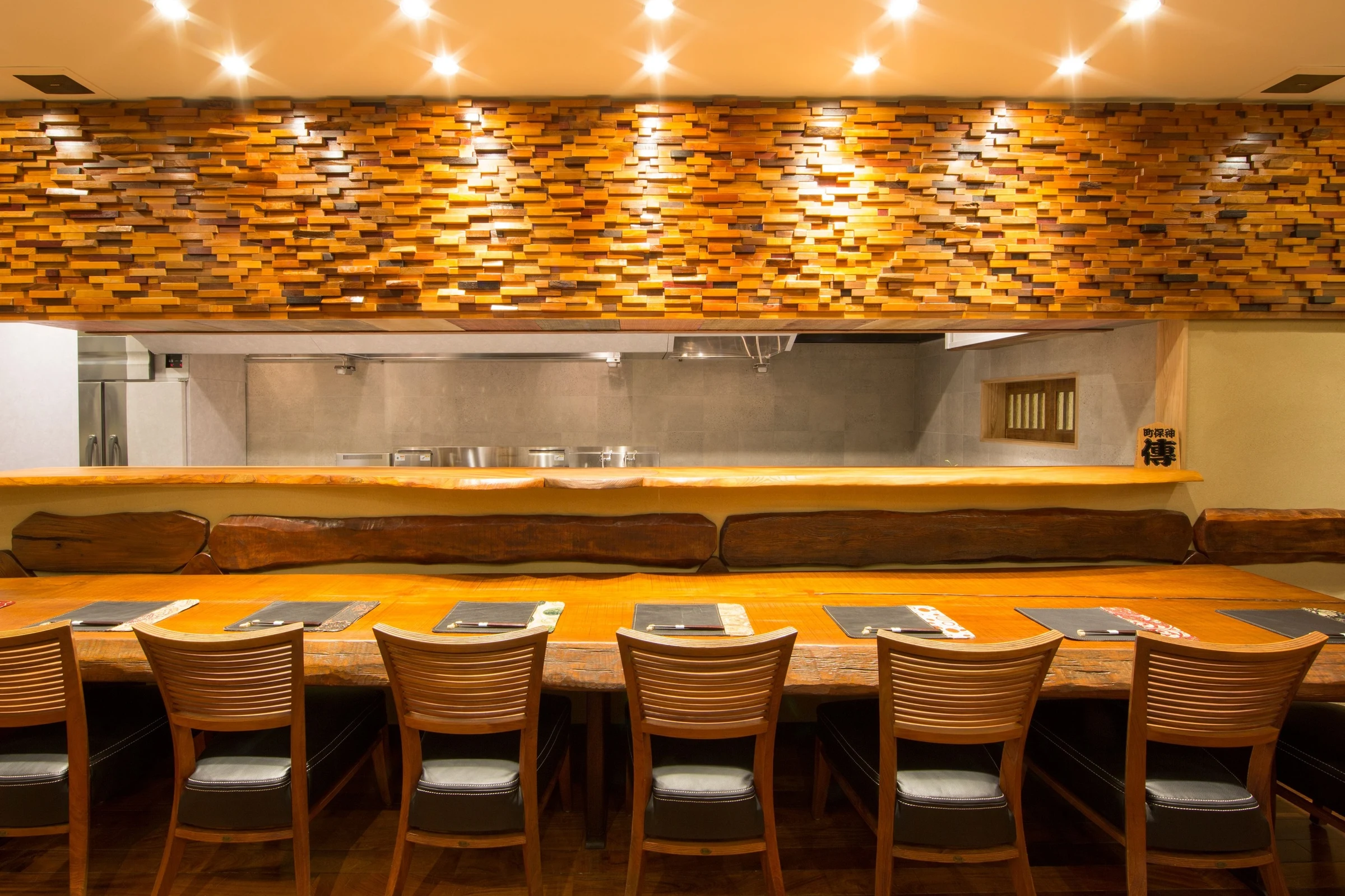
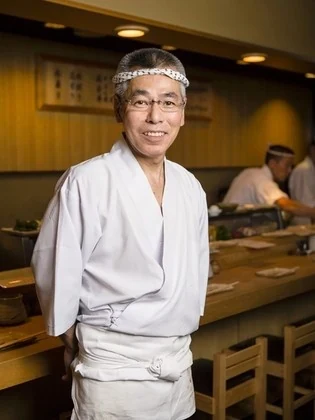
Chef Yoshito Inomata's role in that structure is less that of a showman and more that of a technician who has mastered timing. The counter format keeps that relationship visible: you watch the sequencing decisions happen in real time, which is part of what makes the yakitori counter, at this level, a different experience from eating behind a closed kitchen.
Reading the OAD Rankings in Context
Opinionated About Dining publishes one of the more methodologically serious restaurant ranking systems operating in Asia, drawing on a surveyed diner base rather than anonymous inspectors alone. A venue appearing on three consecutive annual lists, first as Recommended, then with numerical rankings, carries different evidential weight than a single-year appearance. The movement from 427th in 2024 to 549th in 2025 should be read against the list's expanding scope. OAD's Japanese coverage has grown year on year; maintaining a ranked position in a larger field is not a decline. A Google rating of 4.2 across 277 reviews adds a separate, crowd-sourced signal that aligns broadly with the specialist recognition.
Within Tokyo's yakitori tier, Toriyoshi belongs to a cohort that includes counters recognised by both specialist and generalist platforms. For comparison, Yakitori Omino and Asagaya BIRD LAND operate in the same specialist register; the category also connects to broader Tokyo dining conversations that include kaiseki-rooted precision at places like 124. KAGURAZAKA and the Italian-Japanese hybrid territory of Aria di Takubo. For those mapping yakitori across Japan, Ichimatsu in Osaka and Torisaki in Kyoto represent the tradition's regional variations.
Tokyo's serious dining circuit extends well beyond yakitori, of course. If Toriyoshi fits into a broader Japan trip, the editorial context deepens considerably at HAJIME in Osaka, Gion Sasaki in Kyoto, akordu in Nara, Goh in Fukuoka, 1000 in Yokohama, and 6 in Okinawa. For a wider view of what Tokyo's restaurant scene looks like at this level, see our full Tokyo restaurants guide, alongside guides to hotels, bars, wineries, and experiences in the city.
Neighbourhood and Timing
Toranomon has shifted considerably in character since the opening of the Toranomon Hills complex in 2014, with subsequent towers adding residential and hospitality density to what was a purely commercial district. That gradual shift has brought a quieter, more considered dining culture to the area, with less of the volume-driven turnover that defines dinner service in tourist-heavy neighbourhoods. For yakitori specifically, the opening hours are structured for lunch and evening service on weekdays, with the restaurant closed on Saturdays and Sundays. Aramaki is another point of reference in Tokyo's precision-grill category worth cross-referencing when planning an itinerary in this part of the city.
Know Before You Go
- Address: 1 Chome-1-11 Toranomon, Minato City, Tokyo 105-0001, Japan
- Hours: Monday to Friday, 11:15 am to 2:00 pm and 5:00 pm to 10:30 pm; Saturday and Sunday closed
- Cuisine: Yakitori
- Chef: Yoshito Inomata
- Recognition: Opinionated About Dining Leading Restaurants in Japan, Recommended (2023), Ranked #427 (2024), Ranked #549 (2025)
- Google Rating: 4.2 based on 249 reviews
- Booking: Reservations recommended
- Getting There: Toranomon Station (Tokyo Metro Ginza Line) is the closest access point; the address falls within a few minutes' walk of the station exits serving the Toranomon Hills precinct
Questions
Frequently asked
Who works at Toriyoshi?
Made By profiles Yoshito Inomata (Chef) at Toriyoshi.
How expensive is Toriyoshi?
Toriyoshi is listed at a price level of $$$.
Where is Toriyoshi and what does it serve?
Toriyoshi is in Minato, Tokyo, serving Traditional Yakitori.
The field
How it compares
| Place | Cuisine | Notes | Awards |
|---|---|---|---|
| Toriyoshi | Traditional Yakitori | Minato, $$$ | · |
| Den | Modern Japanese Kaiseki | Tokyo | Michelin 2 Stars, World's 50 Best |
| Florilège | Modern French-Japanese Plant-Based Fine Dining | Tokyo | Michelin 2 Stars, World's 50 Best |
| Narisawa | Modern Japanese Satoyama Fine Dining | Tokyo | Michelin 2 Stars, World's 50 Best |
| Quintessence | Modern French Fine Dining | Tokyo | Michelin 3 Stars |
| Sazenka | Modern Chinese Fine Dining | Tokyo | Michelin 3 Stars, World's 50 Best |
| Sézanne | Modern French Fine Dining | Tokyo | Michelin 3 Stars, World's 50 Best |
In residence
Similar places
Modern Japanese Kaiseki
Den
Tokyo, Japan
★★ · 50 Best
Modern French-Japanese Plant-Based Fine Dining
Florilège
Tokyo, Japan
★★ · 50 Best
Modern Japanese Satoyama Fine Dining
Narisawa
Tokyo, Japan
★★ · 50 Best
Modern French Fine Dining
Quintessence
Tokyo, Japan
★★★
Modern Chinese Fine Dining
Sazenka
Tokyo, Japan
★★★ · 50 Best
Modern French Fine Dining
Sézanne
Tokyo, Japan
★★★ · 50 Best