Varq
- 01CuisineContemporary Indian Fine Dining with Molecular Fusion
- 02CityNew Delhi, India
Crab layered between phyllo sheets
- Opinionated About Dining Top Restaurants in Asia Recommended · 2026
- Opinionated About Dining Top Restaurants in Asia Ranked #333 · 2025
- Opinionated About Dining Top Restaurants in Asia Ranked #304 · 2024
- Opinionated About Dining Top Restaurants in Asia Recommended · 2023
A Taj hand at the pass
Contemporary Indian plates leave the kitchen at Varq in New Delhi with Taj discipline behind them. The restaurant’s culinary identity was set by Chef Hemant Oberoi, regarded as one of the most influential figures in Indian haute cuisine and India’s best-known chef before his retirement in 2015. He built Varq’s menu to fuse authentic Indian flavour with Western-style presentation, and the wave of modern Indian restaurants that followed owes much to that decision.
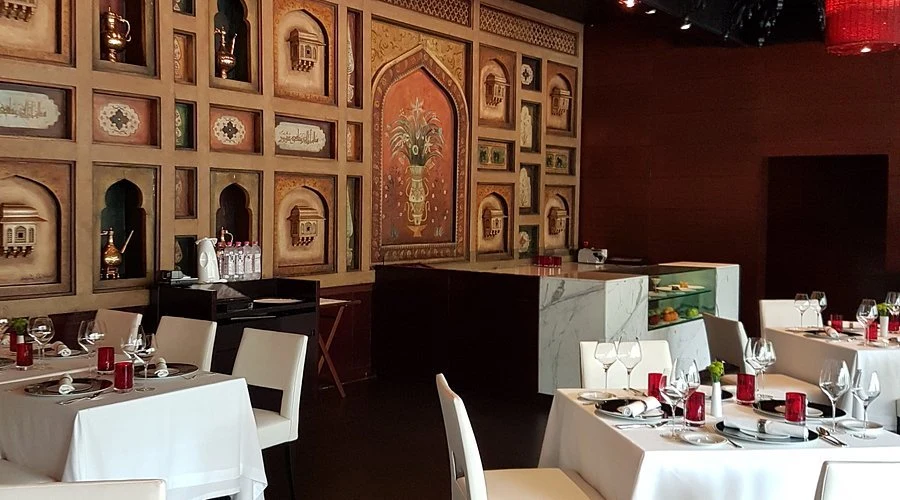
His philosophy was innovation without forsaking tradition, re-articulating classics into visually striking forms while keeping genuine flavour ahead of aesthetics. That lineage matters because Varq asks for range: a kitchen fluent in regional Indian memory, hotel precision, formal service, and the visual grammar of modern fine dining. The work is less about novelty than restraint, deciding when a dish should keep its traditional shape and when the method can be turned. The predecessor space was Haveli, a North Indian restaurant remembered for a more opulent idiom; Varq kept continuity through the room’s Anjolie Ela Menon frieze while moving the food toward a cleaner line.
Crab between phyllo sheets
The dish that best explains the method is Varqui Crab: shredded crab cooked with coconut milk and spices, then layered between thin phyllo sheets. It reads like a mille-feuille, but the seasoning stays Indian and the architecture does the modern work. That is the house gesture. Upma Sushi takes a familiar South Indian preparation and gives it a new format; Gilawat Kebab keeps tenderness at the centre; Achari Sole Fish Tikka leans on pickle spice; Dilli 6 Chicken Curry, Bengali Style Prawns and Martaban ka Meat keep the menu tied to named regional memories rather than abstraction.
The dining format can move through tasting menu, set menu or à la carte, but the kitchen’s argument remains consistent: classical flavour, contemporary plating, controlled theatre. The beverage program follows with wine, craft cocktails and serves such as Teekha Tamarind, while wild rose tea brings a quieter finish after the more performative moments. Varq returns to spice before it returns to spectacle.
The room keeps its own tempo
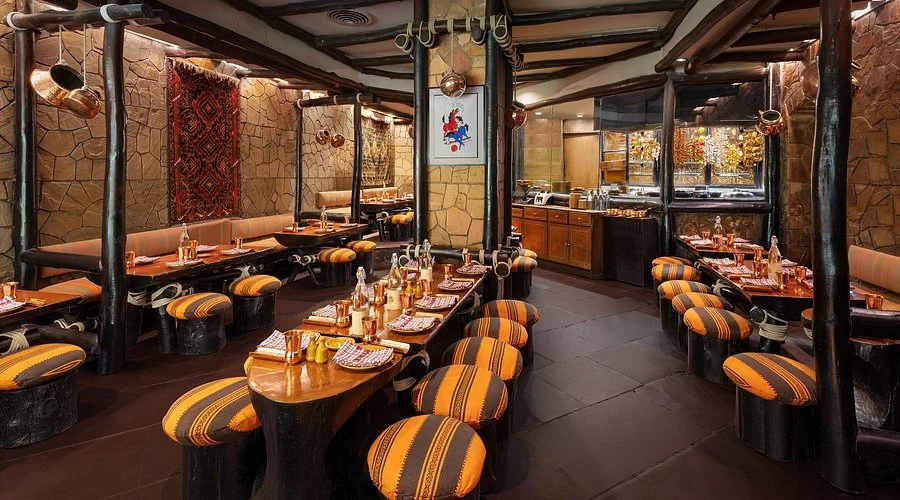
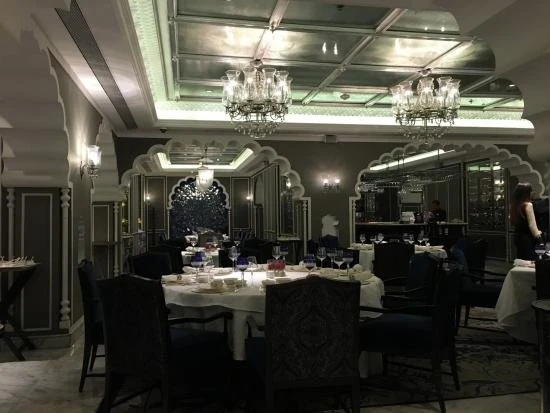
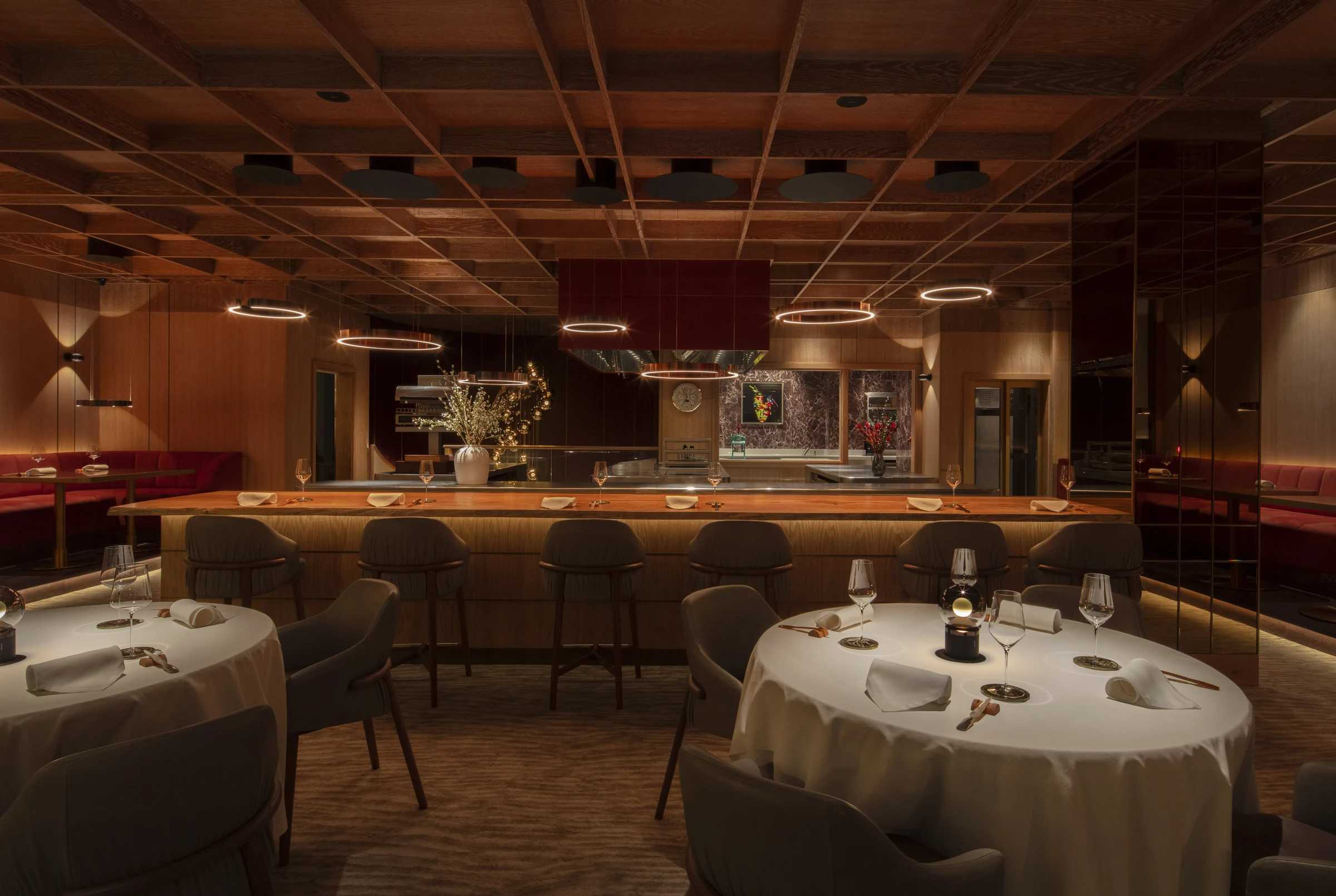
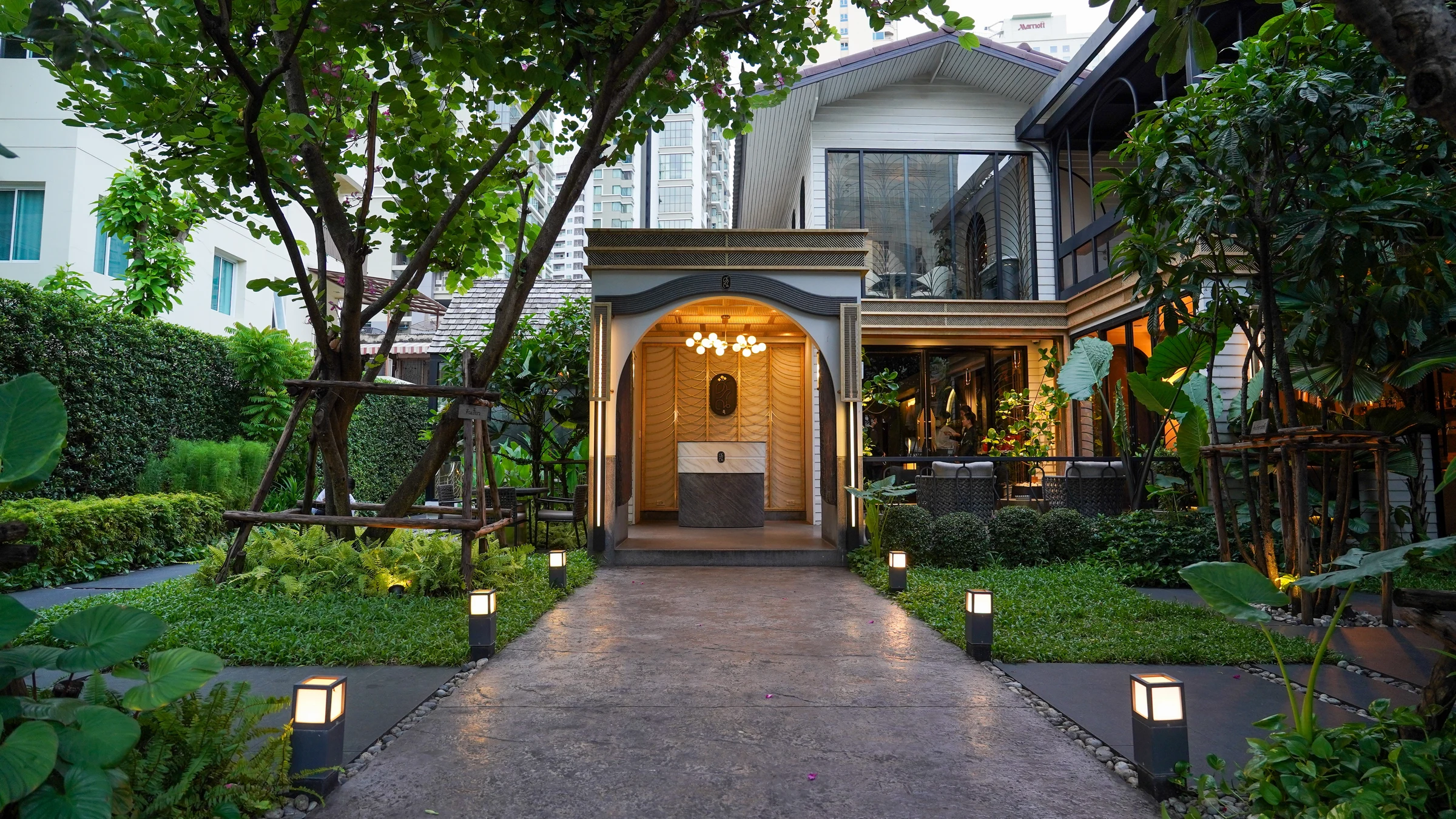
The room works softly around the pass. Indian classical music sits low enough for conversation, garden views pull the eye away from the plate between courses, and the Anjolie Ela Menon work gives the dining room a fixed point that is not culinary but still part of the experience. Formal service suits the food here because the plates often arrive with small instructions from the floor, especially when a course uses contrast, heat, smoke or a palate-cleansing turn.
The setting is polished without needing volume. Varq is intimate in scale, and that matters for a kitchen built around finish: phyllo must stay crisp, kebab must arrive yielding, and a curry such as Dilli 6 Chicken Curry needs enough composure on the pass to reach the table as itself.
What remains in the hand
Varq’s standing rests on a claim that was unusual when the room opened and is now common: that Indian cooking could take a Western plating language without surrendering its seasoning. Nothing here asks the reader to mistake surface for craft. The close work is in the fold of phyllo around Varqui Crab, the smoke on lamb, and the last measured pour of wild rose tea.
Questions
Frequently asked
What is Varq known for?
Varq is known for contemporary Indian fine dining with molecular touches, built around classic Indian flavours presented in a modern way. The dish that best shows that approach is Varqui Crab, with shredded crab, coconut milk and spices layered between thin phyllo sheets.
Who shaped the kitchen’s identity?
The restaurant’s culinary identity was set by Chef Hemant Oberoi, who built the menu to fuse authentic Indian flavour with Western-style presentation. His approach was to innovate without letting go of tradition.
What kind of menu does Varq serve?
The menu moves between tasting menu, set menu and à la carte. Dishes named in the kitchen’s own lineage include Upma Sushi, Gilawat Kebab, Achari Sole Fish Tikka, Dilli 6 Chicken Curry and Bengali Style Prawns.
What should guests know before booking?
Reservations are essential, and bookings are taken direct. The dress code is smart casual, valet parking is available, and the restaurant sits inside the Taj Mahal Hotel near Khan Market in New Delhi.
The field
How it compares
| Place | Cuisine | Notes | Awards |
|---|---|---|---|
| Varq | Contemporary Indian Fine Dining with Molecular Fusion | New Delhi, $$$$ | · |
| Bukhara | North West Frontier Tandoori | New Delhi | World's 50 Best |
| Dum Pukht | Awadhi Dum Pukht Fine Dining | New Delhi | World's 50 Best |
| Inja | Indian-Japanese Fusion | New Delhi | World's 50 Best |
| Kitchen Table | Modern British Fine Dining | London | Michelin 2 Stars |
| Row on 5 | Modern British Fine Dining with Mediterranean & Asian Influences | London | Michelin 2 Stars |
| Sorn | Fine Southern Thai | Bangkok | Michelin 3 Stars, World's 50 Best |
Similar places
North West Frontier Tandoori
Bukhara
New Delhi, India
50 Best
Awadhi Dum Pukht Fine Dining
Dum Pukht
New Delhi, India
50 Best
Indian-Japanese Fusion
Inja
New Delhi, India
50 Best
Modern British Fine Dining
Kitchen Table
London, United Kingdom
★★
Modern British Fine Dining with Mediterranean & Asian Influences
Row on 5
London, United Kingdom
★★
Fine Southern Thai
Sorn
Bangkok, Thailand
★★★ · 50 Best