Vestibül Restaurant
- 01CuisineModern Viennese Fine Dining
- 02CityVienna, Austria
- Michelin Plate · 2026
- Opinionated About Dining Casual in Europe Recommended · 2026
- Michelin Plate · 2025
- Opinionated About Dining Casual in Europe Ranked #579 · 2024
- Opinionated About Dining Casual in Europe Recommended · 2023
Inside the Burgtheater's Anteroom
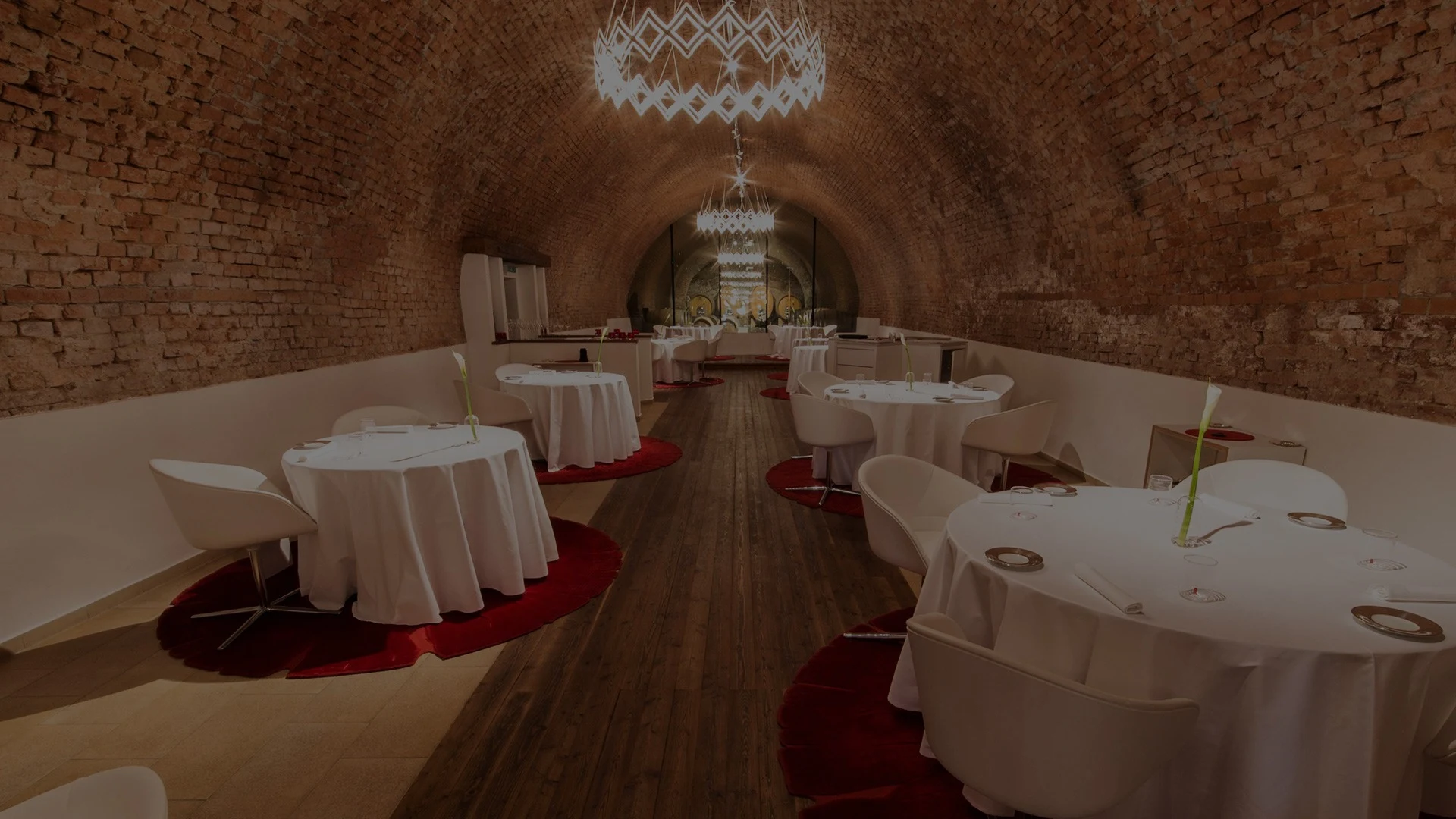
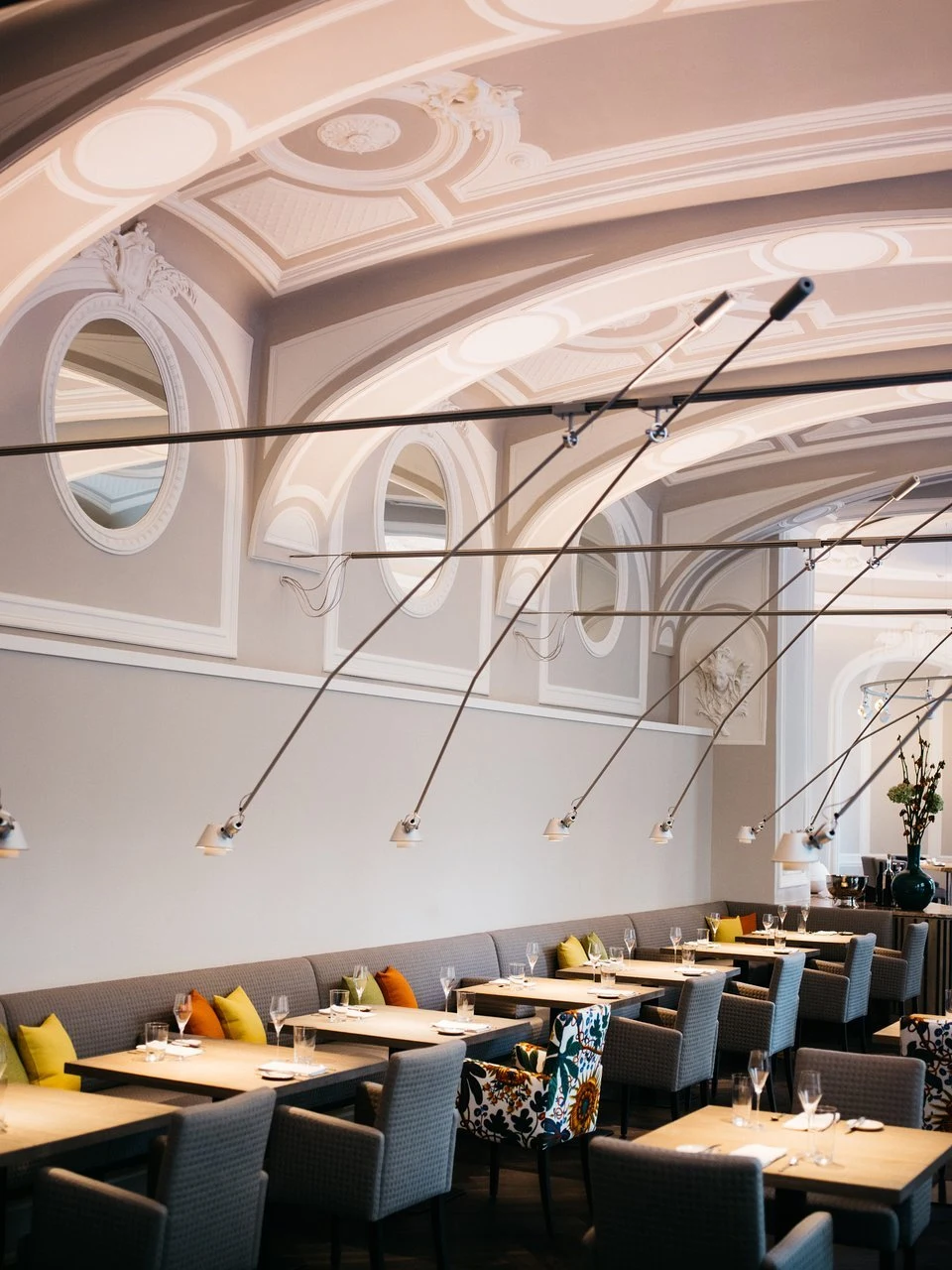
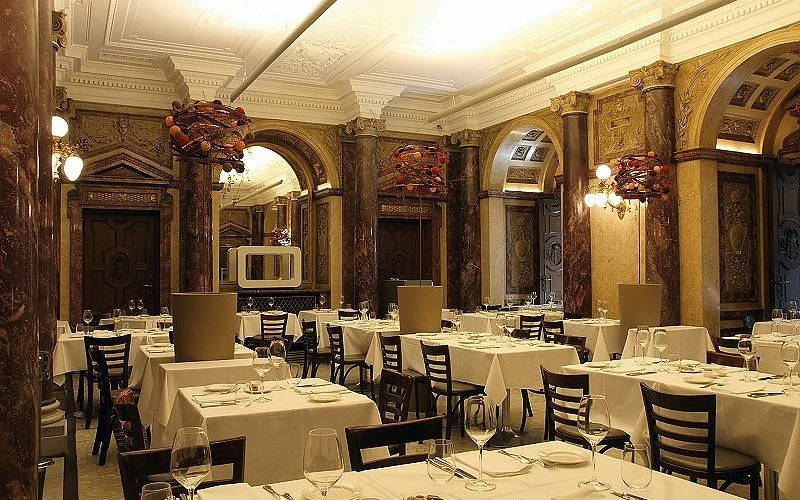
The address alone sets the register: Universitätsring 2 is the Burgtheater, Vienna's federal stage and one of the German-speaking world's most architecturally serious buildings. Vestibül occupies the foyer spaces of that building, which means that before a single dish arrives, the room has already done considerable work. High ceilings, theatrical proportions, and the particular hush of a cultural institution after hours frame the meal in a way that a purpose-built restaurant cannot replicate. Vienna has several dining rooms that trade on historic settings, but few where the architecture is quite so non-negotiable.
Austrian Cooking in Its Civic Context
Vienna's Austrian restaurant category is crowded with comfortable options, and the differences between them often come down to sourcing philosophy and culinary precision rather than menu format. At Vestibül, Christian Domschitz has worked within a framework that takes the Burgtheater's institutional character seriously, producing Austrian cooking that reads as considered rather than nostalgic. The 2025 Michelin Plate recognition positions this kitchen inside a credible peer tier, not at the top of Vienna's fine-dining hierarchy, but clearly above the anonymous Beisl end of the spectrum.
For context, Vienna's highest-wattage Austrian kitchens, including Steirereck im Stadtpark and Mraz & Sohn at the €€€€ tier, operate with multi-course tasting formats and considerably higher price points. Vestibül's €€ positioning means it occupies a different space: a meal here is closer in ambition to what Meierei im Stadtpark or Meissl & Schadn represent, restaurants where a serious approach to Austrian produce does not require a full evening and a significant outlay. The distinction matters: at this price tier, recognitions like a Michelin Plate and repeated OAD citation carry more weight proportionally, because the competition is larger and the margin for differentiation narrower.
Where the Food Comes From
Austrian cuisine at its most coherent is an expression of regional geography: Alpine dairy from Vorarlberg and Tyrol, freshwater fish from the Salzkammergut lakes, game from the eastern lowlands, and the wine-country vegetables of Burgenland and Styria. The tradition did not begin with sourcing as a marketing claim but as a practical condition of a landlocked empire that developed strong regional larders out of necessity. What distinguishes the more careful Austrian kitchens today is not whether they source regionally, but how specifically and how transparently they do so.
Vestibül's price tier suggests a kitchen that makes deliberate choices about which ingredients absorb the budget and which are sourced more broadly. Austrian restaurants at this tier that sustain recognition over consecutive years typically do so by anchoring the menu around a short list of premium domestic ingredients and building the rest of the dish around them with technical competence. The Burgtheater address does not come cheap in terms of operational cost, which itself tells you something about the priorities at play: the room and the reputation together require a kitchen that holds its own. A 4.4 Google rating across 607 reviews suggests that the broader dining public concurs.
For those interested in how Austrian sourcing philosophy plays out across the country's other serious kitchens, the picture is instructive. Döllerer in Golling an der Salzach has built an entire identity around Alpine larder specificity. Obauer in Werfen has done so for decades with a focus on Salzburg province produce. Closer to Vienna, Kräuterreich by Vitus Winkler in Sankt Veit im Pongau has pushed herb and mountain ingredient sourcing into a distinctive format. Vestibül operates in the capital, where the supply chains are broader and the temptation toward cosmopolitanism is higher, making its consistent recognition within the Austrian cooking tradition a more specific choice than it might appear.
The Room and the Occasion
Vienna's premium casual segment has a particular problem: many of its most atmospheric spaces are attached to institutions, hotels, or historic buildings that set the tone before the kitchen can. This cuts both ways. The setting can carry a mediocre meal further than it deserves, but it can also make a genuinely good meal feel more significant than it would in a neutral room. Vestibül benefits from the Burgtheater's gravity without being subsumed by it. The venue's operating hours, running until midnight Tuesday through Thursday with a Friday and Saturday evening-only format, suggest it is calibrated partly around the theatre schedule, drawing pre- and post-performance diners who want something more considered than the surrounding Ring-district options.
That positions it differently from a standard lunch destination. The late closing time implies a room that maintains energy into the evening, functioning as a continuation of the Burgtheater experience rather than a break from it. Comparable Vienna rooms that operate in this cultural-institution adjacency mode include Rote Bar at the Volksoper axis and Fuhrmann, though the settings and formats differ substantially.
Where It Sits in Vienna's Austrian Cooking Scene
Vienna's mid-range Austrian table is broader than it is deep. The famous names, Plachutta being the most cited, have built their reputations on reliability and specific dishes rather than on evolving culinary ambition. Vestibül operates in a different register: the Michelin and OAD recognition suggests a kitchen with enough technical ambition to distinguish itself from the comfort-cooking majority, without the tasting-menu formality that defines the city's €€€€ tier. For those exploring how Austrian cooking is being interpreted across the country, Senns in Salzburg, Ikarus in Salzburg, and Griggeler Stuba in Lech offer useful reference points for how the tradition translates outside the capital. Gourmetrestaurant Tannenhof in Sankt Anton am Arlberg and 1er Beisl im Lexenhof in Nußdorf am Attersee show how regional specificity functions at smaller scales.
Within Vienna itself, the broader dining picture spans enough variety that a single visit rarely covers the full range.
Know Before You Go
- Address: Universitätsring 2, 1010 Wien, Austria (inside the Burgtheater)
- Cuisine: Austrian
- Price range: €€
- Hours: Tuesday to Thursday 12pm to midnight; Friday and Saturday 6pm to midnight; closed Sunday and Monday
- Awards: Michelin Plate (2025); Opinionated About Dining Casual in Europe #579 (2024); OAD Recommended (2023)
- Google rating: 4.5 from 564 reviews
- Chef: Christian Domschitz
Questions
Frequently asked
How expensive is Vestibül Restaurant?
Vestibül Restaurant is listed at a price level of $$$$.
Where is Vestibül Restaurant and what does it serve?
Vestibül Restaurant is in Hofburg, Vienna, serving Modern Viennese Fine Dining.
The field
How it compares
| Place | Cuisine | Notes | Awards |
|---|---|---|---|
| Vestibül Restaurant | Modern Viennese Fine Dining | Hofburg, $$$$ | · |
| Amador | Avant-Garde European Fine Dining | Vienna | Michelin 3 Stars |
| Konstantin Filippou | Modern Fish-Led Fine Dining | Vienna | Michelin 2 Stars |
| Mraz & Sohn | Contemporary Austrian Fusion | Vienna | Michelin 2 Stars |
| Silvio Nickol Gourmet Restaurant | Modern Austrian Fine Dining | Vienna | Michelin 2 Stars |
| Steirereck im Stadtpark | Modern Austrian Fine Dining | Vienna | Michelin 3 Stars, World's 50 Best |
| TIAN | Modern Vegetarian Fine Dining | Vienna | Michelin 1 Star |
Similar places
Avant-Garde European Fine Dining
Amador
Vienna, Austria
★★★
Modern Fish-Led Fine Dining
Konstantin Filippou
Vienna, Austria
★★
Contemporary Austrian Fusion
Mraz & Sohn
Vienna, Austria
★★
Modern Austrian Fine Dining
Silvio Nickol Gourmet Restaurant
Vienna, Austria
★★
Modern Austrian Fine Dining
Steirereck im Stadtpark
Vienna, Austria
★★★ · 50 Best
Modern Vegetarian Fine Dining
TIAN
Vienna, Austria
★