Vuur
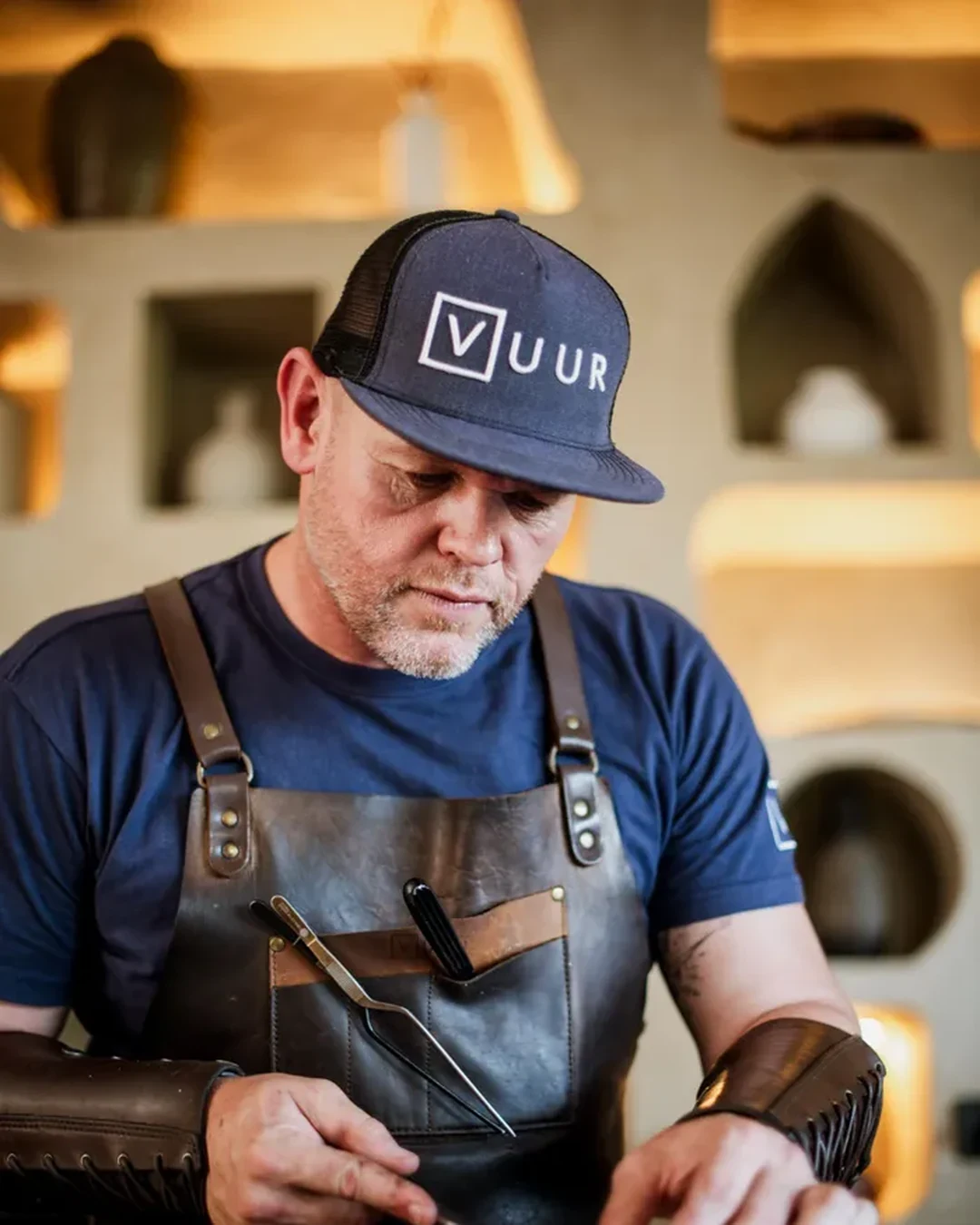
In Residence
Shaun Scrooby
Chef
- 01CuisineSouth African Open-Fire Steakhouse
- 02CityStellenbosch, South Africa
- World's Best Steaks 101 Best Steak Restaurants #52 · 2026
- World's Best Steaks 101 Best Steak Restaurants #87 · 2025
Fire, Water, and the Winelands
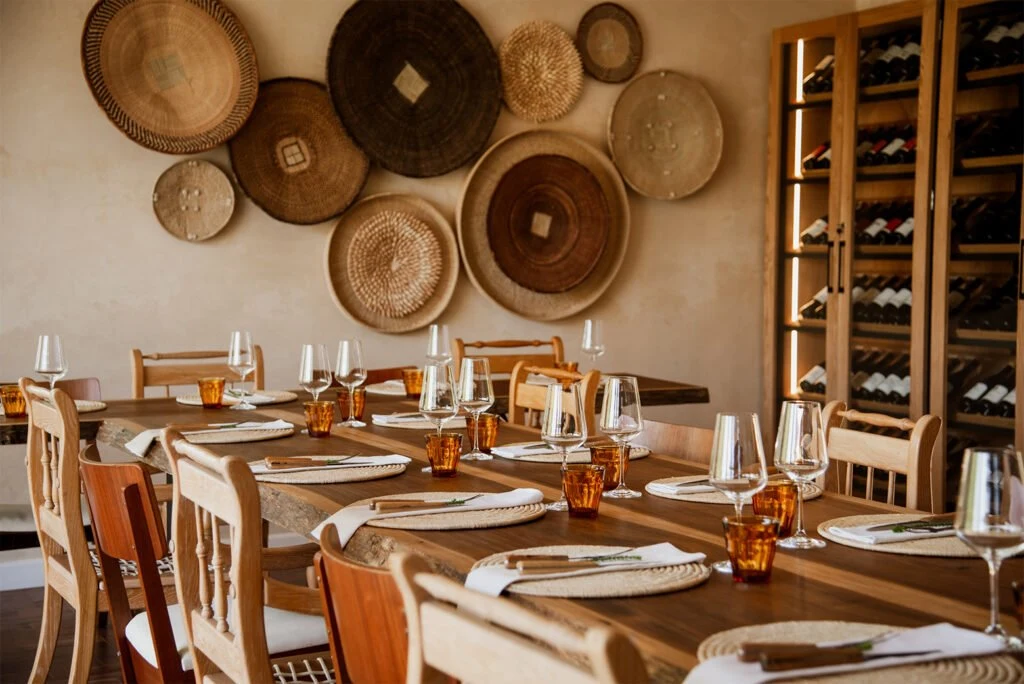
Vuur is a restaurant in Stellenbosch, South Africa, serving South African open-fire steakhouse dining at about US$450 per person. There is a particular kind of stillness that settles over the Stellenbosch winelands in the hour before dinner. The R44 corridor, which links some of the Western Cape's most serious wine estates, has over the past decade developed a dining scene that competes with Cape Town on culinary ambition while offering something the city cannot replicate: land, silence, and scale. Vuur, located on the Remhoogte Wine Estate, takes that contrast to its logical conclusion. The restaurant sits on a small island within a dam on the property, accessible across water, framed by the Simonsberg Mountains on the horizon. Before a course is served, the setting itself makes an argument.
Open-fire cooking has become one of the more discussed formats in global dining over the past several years, appearing in everything from neighbourhood bistros in Copenhagen to showpiece restaurants in São Paulo. In the Western Cape, that tradition has deeper and more practical roots: braai culture here is not an affectation but an inherited grammar. What distinguishes the more ambitious iterations is the degree to which fire becomes a precision instrument rather than a rustic shortcut. At Vuur, up to six different wood types are in use, each chosen for its combustion profile and the flavour compounds it contributes. That level of specificity places the kitchen closer to the approach of wood-fire practitioners like Wolfgat in Paternoster than to anything resembling a conventional grill room.
The Sunday letter
Find new places through the people who run them.
Our Sunday email brings you the chefs, winemakers and hoteliers behind our newest stories. See a sample before you subscribe.
See a sample of the Sunday emailOne email a week. Unsubscribe from any issue.
The Island Setting as Sensory Frame
The physical experience of arriving at Vuur is not incidental to the meal. Water surrounds the dining space on all sides, and the effect on atmosphere is immediate: ambient sound drops, peripheral movement narrows, and attention concentrates. The Simonsberg, visible in the near distance, provides a backdrop that changes through the dinner hours as light shifts from the long Western Cape dusk into dark. This kind of deliberate environmental framing is becoming more common among premium experience-format restaurants in South Africa, where the country's spatial generosity allows for a kind of staging that urban dining rooms simply cannot achieve.
Comparable estate dining formats in the region, including Indochine at Delaire Graff Estate and Jordan in Stellenbosch, use their settings with sophistication, but Vuur's island configuration produces a more complete separation from the outside world. Once seated, there is nowhere else to look.
The Format: Seven Courses, Communal Cadence
The menu runs to seven courses and is seasonal, constructed around local produce, meats, and seafood. What makes the format distinct from conventional tasting menus is the visibility of preparation: dishes are cooked and plated in front of guests. This approach sits within a broader movement in premium dining toward transparency of process, though Vuur's version has a communal, unpretentious register that distinguishes it from the more theatrical presentations found at places like The Test Kitchen in Cape Town or the precision-led counter formats of Atomix in New York City.
The protein program is particularly specific. Vuur works with locally reared breeds, including Dexter cattle, dry-aged for a minimum of 70 days before service. A 70-day minimum puts the program at the serious end of the dry-aging spectrum; most steakhouse operations that advertise dry-aging work in the 28-to-45-day range. The choice of Dexter, a heritage breed known for its marbling and compact muscle structure, suggests a sourcing philosophy oriented toward flavour depth rather than yield. Chef Shaun Scrooby, who built the concept, has shaped the kitchen around this approach. Chef Shaun Scrooby has shaped the kitchen around this approach.
Where Vuur Sits in Stellenbosch's Current Dining Scene
Stellenbosch has developed a more varied fine-dining offering over the past few years than its wine-country reputation might suggest. The emergence of format-driven restaurants alongside traditional estate tables has given the town a comparable set worth mapping. Dusk and HŌSEKI represent different poles of that development, the former grounded in South African produce and technique, the latter a Japanese-inflected counter experience. MERTIA adds further range to the town's premium offer. Vuur's competitive set is not primarily this local field, however. Its closest analogues are experience-format fire restaurants operating at destination-dining scale, a category that in South Africa also includes Le Quartier Français in Franschhoek and, further afield, Ellerman House in Bantry Bay. Internationally, the comparison points are restaurants where fire technique and sourcing specificity carry the same weight as kitchen precision, a standard represented in different registers by Le Bernardin in New York City in terms of program seriousness, even if the cuisines are entirely different.
For a broader view of what Stellenbosch offers across categories, our full Stellenbosch restaurants guide covers the current field in detail.
Planning Your Visit
Vuur is located on the R44 at Remhoogte Wine Estate, Stellenbosch 7600.
Questions
Frequently asked
Who works at Vuur?
Made By profiles Shaun Scrooby (Chef) at Vuur.
How expensive is Vuur?
Vuur is listed at a price level of $$$$.
Where is Vuur and what does it serve?
Vuur is in Stellenbosch, Stellenbosch, serving South African Open-Fire Steakhouse.
The field
How it compares
| Place | Cuisine | Notes | Awards |
|---|---|---|---|
| Vuur | South African Open-Fire Steakhouse | Stellenbosch, $$$$ | · |
| Benu | Modern Asian Fusion Fine Dining | San Francisco | Michelin 3 Stars, World's 50 Best |
| Dusk | Modern Fusion Fine Dining | Stellenbosch | · |
| HAJIME | Avant-Garde Japanese Fine Dining | Osaka | Michelin 3 Stars, World's 50 Best |
| Odette | Modern French Fine Dining | Singapore | Michelin 3 Stars, World's 50 Best |
| Restaurant Tim Raue | Asian-German Fine Dining | Berlin | Michelin 2 Stars, World's 50 Best |
| Sorn | Fine Southern Thai | Bangkok | Michelin 3 Stars, World's 50 Best |
In residence
Similar places
Modern Asian Fusion Fine Dining
Benu
San Francisco, United States
★★★ · 50 Best
Modern Fusion Fine Dining
Dusk
Stellenbosch, South Africa
Avant-Garde Japanese Fine Dining
HAJIME
Osaka, Japan
★★★ · 50 Best
Modern French Fine Dining
Odette
Singapore, Singapore
★★★ · 50 Best
Asian-German Fine Dining
Restaurant Tim Raue
Berlin, Germany
★★ · 50 Best
Fine Southern Thai
Sorn
Bangkok, Thailand
★★★ · 50 Best
The Sunday letter
Get the next Made By story in your inbox.
We send one email every Sunday morning with the places and people we covered that week.
See a sample of the Sunday emailOne email a week. Unsubscribe from any issue.