Wagyu Mafia
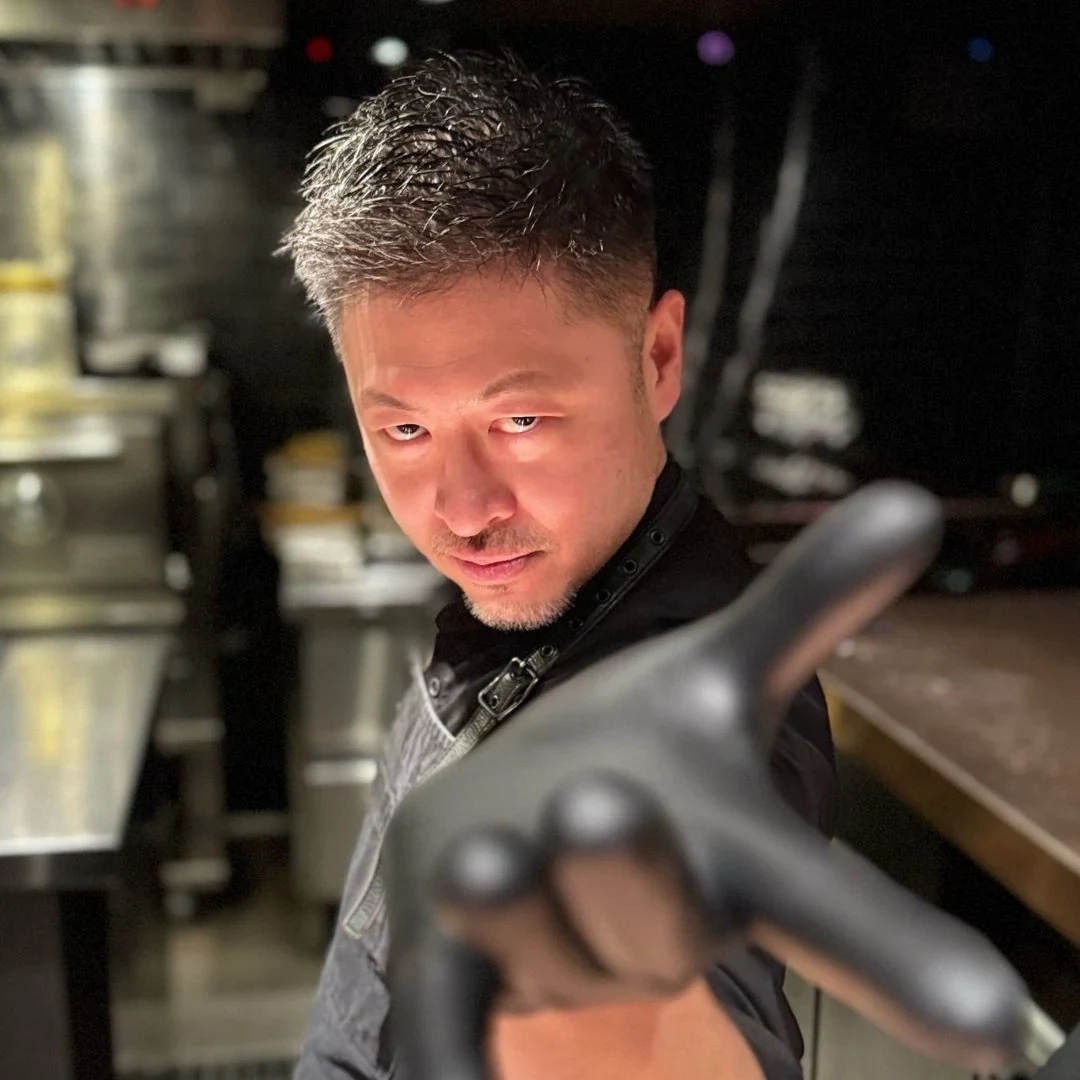
In Residence
Yohei Yamamoto
Chef
- 01CuisineModern Japanese Yakiniku
- 02CityHong Kong, Hong Kong
- Opinionated About Dining Top Restaurants in Japan Ranked #346 · 2025
- Opinionated About Dining Top Restaurants in Asia Ranked #163 · 2025
- Opinionated About Dining Top Restaurants in Asia Ranked #151 · 2024
- Opinionated About Dining Top Restaurants in Asia Ranked #115 · 2023
Where Japanese Wagyu Meets Kaiseki Discipline
The premium steakhouse category across Asia has fragmented considerably over the past decade. At one end sit the volume-driven formats: theatrical cuts, tableside flames, broad menus designed for groups. At the other sits a smaller tier of wagyu-specialist counters where the sequencing, temperature control, and sourcing philosophy borrow more from kaiseki tradition than from any Western steakhouse model. Wagyu Mafia is a restaurant in Camogli, Hong Kong, led by chef Yohei Yamamoto, with a price point around $85 per person. Wagyu Mafia, with Chef Yohei Yamamoto at the counter, belongs to that second group, a distinction that shapes everything from the pacing of the meal to the way individual cuts are introduced and rested before service.
Kaiseki, as a discipline, insists on structure: each course exists in relation to the ones before and after it, building toward a cumulative effect rather than presenting a series of independent dishes. Applied to a wagyu-focused format, this logic transforms what might otherwise be a simple protein showcase into something considerably more considered. The fat content of A5 beef, the way marbling behaves at different temperatures, the contrast between lean and richly marbled cuts, all of this becomes navigable material when a kitchen approaches sequencing with the same intentionality a kaiseki chef brings to a seasonal menu. Whether Wagyu Mafia fully realises that ambition across every service is a question the counter itself must answer, but the framework is the right one.
Recognition That Places It in Context
Opinionated About Dining (OAD), one of the few serious crowd-sourced but expert-weighted dining surveys operating across Asia, has tracked Wagyu Mafia through a clear upward arc. The restaurant ranked #115 in Asia in 2023, moved to #151 in 2024, and by 2025 held positions of both #163 on the Asia list and #346 on the Japan list. OAD rankings weight heavily toward experienced diners and professional critics rather than general volume, which makes this kind of sustained presence meaningful as a signal of peer-set recognition rather than popularity.
That dual-list presence, Japan and broader Asia, also tells you something about how the restaurant is perceived. Venues that appear on both tend to draw an international audience while maintaining credibility within the Japanese dining community itself, a balance that is harder to sustain than it might appear. For comparable ambition in other protein-forward or tasting-format restaurants across the region, Chef Tam's Seasons in Macau and Aji in its Nikkei-innovative format offer useful reference points, as does the precision-led approach visible at Atomix in New York City for what sequenced tasting formats can achieve at their ceiling.
The Wagyu Tier and What It Demands of a Kitchen
Japanese wagyu at the premium end is not a forgiving ingredient. Its extraordinary intramuscular fat content means it is easy to over-serve: too much of a richly marbled cut, presented without contrast or palate-cleansing structure, collapses into monotony regardless of the source quality. The kitchens that handle it well, and the OAD rankings suggest Wagyu Mafia is among them, understand that a wagyu-centric menu requires the same compositional thinking as any multi-course format. Acidity, light protein interludes, textural variation, and careful portion calibration all become as important as the beef itself.
This is where the kaiseki inheritance becomes most practically useful. The tradition's insistence on restraint per course, on small volumes that accumulate rather than overwhelm, is structurally well-suited to premium fat-forward ingredients. A kaiseki-trained sensibility doesn't chase impact in any individual moment; it builds it across the full arc of a sitting. Applied to wagyu, that means a menu that might move through delicate preparations before arriving at the richest cuts, then step back before any final moments, a structure that protects the ingredient's impact rather than exhausting it. For readers who have experienced the sequencing logic at Le Bernardin in New York City or the course architecture at 102 House in Shanghai, the underlying discipline will feel familiar even in a very different culinary register.
Placing Wagyu Mafia in the Broader Dining Tier
Japan's specialist counter format, whether omakase sushi, yakitori, or wagyu, tends to cluster around small seatings, premium price brackets, and advance booking requirements. The counter model concentrates attention and allows a kitchen to control pacing in ways that larger dining rooms cannot. At the level where OAD recognition sits, these formats typically operate on reservation windows of several weeks to a few months, and the wagyu-specialist tier specifically draws an audience that cross-references sourcing, cattle breed, prefecture, grade, with the same attention a wine-focused diner brings to vintage and producer. For context on how other high-intent tasting formats handle discovery and reservation logistics, Xin Rong Ji in Chengdu and Dingshan·Jiangyan in Suzhou represent adjacent precision-led formats worth examining.
The address at Via San Fruttuoso 19 in Camogli provides a specific physical anchor for planning. Reservations are essential, and the dress code is smart casual. For diners whose interests extend across Asian fine dining more broadly, Xin Rong Ji on Xinyuan South Road in Beijing, Jiangnan Wok·Rong in Fuzhou, and Shang Palace in Yangzhou offer further reference points across different regional traditions.
Questions
Frequently asked
Who works at Wagyu Mafia?
Made By profiles Yohei Yamamoto (Chef) at Wagyu Mafia.
How expensive is Wagyu Mafia?
Wagyu Mafia is listed at a price level of $$$.
Where is Wagyu Mafia and what does it serve?
Wagyu Mafia is in Camogli, Hong Kong, serving Modern Japanese Yakiniku.
The field
How it compares
| Place | Cuisine | Notes | Awards |
|---|---|---|---|
| Wagyu Mafia | Modern Japanese Yakiniku | Camogli, $$$ | · |
| 8 1/2 Otto e Mezzo Bombana (Hong Kong) | 3 Michelin-Star Italian Fine Dining | Hong Kong | Michelin 3 Stars, World's 50 Best |
| Amber | Contemporary French Fine Dining | Hong Kong | Michelin 3 Stars, World's 50 Best |
| Caprice | Contemporary French Fine Dining | Hong Kong | Michelin 3 Stars, World's 50 Best |
| The Chairman | Traditional Cantonese | Hong Kong | Michelin 1 Star, World's 50 Best |
| Vea | Modern Chinese-French Fusion | Hong Kong | Michelin 1 Star, World's 50 Best |
| WING Restaurant | Modern Chinese Fine Dining | Hong Kong | World's 50 Best |
In residence
Similar places
3 Michelin-Star Italian Fine Dining
8 1/2 Otto e Mezzo Bombana (Hong Kong)
Hong Kong, Hong Kong
★★★ · 50 Best
Contemporary French Fine Dining
Amber
Hong Kong, Hong Kong
★★★ · 50 Best
Contemporary French Fine Dining
Caprice
Hong Kong, Hong Kong
★★★ · 50 Best
Traditional Cantonese
The Chairman
Hong Kong, Hong Kong
★ · 50 Best
Modern Chinese-French Fusion
Vea
Hong Kong, Hong Kong
★ · 50 Best
Modern Chinese Fine Dining
WING Restaurant
Hong Kong, Hong Kong
50 Best