Weingut Battenfeld-Spanier operates from the quiet village of Hohen-Sülzen in Rheinhessen, where the region's distinctive limestone and loess soils shape wines of genuine precision. A 2025 Pearl 3 Star Prestige rating and a Decanter Silver medal place it among the more closely watched producers in Germany's largest wine region. Visitors approaching this address find a working estate rather than a tourist destination.
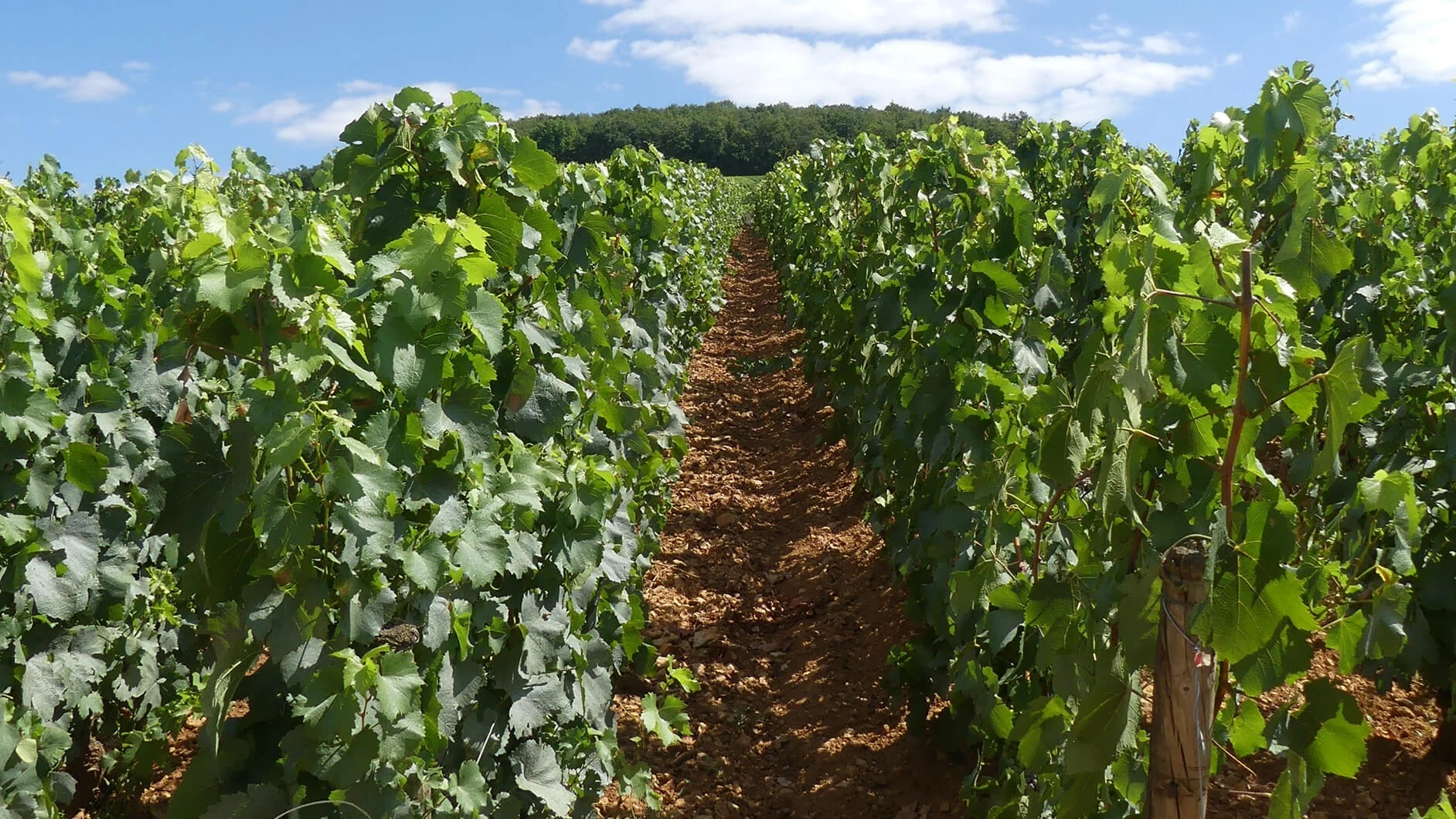
<h2>Rheinhessen's Limestone Belt and Why It Matters</h2><p>Germany's largest wine region spent decades in the shadow of its own reputation for volume production, but the stretch of refined limestone and loess terrain running through the Wonnegau, the southern district where Hohen-Sülzen sits, has quietly rewritten that narrative. The soils here are markedly different from the sandier, more fertile land to the north: tighter, more mineral-charged, with the kind of structure that forces vines to work for water and pushes roots deep. The result, across the better producers in this corridor, is wines with a tautness and saline edge that distinguish them clearly from the softer, fruit-forward style associated with Rheinhessen's bulk tier. Weingut Battenfeld-Spanier works within this specific terroir context, and the estate's address on Bahnhofstraße 33 in Hohen-Sülzen places it at the centre of this quietly serious sub-region.</p><p>The Wonnegau remains less visited than the Mosel or the Rheingau, which suits the producers who have built their reputations here through precision rather than profile. For the traveller who has covered <a href="https://www.enprimeurclub.com/wineries/kloster-eberbach-eltville-winery">Kloster Eberbach in Eltville</a> or the established names along the Nahe, the village estates of Hohen-Sülzen represent a different register: smaller scale, fewer concessions to the cellar-door tourist circuit, and wines whose logic is rooted in soil composition rather than marketing positioning.</p><h2>What the 2025 Recognition Signals</h2><p>The 2025 Pearl 3 Star Prestige rating, combined with a Silver medal at the 2025 Decanter competition, places Battenfeld-Spanier in a specific tier within the German wine recognition system. Decanter's Silver threshold requires wines to score within the upper bracket of the judged panel, and the Pearl Prestige designation operates as a separate curatorial signal applied by specialist reviewers tracking estate-level consistency. Together, these recognitions don't position the estate at the absolute apex of German fine wine, that bracket is occupied by a small number of Grosse Gewächs producers with decades of critical momentum, but they do mark it as a producer whose output warrants close attention. In the context of Rheinhessen, where the distance between serious and mediocre can be difficult to read from the label alone, that signal carries real navigational value.</p><p>For comparison, estates like <a href="https://www.enprimeurclub.com/wineries/weingut-bassermann-jordan-deidesheim-winery">Weingut Bassermann-Jordan in Deidesheim</a> and <a href="https://www.enprimeurclub.com/wineries/weingut-dr-burklin-wolf-wachenheim-an-der-weinstrasse-winery">Weingut Dr. Bürklin-Wolf in Wachenheim an der Weinstraße</a> represent the Pfalz's elite tier with long award histories and substantial international distribution. Battenfeld-Spanier operates in a different context: Rheinhessen limestone rather than Pfalz basalt, and a profile that has been built more through specialist press than retail visibility. The 2025 recognitions suggest that momentum is continuing.</p><h2>Approaching the Estate</h2><p>Hohen-Sülzen is not a destination that announces itself. The village of a few hundred residents sits in gently rolling countryside south of Alzey, and arriving by car along the regional roads gives a clear sense of why the terrain here produces wines with tension: the land rises and flattens in ways that concentrate sun exposure without the softening effect of a major river nearby. Unlike the Mosel valley estates, where the river's thermal mass moderates temperature swings and the slate reflects heat onto vertiginous slopes, the Wonnegau operates on a drier, more continental logic. The vines face a harder growing season in some respects, and that difficulty writes itself into the wines.</p><p>The estate sits on Bahnhofstraße, a working address in a working village. There is no riverside terrace, no baroque tasting hall. What the area offers instead is directness: the chance to understand a wine region through its quieter, less mediated version of itself. For the traveller who finds the more theatrical settings of estates like <a href="https://www.enprimeurclub.com/wineries/weingut-georg-breuer-rudesheim-am-rhein-winery">Weingut Georg Breuer in Rüdesheim am Rhein</a> or <a href="https://www.enprimeurclub.com/wineries/weingut-fritz-haag-brauneberg-winery">Weingut Fritz Haag in Brauneberg</a> part of the appeal, the contrast here is instructive. The Wonnegau's seriousness comes from the ground, not the scenery.</p><h2>Terroir Expression: Limestone, Loess, and the Wonnegau Character</h2><p>The limestone and loess mix that underlies Hohen-Sülzen's vineyards is geologically distinct from the other great German wine soils. Mosel slate conducts heat and drains rapidly; Pfalz's varied geology supports a wider range of varieties. The Wonnegau's calcareous soils, sometimes called Muschelkalk, are alkaline, moisture-retentive enough to support vines through dry summers, and structured in a way that produces wines with fine, saline minerality rather than the opulent fruit of warmer, more generous terroirs. Riesling on this soil type tends toward tighter acidity and longer development than examples from the Rheingau or the lower Nahe. Pinot Noir, increasingly significant in Rheinhessen, takes on a cooler-climate character that references Burgundy more than Baden.</p><p>Producers working this terroir consciously, rather than simply farming what was inherited, tend to align with the broader movement toward low-intervention viticulture that has reshaped German fine wine over the past two decades. <a href="https://www.enprimeurclub.com/wineries/weingut-clemens-busch-punderich-winery">Weingut Clemens Busch in Pünderich</a> on the Mosel and <a href="https://www.enprimeurclub.com/wineries/weingut-heymann-lowenstein-winningen-winery">Weingut Heymann-Löwenstein in Winningen</a> represent analogous commitments to site expression in their respective regions. The point, across all of these producers, is that the wine's identity derives from place first and winemaking intervention second. The 2025 Decanter recognition for Battenfeld-Spanier fits this pattern: the medal is for a specific wine from a specific site, not for a blended house style.</p><h2>Planning a Visit</h2><p>Hohen-Sülzen is accessible by car from Mainz in under an hour, and the Wonnegau sits conveniently between the Nahe valley wine route to the northwest and the Pfalz to the south, making it a natural addition to a multi-region itinerary. Travellers combining this area with visits to <a href="https://www.enprimeurclub.com/wineries/weingut-a-christmann-neustadt-an-der-weinstrasse-winery">Weingut A. Christmann in Neustadt an der Weinstraße</a> or <a href="https://www.enprimeurclub.com/wineries/weingut-jakob-schneider-niederhausen-winery">Weingut Jakob Schneider in Niederhausen</a> will find the geography makes a coherent day's routing. Public transport connections to the village itself are limited, so a car is the practical option for most visitors.</p><p>Because visits are by appointment only, reaching out in advance through the estate's official channels is the prudent approach before making the journey. Visiting is by appointment only. Checking current arrangements before arrival is not a formality here, it is the visit itself that depends on it.</p><p> Those building a wider German wine itinerary may also find value in the profiles of <a href="https://www.enprimeurclub.com/wineries/weingut-allendorf-oestrich-winkel-winery">Weingut Allendorf in Oestrich-Winkel</a>, <a href="https://www.enprimeurclub.com/wineries/weingut-grans-fassian-leiwen-winery">Weingut Grans-Fassian in Leiwen</a>, and <a href="https://www.enprimeurclub.com/wineries/weingut-burgerspital-zum-heiligen-geist-wurzburg-winery">Weingut Bürgerspital zum Heiligen Geist in Würzburg</a> as part of the same editorial series. For those extending beyond Germany entirely, the contrast with <a href="https://www.enprimeurclub.com/wineries/aberlour-aberlour-winery">Aberlour in Aberlour</a> or <a href="https://www.enprimeurclub.com/wineries/accendo-cellars">Accendo Cellars in St. Helena</a> illustrates how different a limestone Rheinhessen Riesling sits against Speyside single malts or Napa Cabernet in terms of collector logic and ageing horizon.</p>
Battenfeld-Spanier operates out of Bahnhofstraße 33 in Hohen-Sülzen, a village of a few hundred residents in gently rolling Wonnegau countryside. The atmosphere is quiet and agricultural rather than tourist-facing — this is a working estate where the wines, not the setting, do the talking. The 2025 Pearl 3 Star Prestige rating positions it firmly among Germany's serious producers, and visits tend to attract wine-focused travellers rather than casual day-trippers.
Weingut Battenfeld-Spanier has received recognition including: 2025 Decanter rollup: 1 awarded wines, best medal Silver, medals 1 Silver.; Pearl 3 Star Prestige (2025).
The estate's reputation is grounded in the limestone and loess soils of the Wonnegau, the elevated southern stretch of Rheinhessen that produces wines with a mineral tension distinct from the region's more volume-driven output. A Silver medal at the 2025 Decanter competition confirms the quality tier, and the Pearl 3 Star Prestige rating reinforces that the estate's wines are among the most closely watched in this part of Germany.
Weingut Battenfeld-Spanier is located at Bahnhofstraße 33, 67591 Hohen-Sülzen, Hohen-Sülzen.
The combination of a 2025 Pearl 3 Star Prestige rating and a Decanter Silver medal places Battenfeld-Spanier in a specific tier within Rheinhessen — acknowledged by two independent evaluation systems in the same year. What makes this notable is the location: Hohen-Sülzen sits on a limestone belt that long went underappreciated, and the estate has been central to the argument that this geology can produce wines of genuine structural interest.
Visit and tasting policies are not publicly documented in available trade records, and the estate does not list public hours or a booking portal in its current profile. Given its size and location in a small village, contacting the estate directly at Bahnhofstraße 33, Hohen-Sülzen, before travelling is the practical approach. Producers at this recognition level — Pearl 3 Star Prestige, Decanter Silver 2025 — typically prefer arranged visits over walk-ins.
The Pearl 3 Star Prestige designation is one of the higher tiers within the Pearl rating system, and receiving it alongside a 2025 Decanter Silver medal in the same cycle signals consistent performance across independent evaluators. Within Rheinhessen, Germany's largest wine region, estates operating at this recognition level are a minority — the region's sheer size means quality is unevenly distributed, and the Wonnegau limestone belt where Battenfeld-Spanier farms remains a smaller, more defined zone within it.
Bahnhofstraße 33, 67591 Hohen-Sülzen
Wonnegau