Weingut Fritz Waßmer operates from the southern Baden village of Bad Krozingen-Schlatt, a corner of Germany where the Kaiserstuhl and Markgräflerland converge to produce some of the country's most distinctive Pinot Noir and white Burgundy-style wines. The estate holds a Pearl 2 Star Prestige rating for 2025, placing it among Germany's more serious allocation-tier producers.
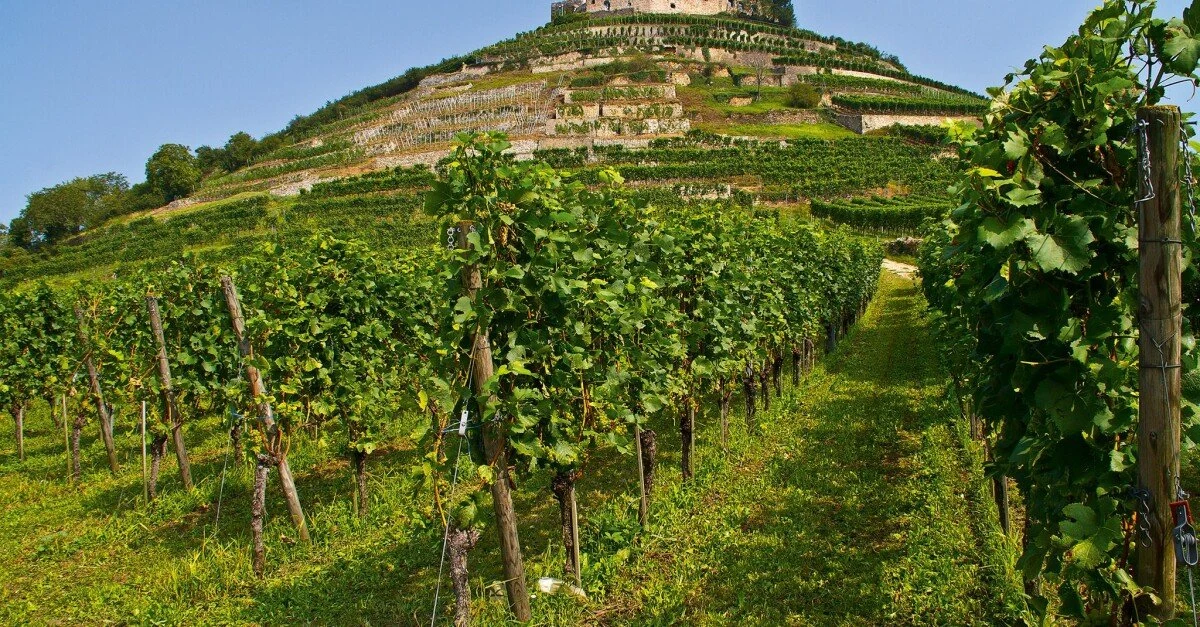
<h2>Baden's Southern Edge and What the Soil Tells You</h2><p>The Upper Rhine Plain narrows as it approaches the Swiss border, and the vineyards strung across the hills above Bad Krozingen sit at one of its quieter junctions. This is Baden's southernmost serious wine country, where the Freiburg gap funnels warm, dry air off the Vosges and the Black Forest slopes retain enough altitude to preserve acidity in what would otherwise be an unambiguously warm-climate zone. It is terrain that has long shaped a distinctive house style across the region's better estates: Pinot Noir with actual structure, not just ripeness, and white wines that carry textural weight without losing precision.</p><p>Weingut Fritz Waßmer, addressed at Lazariterstraße 2 in the village of Schlatt, sits inside that terroir argument rather than above it. The estate's 2025 Pearl 2 Star Prestige recognition positions it in the upper tier of Germany's assessed producers.</p><h2>What the Land Brings to the Glass</h2><p>Southern Baden's soil mosaic is one of the most varied in Germany. The Markgräflerland, which is the sub-region most directly relevant to Schlatt's position, runs on a base of calcareous loess and clay-rich loam, with pockets of limestone that echo, however loosely, the geology of Burgundy's Côte d'Or. That comparison is made carefully and often in this region, and for reasonably defensible cause: the latitudinal alignment with Burgundy, combined with the thermal moderation that altitude and forest proximity provide, creates conditions where Spätburgunder (Germany's Pinot Noir) can achieve the kind of mid-weight tension that defines the better Côte de Nuits villages.</p><p>The region's wine argument is also partly an argument against the Kaiserstuhl to the north, where volcanic basalt produces a fuller, rounder style of Spätburgunder that reads differently in the glass. Estates working the Markgräflerland and its fringes are, in effect, asserting a lighter-textured, more mineral-driven counter-thesis. Among Germany's broader prestige-tier Pinot producers, the peer conversation also reaches across regions to estates like <a href="https://www.enprimeurclub.com/wineries/weingut-georg-breuer-rudesheim-am-rhein-winery">Weingut Georg Breuer in Rüdesheim am Rhein</a> and, for Mosel contrast, <a href="https://www.enprimeurclub.com/wineries/weingut-clemens-busch-punderich-winery">Weingut Clemens Busch in Pünderich</a>, whose site-driven philosophy rhymes even across grape varieties.</p><h2>Baden's Position in the German Quality Conversation</h2><p>Germany's fine wine narrative has historically been dominated by Riesling and the Mosel, Nahe, and Rheingau corridors. Baden's prestige story is newer and, for much of the international market, still underpriced relative to comparable quality in France or even the Pfalz. Estates holding multi-star Pearl ratings in Baden have, over the past decade, started attracting the kind of allocation-list attention previously reserved for Mosel Grosses Gewächs bottlings or Pfalz Riesling from houses like <a href="https://www.enprimeurclub.com/wineries/weingut-bassermann-jordan-deidesheim-winery">Weingut Bassermann-Jordan in Deidesheim</a>.</p><p>That shift matters for how to read an estate like Waßmer. A 2 Star Prestige Pearl rating in 2025 is not a local curiosity marker. It sits within a benchmarking system that compares across all of Germany's fine wine producing regions, and achieving it in Baden's Pinot-dominant southern zone requires demonstrating that the wines hold up against structurally different styles from the Rheingau, Franken, or Mosel. For Franken reference, <a href="https://www.enprimeurclub.com/wineries/weingut-burgerspital-zum-heiligen-geist-wurzburg-winery">Weingut Bürgerspital zum Heiligen Geist in Würzburg</a> sits in that broader peer conversation. At the international end of the comparative spectrum, the terroir-expression emphasis that defines Baden's more ambitious estates connects to the same conversation happening at <a href="https://www.enprimeurclub.com/wineries/kloster-eberbach-eltville-winery">Kloster Eberbach in Eltville</a> and, beyond Germany, at <a href="https://www.enprimeurclub.com/wineries/accendo-cellars">Accendo Cellars in St. Helena</a> and <a href="https://www.enprimeurclub.com/wineries/weingut-allendorf-oestrich-winkel-winery">Weingut Allendorf in Oestrich-Winkel</a>.</p><h2>Visiting: The Approach and What to Expect</h2><p>Bad Krozingen sits roughly 20 kilometres south of Freiburg im Breisgau, and Schlatt is a short drive into the quieter agricultural edge of the municipality. The village is not on a wine tourism circuit in any commercial sense. There is no tasting room signage visible from a motorway, no cluster of adjacent cellar doors. Arriving at Lazariterstraße 2 means arriving at a working estate in a quiet residential-agricultural street, which shapes the experience from the first moment. This is the geography of production, not presentation.</p><p>Visitors should approach with advance contact. Freiburg's main station connects the city to an extensive regional rail and road network; the drive from Freiburg to Schlatt takes under 30 minutes by car and remains the practical choice for anyone combining this stop with the broader Markgräflerland or Black Forest corridor. Those building a multi-estate itinerary might also factor in Mosel visits to <a href="https://www.enprimeurclub.com/wineries/weingut-fritz-haag-brauneberg-winery">Weingut Fritz Haag in Brauneberg</a>, <a href="https://www.enprimeurclub.com/wineries/weingut-grans-fassian-leiwen-winery">Weingut Grans-Fassian in Leiwen</a>, or <a href="https://www.enprimeurclub.com/wineries/weingut-heymann-lowenstein-winningen-winery">Weingut Heymann-Löwenstein in Winningen</a> to understand the stylistic range that Germany's prestige tier now spans.</p><p></p><h2>Practical Notes for the Serious Visitor</h2><p>The estate's Pearl 2 Star Prestige classification for 2025 is the primary trust signal for any buyer or visitor calibrating where Waßmer sits relative to Germany's broader fine wine map. Late spring through early summer offers better access without the operational pressure of harvest.</p><div class="faq-section">
Waßmer is a working production estate in Schlatt, the agricultural edge of Bad Krozingen, not a tasting-room destination set up for walk-in visitors. The focus is on viticulture and winemaking, and the Pearl 2 Star Prestige classification for 2025 reflects that seriousness. Visitors arriving here are typically wine buyers or collectors rather than casual tourists.
Weingut Fritz Waßmer has received recognition including: Pearl 2 Star Prestige (2025).
Southern Baden's strongest case for fine wine runs through Spätburgunder (Pinot Noir), and estates earning multi-star Prestige ratings in the Markgräflerland sub-region typically produce site-expressive examples of it. Waßmer's Pearl 2 Star Prestige standing for 2025 puts it in the upper tier of Baden producers, making Spätburgunder the logical starting point for any serious tasting.
Weingut Fritz Waßmer is located at Lazariterstraße 2, 79189 Bad Krozingen, Bad Krozingen-Schlatt.
The estate is at Lazariterstraße 2, 79189 Bad Krozingen, in the village of Schlatt, roughly 20 kilometres south of Freiburg. It carries a Pearl 2 Star Prestige classification for 2025, which is the clearest calibration of where it sits in the German quality hierarchy.
Lazariterstraße 2, 79189 Bad Krozingen
Bad Krozingen-Schlatt