Weingut Hagn
- 01CityMailberg, Austria
- Falstaff Winery - 3 Stars · 2026
Wine Country on Its Own Terms: Dining in the Weinviertel
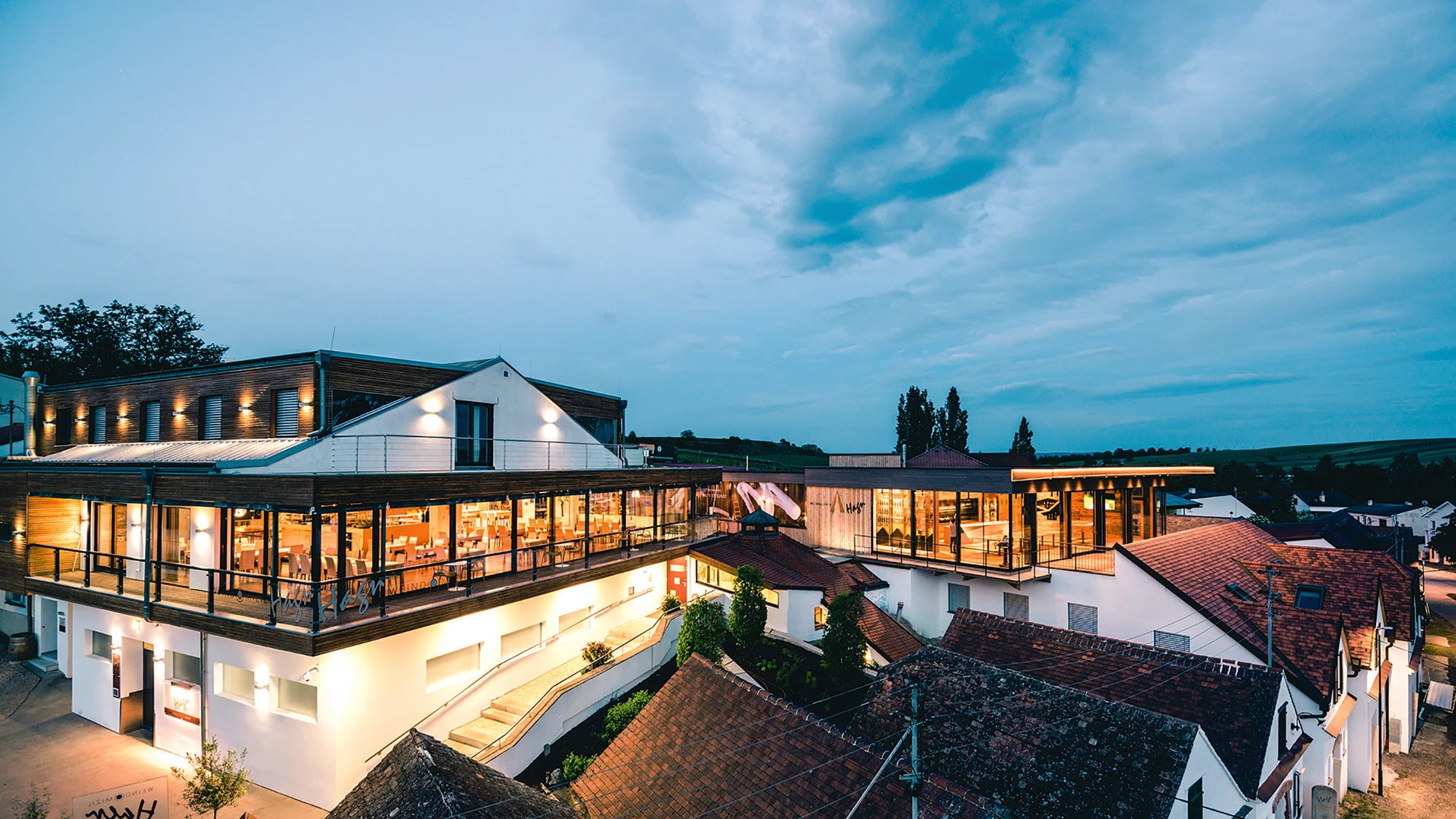
The Weinviertel, Lower Austria's northern wine belt, does not operate on the same calendar as Vienna's restaurant scene, roughly 60 kilometres to the south. Here, the harvest cycle, the cellar schedule, and the agricultural character of individual villages shape hospitality more reliably than chef celebrity or awards season. Weingut Hagn, addressed at Mailberg 422 in the small municipality of Mailberg, sits inside that tradition, where the estate itself is the organizing logic and the wine is the reason the address exists at all.
Mailberg is not a dining destination in the conventional sense. It is a wine village, and the distinction matters. Visitors who arrive expecting the format of a city restaurant, with a menu decoupled from its surroundings, tend to misread what this part of Lower Austria offers. The more productive frame is to understand Weingut Hagn as part of a broader pattern of Austrian estate hospitality, where winemakers have long operated a Heuriger or Buschenschank function alongside their production work, offering food and wine in a setting that reflects the land rather than a chef's tasting philosophy. For a sense of how that tradition plays out at the other end of the formality spectrum, the contrast with Landhaus Bacher in Mautern an der Donau is instructive: that address treats the Danube wine country as a platform for polished classic Austrian cuisine, while Weinviertel estates like this one tend to keep the register considerably closer to the land.
The Weinviertel's Ingredient Logic
What the Weinviertel produces in abundance is not variety but depth of place. The region's loess and sand soils, combined with a continental climate that brings warm days and cold nights, yield Grüner Veltliner and Riesling with a particular directness, less baroque than the Wachau to the south, more saline and mineral in character. At an estate like Weingut Hagn, the food served alongside those wines tends to follow a similar discipline: local produce, seasonal availability, and preparations that do not compete with the wine for attention. This is a regional philosophy with a long track record in Austrian winemaking country. The food is, in effect, sourced by geography before it is sourced by a purchasing decision.
That logic is visible across the better estate addresses in Lower Austria. Where a destination like Steirereck im Stadtpark in Vienna builds its sourcing narrative around named producers and precisely documented provenance, the Weinviertel estate model tends to internalize that sourcing: the estate grows or sources from immediate neighbours, the relationship is structural rather than curated. Neither approach is superior; they serve different readers with different expectations. For those who want the ingredient sourcing story to be transparent and narrated, the Vienna addresses are better equipped. For those who want to experience the logic before it is translated, the estate model in villages like Mailberg is harder to replicate.
For comparison, Austrian restaurants that have built formal reputations on regional sourcing include Döllerer in Golling an der Salzach and Kräuterreich by Vitus Winkler in Sankt Veit im Pongau, both of which carry Michelin recognition and frame their menus explicitly through local and Alpine produce. Weingut Hagn operates in a different tier and with a different mandate, but the underlying ingredient logic, that what grows near you should define what you cook, connects across these addresses.
Placing Weingut Hagn in Its comparable set
Within Mailberg specifically, the natural peer is Genusswirtschaft, another address in the village that operates within the same wine-country hospitality tradition. The two co-exist in a setting small enough that the choice between them will often come down to availability and format on a given day rather than significant differences in culinary ambition. Both are worth considering for visitors making the drive from Vienna specifically to spend time in the Weinviertel rather than to check a specific kitchen off a list.
The broader Austrian fine dining circuit, which includes addresses like Ikarus in Salzburg, Obauer in Werfen, Griggeler Stuba in Lech, Gourmetrestaurant Tannenhof in Sankt Anton am Arlberg, Stüva in Ischgl, Schwarzer Adler in Hall in Tirol, Restaurant 141 by Joachim Jaud in Mieming, and Taubenkobel in Schützen am Gebirge, operates with different price points, formats, and levels of formality. Weingut Hagn is not in competition with those addresses and should not be evaluated against them. It belongs to a separate category of Austrian hospitality, one closer to Ois in Neufelden in its village-scale register, and to Artis in Graz in its positioning within a regional rather than national conversation. For global reference, the gap between an estate address in the Weinviertel and a destination restaurant like Le Bernardin in New York City or Atomix in New York City is categorical rather than merely qualitative.
Planning a Visit
Mailberg sits in the northern Weinviertel, accessible from Vienna by car in under an hour, which makes it a viable half-day excursion combined with time at other estates in the region. The village is small, and the address at Mailberg 422 is the operational heart of the Hagn estate. Reach out directly for current operational information before making the drive. Estate properties in the Weinviertel frequently adjust availability around harvest periods in September and October, and around the winter months when production work takes priority over hospitality. Spring and summer visits, when the vineyards are active and the outdoor setting of Lower Austrian estates is at its most readable, tend to align with the spirit of this kind of address.
Questions
Frequently asked
How expensive is Weingut Hagn?
Weingut Hagn is listed at a price level of $$$.
The field
How it compares
| Place | Notes | Awards |
|---|---|---|
| Weingut Hagn | Mailberg, $$$ | · |
| Azienda Agricola Casanova di Neri di Giacomo Neri | Montalcino | World's 50 Best |
| Jacques Selosse | Avize | · |
| Puhwein | Mailberg | · |
| Schlossweingut Malteser-Ritter-Orden | Mailberg | · |
| Weingut Peer | Mailberg | · |
| Weingut Zens | Mailberg | · |