Weingut Hans Wirsching operates from the heart of Iphofen, one of Franconia's most consequential wine villages, where red Keuper sandstone soils and a continental microclimate shape a house style defined by mineral precision and structural restraint. Recognised with a Pearl 2 Star Prestige award in 2025, the estate ranks among Franken's serious reference producers. Visitors arrive for wines that argue the region's case plainly, without ornament.
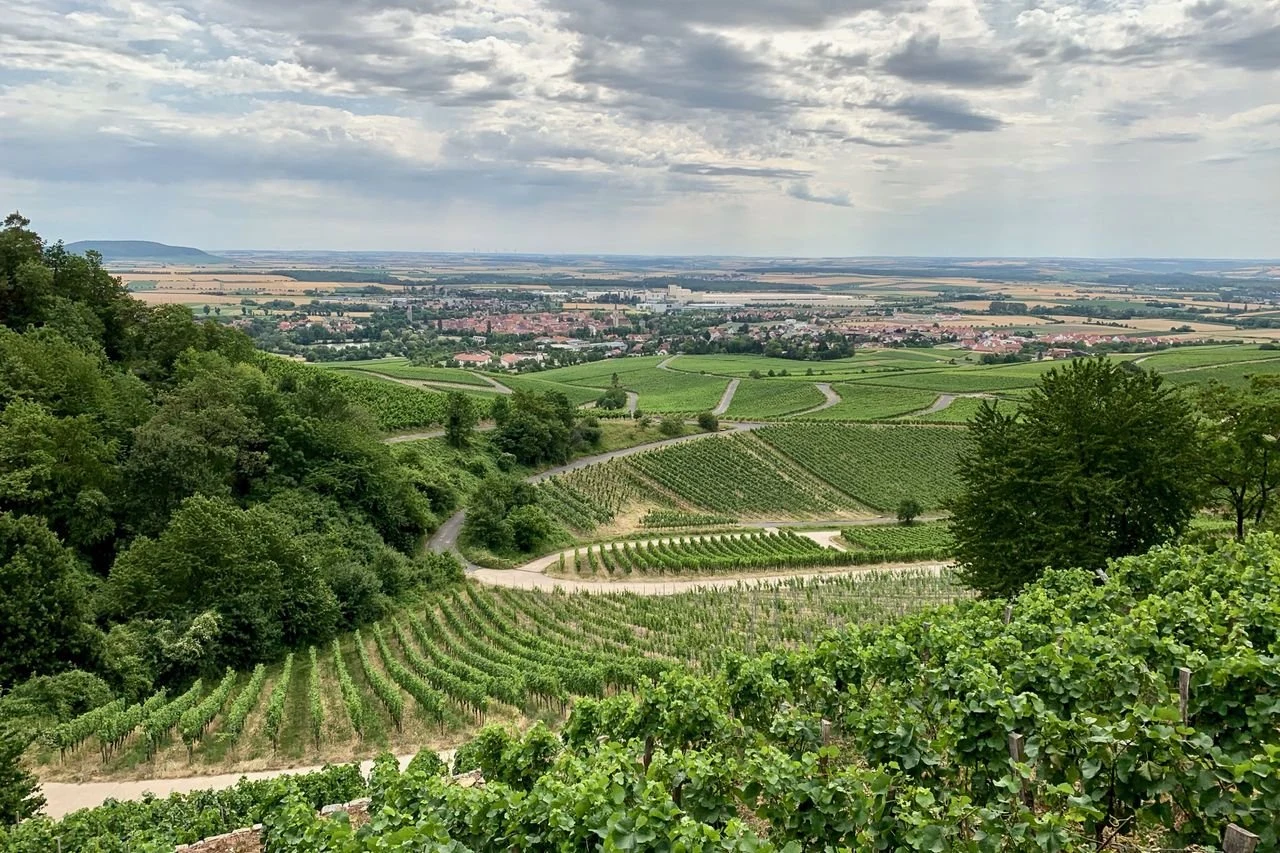
<h2>Keuper Country: What Iphofen's Soils Say Before the Wine Does</h2><p>There is a moment, approaching Iphofen from the west along the vine-covered ridge roads of Franken, where the landscape announces exactly what kind of wine you are about to encounter. The soils here are triassic Keuper, red, iron-rich, gypsum-threaded sandstone that drains fast, retains heat selectively, and delivers a mineral signature unlike the blue Devonian slate of the Mosel or the loess of the Pfalz. This is not gentle terroir. It demands varieties and methods that can express dryness and structure without tipping into severity. The wines that emerge from these hillsides tend to be precise, savoury, and built for the table rather than the tasting glass in isolation.</p><p>Weingut Hans Wirsching, addressed at Ludwigstraße 16 in the old town centre, sits at the intersection of this geological argument. The address matters less than what it implies: proximity to the Julius-Echter-Berg and Kronsberg, two of Franken's most closely monitored Einzellagen, both of which are closely associated with the estate. These sites have been debated in German wine circles for decades, not because of their age but because of the specificity of flavour they consistently produce, something between white pepper, chalk dust, and orchard fruit, the kind of mineral-fruit tension that makes Franconian Silvaner and dry Riesling compelling to a particular kind of wine drinker.</p><h2>Franken's Competitive Position Among German Prestige Estates</h2><p>German wine operates across a wide spectrum of recognition tiers. At one end sit the Grosse Gewächs producers of the VDP, carrying Michelin-style cultural weight in wine circles. Franken occupies a specific position within that national picture: historically respected but geographically peripheral to the media concentration around the Mosel, Rhine, and Pfalz. That peripheral status has, paradoxically, created a cohort of producers who have had to build reputations on wine quality alone rather than regional fame.</p><p>Wirsching's Pearl 2 Star Prestige award places it within the upper tier of that national field. For context, similar awards within the EP Club framework are shared by estates such as <a href="https://www.enprimeurclub.com/wineries/weingut-a-christmann-neustadt-an-der-weinstrasse-winery">Weingut A. Christmann in Neustadt an der Weinstraße</a>, <a href="https://www.enprimeurclub.com/wineries/weingut-bassermann-jordan-deidesheim-winery">Weingut Bassermann-Jordan in Deidesheim</a>, and <a href="https://www.enprimeurclub.com/wineries/weingut-burgerspital-zum-heiligen-geist-wurzburg-winery">Weingut Bürgerspital zum Heiligen Geist in Würzburg</a>, the latter being a near neighbour with deep historical roots in the same Franconian winemaking tradition. That comparable set signals what kind of conversation Wirsching is part of: prestige dry German wine, argued from site and varietal discipline rather than international style.</p><p>The Mosel's leading addresses, estates like <a href="https://www.enprimeurclub.com/wineries/weingut-fritz-haag-brauneberg-winery">Weingut Fritz Haag in Brauneberg</a>, <a href="https://www.enprimeurclub.com/wineries/weingut-clemens-busch-punderich-winery">Weingut Clemens Busch in Pünderich</a>, and <a href="https://www.enprimeurclub.com/wineries/weingut-grans-fassian-leiwen-winery">Weingut Grans-Fassian in Leiwen</a>, operate from a slate and Riesling identity that is entirely different in character. Comparing Franken to the Mosel is less a competition than a study in what German wine is capable of expressing across radically different geological conditions. <a href="https://www.enprimeurclub.com/wineries/weingut-heymann-lowenstein-winningen-winery">Weingut Heymann-Löwenstein in Winningen</a> and <a href="https://www.enprimeurclub.com/wineries/weingut-georg-breuer-rudesheim-am-rhein-winery">Weingut Georg Breuer in Rüdesheim am Rhein</a> anchor the Rheingau and Terrassenmosel respectively, providing further reference points for how site-focused German producers price and position themselves in the premium tier.</p><h2>Silvaner as Argument, Not Afterthought</h2><p>The editorial case for visiting Franken specifically, and Wirsching in particular, rests on one grape more than any other: Silvaner. Elsewhere in Germany, Silvaner is treated as a workhorse variety, productive, neutral, commercially useful. In Franken's Keuper and shell-limestone sites, something different happens. The grape develops a structural backbone that reads as almost Burgundian in its site sensitivity, producing wines with herbal tension, cool savouriness, and an acid line that ages well. This is not a widely understood fact outside specialist wine circles, which is partly why Franken remains less visited than its quality level warrants.</p><p>Riesling also features prominently at estates working the steeper exposures of the Steigerwald, and in Wirsching's context, dry Riesling from the Keuper sites can carry a grapefruit-pith austerity that rewards time in the bottle. The Franconian style, broadly, is defined by the Bocksbeutel, the distinctive flat-sided flask that has carried the region's wines since the eighteenth century and remains a protected designation, and by a commitment to dryness that predates the modern German fashion for trocken wines by several generations.</p><h2>Planning a Visit to Iphofen and the Steigerwald</h2><p>Iphofen itself is the kind of small Franconian town that remains functional rather than tourist-engineered. The medieval town walls are intact, the market square hosts a weekly market, and the wine estates are embedded in the residential fabric rather than set apart in visitor-centre compounds. Wirsching's address on Ludwigstraße places it centrally within this fabric. For visitors arriving by rail, Würzburg is the nearest major hub, approximately 25 kilometres to the northwest, with onward connections by regional train or car to Iphofen. The town is also reachable from Nuremberg, roughly 60 kilometres to the southeast.</p><p>Advance contact before visiting is advisable rather than optional. Prestige-tier producers across Germany's wine regions generally expect appointment-based visits for serious tastings, and the Franconian wine calendar concentrates visitor traffic in autumn around harvest. Spring, from April through June, tends to offer more availability and cooler cellar temperatures that suit structured tastings of the estate's drier styles.</p><p> The Steigerwald region also rewards multi-day visits: a circuit taking in Wirsching alongside the historic monastic estates of the broader Franken region, or extending westward to the Rheingau to visit <a href="https://www.enprimeurclub.com/wineries/weingut-allendorf-oestrich-winkel-winery">Weingut Allendorf in Oestrich-Winkel</a> or the benchmarking cellars of <a href="https://www.enprimeurclub.com/wineries/kloster-eberbach-eltville-winery">Kloster Eberbach in Eltville</a>, provides a structured comparison across Germany's principal white-wine traditions.</p><p>Those interested in extending comparisons further afield within the EP Club network can cross-reference against <a href="https://www.enprimeurclub.com/wineries/weingut-dr-burklin-wolf-wachenheim-an-der-weinstrasse-winery">Weingut Dr. Bürklin-Wolf in Wachenheim an der Weinstraße</a> or <a href="https://www.enprimeurclub.com/wineries/weingut-battenfeld-spanier-hohen-sulzen-winery">Weingut Battenfeld-Spanier in Hohen-Sülzen</a>, both of which work at the prestige tier but from Pfalz geology and competitive positioning. For those whose interests extend beyond German wine altogether, the EP Club also profiles estate-level producers across other regions, including <a href="https://www.enprimeurclub.com/wineries/accendo-cellars">Accendo Cellars in St. Helena</a> and <a href="https://www.enprimeurclub.com/wineries/aberlour-aberlour-winery">Aberlour in Aberlour</a>, offering reference points for how prestige producers operate across entirely different traditions.</p>
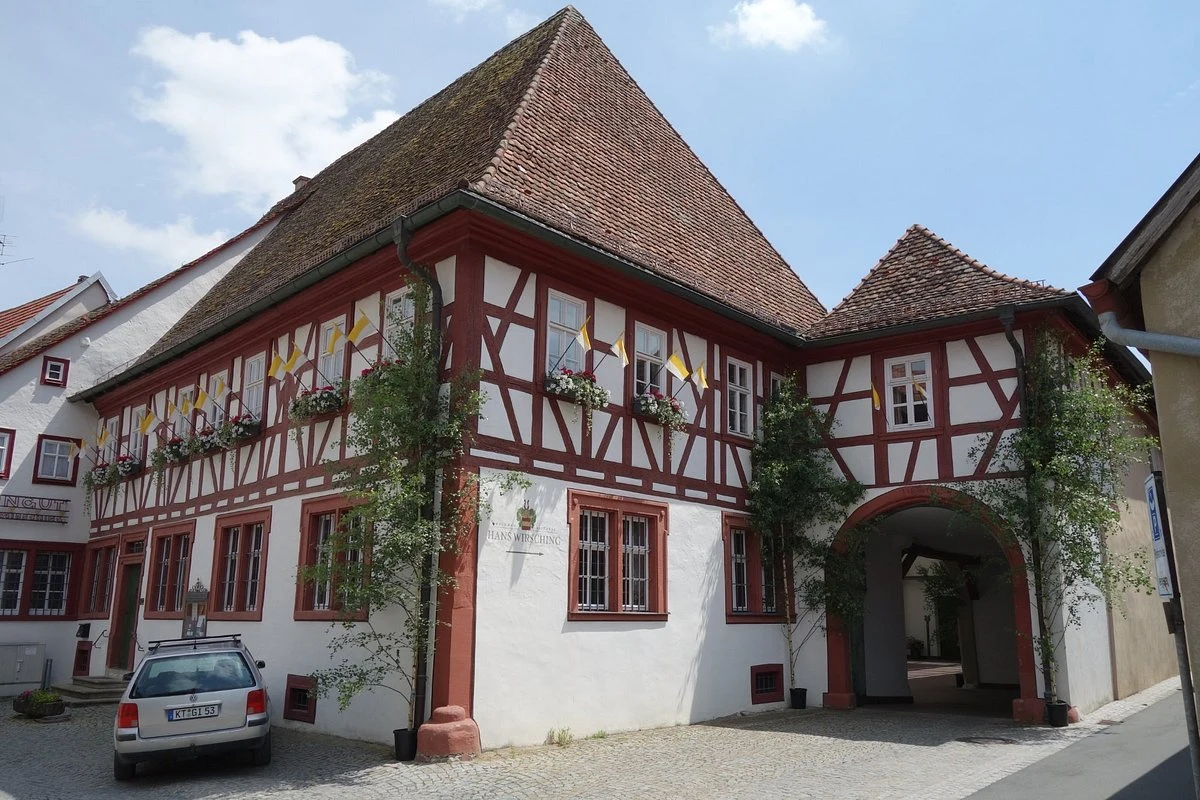
Wirsching operates as a working estate on Ludwigstraße 16 in the medieval town of Iphofen, which sets the register: serious about wine, unhurried in pace. A tasting visit here is closer to an informed cellar conversation than a curated hospitality performance. Smart but unpretentious attire fits the context.
Weingut Hans Wirsching is located at Ludwigstraße 16, 97346 Iphofen, Iphofen.
Weingut Hans Wirsching has received recognition including: Pearl 2 Star Prestige (2025).
Franken built its reputation on Silvaner, and Wirsching is among the region's most closely watched producers of it. The estate's holdings in Iphofen's Keuper-clay vineyards give the grape a mineral density rarely found outside this specific stretch of Franken. Scheurebe from the same soils is worth requesting if available at the time of your visit.
The estate holds a Pearl 2 Star Prestige rating for 2025, placing it among a small tier of German producers recognised for consistent quality at that level. Beyond the accolade, Iphofen's Keuper geology produces a style of Silvaner that has no direct equivalent in the Rheinhessen or Mosel, which makes a visit to Wirsching a regionally specific proposition rather than a generic winery stop.
The estate is located at Ludwigstraße 16 in Iphofen's compact town centre, which is walkable from most accommodation in the area. For tasting room access and availability, contacting the estate directly before arrival is advisable, particularly during harvest season when winery operations take priority.
Ludwigstraße 16, 97346 Iphofen
Iphofen
Weingut Bürgerspital zum Heiligen Geist