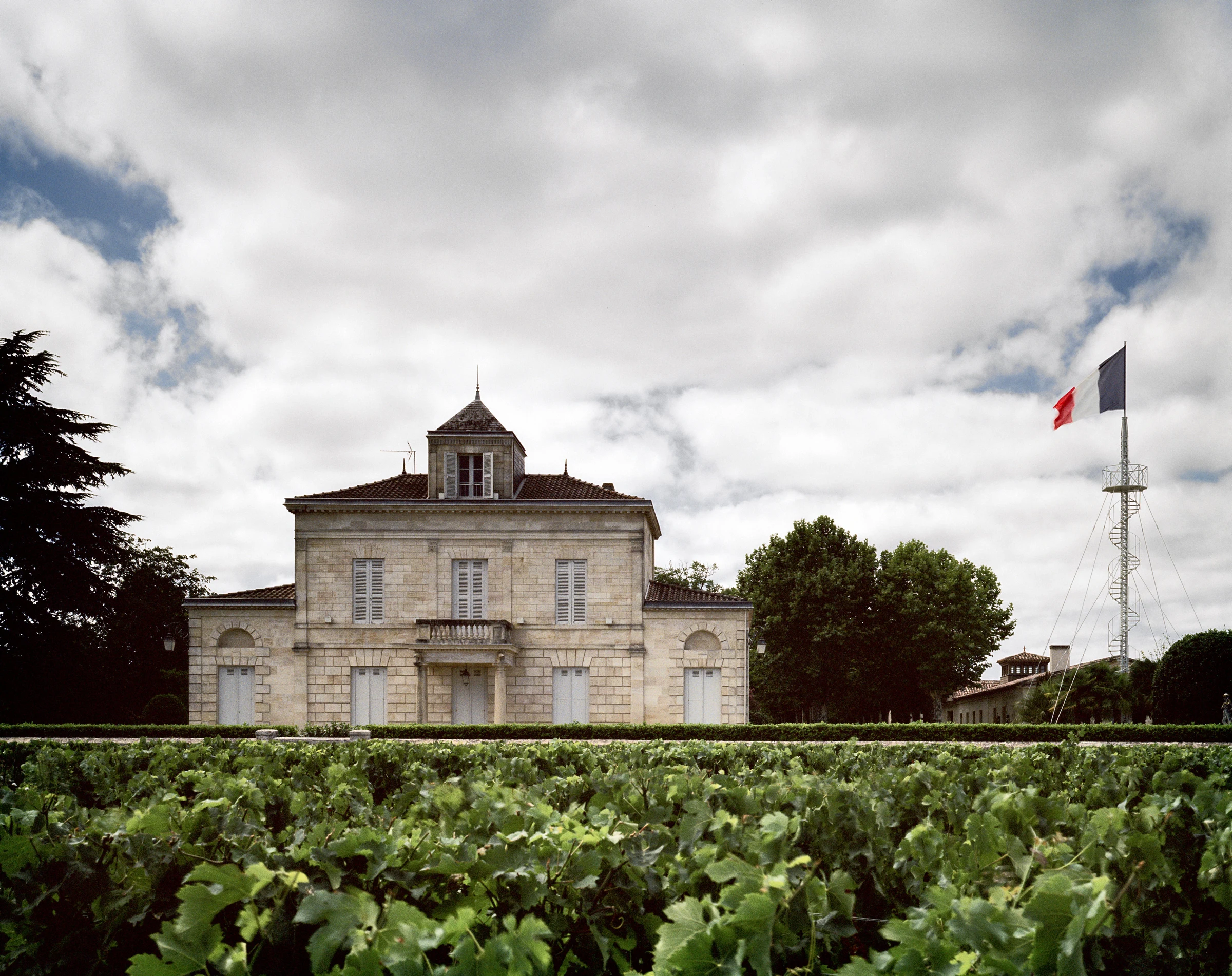
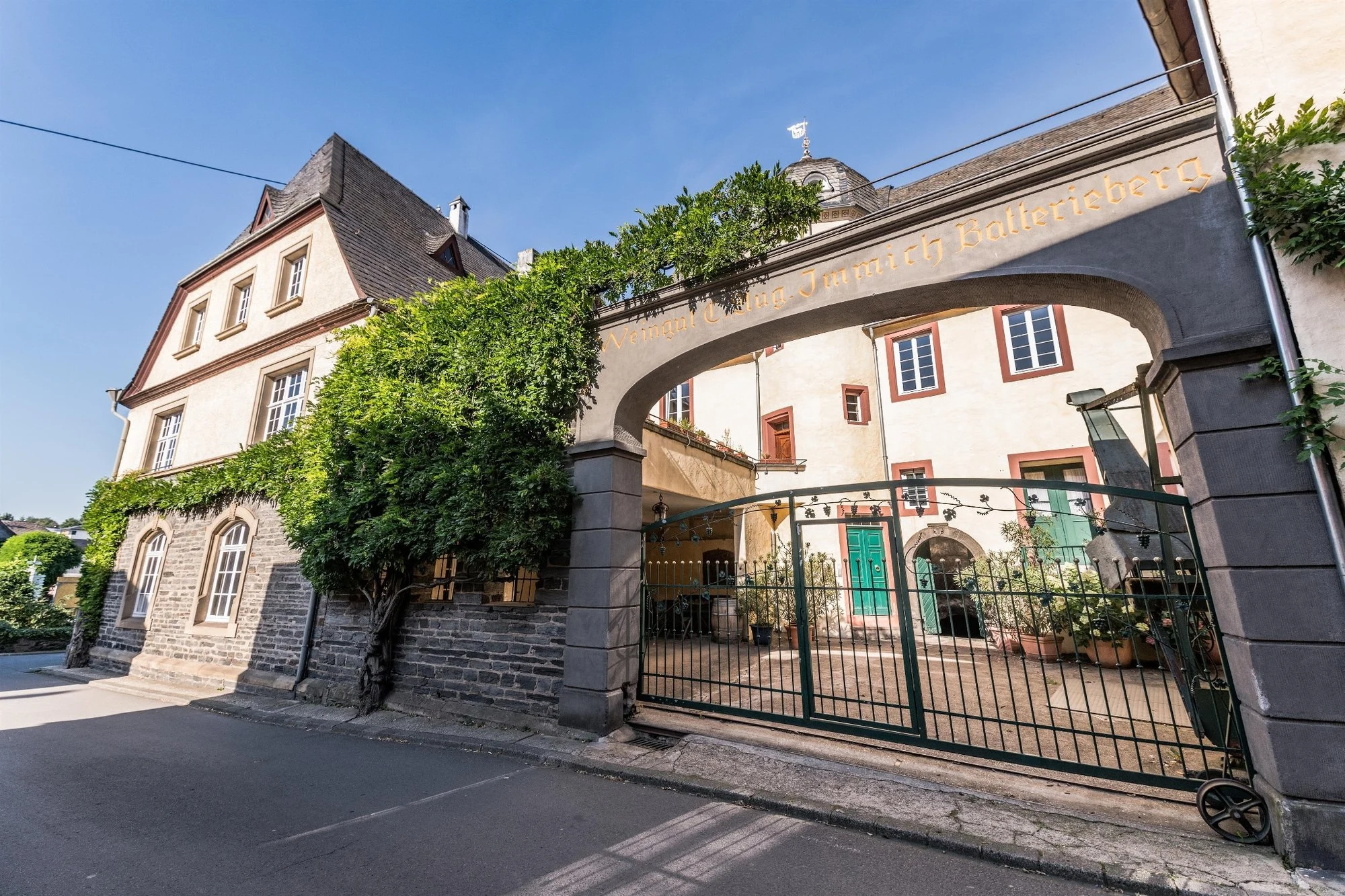
Weingut Immich-Batterieberg sits in Enkirch, one of the Mosel's less-trafficked villages, producing Riesling from steep slate vineyards that have been cultivated for centuries. The estate earned a Pearl 2 Star Prestige rating in 2025, placing it firmly among Germany's serious wine addresses. For those tracing the Mosel's upper reaches, it represents the valley at its most geologically expressive.
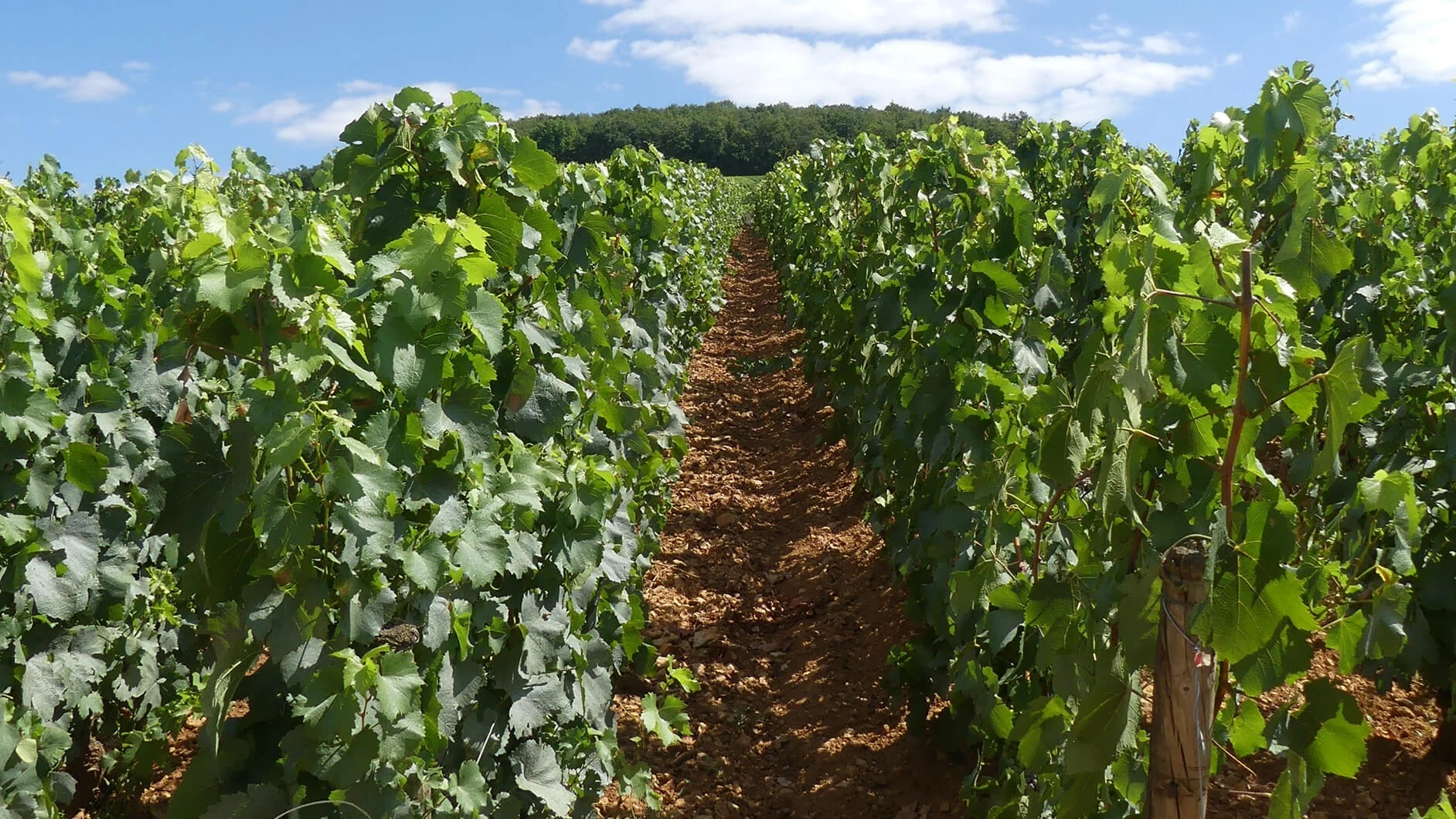
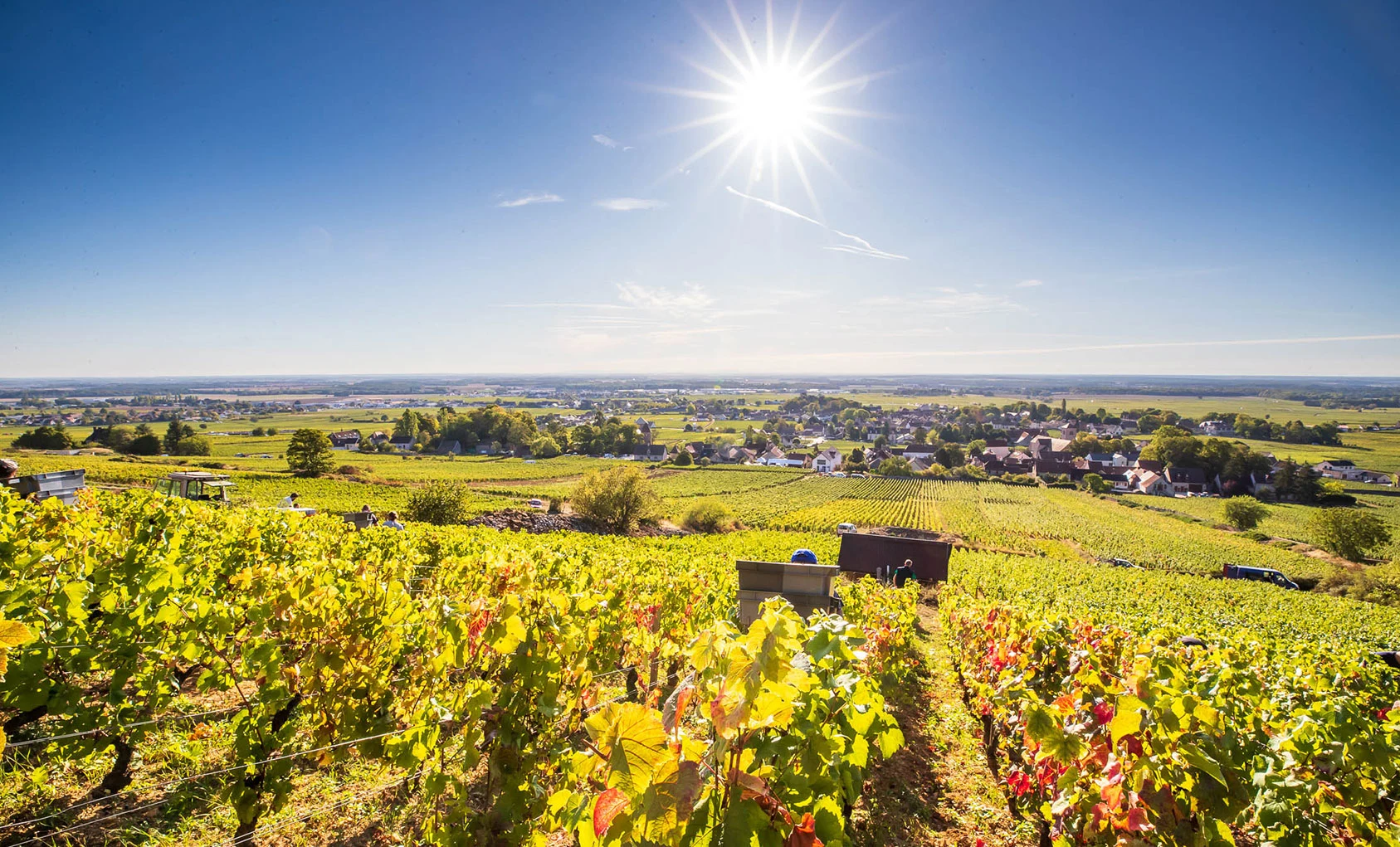
<h2>Where the Mosel Narrows and the Slate Takes Over</h2><p>The middle Mosel between Traben-Trarbach and Zell is a different proposition from the celebrated stretch around Bernkastel. The river bends more sharply here, the villages sit closer together, and the vineyard gradients, already steep by any European standard, become near-vertical in places. Enkirch occupies one of these bends, a small settlement of timber-framed houses pressed against the hillside, with parcels of Riesling rising above the rooflines at angles that make mechanical harvesting impossible. This is the physical setting that defines what Weingut Immich-Batterieberg produces: wines shaped by the specific geology underfoot.</p><p>The name itself points to the land. Batterieberg references a historic vineyard site above the village, and the continuity between place-name and producer is exactly the kind of signal that matters in Mosel Riesling. Here, the appellative logic runs the other way from many wine regions: the site names carry the prestige, and a producer's reputation is built on how faithfully it translates those sites into the bottle. Immich-Batterieberg's 2025 Pearl 2 Star Prestige award confirms it has earned that translation.</p><h2>Slate, Gradient, and the Mosel's Geological Argument</h2><p>Mosel Riesling's identity is inseparable from Devonian blue slate, and the Enkirch section of the valley offers some of the clearest expression of that geology. Slate retains daytime heat and releases it slowly through cool nights, moderating what would otherwise be a marginal climate for ripening. The mineral character that appears in Mosel wines as a kind of flinty, almost electric precision in the finish is widely attributed to this thermal dynamic and the direct interaction between vine roots and fractured slate. These are not decorative claims: producers across the valley, from <a href="https://www.enprimeurclub.com/wineries/weingut-fritz-haag-brauneberg-winery">Weingut Fritz Haag in Brauneberg</a> to <a href="https://www.enprimeurclub.com/wineries/weingut-grans-fassian-leiwen-winery">Weingut Grans-Fassian in Leiwen</a>, are working the same geological argument, just from different bends in the river.</p><p>What distinguishes the Enkirch sites is their relative obscurity within a region already dominated by a handful of celebrated village names. Bernkastel, Wehlen, and Erden command the most critical attention and the highest prices. Enkirch sits downstream from that core, which has historically meant lower auction benchmarks but also less commercial pressure to harvest early or adjust toward a broadly accessible style. That independence from the region's top-price expectations has allowed producers here to work at the slower pace that old vines and difficult terrain require. <a href="https://www.enprimeurclub.com/wineries/weingut-clemens-busch-punderich-winery">Weingut Clemens Busch in Pünderich</a> operates under similar conditions further downstream, and the parallel is instructive: both addresses have built reputations through site fidelity rather than brand scale.</p><h2>The Competitive Position: Prestige Mosel in a Niche Tier</h2><p>German wine's prestige tier has consolidated around a relatively small group of estates, most of them associated with the VDP, whose classification system mirrors Burgundy's hierarchy of Grosse Lage, Erste Lage, and Ortswein designations. Within this framework, the Mosel competes with the Rheingau and Pfalz for critical attention, though its argument is almost always made through Riesling's transparency rather than its weight. Estates like <a href="https://www.enprimeurclub.com/wineries/weingut-georg-breuer-rudesheim-am-rhein-winery">Weingut Georg Breuer in Rüdesheim am Rhein</a> or <a href="https://www.enprimeurclub.com/wineries/weingut-a-christmann-neustadt-an-der-weinstrasse-winery">Weingut A. Christmann in Neustadt an der Weinstraße</a> sit in adjacent regions making the same structural case for terroir-driven German wine, and they provide the frame within which Immich-Batterieberg's 2025 Pearl 2 Star Prestige rating carries meaning.</p><p>That rating places the estate in a tier where allocation access and direct relationships with the winery matter considerably. At this level of recognition across German wine, the estates that hold comparable standing, including <a href="https://www.enprimeurclub.com/wineries/weingut-battenfeld-spanier-hohen-sulzen-winery">Weingut Battenfeld-Spanier in Hohen-Sülzen</a>, <a href="https://www.enprimeurclub.com/wineries/weingut-dr-burklin-wolf-wachenheim-an-der-weinstrasse-winery">Weingut Dr. Bürklin-Wolf in Wachenheim an der Weinstraße</a>, and <a href="https://www.enprimeurclub.com/wineries/weingut-bassermann-jordan-deidesheim-winery">Weingut Bassermann-Jordan in Deidesheim</a>, tend to distribute their top-tier wines through a combination of mailing lists, specialist importers, and direct sales from the estate. Visiting Enkirch is not a casual detour: it requires a deliberate decision to leave the wine-trail infrastructure of Bernkastel or Cochem and follow the river into a section of the valley that moves at a slower pace.</p><h2>Visiting Enkirch: Logistics and Timing</h2><p>Enkirch is reachable by car from Trier in under an hour, and the B53 riverside road connecting the major Mosel villages passes through the village directly. Train access runs via the Moseltal line to Traben-Trarbach, the closest station with regular service, after which a short taxi or bicycle ride covers the remaining distance. The estate is located at Im Alten Tal 2 in Enkirch. Visits are recommended in advance. The shoulder seasons of May and October tend to work well for visits, catching either the vineyard's spring growth or the drama of harvest on steep slopes.</p><p>For those building a broader Mosel itinerary, the middle and lower Mosel offer a logical pairing with nearby estates. <a href="https://www.enprimeurclub.com/wineries/weingut-heymann-lowenstein-winningen-winery">Weingut Heymann-Löwenstein in Winningen</a> operates close to Koblenz at the river's junction with the Rhine, and the contrast between the two producers' sites illustrates how much the Mosel's geology varies over its length. Further into the German wine world, the Rheingau's institutional weight is well represented by <a href="https://www.enprimeurclub.com/wineries/kloster-eberbach-eltville-winery">Kloster Eberbach in Eltville</a>, one of the region's most historically significant estates, while <a href="https://www.enprimeurclub.com/wineries/weingut-burgerspital-zum-heiligen-geist-wurzburg-winery">Weingut Bürgerspital zum Heiligen Geist in Würzburg</a> makes the case for Franconia as an entirely different expression of German viticulture.</p><p></p><h2>What the 2025 Rating Tells You</h2><p>A Pearl 2 Star Prestige award in 2025 is not a lifetime achievement marker. At the ratings tier Immich-Batterieberg now occupies, the expectation is sustained consistency across vintages, and the Mosel's climate variability makes that harder than it sounds. The valley's cool continental conditions produce enormous vintage variation: a warm, dry year like 2018 or 2022 delivers wines with structural weight unusual for the region, while a challenging cool year demands precision in harvest timing and cellar patience to find the balance between acidity and fruit. Estates that hold prestige ratings across multiple vintage types have demonstrated exactly that kind of range.</p><p>That consistency, in a region where Riesling's acidity can tip from electric precision into severity, is the argument for drinking carefully at this level. The comparison set for Immich-Batterieberg is the narrow group of estates translating specific named sites into wines that reward patience. It is the narrow group of estates translating specific named sites into wines that reward the patience to wait for the right vintage maturity. That is the premise of the 2 Star Prestige designation, and the reason the estate belongs on a serious Mosel itinerary.</p>
This is a working estate in the village of Enkirch, not a hospitality showcase. The focus is the wine itself — Rieslings shaped by Devonian blue slate from some of the middle Mosel's steeper gradients. The Pearl 2 Star Prestige rating earned in 2025 places it firmly in Germany's serious wine tier, and visits tend to reflect that: they're about understanding site and producer, not ambient atmosphere.
Weingut Immich-Batterieberg is located at Im Alten Tal 2, 56850 Enkirch, Enkirch.
Weingut Immich-Batterieberg has received recognition including: Pearl 2 Star Prestige (2025).
The estate's reputation is built on its Enkirch Batterieberg site, a Devonian blue slate slope that gives Rieslings a mineral tension associated with the middle Mosel's more demanding vineyards. The 2025 Pearl 2 Star Prestige award signals that single-site bottlings from this estate are the reference point — those are the wines worth prioritising over any introductory range.
The estate sits at Im Alten Tal 2 in Enkirch, a village on the middle Mosel between Traben-Trarbach and Zell — a stretch that receives less visitor traffic than Bernkastel but produces Rieslings with comparable geological pedigree. The Pearl 2 Star Prestige recognition in 2025 draws collectors and serious wine travellers who want direct access to a producer working at the top of its regional tier, outside the more commercialised Mosel towns.
Im Alten Tal 2, 56850 Enkirch
Enkirch