Winemaker
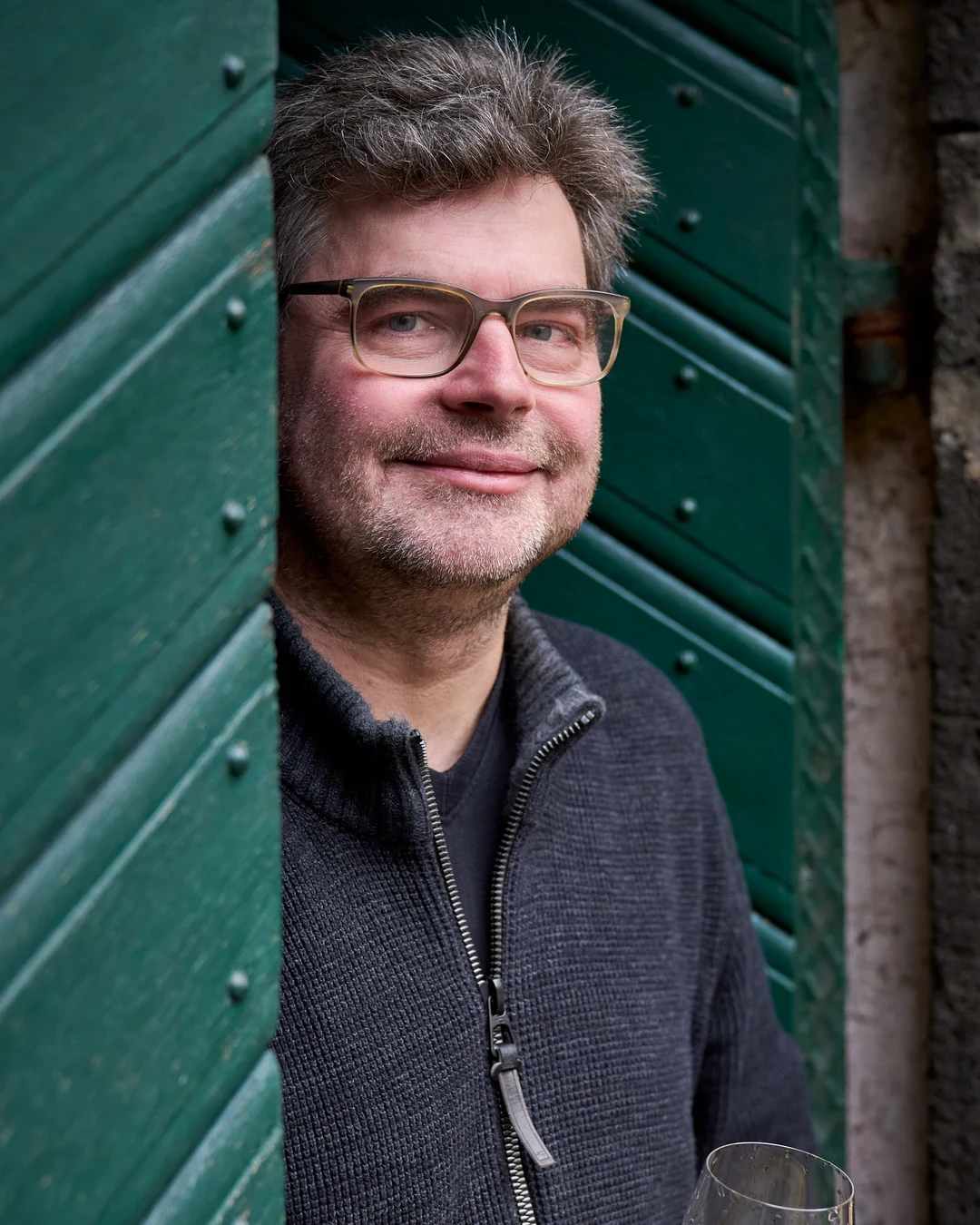
Gernot Kollmann
- Discipline
- Winemaker
- Based in
- Enkirch, Germany
i. Biography
Slate, Riesling, and the steep grammar of the Mosel define Gernot Kollmann’s work in Enkirch, Germany. Since 2009, he has been Sole Winemaker and operator at Weingut Immich-Batterieberg, where the vineyards’ mineral edge and the region’s restless slopes are turned into Dry Rieslings of finesse, tension, power, and delicacy. In Kollmann’s hands, the Mosel reads less like scenery than as working terrain: weathered, disciplined, and capable of precision, length, and quiet force.
The Path
Early in his career, Gernot Kollmann began as an intern at Dr. Loosen in Mosel, Germany, an entry point into the region’s exacting rhythms. He then moved on to Van Volxem in Mosel, Germany (2000–2003), where he worked as winemaker, before continuing as winemaker at Knebel in Mosel, Germany (2004–2008). In 2009, he took on the role of Sole Winemaker and operator at Immich-Batterieberg in Mosel, Germany, bringing his experience back to a landscape shaped by steepness, slate, and meticulous attention to site.
The Work Today
At Weingut Immich-Batterieberg in Enkirch, dry Riesling is the central register, and Gernot Kollmann uses it to articulate place with clarity rather than decoration. The estate’s CAI Riesling is its interpretation of a complex Riesling from mineral slate vineyards, described as light with plenty of finesse and tension. The wine is built on line and balance, not excess—drawn taut between precision and energy. Detonation Riesling comes from a selection of the best Mosel vineyards and is described as expressive, explosive, powerful, and yet delicate. ESCHEBURG RIESLING draws on four top Enkirch vineyards, from vines over 60 years old, and is described as always a small Grand Cru, a distilled expression of longevity and topography. Enkircher Steffensberg Riesling is tied to a pure south-facing site directly behind the center of Enkirch, rooting the wine in a specific village address and a particular slope’s exposure. His thinking about hillsides returns to the split between life and mineral matter: “This is why vines were historically planted on hillsides: there is clay for the link to the living (growth, fermentation) and hard soil for the non-living (flower, fruit, aromatic, tannins, bitterness).” In that sentence, the vineyard becomes a working grammar, where soil and slope are not backdrop but the architecture of the wine’s expression.
Career - intern — Dr. Loosen, Mosel, Germany - winemaker — Van Volxem, Mosel, Germany (2000–2003) - winemaker — Knebel, Mosel, Germany (2004–2008) - Sole Winemaker and operator — Immich-Batterieberg, Mosel, Germany (from 2009)
Signature
Gernot's signature wines include CAI Riesling, Detonation Riesling, ESCHEBURG RIESLING, and Enkircher Steffensberg Riesling.
In Their Words “This is why vines were historically planted on hillsides: there is clay for the link to the living (growth, fermentation) and hard soil for the non-living (flower, fruit, aromatic, tannins, bitterness).” “Before starting to vinify Riesling by direct-pressing it, I took the time to taste many wines made on this type of terroir: that is to say hard soils such as granite, schist or gneiss.”
Acclaim
He has also spoken with the plain urgency of someone watching seasons change in real time: “Harvest was the earliest that people remember in the Mosel.” That kind of sentence belongs to a working cellar, where weather is not an abstraction and timing decides the shape of the wine.
FAQ Where did Gernot Kollmann work before? Gernot Kollmann's earlier career included Dr. Loosen, Van Volxem, and Knebel.
Explore
Similar Winemakers