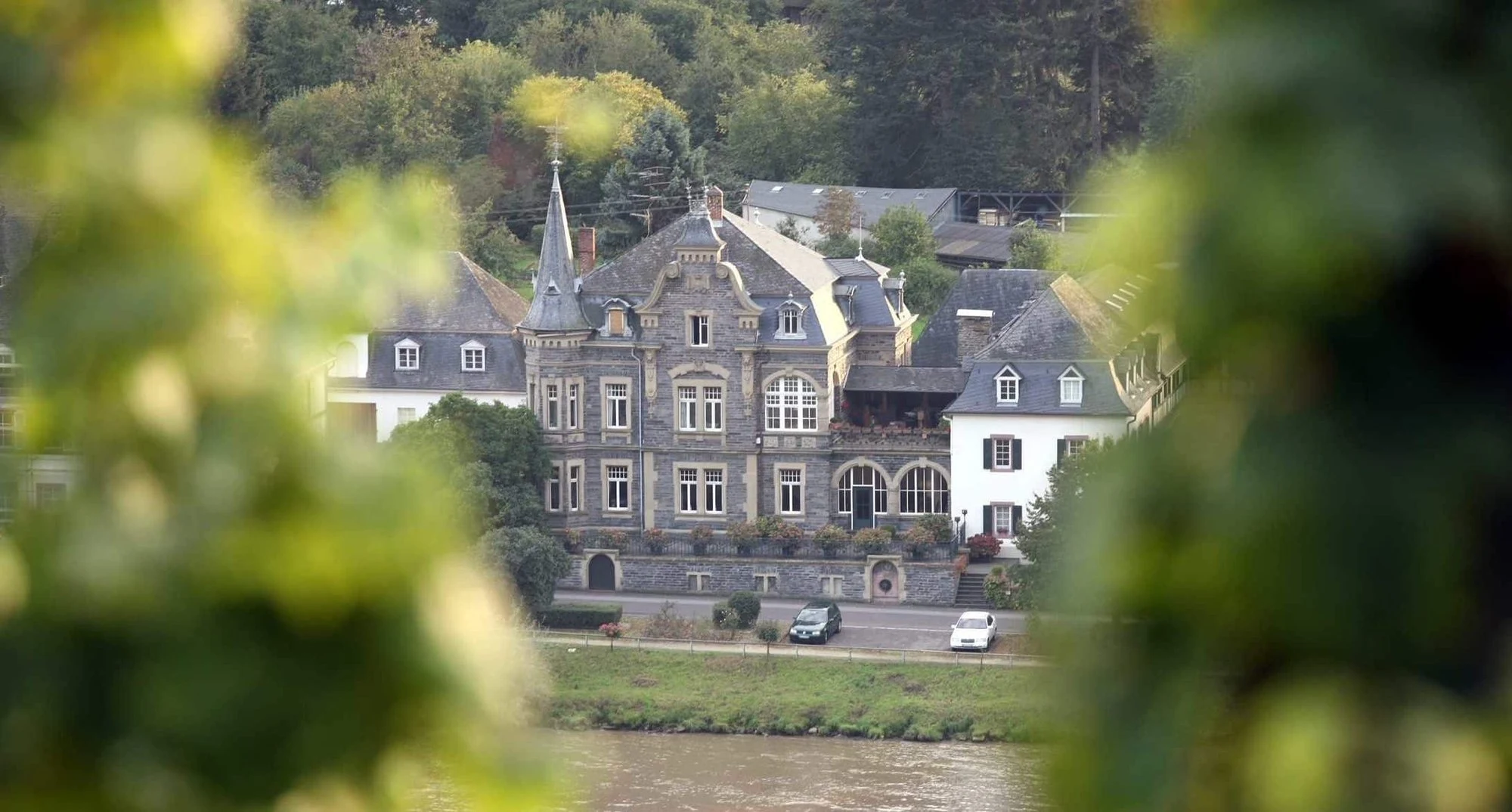
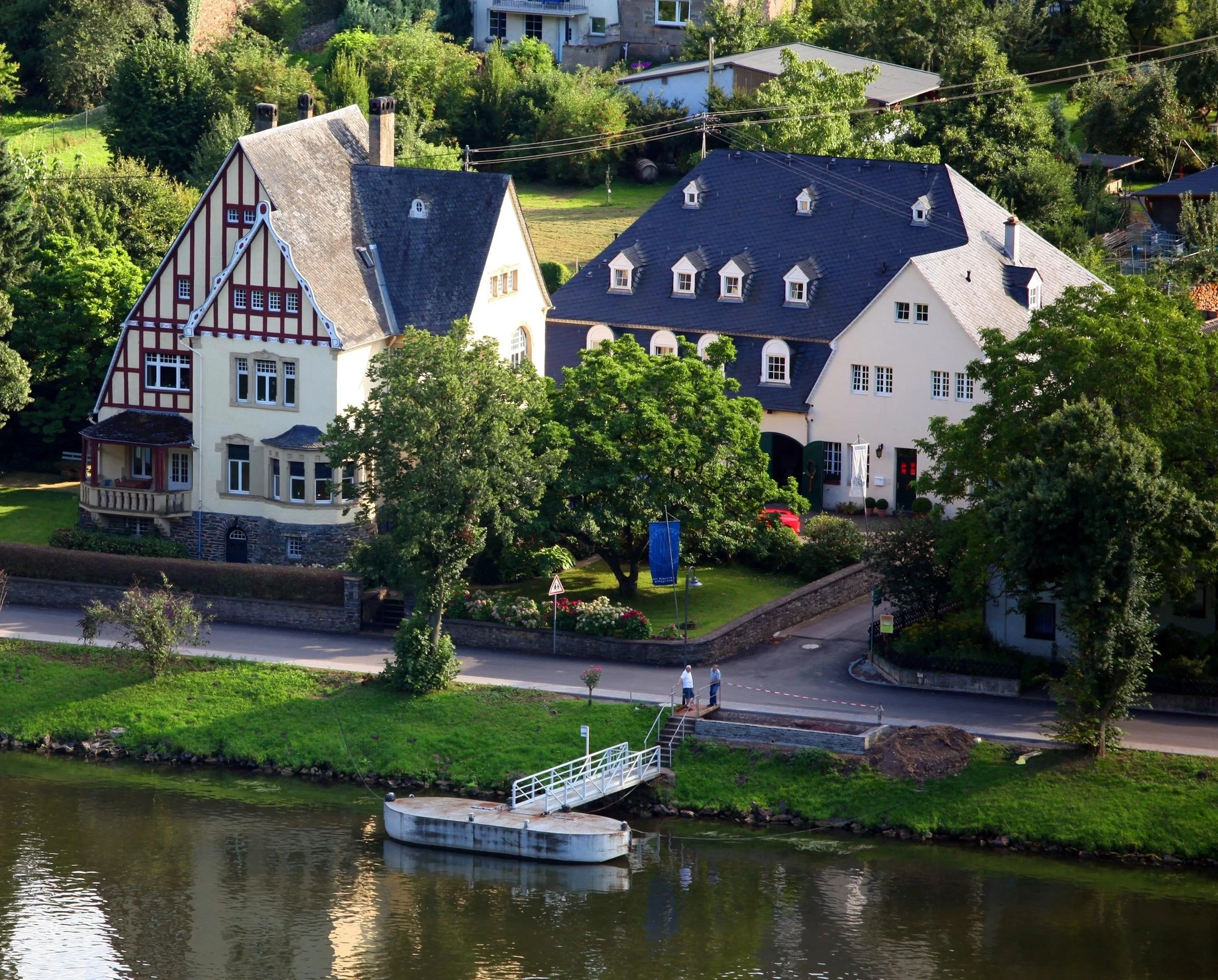
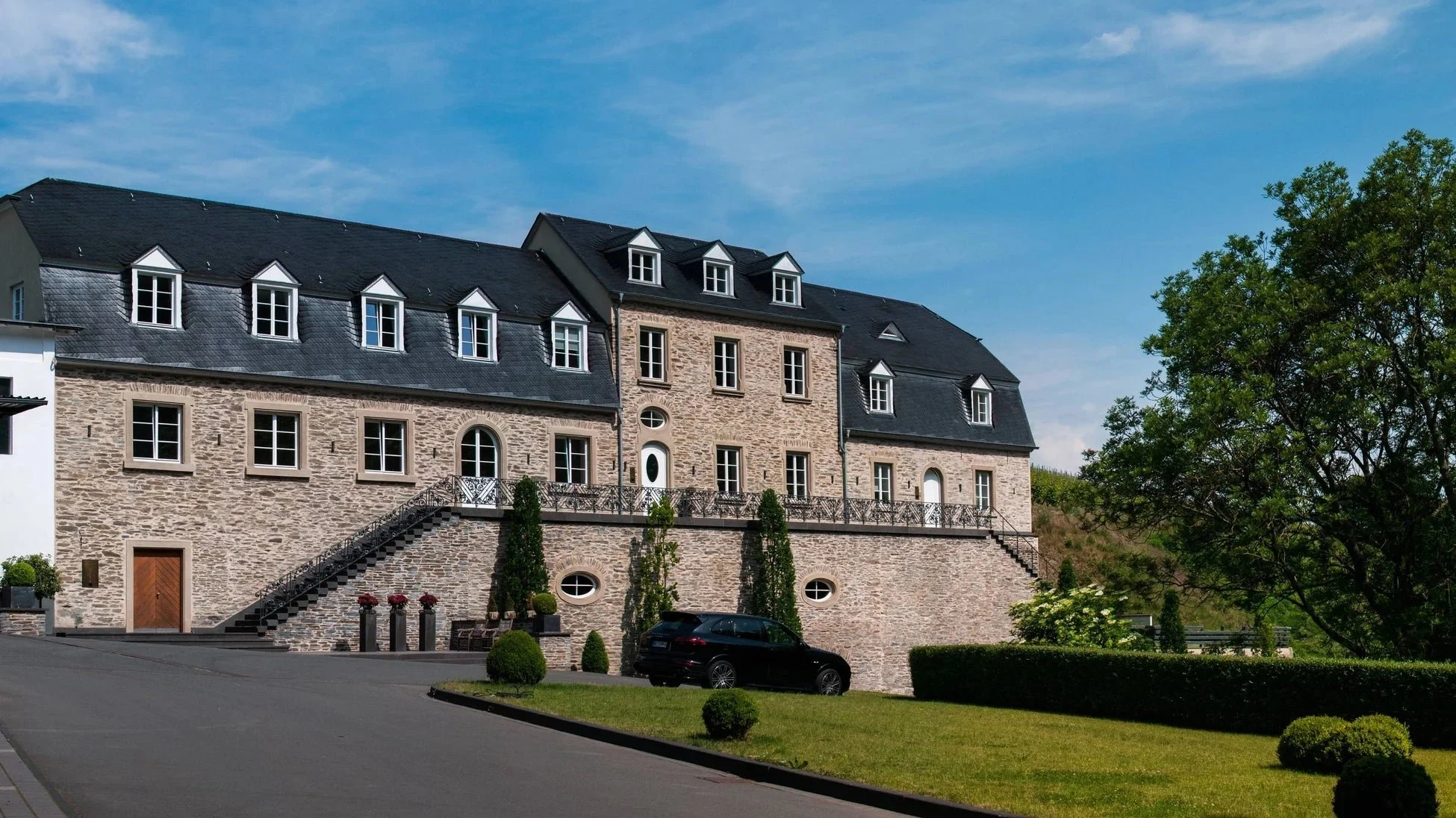
On the steep slate banks of the Mosel between Bernkastel and Wehlen, Weingut Joh. Jos. Prüm is one of the reference addresses for German Riesling, with the Wehlener Sonnenuhr vineyard as its primary canvas. The estate holds a Pearl 4 Star Prestige rating for 2025, placing it among a small tier of producers whose wines are sought on allocation rather than browsed from a shelf.
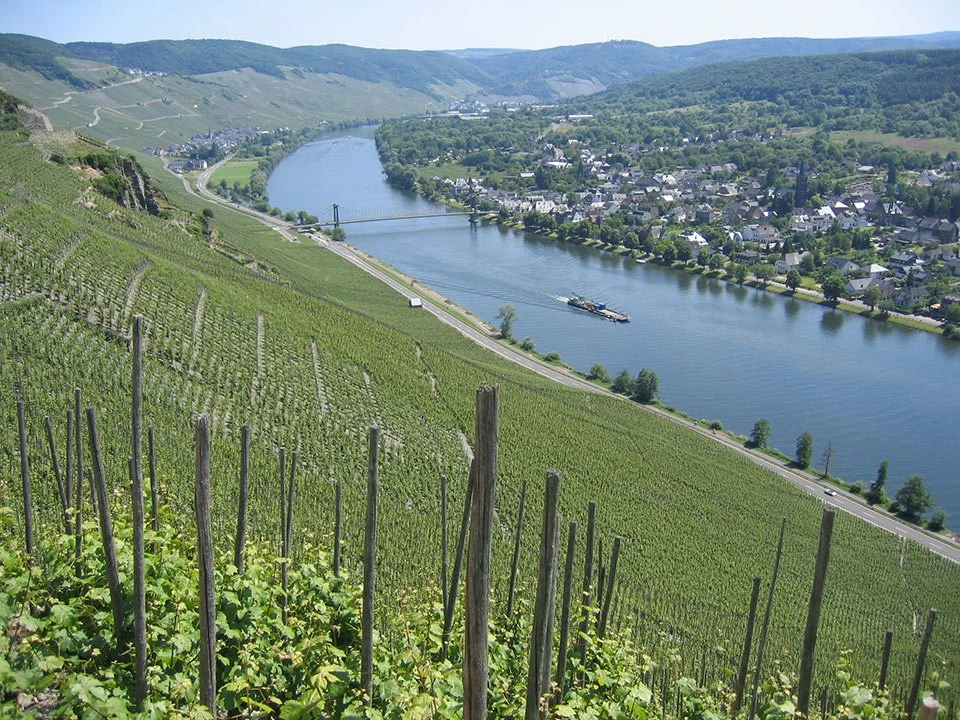
<h2>Slate, River Light, and the Mosel's Vertical Ambition</h2><p>The middle Mosel does not announce itself gradually. Driving the narrow river road from Bernkastel toward Wehlen, the vineyard walls rise almost immediately to angles that make conventional viticulture look implausible. The slope gradient on parcels like the Wehlener Sonnenuhr routinely exceeds 60 degrees, and the blue-grey Devonian slate underfoot retains the afternoon heat long after the sun drops behind the ridge. It is this physical equation, slope plus slate plus the Mosel's reflective surface, that defines what Riesling can become here, and it is the equation that Weingut Joh. Jos. Prüm, based at Uferallee 19 on the Bernkastel-Kues bank, has organised its entire output around.</p><p>The estate carries a Pearl 4 Star Prestige rating for 2025, a designation that places it in a narrow peer group among Mosel producers and signals allocation-level demand rather than casual retail availability. For context, the Mosel's upper tier of Riesling estates is not large: producers like <a href="https://www.enprimeurclub.com/wineries/weingut-fritz-haag-brauneberg-winery">Weingut Fritz Haag in Brauneberg</a>, <a href="https://www.enprimeurclub.com/wineries/weingut-markus-molitor-bernkastel-wehlen-winery">Weingut Markus Molitor</a> and <a href="https://www.enprimeurclub.com/wineries/weingut-clemens-busch-punderich-winery">Weingut Clemens Busch in Pünderich</a> populate that same tier, each anchored to specific slope exposures along the river. What separates Joh. Jos. Prüm within that set is the weight of its Sonnenuhr claim and the estate's sustained critical positioning over multiple decades rather than a recent surge in attention.</p><h2>The Wehlener Sonnenuhr as Terroir Argument</h2><p>Wehlener Sonnenuhr, named for the sundial cut into the slate face above the vineyard, is among the most discussed individual sites in German viticulture. Its orientation is nearly due south, and the combination of angle and slate colour creates a microclimate warm enough to ripen Riesling fully in years when neighbouring sites struggle, yet cool enough at night to preserve the acidity that structures the wine's long arc in bottle. This thermal asymmetry is not a rhetorical flourish; it is the reason wines from this site age differently from those grown on the flatter, heavier soils further downstream.</p><p>Slate's influence on Riesling is debated in technical circles, but at the Sonnenuhr scale the effect on drainage and heat retention is measurable. The vines do not sit in moisture-retentive clay; excess water disappears quickly through fractured rock, pushing root systems deeper to find nutrients and creating a stress pattern that concentrates flavour rather than diluting it. The result is wines that carry density without weight, a distinction that takes on meaning when you compare them to Rieslings from the sandier or loamier sites of the Pfalz, as produced by estates like <a href="https://www.enprimeurclub.com/wineries/weingut-a-christmann-neustadt-an-der-weinstrasse-winery">Weingut A. Christmann in Neustadt an der Weinstraße</a> or <a href="https://www.enprimeurclub.com/wineries/weingut-dr-burklin-wolf-wachenheim-an-der-weinstrasse-winery">Weingut Dr. Bürklin-Wolf in Wachenheim an der Weinstraße</a>. Those wines have their own integrity, but the mineralic register reads differently when the soil is this specific.</p><h2>The Pradikat Hierarchy and How to Read It</h2><p>German wine law provides a framework that matters particularly at estates like this one. The Pradikat system, from Kabinett through Spatlese, Auslese, Beerenauslese, and Trockenbeerenauslese, organises wines by the ripeness level of the harvested grapes rather than by production method or region in the way Burgundy's hierarchy does. At the Sonnenuhr, where conditions routinely allow selective harvest across multiple passes, the full vertical of this system comes into play in productive years.</p><p>Kabinett from this site tends to sit at the lighter end of the estate's output, with relatively modest alcohol and high acidity that makes it practical with food in a way that richer styles are not. Spatlese adds weight and orchard-fruit concentration while retaining the acidity spine. Auslese and above move into a different register, wines where residual sugar becomes a structural element rather than a sweetness marker, and where the slate's grip on mineralic expression tightens as the concentration of the must increases. Collectors who track this range treat the Pradikat levels almost as separate products from the same single site, which in terms of drinking windows and food pairing logic they effectively are.</p><p>For a different model of how Riesling's expression varies with site across Germany, <a href="https://www.enprimeurclub.com/wineries/weingut-grans-fassian-leiwen-winery">Weingut Grans-Fassian in Leiwen</a> offers a point of comparison on the Mosel, while <a href="https://www.enprimeurclub.com/wineries/kloster-eberbach-eltville-winery">Kloster Eberbach in Eltville</a> shows what the Rheingau does with the same grape on different geology. Further afield, <a href="https://www.enprimeurclub.com/wineries/weingut-georg-breuer-rudesheim-am-rhein-winery">Weingut Georg Breuer in Rüdesheim am Rhein</a> and <a href="https://www.enprimeurclub.com/wineries/weingut-bassermann-jordan-deidesheim-winery">Weingut Bassermann-Jordan in Deidesheim</a> anchor Riesling's range in the Pfalz tradition. The comparison is not competitive so much as geographic: each region presents a version of the grape shaped by its own soil chemistry and river valley microclimate.</p><h2>Visiting Bernkastel-Wehlen: Logistics and Timing</h2><p>The estate's address on Uferallee 19 places it directly on the riverside road that connects Bernkastel-Kues to Wehlen. The town itself is compact enough that most visitors arrive by car along the Mosel valley road from Trier, roughly 55 kilometres to the southwest, or from Koblenz to the north. The river road is narrow and traffic during peak season in late September and October, when harvest activity adds working vehicles to tourist flow, requires patience. The quieter window for a visit runs from late spring through early summer, when the vines are in canopy growth and the terraced slopes read as working viticulture rather than backdrop.</p><p>Because Joh. Jos. Prüm operates by appointment only, contacting the estate directly in advance is the appropriate approach. Planning a trip to the Mosel specifically around a tasting here merits confirming access well ahead of travel dates. The broader Bernkastel-Wehlen wine village circuit, covered in our full Bernkastel-Wehlen restaurants guide, includes several complementary estates and restaurants that make a multi-day itinerary feasible without repeated long drives. Estates like <a href="https://www.enprimeurclub.com/wineries/weingut-battenfeld-spanier-hohen-sulzen-winery">Weingut Battenfeld-Spanier in Hohen-Sülzen</a>, <a href="https://www.enprimeurclub.com/wineries/weingut-allendorf-oestrich-winkel-winery">Weingut Allendorf in Oestrich-Winkel</a>, and <a href="https://www.enprimeurclub.com/wineries/weingut-burgerspital-zum-heiligen-geist-wurzburg-winery">Weingut Bürgerspital zum Heiligen Geist in Würzburg</a> offer productive extensions if the itinerary stretches further into other German regions.</p><p></p>
Weingut Joh. Jos. Prüm is located at Uferallee 19, 54470 Bernkastel-Kues, Bernkastel-Wehlen.
Weingut Joh. Jos. Prüm has received recognition including: Pearl 4 Star Prestige (2025).
The estate is most closely associated with Rieslings from the Wehlener Sonnenuhr, a steep slate vineyard on the middle Mosel named for a sundial carved into the rock face above the vines. Across the Prädikat range — from Kabinett through Auslese and beyond — these wines are reference points for the Mosel style: high acidity, mineral tension, and the slow development that slate soils encourage. The 2025 Pearl 4 Star Prestige award reflects the estate's sustained standing among critics tracking German fine wine.
Continuity with a specific site. The estate on Uferallee 19 in Bernkastel-Wehlen has concentrated its reputation on the Wehlener Sonnenuhr over generations, rather than expanding across multiple appellations. That focus on one great vineyard — and the Prädikat hierarchy as the tool for expressing it — gives the portfolio an internal logic that rewards vertical comparison. The 2025 Pearl 4 Star Prestige designation confirms the estate's place at the top of the Mosel reference tier.
The estate is on Uferallee 19, the riverside road connecting Bernkastel-Kues to Wehlen — a compact village where accommodation is limited. For harvest season visits in late September and October, when demand peaks across the Mosel, planning two to three months ahead for lodging in the area is prudent. Contact and booking details for the estate itself are not currently listed, so checking directly via the winery's official channels before arrival is advisable.
For collectors tracking the Mosel's Prädikat tier, the estate at Uferallee 19, Bernkastel-Wehlen is among the addresses that define the benchmark. Its 2025 Pearl 4 Star Prestige recognition places it in a select group of German wine producers rated at that level. The Wehlener Sonnenuhr bottlings in particular — especially Auslese and above — are regularly sought at auction and in specialist retail, reflecting the estate's credibility across both primary and secondary wine markets.
Uferallee 19, 54470 Bernkastel-Kues
Bernkastel-Wehlen