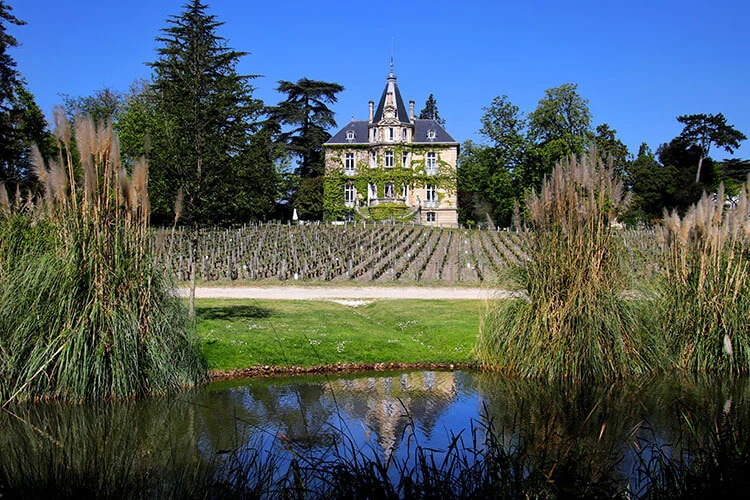
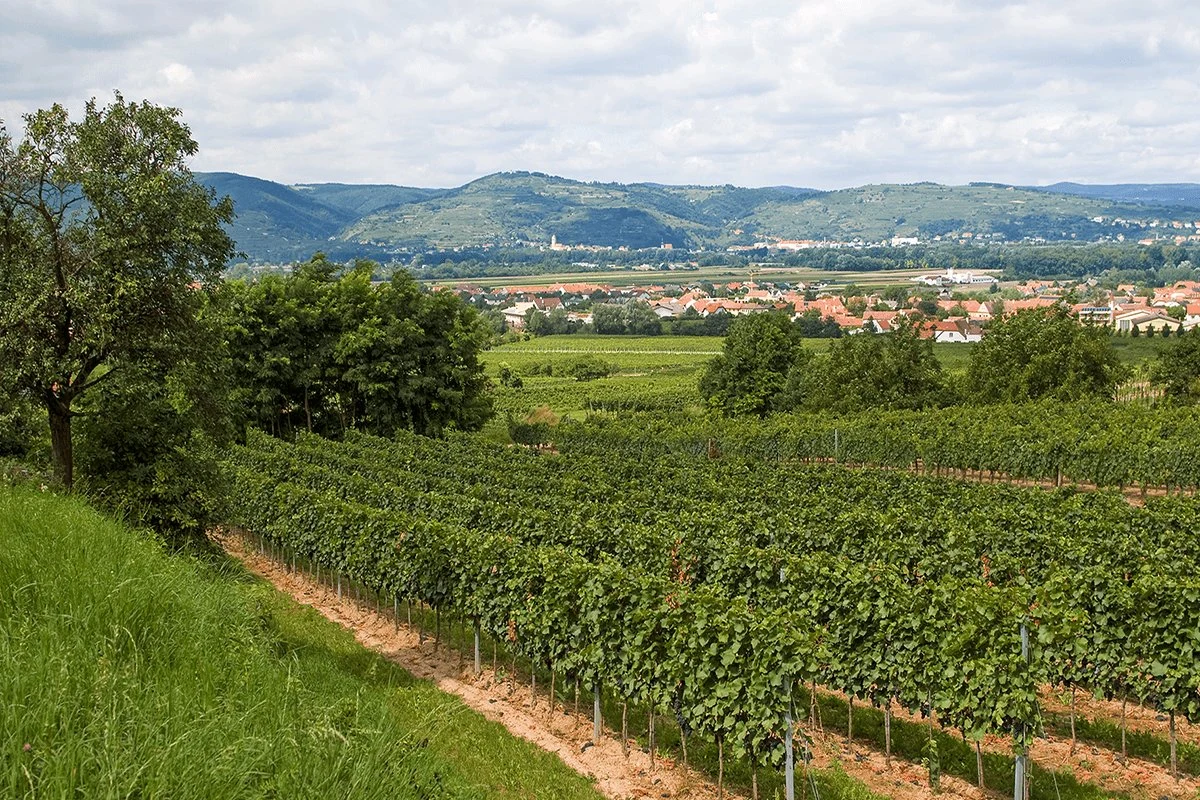
Weingut Petra Unger sits in Furth bei Göttweig, a village in Lower Austria's Kremstal where the Danube's influence and the Göttweig monastery's hillside geography shape the character of local viticulture. The estate holds a Pearl 2 Star Prestige rating for 2025, placing it in the upper tier of Austrian wine producers. For visitors tracing the country's premium wine corridor, Furth offers a quieter entry point than the better-known Wachau villages downstream.
<h2>Where the Göttweig Hillside Meets the Glass</h2><p>Approach Furth bei Göttweig from the south and the Benedictine monastery above the village announces itself before the village does. That elevation, the slope orientation, and the thermal air currents that move between the Danube plain and the Göttweig massif are not incidental to the wines made here. They are the argument. Weingut Petra Unger, at Lindengasse 22, occupies a position in this landscape where geology and microclimate converge in ways that distinguish the Kremstal from neighboring wine regions. The estate's 2025 Pearl 2 Star Prestige award places it in a tier of producers recognized for sustained quality.</p><p>Lower Austria's wine country divides into corridors defined by the Danube and its tributaries. The Wachau draws the most international attention, and producers like <a href="https://www.enprimeurclub.com/wineries/weingut-emmerich-knoll-durnstein-winery">Weingut Emmerich Knoll in Dürnstein</a> operate at its northern edge with a pedigree built over generations. The Kamptal, further north, houses estates like <a href="https://www.enprimeurclub.com/wineries/weingut-brundlmayer-langenlois-winery">Weingut Bründlmayer in Langenlois</a>, whose scale and international distribution set the tone for that appellation. Furth and the broader Kremstal occupy a middle position in this map: less visited than the Wachau, less documented in the international press, but producing wines whose structural complexity reflects a terroir with its own logic.</p><h2>The Soil Argument in Kremstal</h2><p>Terroir in the Kremstal is a conversation between two soil profiles. The valley floor and lower slopes carry alluvial deposits from the Krems river, contributing to wines with more accessible fruit and earlier drinkability. Higher sites, including parcels near the Göttweig monastery, move into primary rock, loess, and gneiss, where wines develop more tension, minerality, and age-worthiness. Grüner Veltliner and Riesling are the dominant varieties across Lower Austria's Danube-adjacent regions, and both express differently depending on which soil register they occupy.</p><p>What distinguishes the Kremstal's leading producers from mid-tier operations is attention to that gradient. At a 2-Star Prestige level, Weingut Petra Unger is working in territory where vineyard site selection, harvest timing, and cellar restraint matter more than winemaking intervention. The Pearl rating system, which awarded this estate recognition in 2025, evaluates producers across those criteria in combination, placing the estate within a small cohort where critical recognition translates directly into allocation pressure.</p><p>Across Lower Austria, the producers who have built international followings share a similar profile: family scale, estate-grown fruit, and a commitment to expressing site over style. <a href="https://www.enprimeurclub.com/wineries/weingut-pittnauer-gols-winery">Weingut Pittnauer in Gols</a> demonstrates this in Burgenland's Neusiedlersee region; <a href="https://www.enprimeurclub.com/wineries/weingut-wohlmuth-kitzeck-winery">Weingut Wohlmuth in Kitzeck</a> does the same from Styria's Südsteiermark. The approach shares a philosophy, but the soils, altitudes, and grape varieties produce entirely distinct outcomes. Furth's version of that philosophy runs through the specific geology under the Göttweig hillside.</p><h2>Furth as a Base for the Kremstal and Beyond</h2><p>Furth bei Göttweig is a small village without the hospitality infrastructure of Krems or Klosterneuburg. That is part of its appeal for visitors who find the more-visited wine towns along the Danube overcrowded during summer season. The monastery above the village draws pilgrims and tourists in their own right, which means the village itself remains quieter than its proximity to the Wachau would suggest. For those building a Lower Austria wine itinerary, Furth represents a logical anchor point between the eastern edge of the Wachau and the broader Kremstal appellation.</p><p>The practical consideration for visiting Weingut Petra Unger is that specific booking details, tasting room hours, and contact information are limited. Direct contact before visiting is recommended.</p><p>The broader wine region accommodates visits across a wide range. <a href="https://www.enprimeurclub.com/wineries/weingut-kracher-illmitz-winery">Weingut Kracher in Illmitz</a> operates in Burgenland's sweet wine tradition and represents an entirely different register of Austrian production, while <a href="https://www.enprimeurclub.com/wineries/weingut-heinrich-hartl-oberwaltersdorf-winery">Weingut Heinrich Hartl in Oberwaltersdorf</a> sits closer to Vienna's southern edge. For those using Furth as a hub, our full Furth restaurants guide covers the village and surrounding area in more detail.</p><h2>What the 2025 Pearl Rating Signals</h2><p>Award tiers in Austrian wine carry specific weight when they come from the Pearl system, which evaluates estates annually across multiple vintages rather than scoring single wines in isolation. A 2 Star Prestige designation in 2025 is not a debut recognition for an emerging producer; it reflects sustained performance across the range. This positions Weingut Petra Unger in a tier where the competition includes established Kremstal names that have held similar or adjacent ratings for several years running.</p><p>For visitors calibrating expectations, the practical implication is that this is an estate where the full range is worth attention, not just a single flagship wine. The Grüner Veltliner and Riesling that anchor most Kremstal producers at this level tend to show differently across their entry, reserve, and single-vineyard tiers, and the 2-Star rating suggests the upper-tier expressions are what earned the designation. Comparing across multiple expressions, if tasting is available, gives the clearest picture of how site translates into glass at this address.</p><p>Austria's broader distillery and production scene, documented across properties as varied as <a href="https://www.enprimeurclub.com/wineries/1516-brewing-company-distillery-vienna-winery">1516 Brewing Company Distillery in Vienna</a>, <a href="https://www.enprimeurclub.com/wineries/a-batch-distillery-bergheim-winery">A. Batch Distillery in Bergheim</a>, and <a href="https://www.enprimeurclub.com/wineries/1310-spirit-of-the-country-distillery-sierning-winery">1310 Spirit of the Country Distillery in Sierning</a>, reflects a country with deep fermentation culture beyond wine. Furth and the Kremstal sit within this wider Austrian production context, where the proximity of monastic traditions, agricultural discipline, and distinctive soils has supported serious drink culture for centuries. Weingut Petra Unger's 2025 recognition is one data point within that longer story.</p><p>For those tracing Austrian wine across regions, related producers operating in adjacent traditions include <a href="https://www.enprimeurclub.com/wineries/weingut-scheiblhofer-distillery-andau-winery">Weingut Scheiblhofer Distillery in Andau</a> in Burgenland, <a href="https://www.enprimeurclub.com/wineries/abfindungsbrennerei-franz-leithaprodersdorf-winery">Abfindungsbrennerei Franz in Leithaprodersdorf</a>, and further afield, <a href="https://www.enprimeurclub.com/wineries/1404-manufacturing-distillery-sankt-peter-freienstein-winery">1404 Manufacturing Distillery in Sankt Peter-Freienstein</a>. International comparison points, for those calibrating Austrian white wine ambition against global peers, include <a href="https://www.enprimeurclub.com/wineries/accendo-cellars">Accendo Cellars in St. Helena</a> and <a href="https://www.enprimeurclub.com/wineries/aberlour-aberlour-winery">Aberlour in Aberlour</a>, both operating in entirely different terroir traditions but at comparable recognition tiers.</p><h2>Planning Your Visit</h2><p>Weingut Petra Unger is located at Lindengasse 22, 3511 Furth bei Göttweig, in Lower Austria's Kremstal wine region. Contact details are limited; check ahead before visiting. Advance inquiry about tasting availability is advisable before arriving.</p>
The estate sits at Lindengasse 22 in Furth bei Göttweig, a small Lower Austrian village directly below the Benedictine monastery of Göttweig, whose ridge defines the local growing conditions. This is working wine-country Austria: quiet, agrarian, and oriented around the vineyard rather than visitor amenities. The 2025 Pearl 2 Star Prestige rating places it firmly among the region's serious producers.
Weingut Petra Unger has received recognition including: Pearl 2 Star Prestige (2025).
Kremstal is Grüner Veltliner and Riesling territory, and at the 2 Star Prestige tier in the Pearl system, estates typically show meaningful distinctions across site-specific bottlings rather than a single house style. The hillside proximity to Göttweig, with its mix of loess and primary rock soils, tends to produce Grüner Veltliner with more structural tension than valley-floor examples.
Weingut Petra Unger is located at Lindengasse 22, 3511 Furth bei Göttweig, Furth.
Phone and website details are not currently listed, so confirming opening hours and tasting appointments in advance requires direct outreach through regional wine trade contacts or the Kremstal wine association. Furth bei Göttweig has limited hospitality infrastructure, so the visit works best combined with nearby Krems or Klosterneuburg. The 2025 Pearl 2 Star Prestige award gives a current, verifiable benchmark for the estate's standing.
Lindengasse 22, 3511 Furth bei Göttweig
Furth-Palt