Selbach-Oster sits on the steep slate banks of the Mosel in Zeltingen-Rachtig, producing Riesling from some of the river's most demanding vineyard sites. The estate holds a Pearl 3 Star Prestige rating for 2025, placing it among the Mosel's most recognised producers. It is a reference point for anyone serious about how Mosel terroir translates to the glass.
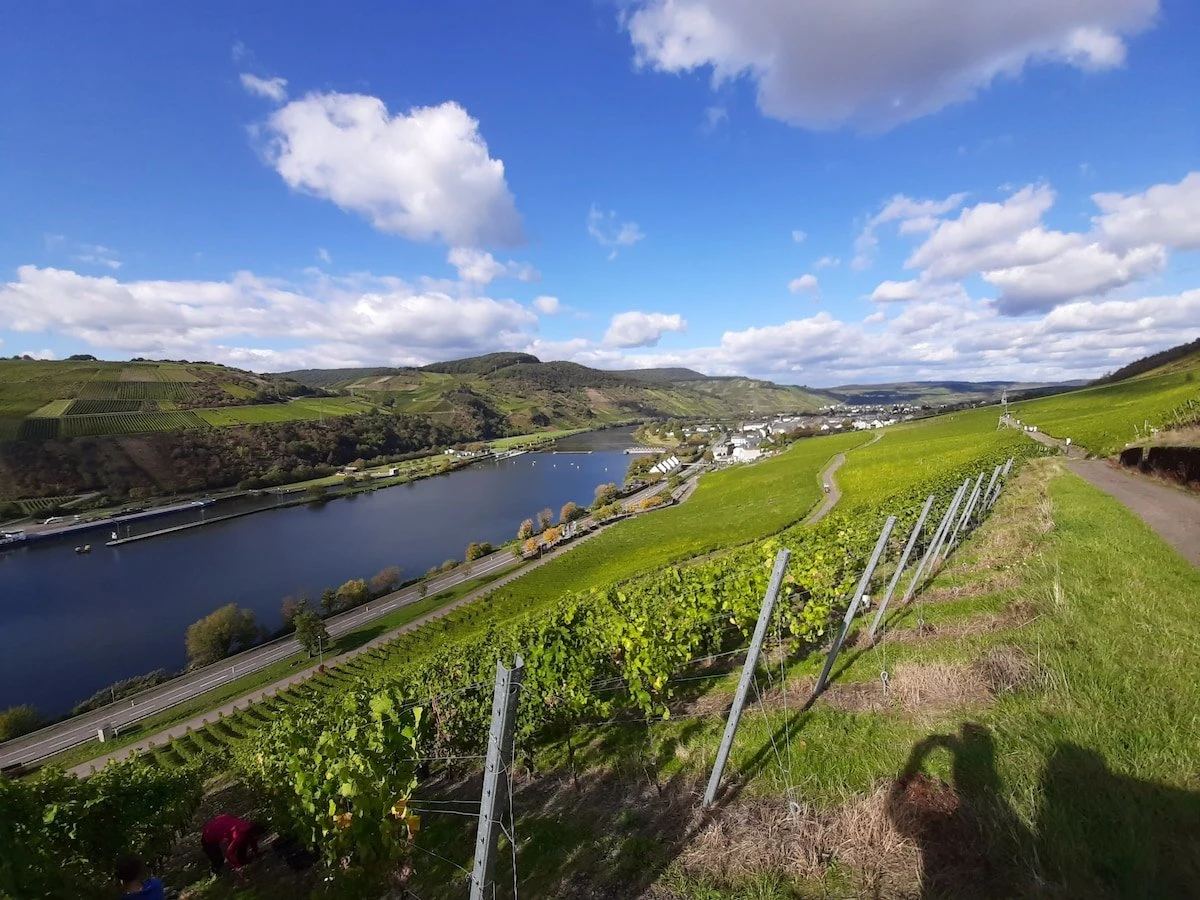
<h2>The Mosel's Slate Arithmetic</h2><p>The middle Mosel between Bernkastel and Traben-Trarbach runs a series of steep, south-facing vineyard amphitheatres that produce some of Germany's most site-specific Riesling. The geology here is not uniform: blue Devonian slate in Zeltingen, grey slate shifting to red in adjacent parcels, each variation transmitting different mineral signatures into the wine. Weingut Selbach-Oster, based at Gänsfelderstraße 20 in Zeltingen-Rachtig, is a winery led by winemaker Johannes Selbach and known for middle Mosel Riesling. The estate's Pearl 3 Star Prestige recognition in 2025 places it inside the upper tier of Mosel producers where vineyard access, site expression, and stylistic consistency form the primary criteria for assessment.</p><p>Context helps here. The Mosel is not a homogeneous wine region. Producers in Pünderich, such as <a href="https://www.enprimeurclub.com/wineries/weingut-clemens-busch-punderich-winery">Weingut Clemens Busch</a>, work volcanic Ruwer-Hunsrück slate that gives wines a different structural weight than the blue slate of Zeltingen. Further downstream in Winningen, <a href="https://www.enprimeurclub.com/wineries/weingut-heymann-lowenstein-winningen-winery">Weingut Heymann-Löwenstein</a> extracts something wilder and more mineral from the Terrassenmosel's near-vertical plots. Selbach-Oster occupies the central Mosel corridor, where the balance of soil, sun angle, and river reflection creates the textbook conditions that made this stretch internationally recognised in the first place.</p><h2>What Slate Does to Riesling</h2><p>Slate's role in Mosel viticulture is both thermal and mineral. During the day, dark slate absorbs heat and radiates it back to the vines at night, allowing Riesling to ripen under conditions that would otherwise be marginal for a cool-climate variety. That extended, slow ripening cycle is directly responsible for the tension between residual sweetness and high natural acidity that defines classic Mosel Riesling. The wine is not sweet in a dessert sense; it is balanced, the sugar acting as a counterweight to acidity rather than a flavour in its own right.</p><p>This thermal dynamic is amplified in the steep sites above Zeltingen, where gradient forces vine roots deep into fractured slate layers rather than allowing lateral spread through topsoil. The result, in terms of yield and concentration, is that steep-site Mosel Riesling tends toward intensity without the weight associated with warmer-climate viticulture. Selbach-Oster's position in Zeltingen-Rachtig puts the estate at the centre of this tradition, working with the same site variables that have defined the town's viticultural reputation across generations.</p><h2>Where Selbach-Oster Sits Among Its Peers</h2><p>The Pearl 3 Star Prestige rating in 2025 is a reference point for positioning. Among Mosel producers, the upper tier is a relatively small cohort defined by access to premier vineyard parcels, long-standing export markets, and the kind of stylistic consistency that lets critics benchmark vintages against a house character rather than treating each year as a separate event. Selbach-Oster belongs to that cohort.</p><p>Comparing across the Mosel and into other German regions sharpens the picture. <a href="https://www.enprimeurclub.com/wineries/weingut-fritz-haag-brauneberg-winery">Weingut Fritz Haag in Brauneberg</a> works the Brauneberger Juffer with a similar commitment to site-specific expression, and the two estates share a comparable set defined by slope steepness, slate geology, and generational estate continuity. Moving to the Pfalz, estates such as <a href="https://www.enprimeurclub.com/wineries/weingut-a-christmann-neustadt-an-der-weinstrasse-winery">Weingut A. Christmann</a> and <a href="https://www.enprimeurclub.com/wineries/weingut-bassermann-jordan-deidesheim-winery">Weingut Bassermann-Jordan</a> operate in a sandstone and limestone context that produces structurally different Riesling, richer and broader, against which Mosel versions read as more precise and nervy. The comparison is useful because it clarifies that Selbach-Oster's identity is not just about quality level but about a specific mineralic register that the Zeltingen slate delivers and that no other geology replicates.</p><p>For a broader view of how German wine estates across multiple regions approach terroir expression, producers including <a href="https://www.enprimeurclub.com/wineries/weingut-dr-burklin-wolf-wachenheim-an-der-weinstrasse-winery">Weingut Dr. Bürklin-Wolf</a>, <a href="https://www.enprimeurclub.com/wineries/weingut-allendorf-oestrich-winkel-winery">Weingut Allendorf</a>, and <a href="https://www.enprimeurclub.com/wineries/weingut-georg-breuer-rudesheim-am-rhein-winery">Weingut Georg Breuer</a> in the Rheingau each offer reference points for how different German appellations handle Riesling and, increasingly, other varieties. The Rheingau's historical weight and the Mosel's geological specificity remain distinct categories, and <a href="https://www.enprimeurclub.com/wineries/kloster-eberbach-eltville-winery">Kloster Eberbach in Eltville</a> is a further anchor for understanding the Rheingau's monastic winemaking tradition against which the Mosel's family-estate model looks quite different in character.</p><h2>Reading the Vintage in Zeltingen</h2><p>Vintage variation on the Mosel is pronounced in a way that matters to buyers. Because the region sits at the northern edge of commercial Riesling viticulture, the difference between a warm, dry year and a cool, wet one translates directly into the wine's structure. Warm years push residual sugar levels and body; cool years deliver higher acidity and lighter extract. Neither is categorically superior, but they require different reading. An estate with the site access and technical consistency that a Pearl 3 Star Prestige rating implies will typically produce wines that express the vintage character clearly rather than correcting against it, which means the producer's back-catalogue is worth understanding before purchasing a single release.</p><p>For visitors to the region, the physical approach to Zeltingen-Rachtig adds its own context. The village sits on the Mosel's northern bank, directly opposite Wehlen, and the road through the valley passes vineyard walls close enough to read the slate layers in cross-section. The full Zeltingen-Rachtig guide covers the wider context of the village's wine culture and the practical information for planning a visit to the area's producers.</p><h2>Planning a Visit</h2><p>Selbach-Oster operates from its address at Gänsfelderstraße 20, Zeltingen-Rachtig, in the heart of the central Mosel wine corridor. The estate sits within a cluster of recognised producers that makes the area practical for a multi-stop wine visit rather than a single-destination trip. Neighbouring villages Wehlen, Graach, and Bernkastel are all within a short drive, and the concentration of highly rated estates means any serious Mosel itinerary will include this stretch. Phone and website details are not available in our current data; visitors should approach via the address directly or through regional wine tourism channels. Given the estate's standing and the high volume of trade and consumer interest in this tier of Mosel producer, advance contact before arriving is advisable. The harvest period in October brings heightened activity to the valley, while summer weekdays tend to offer more access than weekend peak season.</p><p>Those building a broader German wine itinerary will also find value in estates such as <a href="https://www.enprimeurclub.com/wineries/weingut-grans-fassian-leiwen-winery">Weingut Grans-Fassian in Leiwen</a>, <a href="https://www.enprimeurclub.com/wineries/weingut-battenfeld-spanier-hohen-sulzen-winery">Weingut Battenfeld-Spanier in Hohen-Sülzen</a>, and <a href="https://www.enprimeurclub.com/wineries/weingut-burgerspital-zum-heiligen-geist-wurzburg-winery">Weingut Bürgerspital zum Heiligen Geist in Würzburg</a>, each operating in distinct regional contexts. For reference points outside Germany entirely, <a href="https://www.enprimeurclub.com/wineries/accendo-cellars">Accendo Cellars in St. Helena</a> and <a href="https://www.enprimeurclub.com/wineries/aberlour-aberlour-winery">Aberlour</a> offer contrast at the premium end of their own categories.</p>
Selbach-Oster operates as a working estate in Zeltingen-Rachtig, at the heart of the central Mosel corridor between Bernkastel and Traben-Trarbach. The setting is agricultural in the most serious sense: steep slate vineyards rising above the river, not a polished visitor centre. Expect the focused atmosphere of a producer whose Pearl 3 Star Prestige rating (2025) reflects output, not presentation.
Weingut Selbach-Oster has received recognition including: Pearl 3 Star Prestige (2025).
The estate's vineyards sit on the dark slate soils that define the middle Mosel's most demanding sites, making site-specific Rieslings the natural point of reference. Vintage variation is pronounced this far north, so tasting across two or three years gives the clearest picture of how the slate and the season interact. Confirming current availability directly with the estate at Gänsfelderstraße 20 is advisable before visiting.
Weingut Selbach-Oster is located at Gänsfelderstraße 20, 54492 Zeltingen-Rachtig, Zeltingen-Rachtig.
The Pearl 3 Star Prestige recognition in 2025 places Selbach-Oster in the upper cohort of Mosel producers, a relatively small group at that level. What underpins the rating is the estate's position on steep, south-facing slate amphitheatres in Zeltingen-Rachtig, where thermal mass and mineral composition drive the character of the wine rather than cellar intervention. It is a terroir argument made in bottle form.
The estate is located at Gänsfelderstraße 20, 54492 Zeltingen-Rachtig, and direct contact is the most reliable route to arranging a visit or purchase. Phone and website details are not currently listed in public records, so arriving prepared with a prior arrangement made by email or post is advisable. Trade buyers often work through established German wine importers, which can expedite access.
The Pearl 3 Star Prestige (2025) positions Selbach-Oster among the upper tier of Mosel estates, a cohort that includes producers with comparable international distribution and critical attention. At this level, the differentiator is typically vineyard access on the steepest classified sites, and Zeltingen-Rachtig's south-facing slate slopes are among the central Mosel's most closely tracked addresses. For buyers using the rating as a purchasing guide, it signals consistent quality across vintages rather than a single exceptional year.
Gänsfelderstraße 20, 54492 Zeltingen-Rachtig
Zeltingen-Rachtig