- Opinionated About Dining Top Restaurants in Japan Ranked #107 · 2025
- Opinionated About Dining Top Restaurants in Japan Ranked #104 · 2024
- Opinionated About Dining Top Restaurants in Japan Highly Recommended · 2023
Nishiazabu's dining rooms tend toward the discreet. The neighbourhood sits inside Minato-ku, where high-end residential blocks coexist with some of Tokyo's most serious cooking, and where the physical containers for that cooking rarely announce themselves from the street. This is the context in which Yamasaki operates: a kaiseki address at 1-15-3 that fits its surroundings without conceding anything on substance.
The Space as Argument
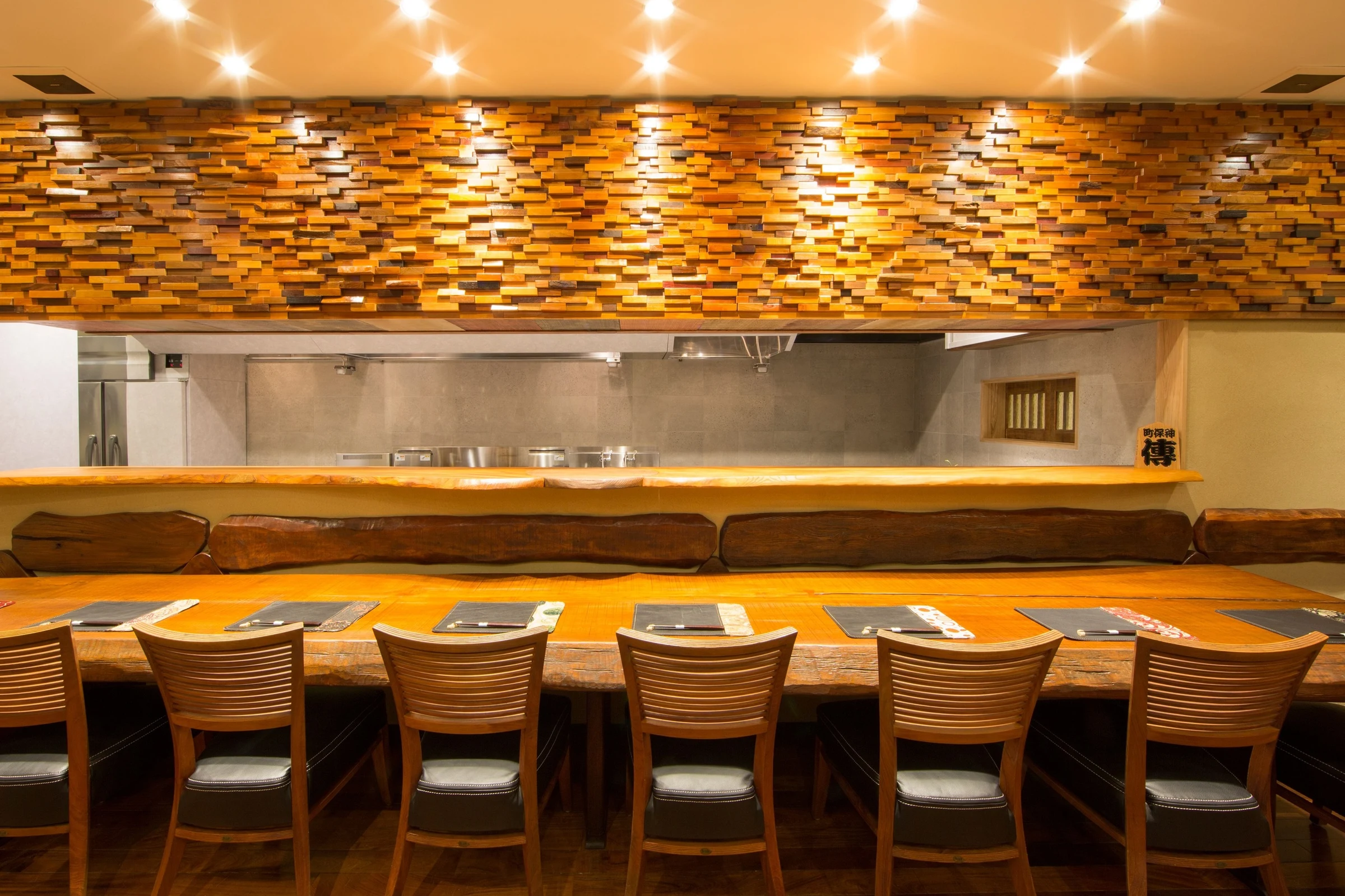
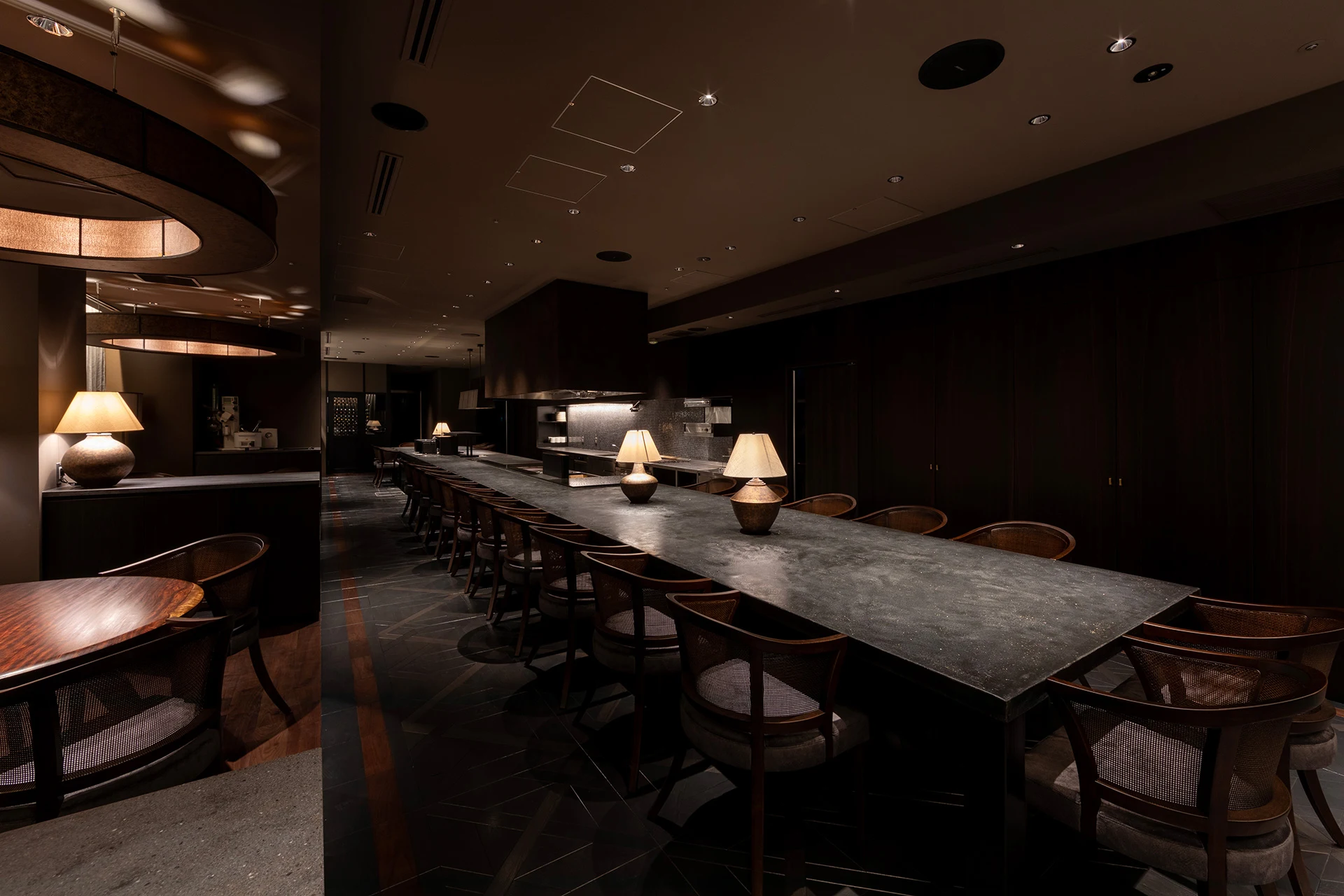
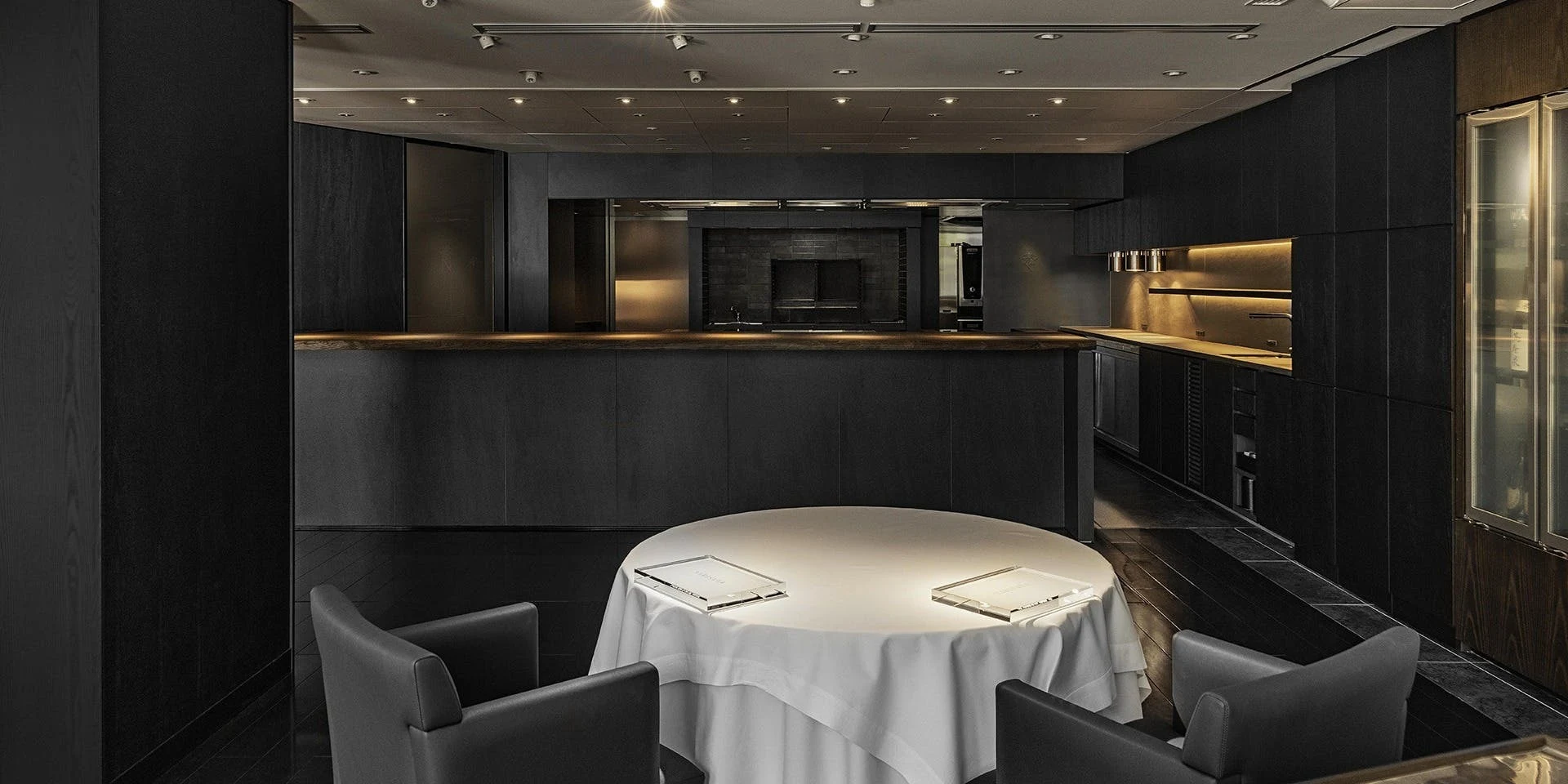
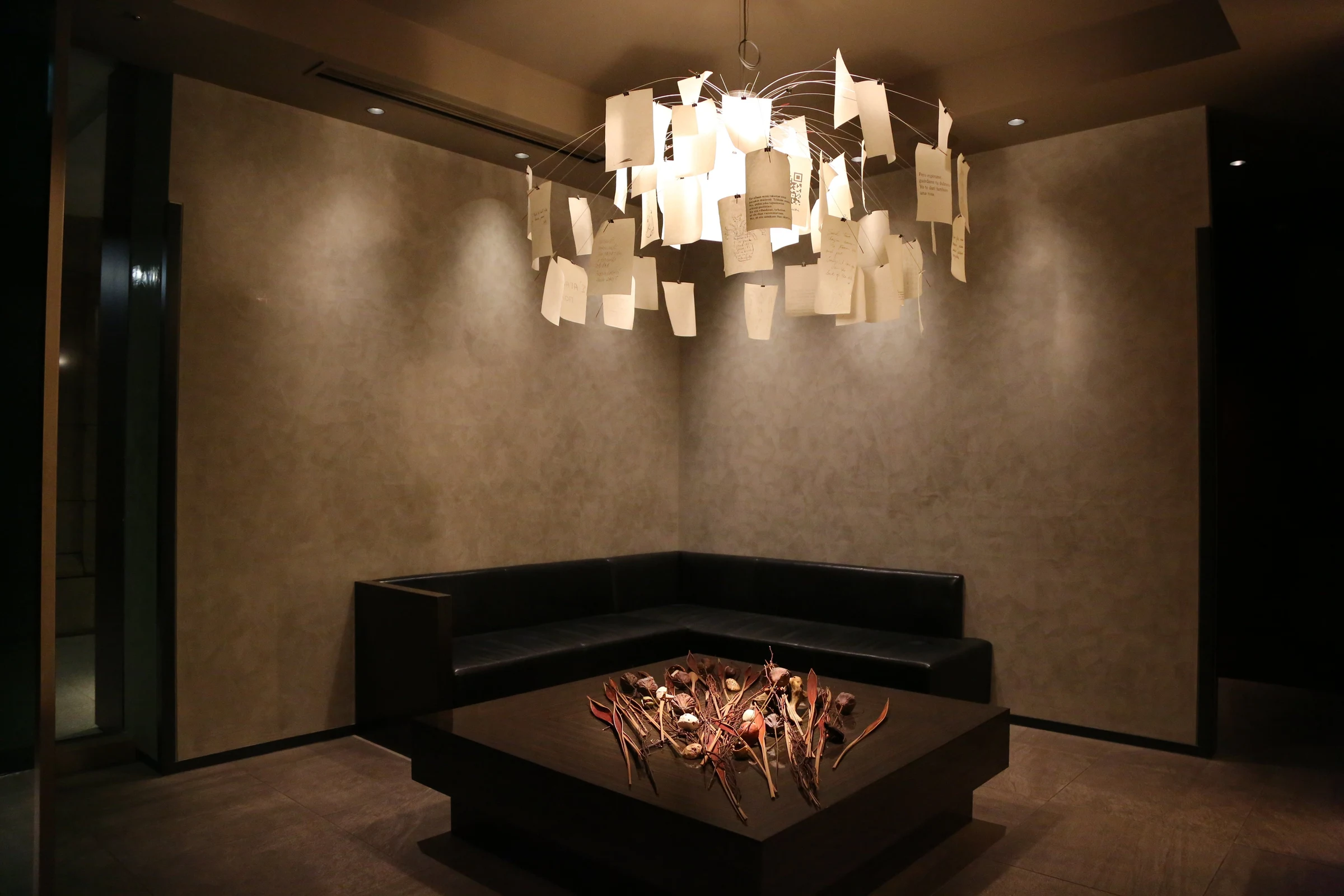
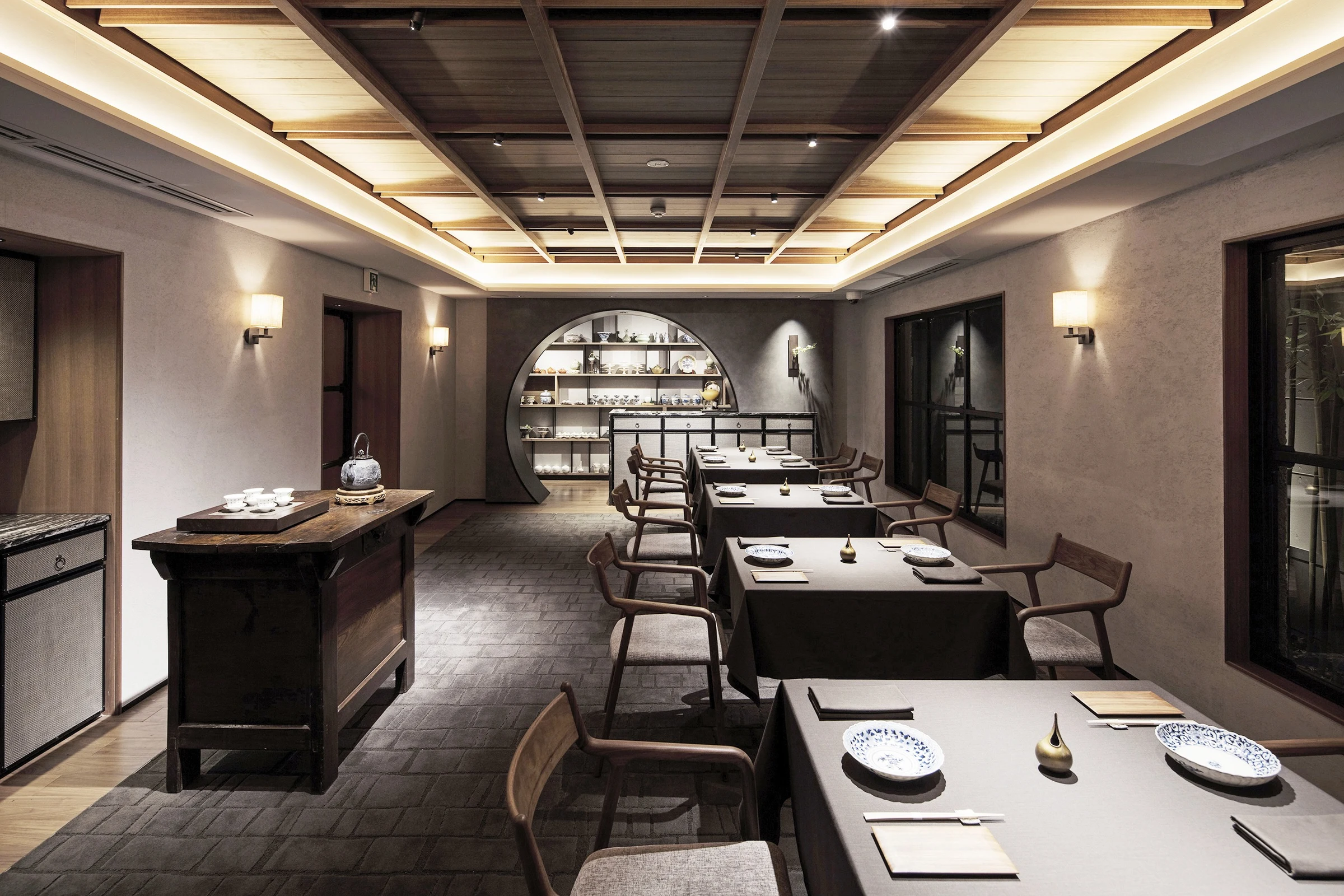
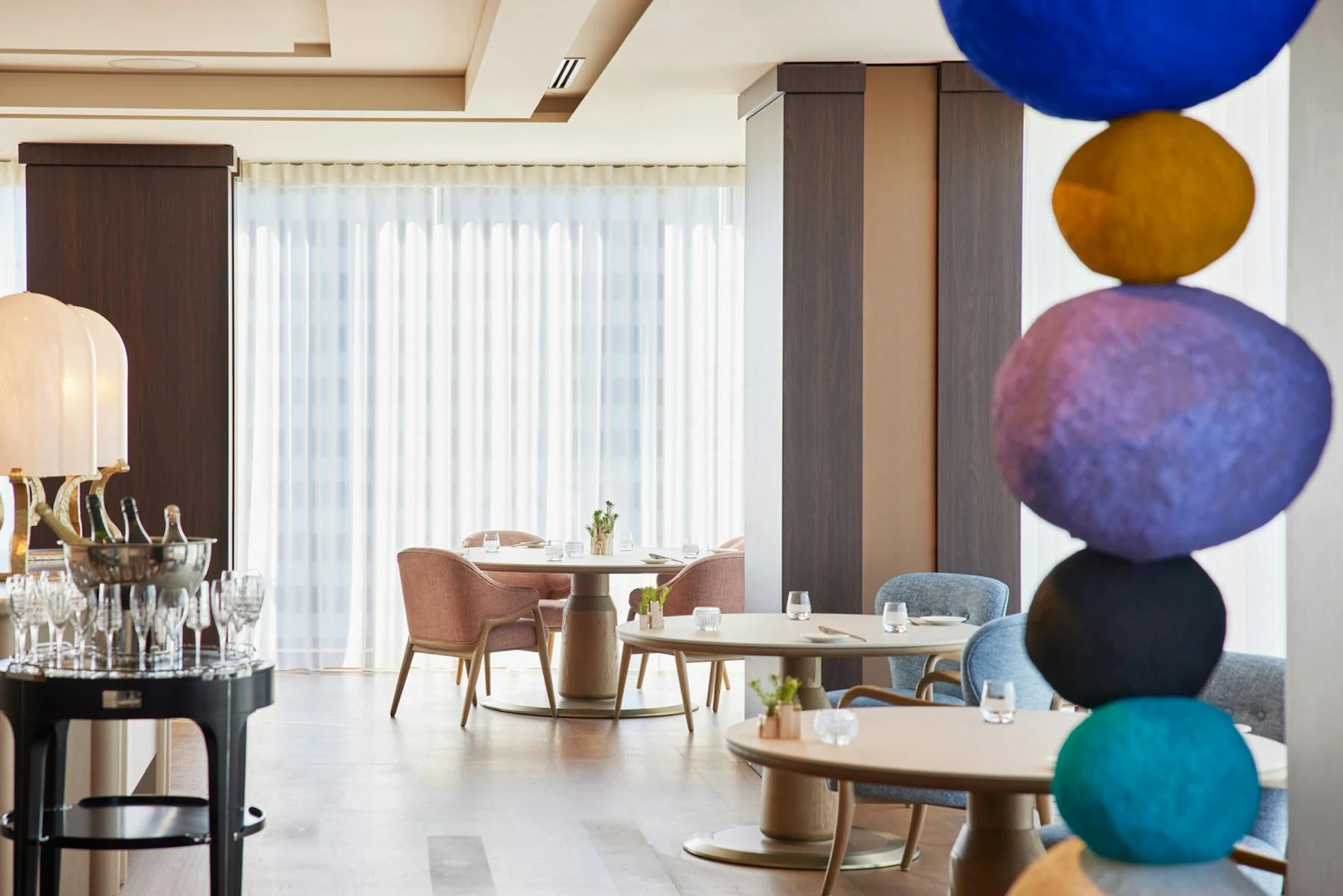
Tokyo kaiseki rooms make a consistent architectural argument: the physical environment is not backdrop but content. The calibration of a tatami-adjacent space, the sight lines from a counter seat, the way lacquerware sits against a surface in low light, these are decisions that carry as much editorial weight as the menu itself. At the level Yamasaki now occupies, ranked #107 on Opinionated About Dining's Japan list in 2025 (up from #104 in 2024 and Highly Recommended in 2023), a certain seriousness of interior grammar is expected as baseline. Rooms in this tier are not casual. The seating arrangement tends to be limited, the service geometry tight, and the acoustic environment close to silence. How a room in this bracket is composed tells you a great deal about what the kitchen intends.
This matters particularly in Nishiazabu, where the residential density means venues rarely have the spatial luxury of larger Ginza or Akasaka addresses. Rooms here are edited down. What remains is deliberate. That compression can work against a venue or, at higher-end addresses, clarify its proposition. For kaiseki specifically, a cuisine built on sequencing, pacing, and the relationship between vessel and ingredient, a compact, controlled room often functions better than a sprawling one.
Where Kaiseki Sits in Tokyo Right Now
Tokyo's kaiseki tier has not consolidated around a single neighbourhood the way Kyoto's has. Addresses like Kikunoi - Tokyo and Akasaka Ogino operate in Akasaka, while Hirosaku and Aoyama Jin reflect the quieter Minato and Aoyama corridors. Ajihiro represents another node in this dispersed map. The effect is a city where kaiseki authority is demonstrated through reputation and booking difficulty rather than through geographic clustering. Yamasaki's position in Nishiazabu places it in the Minato-ku cohort, addresses that draw on the neighbourhood's residential seriousness rather than the prestige-signalling of a Ginza postcode.
The OAD ranking trajectory is the clearest available signal of how that position has developed. Moving from Highly Recommended in 2023 to #104 in 2024 and then #107 in 2025 (a minor positional shift within a competitive field, not a decline) indicates sustained peer recognition across multiple assessment cycles. OAD rankings aggregate input from a professional dining community rather than a single critic, which means consistency matters more than any single performance. Yamasaki has demonstrated that consistency across three years.
For comparison within Japan's broader kaiseki geography: Gion Sasaki in Kyoto and Ifuki and Ankyu represent the Kyoto tradition that kaiseki ultimately derives from. Tokyo addresses in this tier operate with that inheritance while adapting to a different urban register, faster, more international in its diner base, and less anchored to a single seasonal aesthetic. Yamasaki's position in the top 110 nationally places it in a comparable set that also includes broader Japanese fine dining represented by venues like HAJIME in Osaka and Goh in Fukuoka.
The Kaiseki Format and What It Demands of the Room
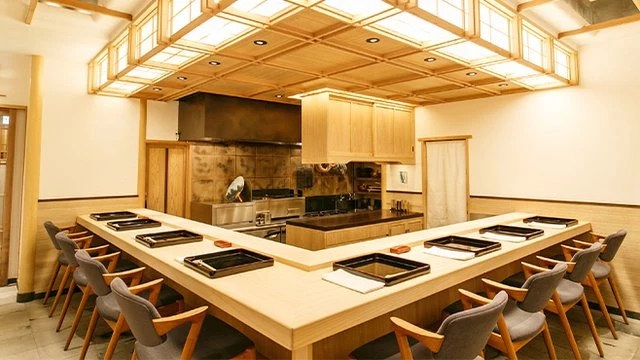
Kaiseki is a sequenced cuisine. A meal moves through a prescribed architecture of courses, sakizuke, hassun, yakimono, and the rest, each course calibrated to a particular moment in the progression. The room has to support that pacing. Dead time between courses in a poorly designed service space reads differently from the same interval in a room built to absorb it. Counter seating, where the diner faces the kitchen or a preparation surface, tends to resolve this better than table service in confined spaces: the visual access to preparation activity fills the interval without requiring conversation.
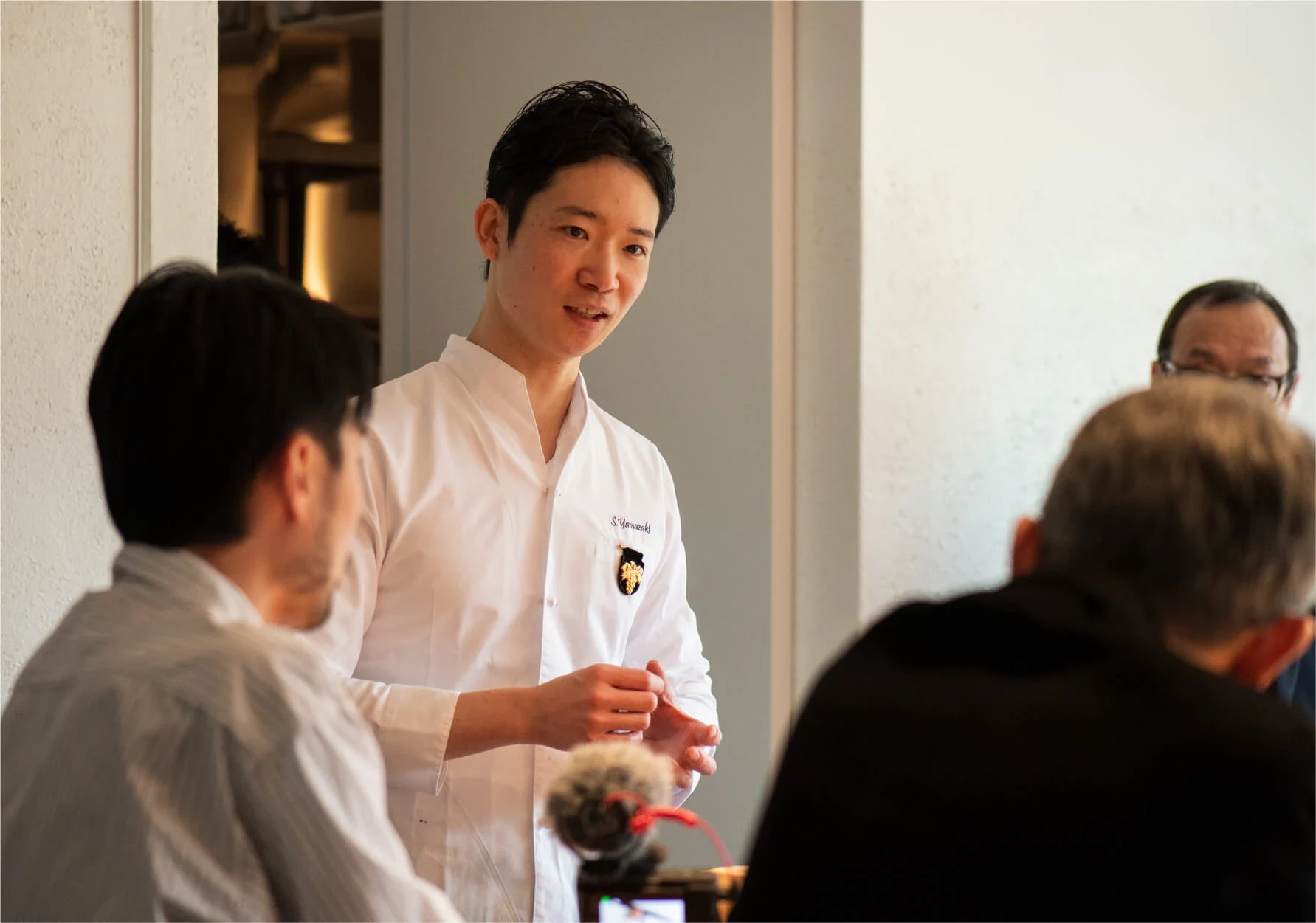
Chef Shiro Yamasaki presides over this sequencing. The venue carries his name, which in Japanese dining is a particular form of commitment, it ties the restaurant's reputation directly to a single individual's technical judgement. At this ranking level, that judgement is being assessed by diners with high baseline familiarity with the format. The cuisine is kaiseki in its traditional structure, which means the seasonal calendar drives ingredient selection and the kitchen's skill is evaluated against what is available.
Practical Considerations
The operating window is narrow and consistent: 6 to 10 pm Tuesday through Saturday. A three-hour window with no lunch service and no late seatings is a characteristic of counters operating at this level, it concentrates service effort and controls pacing. For a diner planning around this, it means the evening is structured from arrival. There is no drifting in at 9:30.
For visitors building a broader Tokyo programme, the full Tokyo restaurants guide covers the range of options across cuisine types and price points. Those planning multi-city itineraries should note that 1000 in Yokohama and 6 in Okinawa extend the OAD-recognised dining map beyond the capital. For other elements of a Tokyo stay, the full Tokyo hotels guide, bars guide, experiences guide, and wineries guide cover the adjacent planning questions. For Nara-adjacent itineraries, akordu in Nara offers a different register of fine dining worth noting.
Know Before You Go
- Address: 1-15-3 Nishiazabu, Minato-ku, Tokyo
- Chef: Shiro Yamasaki
- Cuisine: Kaiseki
- Hours: Daily, 5:30 to 8:30 pm
- Awards: Opinionated About Dining Leading Restaurants in Japan, #107 (2025), #104 (2024), Highly Recommended (2023) 8 (17 reviews)
- Booking: Contact details not listed; research current booking channel before travel
- Price: Not published; expect upper-tier kaiseki pricing based on ranking and format
Questions
Frequently asked
Who works at Yamasaki?
Made By profiles Shiro Yamasaki (Chef) at Yamasaki.
How expensive is Yamasaki?
Yamasaki is listed at a price level of $$$$.
Where is Yamasaki and what does it serve?
Yamasaki is in Shinjuku, Tokyo, serving Kaiseki Japanese.
The field
How it compares
| Place | Cuisine | Notes | Awards |
|---|---|---|---|
| Yamasaki | Kaiseki Japanese | Shinjuku, $$$$ | · |
| Den | Modern Japanese Kaiseki | Tokyo | Michelin 2 Stars, World's 50 Best |
| Florilège | Modern French-Japanese Plant-Based Fine Dining | Tokyo | Michelin 2 Stars, World's 50 Best |
| Narisawa | Modern Japanese Satoyama Fine Dining | Tokyo | Michelin 2 Stars, World's 50 Best |
| Quintessence | Modern French Fine Dining | Tokyo | Michelin 3 Stars |
| Sazenka | Modern Chinese Fine Dining | Tokyo | Michelin 3 Stars, World's 50 Best |
| Sézanne | Modern French Fine Dining | Tokyo | Michelin 3 Stars, World's 50 Best |
In residence
Similar places
Modern Japanese Kaiseki
Den
Tokyo, Japan
★★ · 50 Best
Modern French-Japanese Plant-Based Fine Dining
Florilège
Tokyo, Japan
★★ · 50 Best
Modern Japanese Satoyama Fine Dining
Narisawa
Tokyo, Japan
★★ · 50 Best
Modern French Fine Dining
Quintessence
Tokyo, Japan
★★★
Modern Chinese Fine Dining
Sazenka
Tokyo, Japan
★★★ · 50 Best
Modern French Fine Dining
Sézanne
Tokyo, Japan
★★★ · 50 Best