Zaranda
In Residence
Guillermo de Lucas
Chef
- 01CuisineBalearic Spanish Fine Dining
- 02CityPalma, Spain
- 03RecognitionOne Michelin Star
- 1 Michelin Star · Michelin Guide
- Guía Repsol 1 Sol · 2026
- Michelin 1 Star · 2026
- Star Wine List · 2026
- Michelin 1 Star · 2025
- Michelin 1 Star · 2024
- Opinionated About Dining Classical in Europe Recommended · 2023
A Tannery Beneath the Table
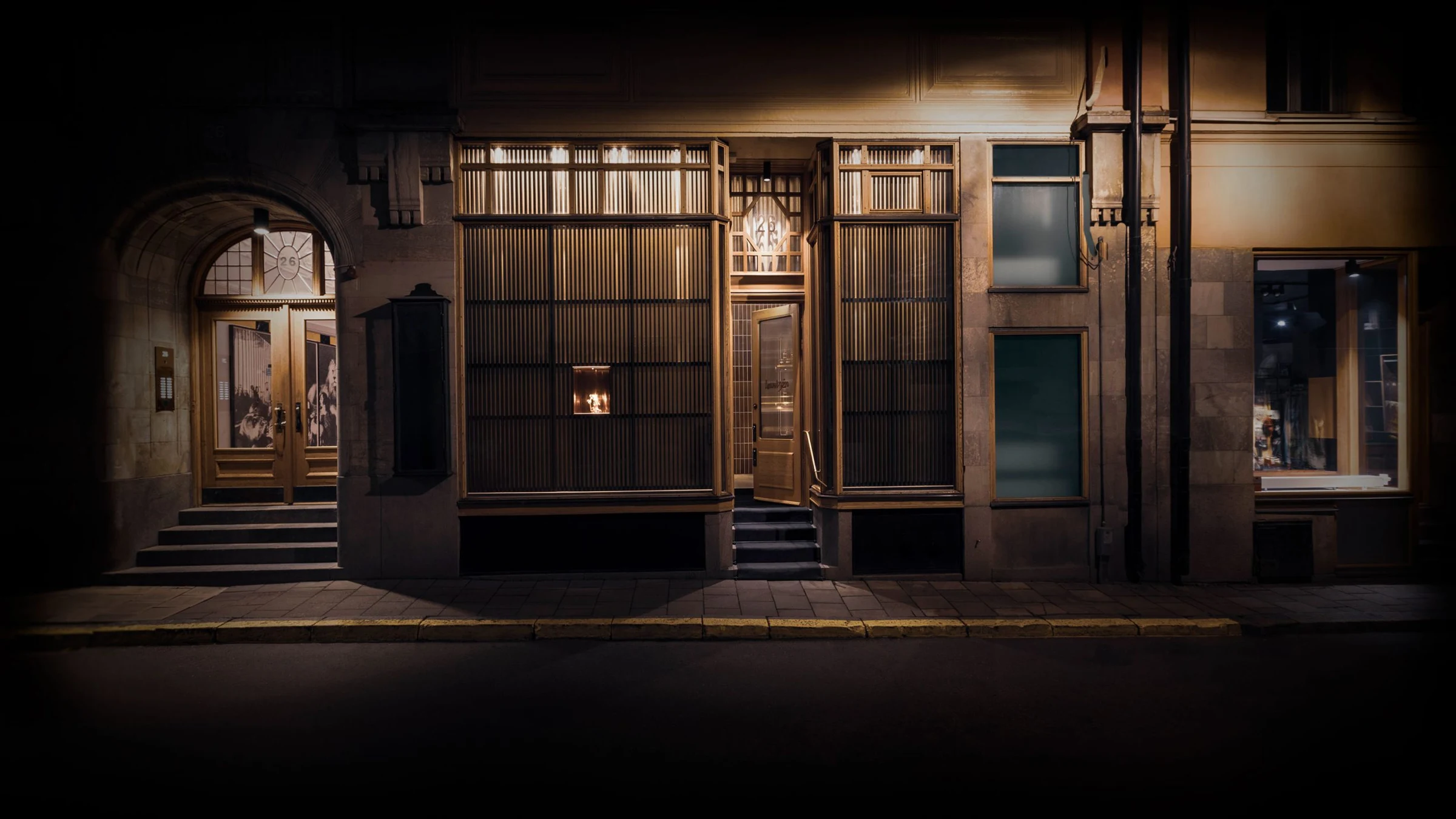
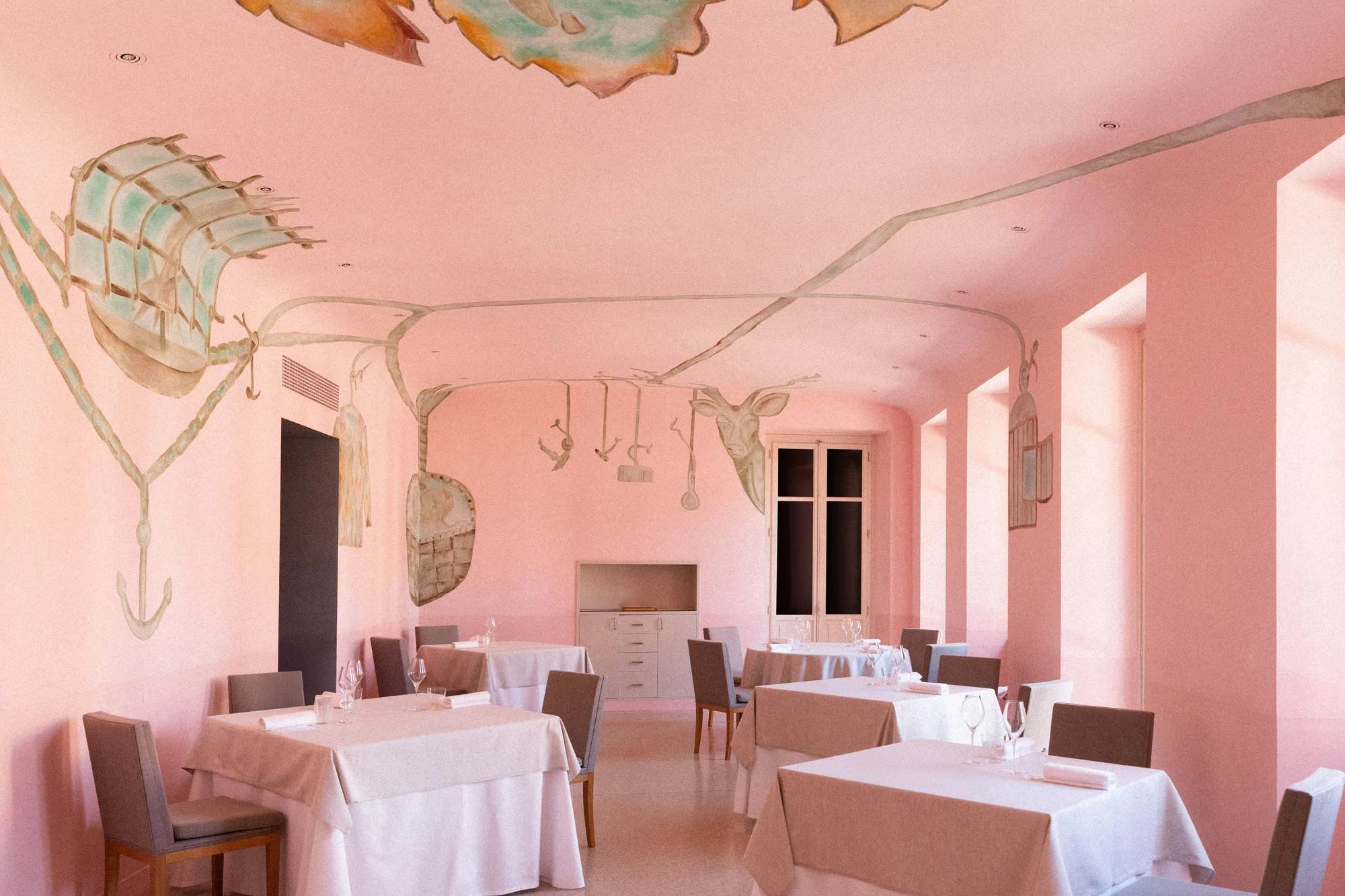
The approach to Zaranda asks something unusual of a diner before the first course arrives: awareness of what lies underfoot. The restaurant sits above the preserved remains of a medieval tannery in Palma's old quarter, its glass floor panels revealing the stone tanks where hides were once soaked and dyed. That archaeological layer is not incidental decoration. It anchors the entire spatial and culinary logic of the place, rooms named Guild Hall, Saddler's Corner, and Tanner's Dining Room trace the grammar of the original craft industry, and the menu follows the same etymological thread, with pickled appetisers that reference Arab dyeing techniques and the layered chemical processes of the tannery itself. The building is within the Es Princep luxury hotel, but Zaranda operates with its own entrance and a programme independent of the wider hotel offer.
Where Mallorcan Produce Meets Technical Precision
Spain's high-end restaurant scene has spent two decades establishing that rigorous European technique and deeply local ingredient sourcing are not competing propositions. What kitchens in San Sebastián proved with Basque produce, as at Arzak, or what the Costa Brava demonstrated through El Celler de Can Roca in Girona, Zaranda attempts on a Mediterranean island whose larder is governed by seasonality, fishing tradition, and a soil profile shaped by limestone and warm winters. Chef Fernando P. Arellano, who trained in Madrid and brings a mainland technical framework to the Balearic context, is working in that same productive tension: applying classical and contemporary Spanish methods to ingredients whose character is distinctly Mallorcan.
That intersection, imported rigour applied to indigenous products, is the defining characteristic of Mallorca's top tier of creative dining. DINS Santi Taura approaches it from the opposite direction, anchoring its programme in the deep archive of Mallorcan recipe tradition before layering modern presentation over it. Marc Fosh brings a northern European sensibility to the same Mediterranean pantry. Zaranda's position in that conversation is shaped by its mainland Spanish fine-dining lineage, its tasting-menu format, and a Michelin 1 Star awarded in 2024.
The Format: Courses, Rooms, and Degrees of Commitment
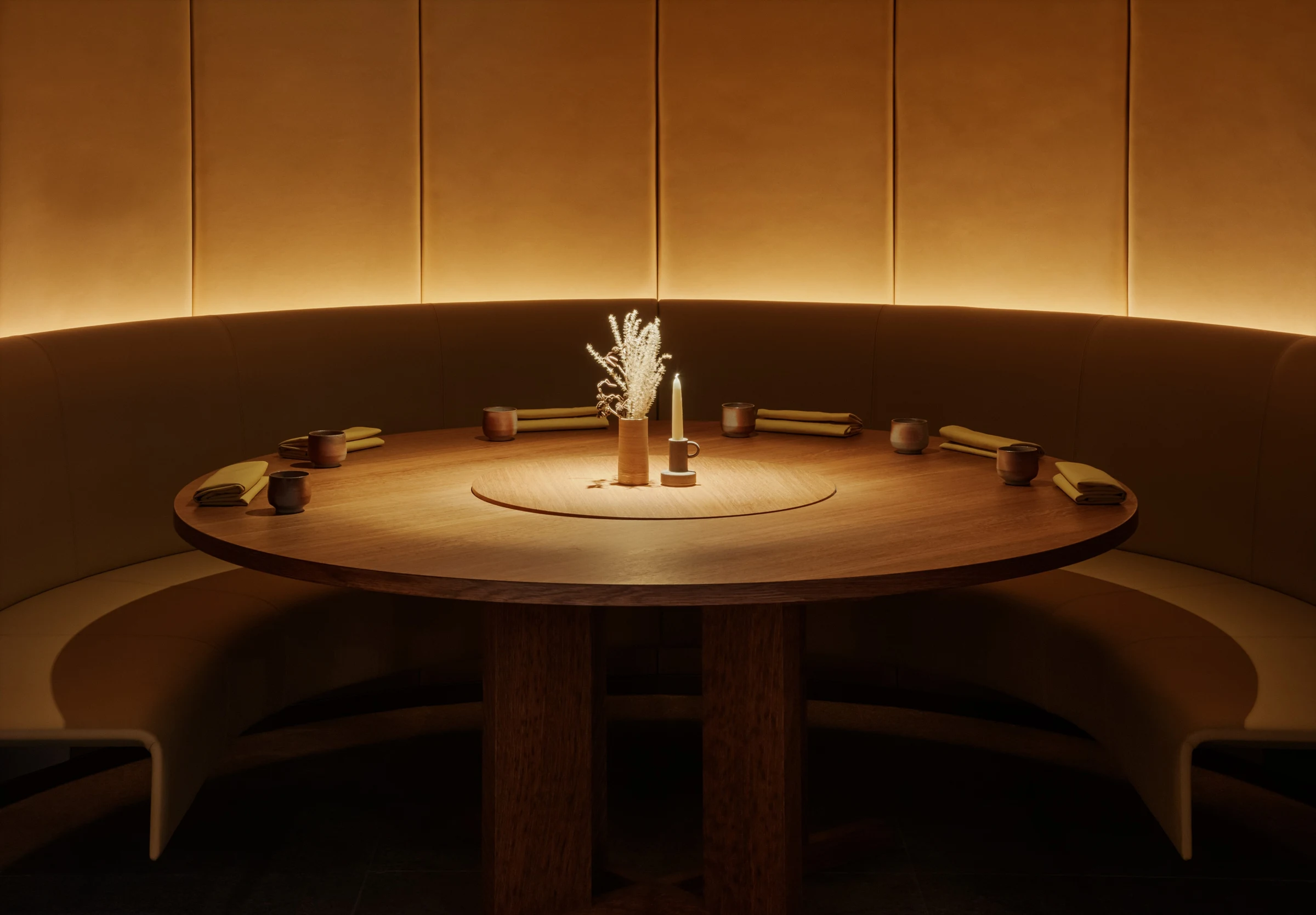
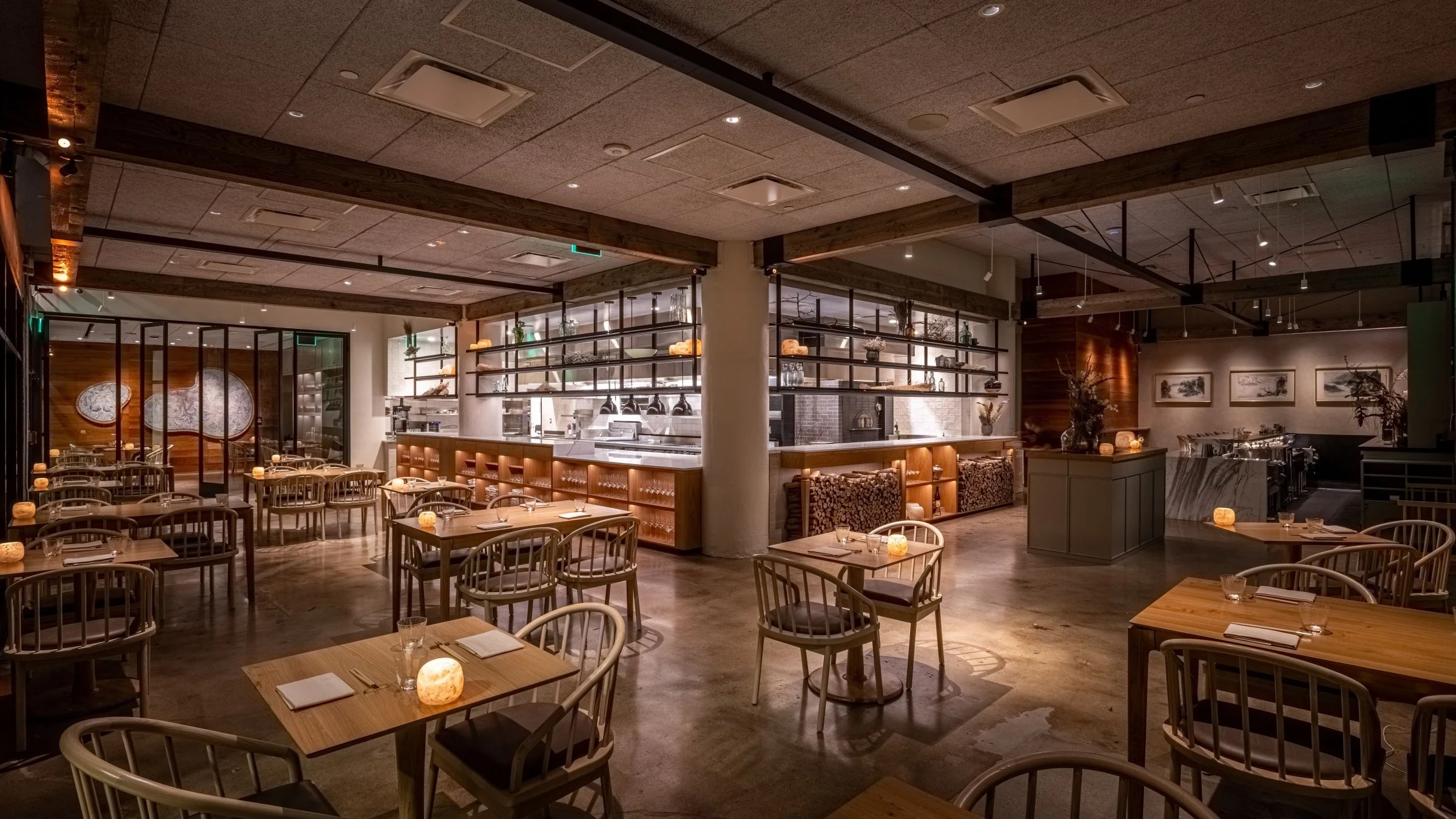
At the summit end of Spanish tasting-menu culture, format architecture has become a statement in itself. The progression at DiverXO in Madrid or Quique Dacosta in Dénia is conceived as a complete theatrical sequence, not simply a series of dishes. Zaranda adopts a comparable philosophy but structures it through spatial movement rather than pure dramatic escalation. Three distinct menus are available: Patrones, at six, seven, or eight courses, which stays within a single dining space; A flor de piel, twelve courses across three rooms; and Plena flor, the full eighteen-course progression through all three spaces. The multi-room architecture of the longer menus means the physical experience of the building, the visible tannery remains, the named guild spaces, is folded into the meal rather than serving as backdrop to it.
This kind of progressive, spatially articulated format is a relatively small niche even within Michelin-level Spain. It places Zaranda in a peer group that includes experience-driven programmes at venues like Aponiente in El Puerto de Santa María, where the mill-and-bay setting is constitutive of the meal, and Azurmendi in Larrabetzu, where arrival, garden, and kitchen are sequenced as distinct episodes. The comparison is instructive: in each case, the space is doing argumentative work, not merely atmospheric work.
Palma's Fine Dining Tier in Context
Mallorca's position within Spanish fine dining has historically been complicated by its seasonality. The island's restaurant economy is heavily weighted toward summer visitors, which makes sustaining a year-round programme at the leading price tier both operationally demanding and commercially unusual. Zaranda's Tuesday-to-Saturday dinner service, with hours from 7 PM to 9 PM and no lunch service listed, reflects the concentrated operational model that the Palma fine-dining bracket has converged on. Adrián Quetglas, working at the €€€ price point, and Aromata in the contemporary register, represent the next tier down in ambition and price; Zaranda and DINS Santi Taura occupy the €€€€ bracket where the island's creative fine dining concentrates. Among those, Zaranda is the one most explicitly rooted in a mainland-Spanish technical tradition applied to an island context, which makes it both the internationally legible and the editorially interesting to place against the broader Spanish scene.
For context within Spanish fine dining, the OAD classical designation places it in a tradition-aware register rather than in the more radical avant-garde current represented by DiverXO or the marine experimentalism of Aponiente.
The Arab Reference and the Pickled Opener
One of the more specific editorial details available about the Zaranda menu is the pickled appetiser sequence, which draws on Arab culinary history and connects it to the tannery's own chemical processes, the use of acidic and mineral compounds in both hide-curing and preservation. This is not a superficial concept connection. The Arab influence on Mallorcan food culture runs deep: the island was under Moorish rule from 902 to 1229, and that period left lasting traces in local recipes, spice use, and agricultural practices. Zaranda's use of that reference as an entry point to the meal positions the kitchen in a conversation about culinary archaeology that is worth taking seriously. Comparable approaches to inherited food history, though in different registers, appear at José Carlos García in Málaga, where Andalusian tradition meets technical precision, and at Le Bernardin in New York City, where classical French method is applied to product with the same single-minded fidelity that Arellano brings to Mallorcan sourcing.
Planning a Visit
Zaranda is located at Bala Roja 1 in Palma's old quarter, within the Es Princep hotel complex but accessed through its own entrance. At the €€€€ price point, Zaranda sits at the summit of Palma's restaurant market; the multi-course format and spatial progression of the longer menus make this a commitment in time as well as budget, particularly for the twelve- or eighteen-course options.
Questions
Frequently asked
What recognition does Zaranda hold?
Zaranda holds 1 Michelin star.
Who works at Zaranda?
Made By profiles Guillermo de Lucas (Chef) at Zaranda.
How expensive is Zaranda?
Zaranda is listed at a price level of $$$$.
Where is Zaranda and what does it serve?
Zaranda is in Palma old quarter, Palma, serving Balearic Spanish Fine Dining.
The field
How it compares
| Place | Awards | Cuisine | Notes |
|---|---|---|---|
| Zaranda | Michelin 1 Star | Balearic Spanish Fine Dining | Palma old quarter, $$$$ |
| DINS Santi Taura | Michelin 1 Star | Modern Mallorcan Fine Dining | Palma |
| Frantzén | Michelin 3 Stars, World's 50 Best | Modern Nordic Fusion with Japanese Influences | Stockholm |
| Ikoyi | Michelin 2 Stars, World's 50 Best | Modern West African Fine Dining | London |
| Kato | Michelin 2 Stars, World's 50 Best | Modern Taiwanese Fine Dining | Los Angeles |
| Kumiko | · | Japanese Dining Bar | Chicago |
| Piazza Duomo | Michelin 3 Stars, World's 50 Best | Modern Piedmontese Fine Dining | Alba |
In residence
Similar places
Modern Mallorcan Fine Dining
DINS Santi Taura
Palma, Spain
★
Modern Nordic Fusion with Japanese Influences
Frantzén
Stockholm, Sweden
★★★ · 50 Best
Modern West African Fine Dining
Ikoyi
London, United Kingdom
★★ · 50 Best
Modern Taiwanese Fine Dining
Kato
Los Angeles, United States
★★ · 50 Best
Japanese Dining Bar
Kumiko
Chicago, United States
Modern Piedmontese Fine Dining
Piazza Duomo
Alba, Italy
★★★ · 50 Best