Zur Wolfshöhle
In Residence
Martin Fauster
Chef
- 01CuisineModern German Gourmet with Baden & Austrian Influences
- 02CityFreiburg im Breisgau, Germany
- 03RecognitionOne Michelin Star
Baden produce, Austrian memory
- 1 Michelin Star · Michelin Guide
- Michelin 1 Star · 2026
- La Liste Top Restaurants: 81pts · 2026
- Michelin 1 Star · 2025
- Michelin 1 Star · 2024
The station held in Baden
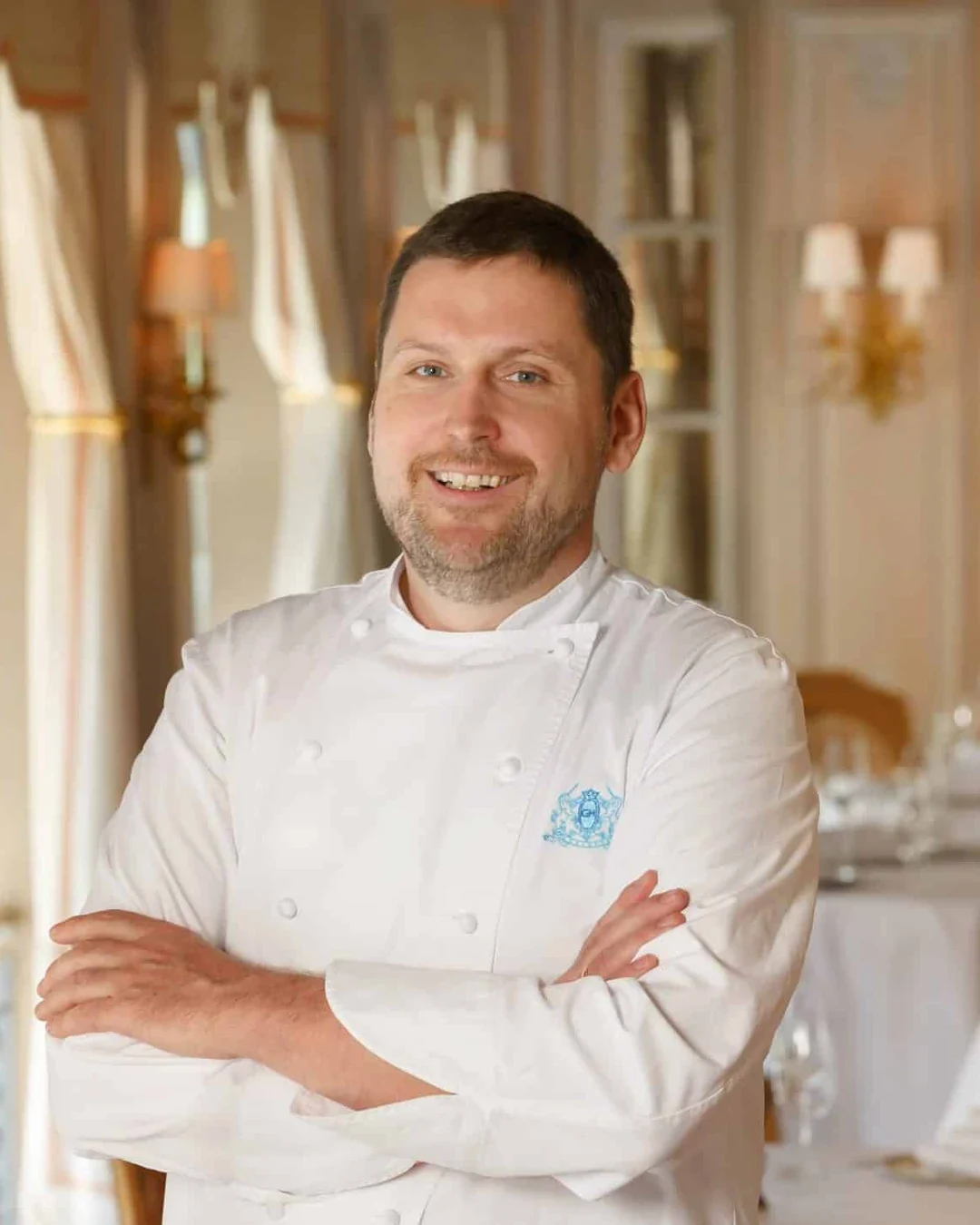
The sauces do the quiet work first at Zur Wolfshöhle in Freiburg im Breisgau, a house built around Baden produce and Austrian memory. Martin Fauster cooks here, a Styrian who took the place on after the previous operators withdrew because of personal hardship, and reopened it in February after the historic building on Konviktstraße was renovated. He arrived with fourteen years at Munich's Königshof behind him and a stated preference for honest cooking with premium products, formed in a Steiermark childhood where the produce did the talking. Zur Wolfshöhle asks for exactly that. The restaurant works in a modern German gourmet register, with Baden specialties, Austrian touches, classical handling, and a small-room formality that leaves little cover for vague cooking. The house carries 1 Michelin star, and its reputation rests on product quality and hand-made sauces rather than theatre, which finds its kinship in venison, scallops, curd dumplings, breaded chicken, pigeon, and oxtail, each a dish that depends on judgement before flourish.
Sauces, game, and the Austrian line
The program at Zur Wolfshöhle gives the kitchen several registers to work in: tasting menu, set menu, and à la carte. The craft sits in the transitions between them. Jacobsmuscheln need a clean hand; Rehkitz asks for timing and a sauce with enough depth to meet the meat without covering it; Backhendl brings Austrian comfort into a room that still expects a polished pass. Topfenknödel, with curd at its centre, belongs to a different part of the appetite, softer and more domestic, but it still has to arrive with the same control. Bresse Taube and geschmorter Ochsenschwanz give the kitchen its darker notes. These are not dishes that improve through ornament. They improve through reduction, rest, carving, seasoning, and the confidence to stop. The wine program follows the same terrain, with German and Baden bottles doing much of the work beside the food. That matters in a room where local sourcing is part of the method and not a caption. The plate and the glass stay close to the region, then let Austria and classical technique widen the frame.
A quiet room off the pass
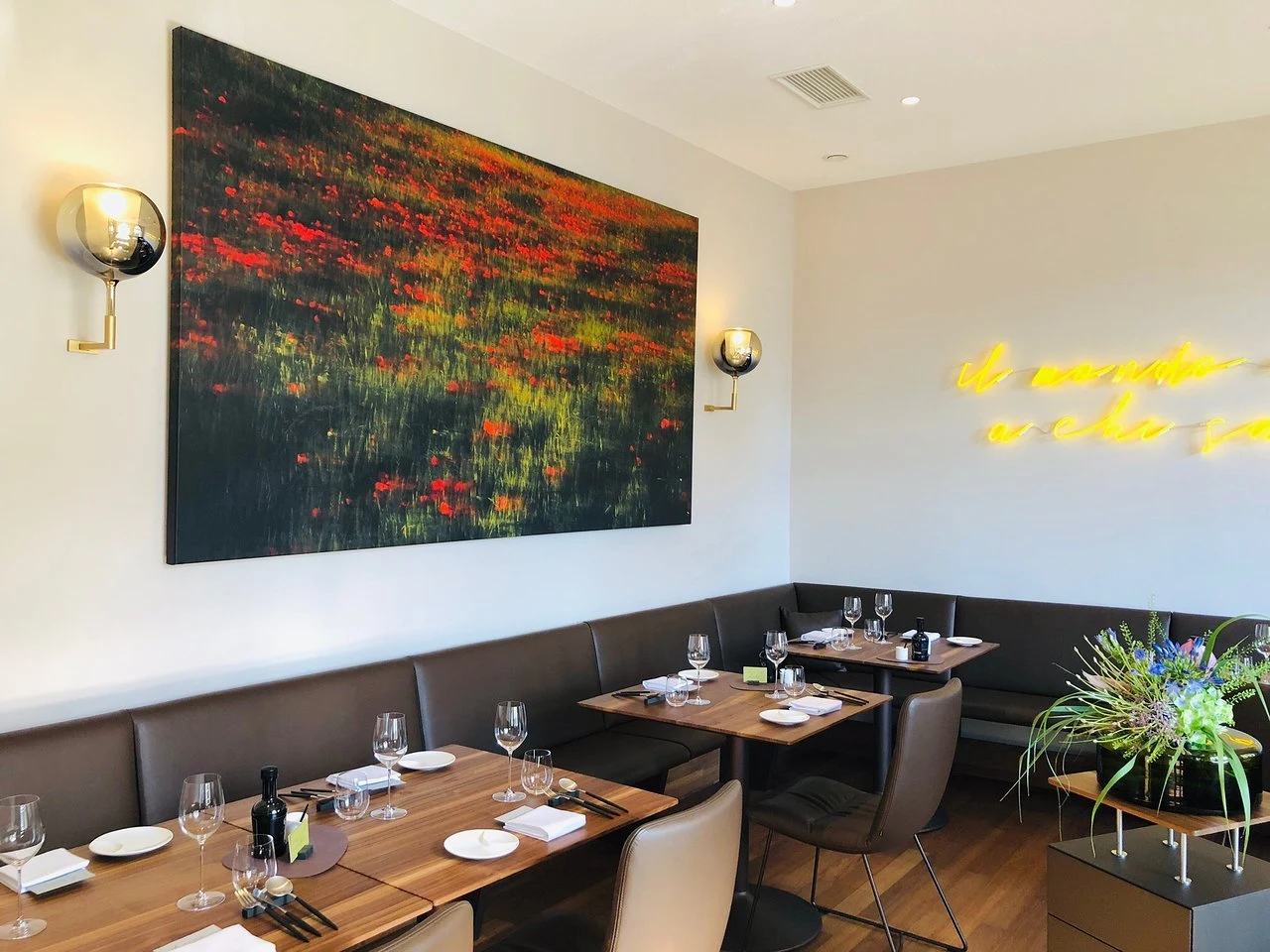
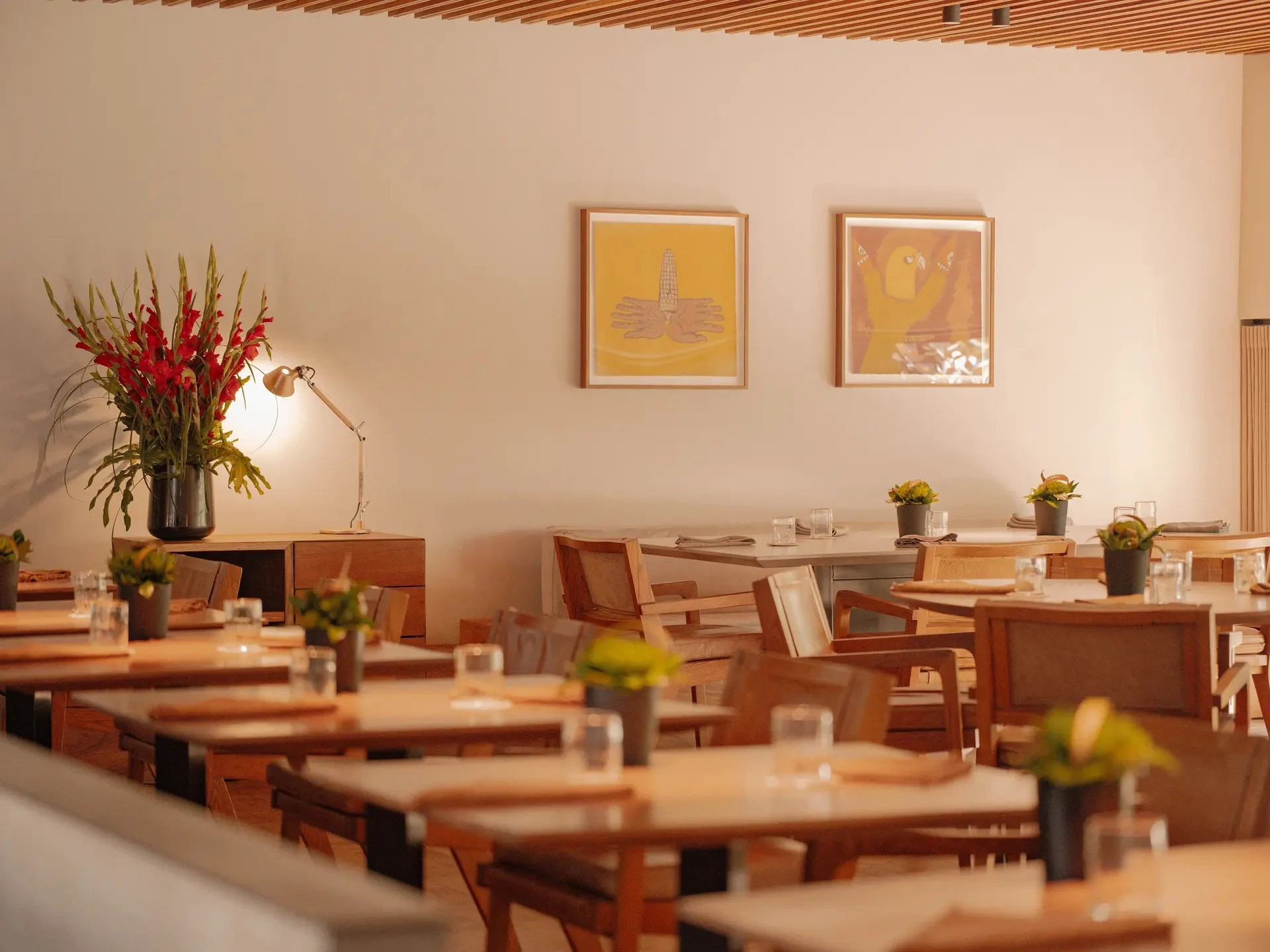
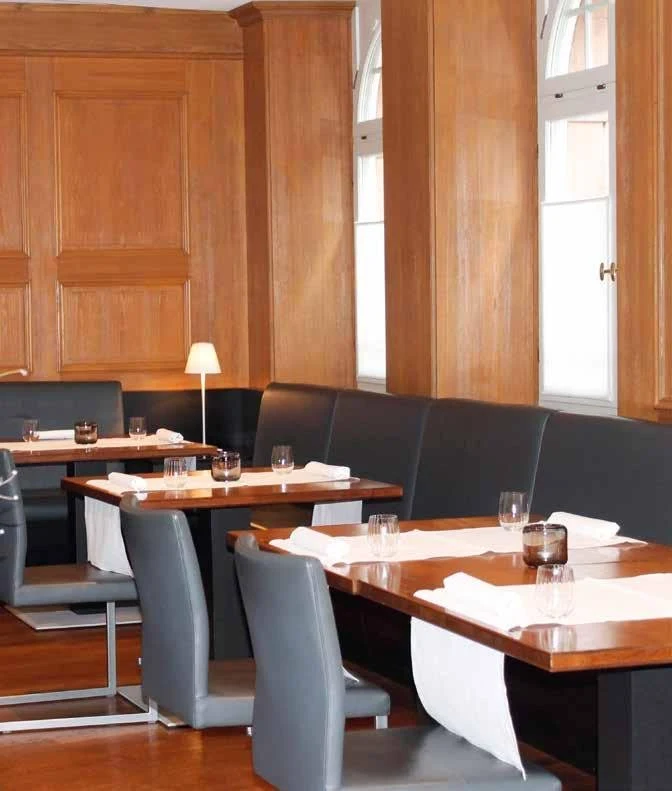
The room is small in feeling, elegant rather than expansive, with a quiet service style that suits a kitchen built on concentration. Guests often meet Zur Wolfshöhle as a refined Freiburg address, one spoken of in the same breath as the Münster in the old town, but the more useful view is bench-side: sauces being held, portions checked, a pigeon breast or venison cut judged at the pass before it reaches the table. The interior is modern and understated, even cool to some eyes, and that plainness puts pressure back on the craft. There is little noise to hide behind. In that atmosphere, the work has to carry its own temperature. A scallop, a dumpling, a piece of oxtail, a glass from Baden; each arrives with the burden of being legible.
What remains on the plate
Zur Wolfshöhle matters because it keeps a regional restaurant language alive without treating tradition as costume. Baden produce, Austrian dishes, German wine, and French discipline can sit awkwardly together when a kitchen chases effect. Here they are asked to serve the same thing: clarity. Fauster's own line about honest cooking is the plainest description of the method, and it is easiest to read in the fertile Breisgau produce arriving at the door. If there is no announced next turn to point toward, the close stays where the work is, with Rehkitz, Backhendl, and Topfenknödel at Zur Wolfshöhle.
Questions
Frequently asked
Who cooks at Zur Wolfshöhle?
Martin Fauster cooks at Zur Wolfshöhle in Freiburg im Breisgau. He is from Styria and came to the restaurant after fourteen years at Munich's Königshof.
What kind of restaurant is it?
Zur Wolfshöhle is a modern German gourmet restaurant with Baden and Austrian influences. The kitchen works with tasting menu, set menu, and à la carte service.
What is the restaurant known for?
The cooking is built around Baden produce, Austrian memory, and hand-made sauces. Dishes named on the menu include Jacobsmuscheln, Rehkitz, Topfenknödel, Backhendl, Bresse Taube, and Ochsenschwanz.
Does Zur Wolfshöhle have any recognition?
The restaurant holds 1 Michelin star.
Is booking required?
Reservation is essential, and the dress code is smart casual.
The field
How it compares
| Place | Awards | Cuisine | Notes |
|---|---|---|---|
| Zur Wolfshöhle | Michelin 1 Star | Modern German Gourmet with Baden & Austrian Influences | Altstadt (Old Town), $$$$ |
| Alchemist | Michelin 2 Stars, World's 50 Best | Avant-Garde Molecular Gastronomy with Social Commentary | Copenhagen |
| Eichhalde | Michelin 1 Star | Modern Italian Fine Dining | Freiburg im Breisgau |
| HAJIME | Michelin 3 Stars, World's 50 Best | Avant-Garde Japanese Fine Dining | Osaka |
| Ikoyi | Michelin 2 Stars, World's 50 Best | Modern West African Fine Dining | London |
| Pujol | Michelin 2 Stars, World's 50 Best | Modern Mexican Fine Dining | Mexico City |
| Saison | Michelin 2 Stars, World's 50 Best | Modern Fire-Forward Fine Dining | San Francisco |
In residence
Similar places
Avant-Garde Molecular Gastronomy with Social Commentary
Alchemist
Copenhagen, Denmark
★★ · 50 Best
Modern Italian Fine Dining
Eichhalde
Freiburg im Breisgau, Germany
★
Avant-Garde Japanese Fine Dining
HAJIME
Osaka, Japan
★★★ · 50 Best
Modern West African Fine Dining
Ikoyi
London, United Kingdom
★★ · 50 Best
Modern Mexican Fine Dining
Pujol
Mexico City, Mexico
★★ · 50 Best
Modern Fire-Forward Fine Dining
Saison
San Francisco, United States
★★ · 50 Best