i. Biography
On the Island of Elba, Italy, vines at Cecilia are shaped by site, system, and cellar precision: white vines mainly trained to Guyot, red vines mainly to spurred cordon, and wines guided through temperature-controlled stainless steel before selected aged bottlings move into barrique. Giuseppe Camerini founded the estate in 1990, turning a long attachment to the island into a winery in the Marina di Campo area.
The Estate
Before wine became the work, Elba had already become a repeated destination. After visiting the island for almost fifty years, Camerini developed his commitment to viticulture and wine at Podere La Casina, a farmstead on the Island of Elba. He came to the project as a Milanese engineer, and that earlier profession matters in the way the winery took shape. In 1990, he founded and began operating Cecilia Vineyards along the Etruscan Coast wine route, transforming his love for the Island of Elba into a working wine estate rather than a distant admiration. The company’s values are practical and local: welcoming visitors for direct sales and promoting Elba Island through quality products from its territory. That emphasis keeps the estate tied to the people who arrive at the cellar door as well as to the land that supplies the grapes. A second layer of Camerini’s thinking appears on the bottle itself. He created the logo and label design from Roger Penrose’s non-periodic tiling systems, bringing a mathematical idea into the visual language of the winery.
In the Cellar
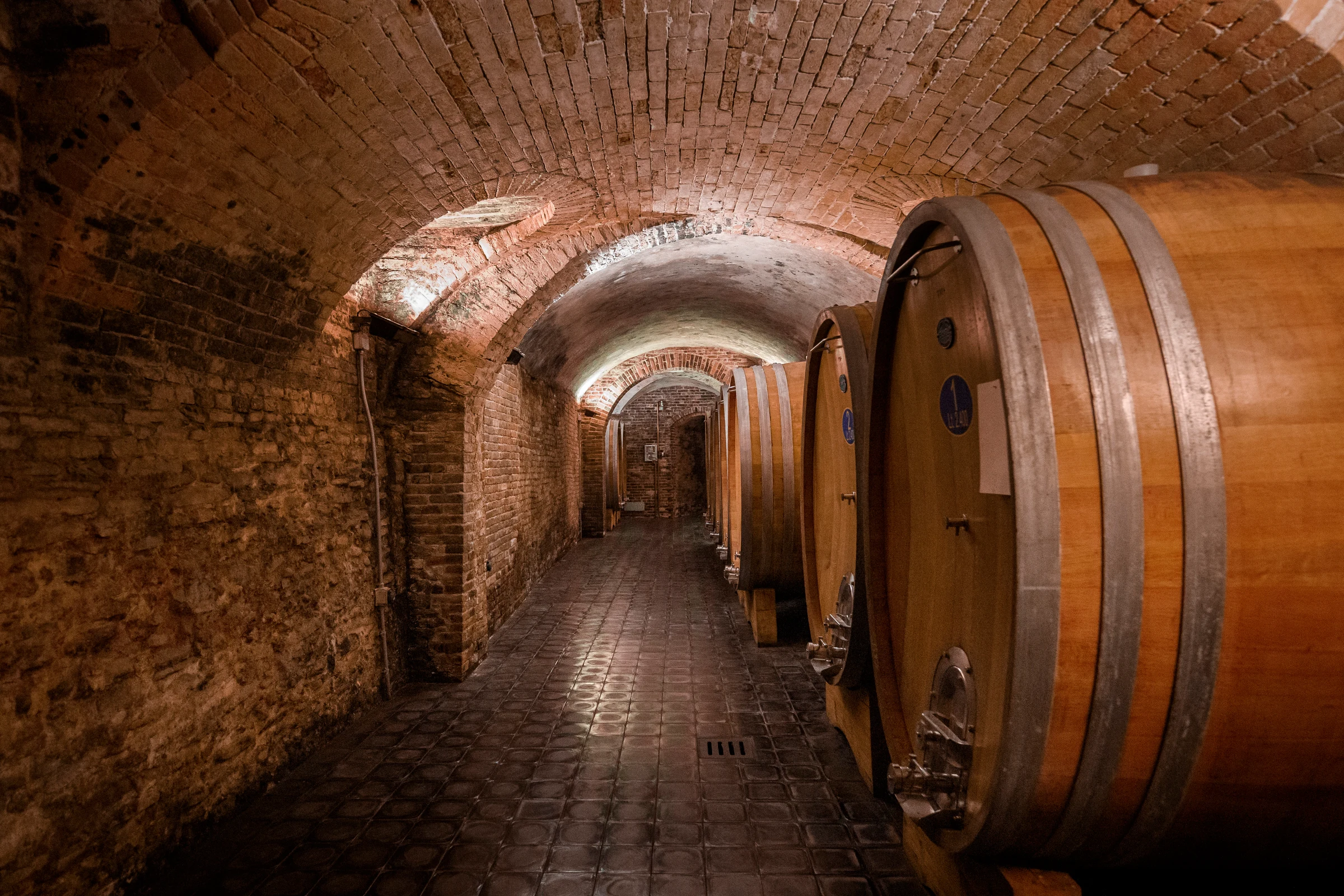
Mechanical knowledge entered the winemaking directly. Camerini created a customized temperature-control system and special filters for the cellar, where wine is aged in small 225-liter barrels. The winery uses stainless steel, temperature-controlled fermentation and storage, new filter systems, and barrique aging for aged wines. The result is a cellar practice described through equipment and vessel choice rather than romance: steel for control, filters designed for the work, and small barrels for wines intended to age. Viticulture is also organized by variety and color. White vines are mainly trained with the Guyot system, while red vines are mainly trained with the spurred cordon system, giving each part of the vineyard a clear structure before the fruit ever reaches the cellar.
The Bottlings
The range stays rooted in traditional Tuscan and Elban wines. The estate produces sweet Aleatico and Moscato wines, Elba Bianco, and Elba Rosso blends, placing island bottlings beside wider Tuscan forms. Syrah has become one of its most visible achievements, with the winery known for producing an award-winning version of the grape. In that release, the estate’s local identity meets a variety with broader reach, made through the same technical cellar culture that defines the rest of the work. Ansonica is another signature point. The wine is described as fresh on the nose and palate, with ripe tropical fruit flavors, and as evoking the setting where it is grown — a sensory link between the glass and the island site behind it.
FAQ What are Giuseppe Camerini's signature releases or dishes? Camerini’s signature releases include Cecilia’s Ansonica, described as fresh with ripe tropical fruit flavors, along with sweet Aleatico, Moscato, Elba Bianco, Elba Rosso blends, and an award-winning Syrah. What is Giuseppe Camerini known for making? He is known for making traditional Tuscan and Elban wines at Cecilia, using temperature-controlled stainless steel, new filter systems, and barrique aging for aged wines. Where does Giuseppe Camerini work? He founded and operates Cecilia winery in the Marina di Campo area of the Island of Elba, Italy.