Winemaker
Massimiliano Caburazzi
- Discipline
- Winemaker
- Based in
- Montefalco, Italy

i. Biography
Oenologist at Antonelli in Montefalco, Italy, is the title that defines Massimiliano Caburazzi’s work. The role puts him behind wines tied directly to one of Umbria’s most exacting territories, including Montefalco Sagrantino DOCG, Montefalco Rosso DOC, and Trebbiano Spoletino DOC, with cellar choices that shape how fruit becomes structure, texture, and time in bottle.
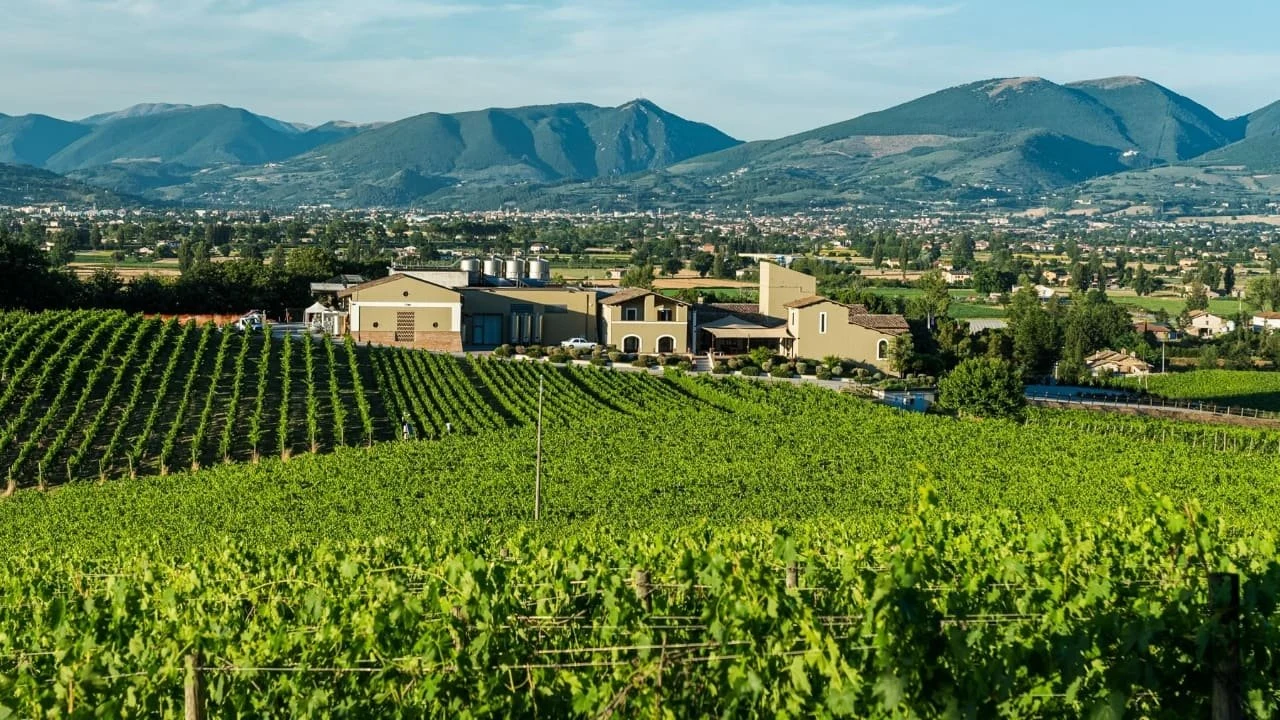
The Recognition Caburazzi’s recognition rests on his current role as oenologist for Antonelli San Marco in Montefalco, where the important labels connected to his winemaker’s hand include Montefalco Sagrantino DOCG, Montefalco Sagrantino Passito DOCG, Montefalco Rosso DOC, Trebbiano Spoletino DOC, and Montefalco Grechetto DOC. Those names carry the geography of Montefalco directly onto the label. Sagrantino, Sangiovese, Montepulciano, Grechetto, and Trebbiano Spoletino form the core grape language associated with his work there, moving between red and white varieties, dry wines and passito, DOC and DOCG categories. No dated award has been identified for Caburazzi. The clearest public marker of his standing is the oenologist title itself at the Montefalco producer, attached to labels that require decisions across fermentation, maceration, variety, and appellation.
The Work
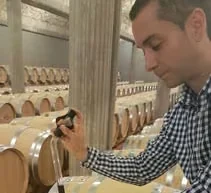
Behind It The most specific view of Caburazzi’s craft comes from the cellar. As a winemaker at the estate, he works in a facility designed for gravity vinification, a system that avoids pumps so crushed grapes enter fermenters by gravity and pomace is discharged the same way. That design is not decorative. The estate says the approach gives greater control of early fermentation and maceration while saving energy, placing the first stages of extraction and movement at the center of the winemaking process. In practical terms, the cellar architecture becomes part of the method: fruit is handled through descent rather than mechanical force, and the earliest contact between skins, juice, and fermenting mass is managed with that structure in mind. For Montefalco Sagrantino DOCG and Montefalco Sagrantino Passito DOCG, those early decisions matter because the wines are tied to Sagrantino, a grape named among Caburazzi’s working varieties. For Montefalco Rosso DOC, the frame broadens to include Sangiovese and Montepulciano. On the white side, Trebbiano Spoletino DOC and Montefalco Grechetto DOC connect his role to Trebbiano Spoletino and Grechetto, two other grapes listed among the varieties associated with the cellar.
The Road Caburazzi studied at Università degli Studi di Perugia, linking his formation to Umbria before his professional work in Montefalco. His career is tied to Antonelli San Marco s.s, the company connected to his current oenologist role and to the labels for which his winemaker responsibilities are named. The arc is compact but clear: education in Perugia, work in Montefalco, and a cellar practice centered on gravity movement, controlled early fermentation, maceration, and energy saving. Rather than a résumé defined by multiple stops, his public career centers on one place and one demanding set of wines. That focus gives the work its authority. Caburazzi is known through the appellations and grapes in his care: Sagrantino in both dry DOCG and passito form, Rosso built from the region’s red varieties, and whites shaped from Trebbiano Spoletino and Grechetto.
FAQ What awards has Massimiliano Caburazzi received? No specific award has been identified for Massimiliano Caburazzi; his public recognition centers on his oenologist role at Antonelli in Montefalco. What is Massimiliano Caburazzi's most notable recognition? His most notable recognition is serving as oenologist for the Montefalco producer connected to Montefalco Sagrantino DOCG, Montefalco Sagrantino Passito DOCG, and other estate labels. What is Massimiliano Caburazzi known for? He is known for winemaking work with Sagrantino, Sangiovese, Montepulciano, Grechetto, and Trebbiano Spoletino, including a gravity-vinificat