Chef
Paul Carmichael
- Discipline
- Chef
- Based in
- New York City, New York, United States
- Venue
- Kabawa · Restaurant
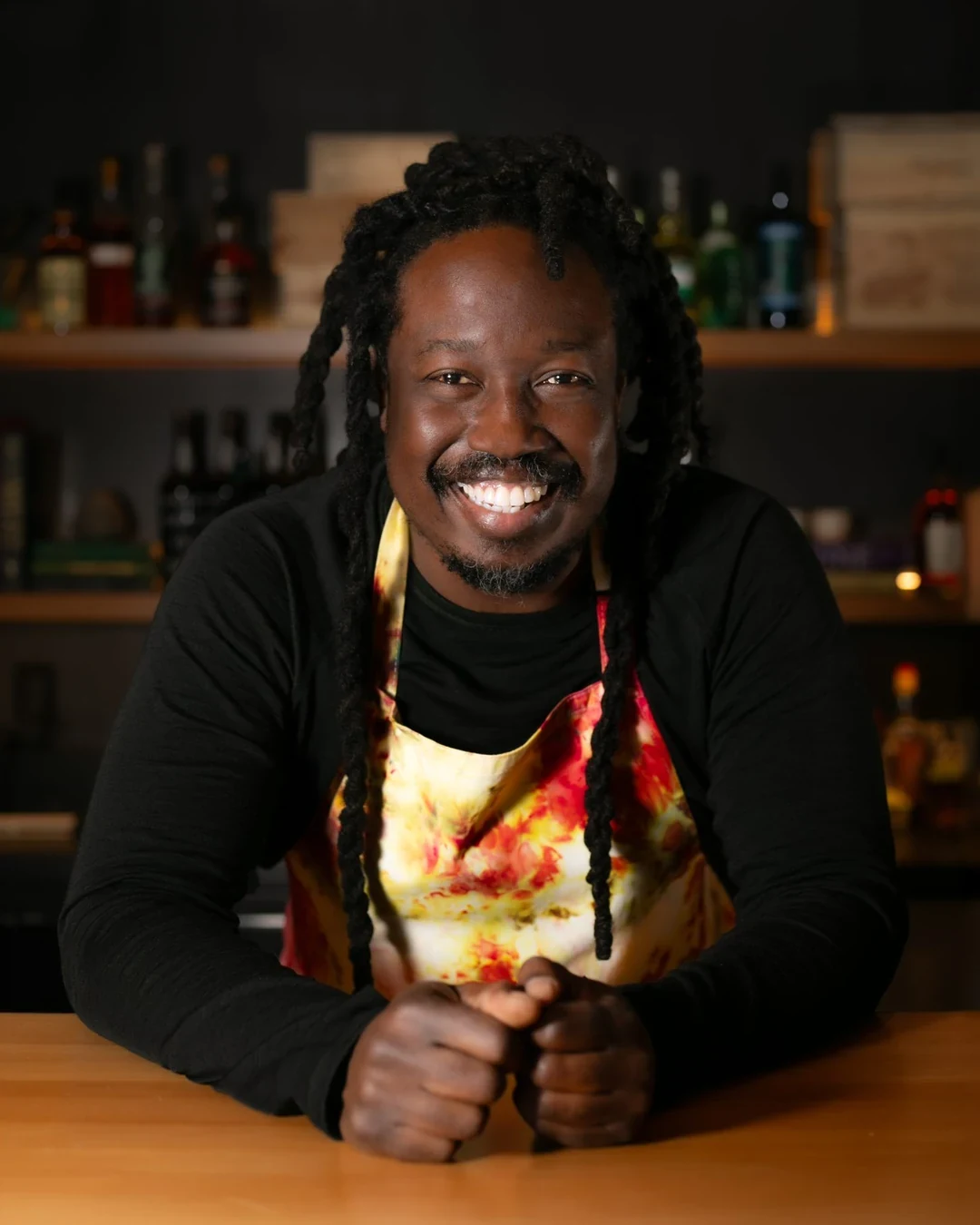
i. Biography
He has said, “This whole restaurant felt risky, so a dish is not going to scare me.” That line tracks with the cooking: controlled, direct, and willing to take a measure of risk when the room calls for it. Paul Carmichael works with a calm hand, building plates that move between precision and ease without losing their line.
Coming Up
Training at Culinary Institute of America gave Paul Carmichael the technical base that later carried into larger, more demanding kitchens and cities. The education is the starting point, but not the whole story; what followed was a career shaped by movement, adaptation, and the need to stay exact while cooking in different registers. As executive chef at Momofuku Seiobo in Sydney, he helped define the restaurant’s identity with a style that joined structure to energy. The work read as disciplined rather than fixed, with each plate kept taut and considered. From 2025, he has been chef at Kabawa in East Village, Manhattan, New York City, carrying that same measured force into a new room. The move does not mark a reset so much as a continuation of the same practice: translating experience into food that feels immediate, composed, and live to the table in front of him.
Where They Are Now
At Kabawa in New York, Caribbean cuisine sits at the center of the menu, and Paul Carmichael treats it as the subject rather than the setting. The food works through memory, texture, and heat, but the point is construction as much as flavor. On Trini curry, he has said, “A Trini curry generally uses some sort of yellow, turmeric-based powder, and that’s what we use. We make our version and then we make a base and then we make a sauce.” The method is plainspoken and sequential: version, base, sauce. That order says as much about the craft as the finished dish. At Kabawa, that approach gives the menu a grounded intensity. The cuisine is not presented as a backdrop; it is the frame of the work. Carmichael’s language shows a cook focused on the mechanics of flavor-building, with repetition used as structure and each step kept legible.
Career - chef — Kabawa, East Village, Manhattan, New York City (from 2025) - executive chef — Momofuku Seiobo, Sydney Education: Culinary Institute of America
Signature
Paul's signature dishes include black bass with curry, goat, and Chuletas Can Can. The set shows range without losing shape. Black bass with curry points to precision and lift, goat suggests depth and weight, and Chuletas Can Can widens the frame again. Taken together, they show a cook comfortable letting different ingredients and traditions sit in the same conversation.
In Their Words “A Trini curry generally uses some sort of yellow, turmeric-based powder, and that’s what we use. We make our version and then we make a base and then we make a sauce.”
FAQ Where did Paul Carmichael train or study? Paul Carmichael trained at Culinary Institute of America.