i. Biography
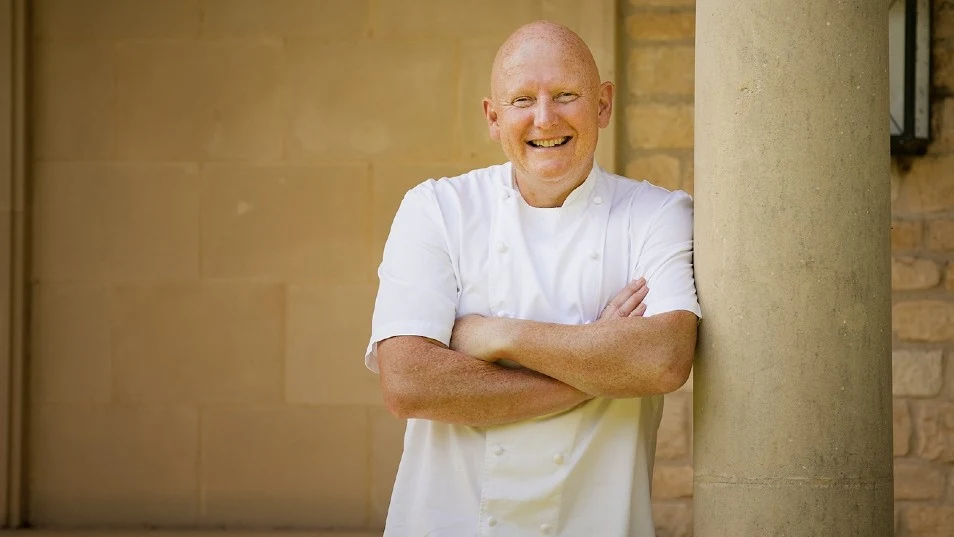
Thomas Martin was in place in 1997, and the work since has been tied to Jacob’s Restaurant, Hotel Louis C. Jacob, where the head-chef role connects continuity with Michelin recognition. Long residence in one dining room changes the work. It makes repetition visible: standards held across services, a house style sharpened over time, and a kitchen identity that does not depend on novelty. At Jacob’s Restaurant, Hotel Louis C. Jacob, Martin’s cooking is read through that continuity—measured, polished, and exacting, with the authority that comes from staying inside one professional frame long enough to define it.
Coming Up
A head-chef tenure beginning in 1997 at Jacob’s Restaurant, Hotel Louis C. Jacob, set the working conditions for Thomas Martin’s profile: one restaurant, one hotel, one Hamburg base. The importance of that date is not only chronological. It marks the start of a sustained attachment between kitchen leadership and house identity. Long kitchen leadership is a craft practice in itself. It fixes rhythm, sets expectations, and gives returning diners a language they can recognize while the cooking continues to move. In Martin’s role as Head Chef, the work sits in the daily disciplines of flavor calibration, technical refinement, and the controlled coordination required for a fine-dining room to feel settled rather than forced. The earlier presence in 1997 as chef de cuisine gives the progression a practical shape. That title already carries operational responsibility; the years that followed turned responsibility into authorship. At Jacob’s Restaurant, Hotel Louis C. Jacob, the career has been built by going deeper into one kitchen rather than wider across many.
Where They Are Now
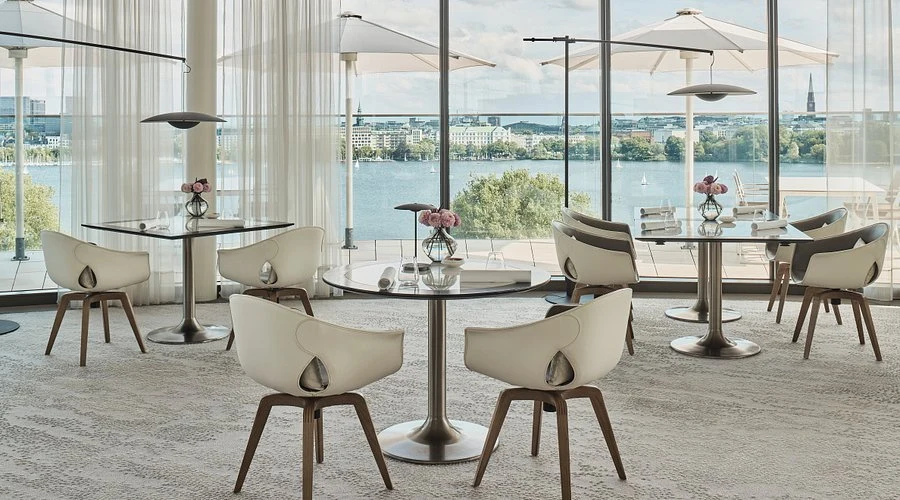
The current point of reference remains clear: Thomas Martin’s cooking is sought at Jacob’s Restaurant, Hotel Louis C. Jacob. For diners and peers, that direct line matters. There is no profile here built around multiple flagships or dispersed projects; the craft identity remains fixed to one Hamburg address. Continuity affects how a fine-dining kitchen is understood. A guest comes for a point of view formed over years, not only for a menu cycle. Martin’s continued association with Jacob’s Restaurant, Hotel Louis C. Jacob signals a kitchen where refinement is cumulative, built through repetition, scrutiny, and care. Hamburg functions as the constant frame. The same city, the same dining room, and the same chefly presence make the professional argument straightforward: endurance can be a form of precision. In a trade often organized around openings and relocations, this position is defined by continuity and by the assurance that the cooking remains connected to the chef whose name is attached to it.
Career - Head Chef — Jacob’s Restaurant, Hotel Louis C. Jacob, Hamburg, Germany (1997–present)
Honors
The honors attached to this work are specific: 2 Michelin Stars, Chef of the year (2002), 17 of 20 points, 4.5 of 5 wooden spoons, and 4 of 5 chefs’ hats. Together they register recognition across several systems of assessment rather than a single critical vocabulary. The 2 Michelin Stars place Jacob’s Restaurant, Hotel Louis C. Jacob within one of the most widely recognized restaurant measures. Chef of the year (2002) marks a dated individual distinction for Thomas Martin. The scores—17 of 20 points, 4.5 of 5 wooden spoons, and 4 of 5 chefs’ hats—show additional critical regard from other rating frameworks. The recognition reads most clearly beside the length of the tenure. These distinctions do not sit apart from the Hamburg address; they document how one kitchen, under Martin’s long head-chef leadership, has held a defined place in contemporary German dining.
FAQ What recognition has Thomas Martin received? 2 Michelin Stars.