Domaine Arnoux-Lachaux Asks MICHELIN to Remove It From Grape Selection
The Vosne-Romanée estate, led by sixth-generation winemaker Charles Lachaux, publicly asked MICHELIN to remove it from the guide's inaugural wine rating system, citing a 2020 policy of not submitting wines for press reviews.
HM
Director of Editorial Standards
Hugo Marchetti
Filed July 14, 2026
9 min read
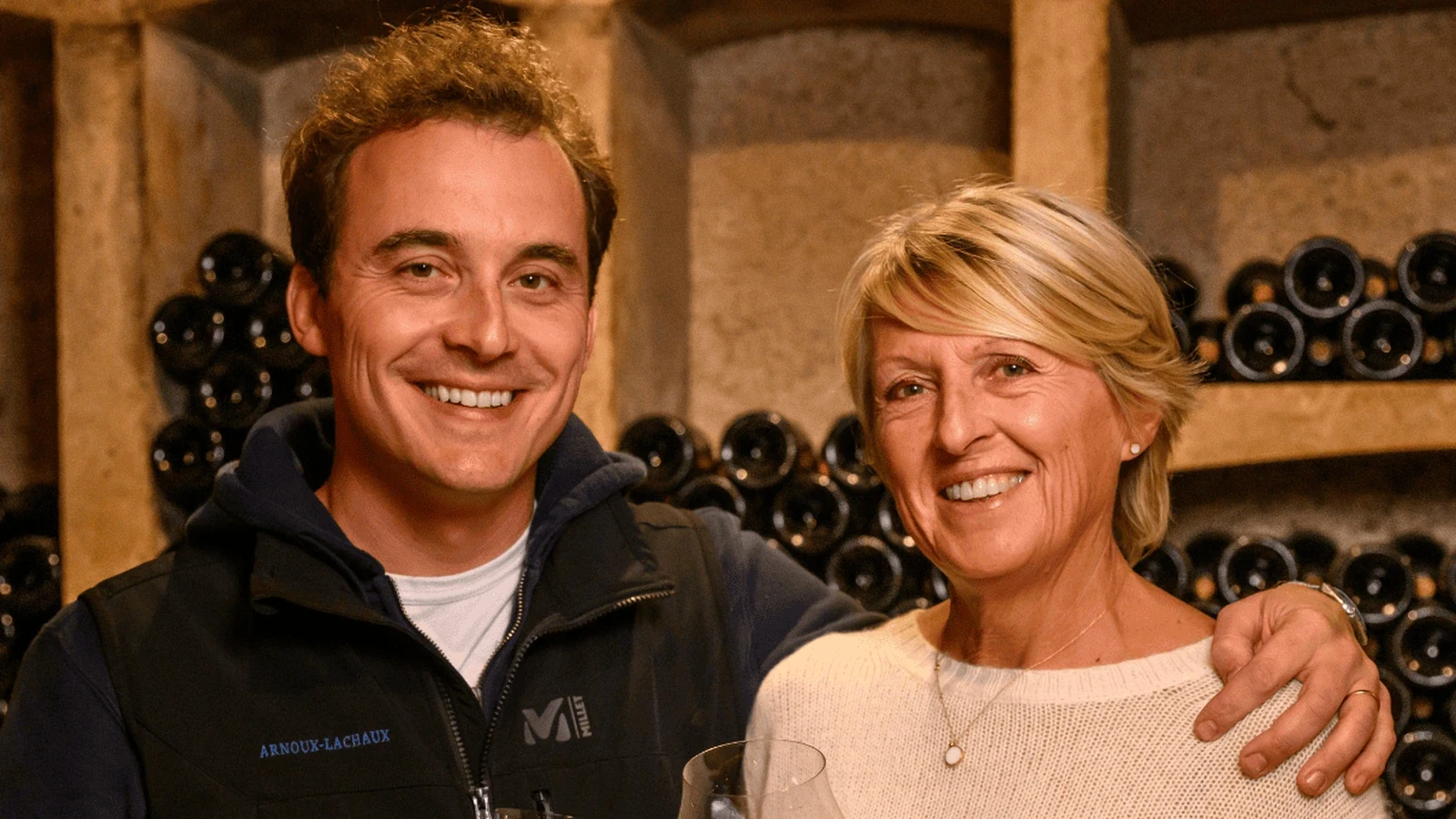
Days after MICHELIN unveiled its first-ever wine estate rating system at the Palace of the Dukes of Burgundy in Dijon on 7 July 2026, Domaine Arnoux-Lachaux posted a statement to Instagram. The Vosne-Romanée estate, led by sixth-generation winemaker Charles Lachaux and Florence Arnoux-Lachaux, asked the guide to remove it from the selection.
The request was procedural and unambiguous: the domaine has not received MICHELIN or presented wines to the press since the 2020 vintage, and it wanted the rating withdrawn.
The Sunday letter
Get our new stories in your inbox every Sunday.
One email with our newest profiles and guides. See a sample before you subscribe.
The statement, signed by both Florence and Charles, opened by acknowledging the volume of questions from clients, wine lovers, and journalists. "We do not know how the Domaine's rating, reportedly based on five criteria, could have been established, as we have not received Michelin or presented our wines to the press since the 2020 vintage," said Florence Arnoux-Lachaux and Charles Lachaux.1 The estate closed by thanking clients, partners, and wine lovers for their continued interest and messages of support. As of mid-July 2026, MICHELIN had not publicly responded to the request, and no other recognized estate had joined Arnoux-Lachaux in publicly objecting.
The removal request carries weight because Arnoux-Lachaux is one of modern Burgundy's most in-demand and highly priced names. MICHELIN placed it in the lowest of its three grape tiers, awarding it a single grape, the entry level of a scale that tops out at three. The estate's central objection is not the rating itself but the method: it says MICHELIN rated it without ever visiting or receiving its wines, and that the domaine has, as a matter of policy, opted out of all critic ratings and press tastings since 2020.
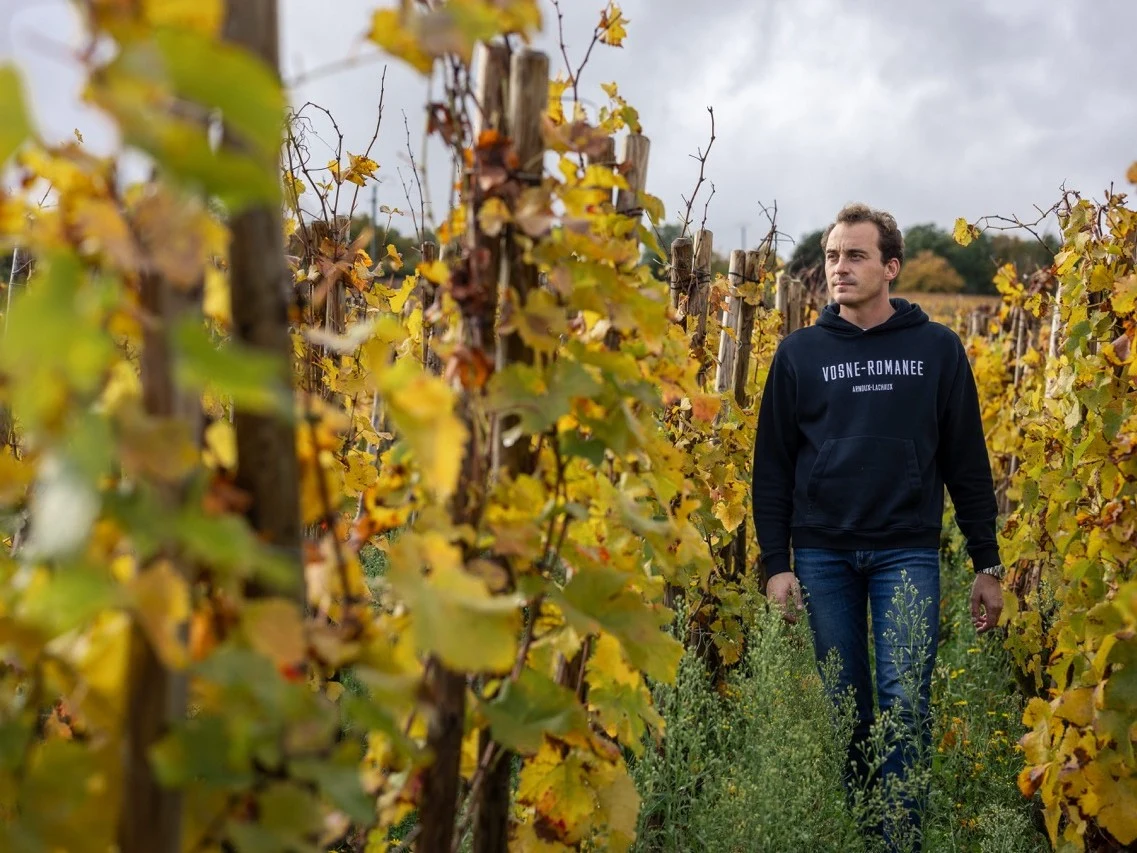
Charles Lachaux in the Arnoux-Lachaux vines at Vosne-Romanée.
MICHELIN says its salaried experts, former sommeliers, wine critics, and winemakers, assess each estate as a whole across vintages, against five criteria: quality of agronomy and soil vitality, technical mastery, identity, balance, and consistency across vintages. Unlike anonymous restaurant inspections, the tastings are collaborative and non-anonymous.
Arnoux-Lachaux's statement framed the removal request as consistent with a long-standing position. The estate has deliberately chosen not to submit wines for press reviews or ratings since 2020. The domaine did not elaborate on what prompted the 2020 policy shift, but the statement made clear that the MICHELIN rating was not an exception the estate was willing to accept. Coming so soon after the launch, it read less like a negotiation than a boundary.
The 2020 Policy Shift That Set This in Motion
Since 2020, Domaine Arnoux-Lachaux has declined to submit wines for press reviews or ratings. The estate has not received MICHELIN or presented wines to the press since the 2020 vintage. The policy is rare among Burgundy's top-tier producers, most of whom maintain relationships with critics and participate in annual tastings. The domaine has removed itself from the critic-driven narrative that shapes much of the Burgundy market.
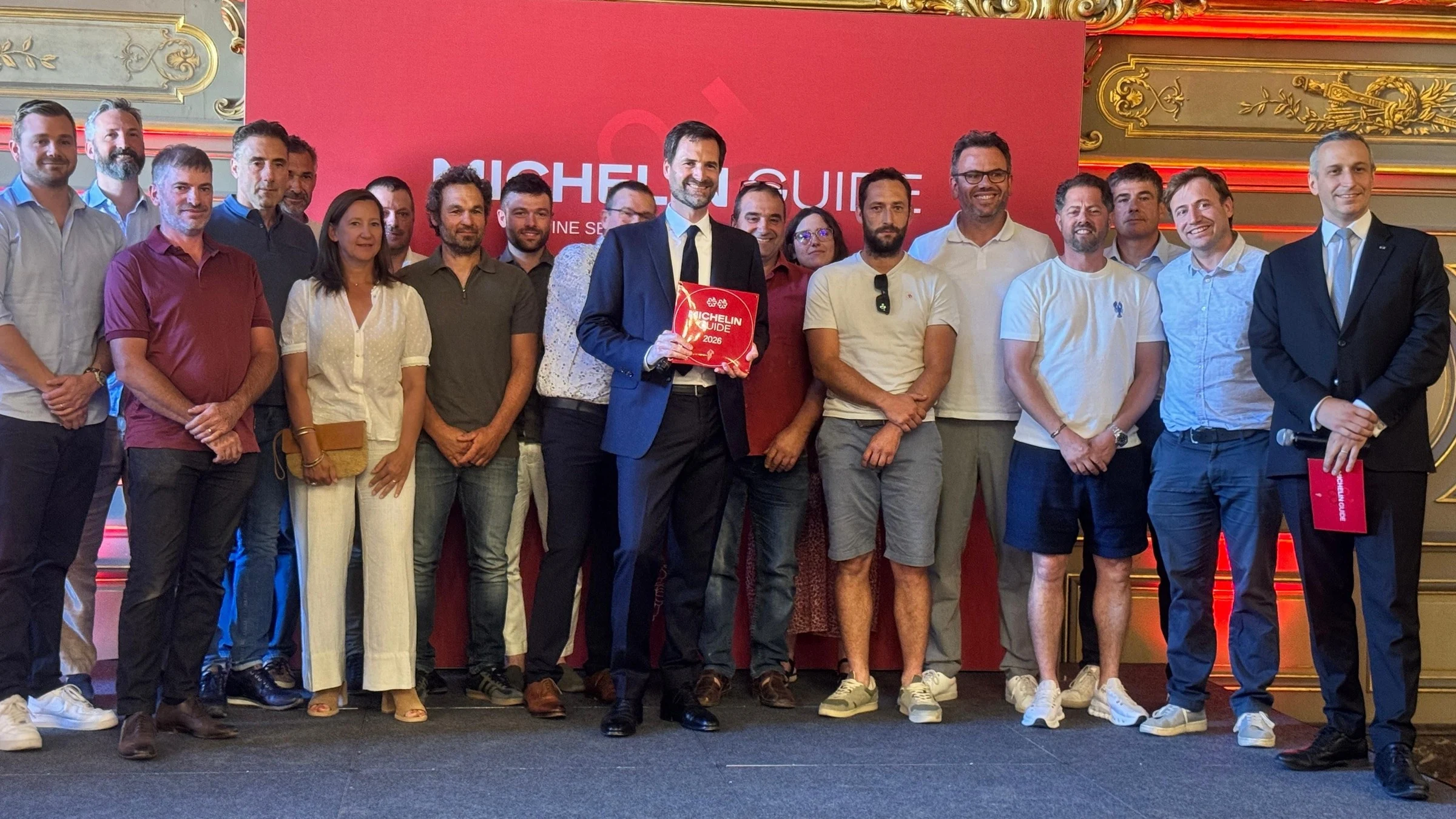
Winemakers on stage at the 2026 MICHELIN Grape Selection ceremony in Dijon, the recognition Arnoux-Lachaux asked to be removed from.
The policy shift predates MICHELIN's wine rating project by six years. The Grape Selection is the guide's first rating for wine, extending a distinction model that already covered restaurants (stars, since 1926) and hotels (Keys, since 2024). Burgundy is the inaugural region, with Bordeaux announced to follow. The guide's International Director, Gwendal Poullennec, presented the selection in Dijon and has said the assessors deliberately set aside the classified-vineyard system: "we do not stop at the question of Grands Crus, Premiers Crus or other classifications," said Gwendal Poullennec.2
The estate's 2020 policy shift means it has operated outside the press circuit for six vintages. The domaine has not submitted wines for review to any publication, including Robert Parker Wine Advocate, which MICHELIN owns.
The Arnoux-Lachaux statement did not address the potential conflict of interest, but commentators have noted that MICHELIN's ownership of a competing wine-rating publication complicates the guide's claim to independence.
Six vintages on, the silence has cost the estate nothing visible: its wines still sell faster than it can make them, carried by the importers and drinkers who deal with the domaine directly rather than by any score.
What MICHELIN's Grape Selection Actually Measures
MICHELIN's Grape Selection assesses estates across five criteria: quality of agronomy and soil vitality, technical mastery, identity, balance, and consistency across vintages. The guide rates the estate as a whole, across cuvées and vintages, rather than scoring individual bottles.
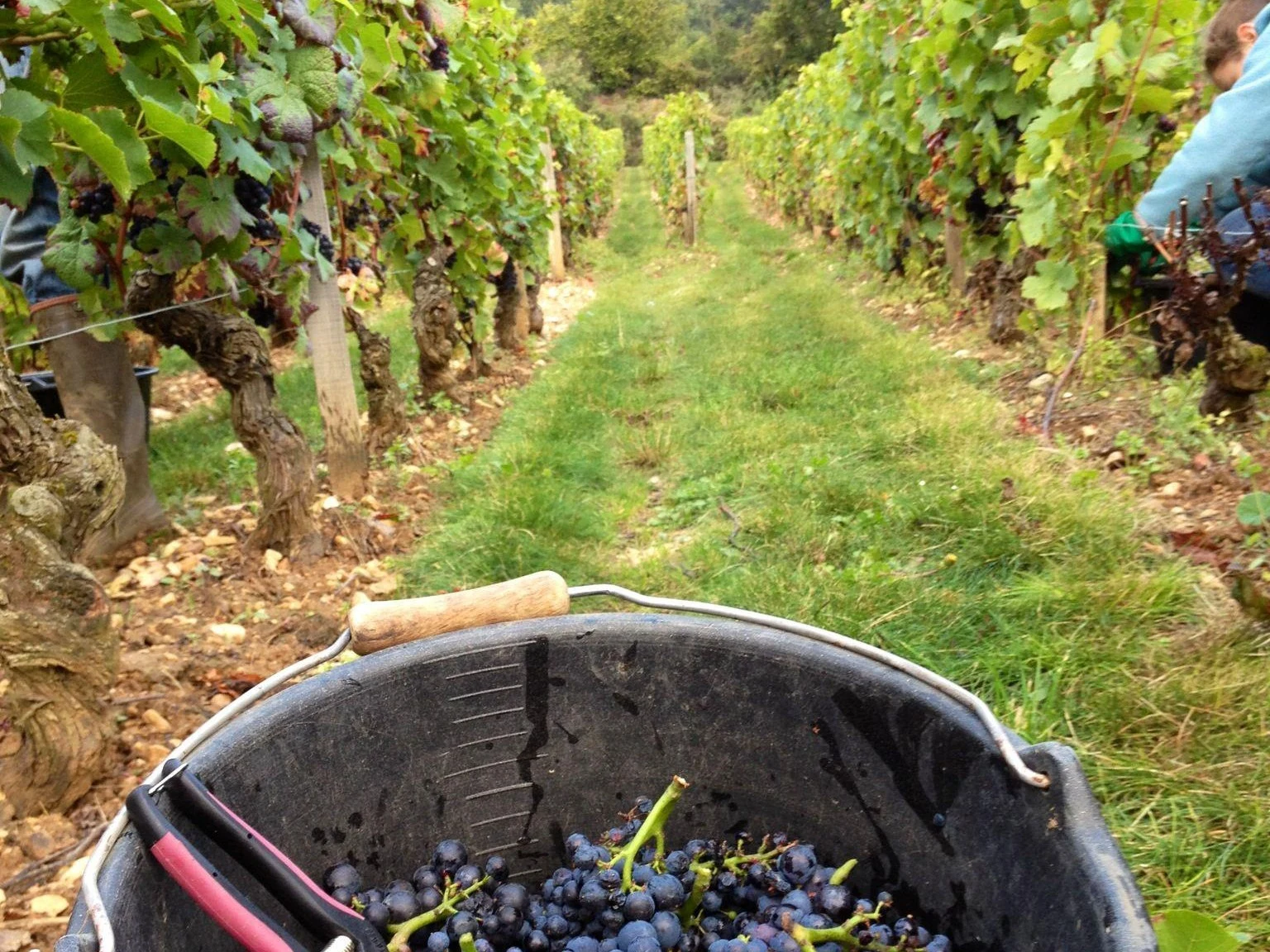
A harvest bucket of Pinot Noir from the Arnoux-Lachaux Clos des Corvées Pagets.
The tastings are collaborative and non-anonymous, a departure from the guide's restaurant inspection model. Poullennec has framed the aim as recognizing that excellence is not defined solely by the prestige of a name but is expressed through precision in vineyard and cellar work, and the personality each vintner brings.
The guide stresses that it is interested in the history of the domaine, the work of the vine, and how the wines hold over time.
The selection has drawn skepticism from critics and collectors. Writing in the San Francisco Chronicle, wine critic Esther Mobley questioned whether an inspector can really assess something so complex and seasonal on a single visit, and flagged the difficulty of judging Burgundy's many négociant houses.
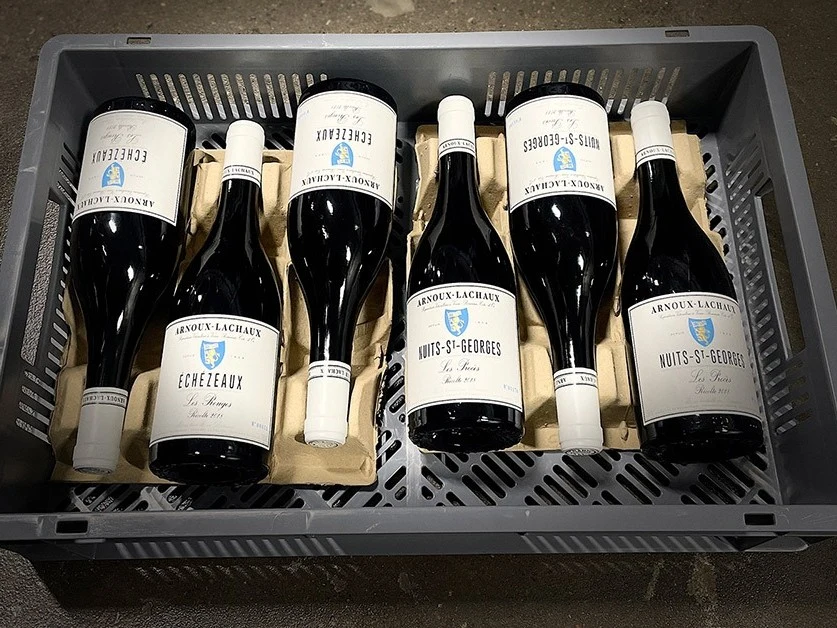
A range of Domaine Arnoux-Lachaux bottles.
Wine writer and educator Julia Coney warned that under such a system many small producers may not get the love they justly deserve.
On wine forums such as WineBerserkers, collectors argued that reducing domaines to a one-to-three scale is fundamentally at odds with the essence of Burgundian terroir, and singled out specific placements as indefensible, notably Dugat-Py receiving three grapes while Armand Rousseau, one of the Côte de Nuits' most revered names, received only one.
Critics also pressed on method and consistency. Writing in The Somm Pour, Anna Belani-Ellis, DipWSET, attacked consistency across vintages as the wrong yardstick for the region, arguing that Burgundy has never been great despite vintage variation but is great because of it.
In an analysis for The Grape Reset, Jamie Anderson argued the selection undercut its own soil-vitality criterion, calculating that only about 21 of the 94 estates, roughly 22 percent, hold organic or biodynamic certification, with several organic pioneers in the lower tiers. MICHELIN has not addressed the gap directly; it treats agronomy and soil vitality as one criterion among five and does not equate them with formal certification, which leaves the question of how it weighed farming open.
The most structural criticism concerns MICHELIN's relationship to Burgundy's existing hierarchy. Poullennec has said the assessors deliberately set aside the classified-vineyard system; to purists, stepping around the centuries-old climat framework, the same one recognized by UNESCO, is precisely the problem. MICHELIN's stated method bears on some of this: it says it judges an estate as a whole and across vintages rather than on any one tasting, weighing the history of the domaine and how its wines hold over time.
Arnoux-Lachaux's objection is narrower, and harder to wave away: not that MICHELIN rated it poorly, but that MICHELIN rated it at all, without consent and without access to wines the domaine has kept from the press since 2020.
What It Means for a Maker to Refuse to Be Judged
Strip away the tiers and the methodology and a smaller, more human question sits underneath the Arnoux-Lachaux statement: can a maker decline to be judged? Charles and Florence Arnoux-Lachaux have spent six years narrowing the distance between their work and the people who drink it, no press samples, no critic visits, no scores, only the wines and the relationships around them. To be rated anyway, by a guide that never tasted with them, is to have that choice overruled from the outside.
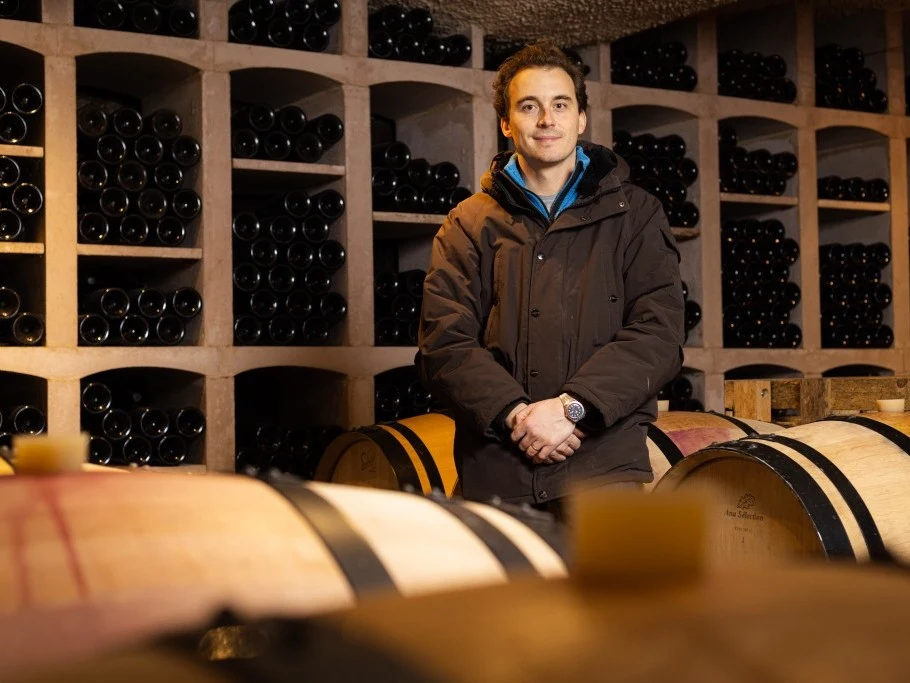
Charles Lachaux in the Arnoux-Lachaux cellar.
That is why the objection reads less like a complaint about a grade and more like a maker guarding the edges of their own practice. The estate's reputation has held without critic scores, its wines still sell faster than it can make them, and the trust it has built with importers and drinkers has done the work a rating is meant to do. Refusing the grape, then, is not a marketing pose but a claim about where a wine's meaning comes from: the vineyard, the cellar, and the hands in them, not a symbol awarded from a distance.
Whether any other estate says so out loud is the open question. No one else has, at least not yet, and MICHELIN has not said whether it will grant the removal, a decision that will tell producers a great deal about whether the guide treats the Grape Selection as a collaboration or something it can confer unasked. But Arnoux-Lachaux is not the only maker in Burgundy who has quietly stopped submitting wines, and if a public opt-out turns out to cost nothing, more may decide the surest verdict on a bottle is the one that comes from drinking it. For now, one domaine has drawn the line, and the region is watching to see what MICHELIN does next.
The Sunday letter
Get the next Made By guide in your inbox.
We send one email every Sunday morning with the guides and profiles we published that week.