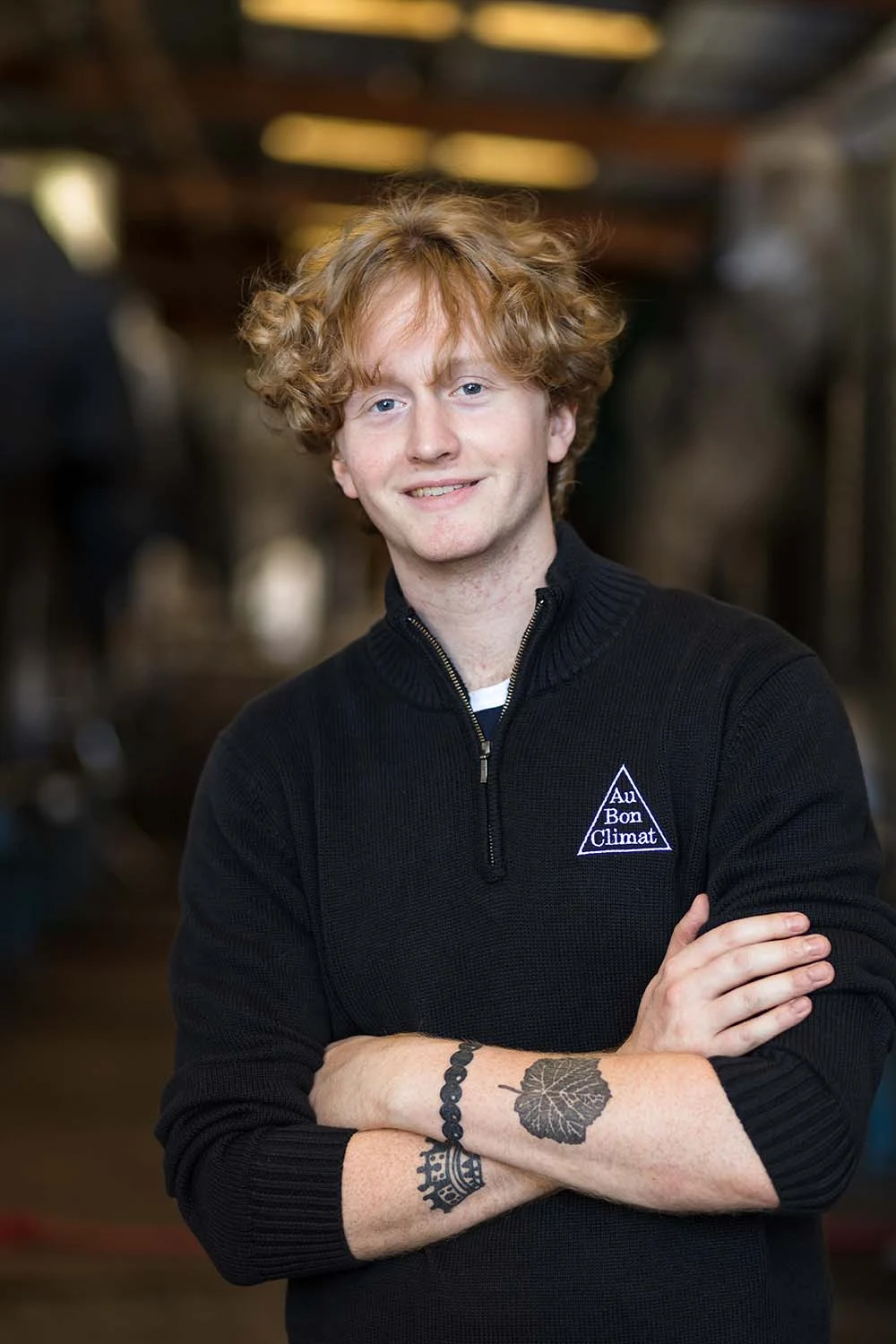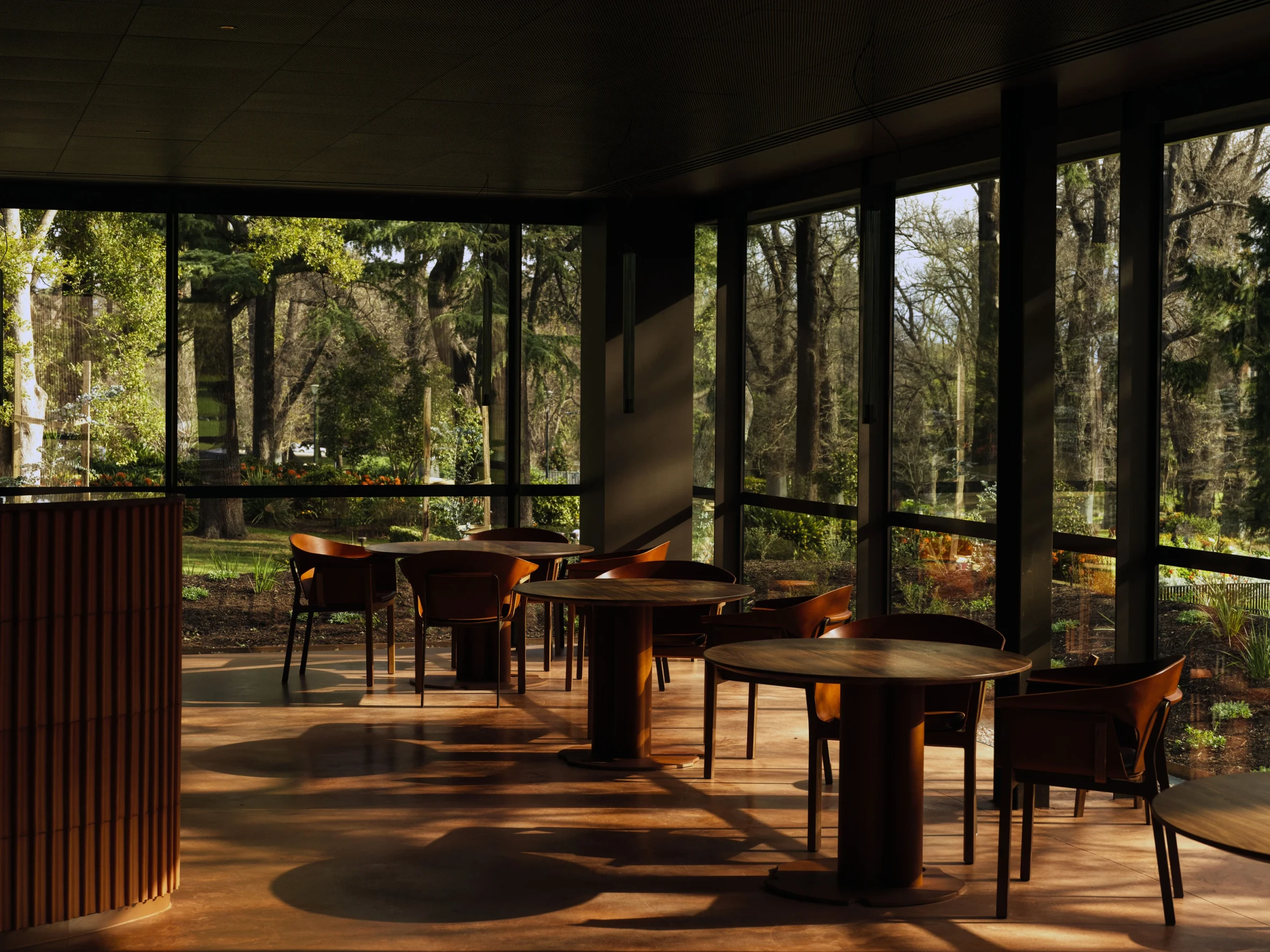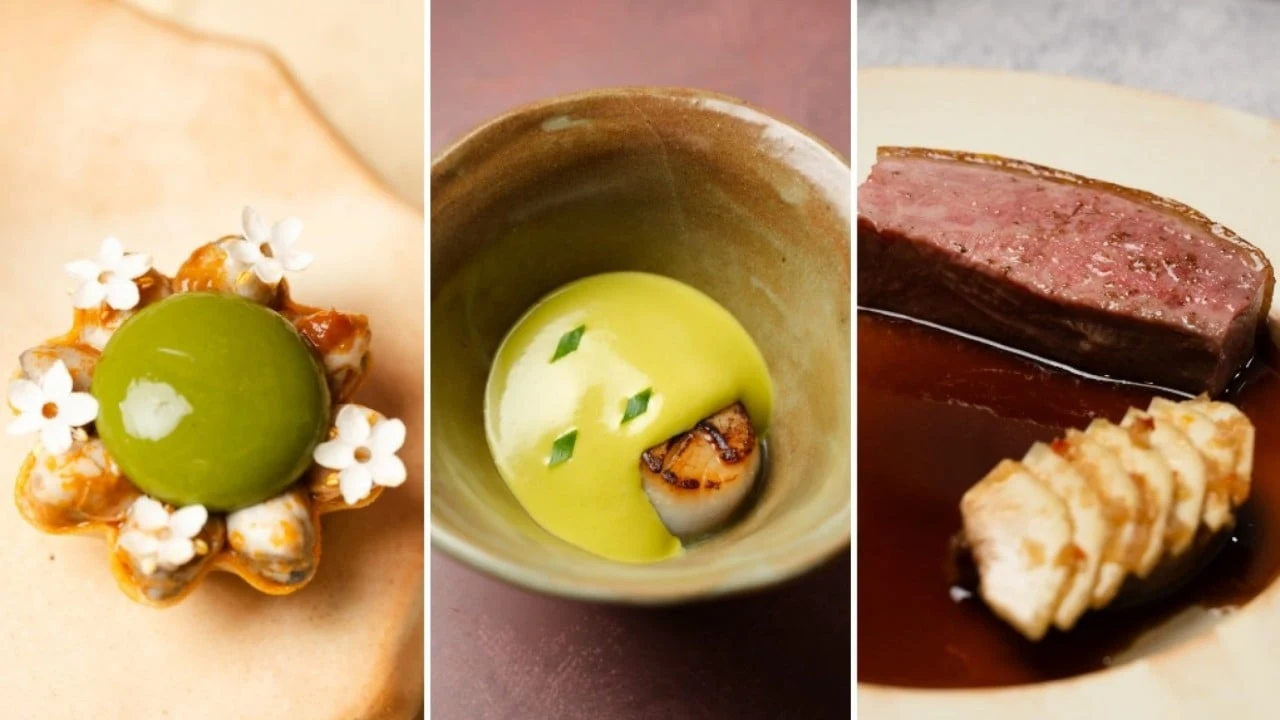
Hiep Truong sends vit hon from the pass at Upstairs Tasting Room as duck dry-aged for 21 days, grilled over charcoal, and served with peanuts, house-made duck sausage, and wild fig.The dish begins from a Central Vietnamese braise of duck, lemongrass, turmeric, coconut water, and fermented shrimp paste.Upstairs Tasting Room won a Michelin star.
At Upstairs Tasting Room, Hiep Truong starts with vit hon
Upstairs Tasting Room is on Nguyen Ba Huan Street in An Khanh Ward, Ho Chi Minh City.It opened in December 2024.It has won a Michelin star.For the reader, the first thing to know is where Truong's work sits now: a young room in Ho Chi Minh City, with a pass that has to speak before the first plate asks too much of the guest.
Truong's signature dish is vit hon, a traditional Central Vietnamese dish in which duck meat is braised with lemongrass, turmeric, coconut water, and fermented shrimp paste.The choice fixes the restaurant's grammar around memory before luxury. Truong does not begin with an imported prestige ingredient and add a Vietnamese accent at the end. He begins with duck, paste, roots, water, smoke, and the patience of a method that lets a familiar dish move through a different station.
At Upstairs Tasting Room, the duck for vit hon is dry-aged for 21 days, grilled over charcoal, and plated with peanuts, house-made duck sausage, and wild fig.That is the plate to look for if you want to understand how this Vietnamese chef is turning a braise toward the tasting-room bench without losing the old structure. Aging changes the duck before heat touches it. Charcoal gives the skin and fat another register. The sausage keeps the animal on the plate in a second form; the peanut pulls the dish back toward the table it came from. Truong's discipline is visible because he keeps the source dish in view. He changes the dwell time, the cut, the fire, and the arrangement.
Hiep Truong's short public path to a Michelin room
Upstairs Tasting Room opened in December 2024.The restaurant won a Michelin star.For Truong, the public arc is compressed. The biographical scaffolding often used to explain a chef, the long list of foreign kitchens, famous mentors, school names, and staged houses, is not the central evidence here. The plate is.
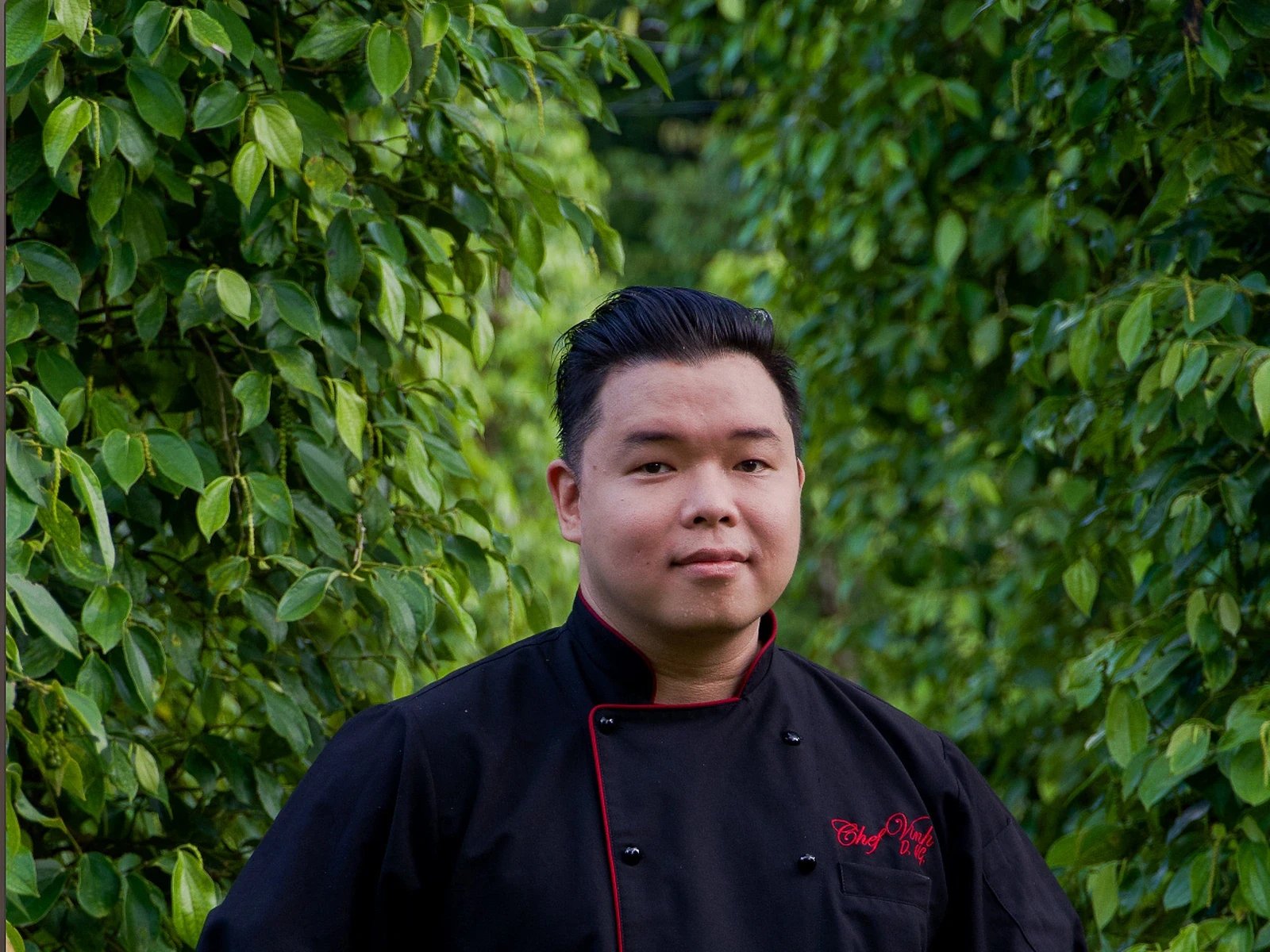
That does not make the lineage thin. It changes where the reader should look for it. In vit hon, lineage sits in the name of the dish and in the braise itself.The traditional Central Vietnamese base carries lemongrass, turmeric, coconut water, and fermented shrimp paste.Those are not garnishes added for recognition. They are the structure. Truong leaves that structure legible while shifting the technique around it: aging before cooking, grilling rather than resting only in braise, presenting duck in both whole-meat and sausage forms.
For a cook, that is the useful reading of the dish: time on the carcass, smoke over charcoal, a secondary preparation from the same animal, then a final plate carrying crunch, fat, fruit, and fermentation. A tasting room can flatten regional cooking when it treats the source as inspiration rather than obligation. Truong's work reads against that habit. He keeps the name vit hon attached to the dish, then makes the bench decisions visible enough for a practitioner to follow.
Vietnamese chef Hiep Truong is turning duck toward age and fire
Vit hon, in its traditional Central Vietnamese form, braises duck meat with lemongrass, turmeric, coconut water, and fermented shrimp paste.The base is built on aromatics, fat, salt, sweetness, and funk. Lemongrass cuts through duck fat. Turmeric stains and rounds. Coconut water brings sweetness without the weight of cream. Fermented shrimp paste gives the dish its depth, not as a loud note but as a base line the palate returns to after the smoke clears.
Truong's version at Upstairs Tasting Room changes the sequence: the duck is dry-aged for 21 days, grilled over charcoal, then served with peanuts, house-made duck sausage, and wild fig.Order it for the sequence as much as the flavor. Dry-aging reduces water and firms the flesh; charcoal puts the outer surface into contact with fire; sausage brings fat, trim, seasoning, and casing into the composition. The wild fig does more than sweeten. Against fermented shrimp paste and smoke, it gives the plate a point of pressure.
The important thing is that Truong does not make the dish polite. He lets fermented shrimp paste remain part of the foundation.That paste belongs to the traditional vit hon matrix alongside lemongrass, turmeric, coconut water, and duck.In many tasting menus, the pungent element gets softened until it becomes an allusion. Here, the method suggests another route: keep the force, then control its frame with aging, smoke, fat, and garnish.
Truong's current favourite dish is hen xuc banh da, stir-fried clams with laksa leaf, served on a rice cracker as a tartlet.That plate works at a smaller scale but follows the same discipline. The clam takes quick heat; the laksa leaf lifts the aroma; the rice cracker gives a brittle base. Calling it a tartlet does not erase the banh da reference. It changes the hand position. The guest picks up a compressed version of a dish that still speaks through clam, herb, and rice.
This is where Truong's work earns attention beyond the star. He uses Vietnamese dishes as the program's structure, not as decoration for a tasting-room format. He lets the dishes decide the format. Vit hon asks for age, fire, fermentation, fat, and crunch. Hen xuc banh da asks for immediacy, leaf, shellfish, and snap. The room's craft lies in listening to those requirements, then tightening them for service.
Hiep Truong and Saigon's Michelin context
Ănăn was awarded one star in the inaugural Vietnam Michelin Guide in 2023.Ănăn was the only Michelin star winner in Saigon in 2023.Ănăn Saigon is located in a tube house in Ho Chi Minh City's Ton That Dam old market.Peter Cuong Franklin, who runs Ănăn, enrolled at Le Cordon Bleu in Paris in 20081 after working at Morgan Stanley as an investment banker.2 He trained at Caprice in Hong Kong2 and at Next in Chicago.2 At Ănăn, banh xeo (turmeric pancakes) are presented as tacos.1Banh trang nuong is dressed as pizza with toppings like smoked chorizo and mozzarella cheese.1Ănăn sources chorizo and other pork products from Dalat Deli.1
The comparison gives readers a clean way to read Truong's method. Franklin's path through finance, culinary school, and high-profile kitchens before opening Ănăn is the more familiar arc. Truong's path is less documented in the public record. The useful comparison is the difference in method. Franklin's work at Ănăn translates Vietnamese dishes into formats borrowed from other cuisines: the taco, the pizza. Truong's work at Upstairs Tasting Room keeps the Vietnamese dish name and structure, then changes the technique within that frame. Both approaches can produce a Michelin plate. The distinction is in what the chef asks the guest to recognize first: the borrowed format or the inherited dish.
How to meet Hiep Truong's work at Upstairs Tasting Room
Upstairs Tasting Room is located on Nguyen Ba Huan Street in An Khanh Ward, Ho Chi Minh City.The restaurant opened in December 2024.It has won a Michelin star.
The dish to look for is Hiep Truong's vit hon: duck dry-aged for 21 days, grilled over charcoal, and served with peanuts, house-made duck sausage, and wild fig.His current favourite dish is hen xuc banh da, stir-fried clams with laksa leaf on a rice-cracker tartlet.
Contact Upstairs Tasting Room directly for reservations.
What Hiep Truong's duck gives the cook
Hiep Truong lets a traditional dish keep its name and pressure while moving it through another discipline. He does not treat vit hon as nostalgia or strip it for parts. The duck spends time in age, meets charcoal, returns as sausage, and still carries lemongrass, turmeric, coconut water, and fermented shrimp paste in its ancestry.That source dish is Central Vietnamese vit hon.At Upstairs Tasting Room, Truong's version gives it 21 days of dry-aging, charcoal, peanuts, house-made duck sausage, and wild fig.The useful lesson for any cook working with inheritance is plain: technique should not drown the predecessor. It should make the old structure audible under new heat.
Frequently Asked Questions
Who is Hiep Truong?
Hiep Truong is the chef at Upstairs Tasting Room, which won a Michelin star.His signature dish is vit hon, a traditional Central Vietnamese dish where duck meat is braised with lemongrass, turmeric, coconut water, and fermented shrimp paste.
Where does Hiep Truong cook now?
Truong's work is found at Upstairs Tasting Room on Nguyen Ba Huan Street in An Khanh Ward, Ho Chi Minh City.
What is Hiep Truong known for?
He is known for vit hon, a traditional Central Vietnamese duck dish with lemongrass, turmeric, coconut water, and fermented shrimp paste.At Upstairs Tasting Room, the duck is dry-aged for 21 days, grilled over charcoal, and served with peanuts, house-made duck sausage, and wild fig.
Has Hiep Truong's Upstairs Tasting Room won a Michelin star?
Yes. Upstairs Tasting Room won a Michelin star.
What is Hiep Truong's current favourite dish?
His current favourite dish is hen xuc banh da, stir-fried clams with laksa leaf, served on a rice cracker as a tartlet.